Microsoft unveils Maia 300 AI chip, plans multi-gigawatt rollout from 2027
Microsoft's third-generation Maia 300 accelerator promises 40% more inference tokens per megawatt than leading GPU systems, with production deployments starting in 2027.
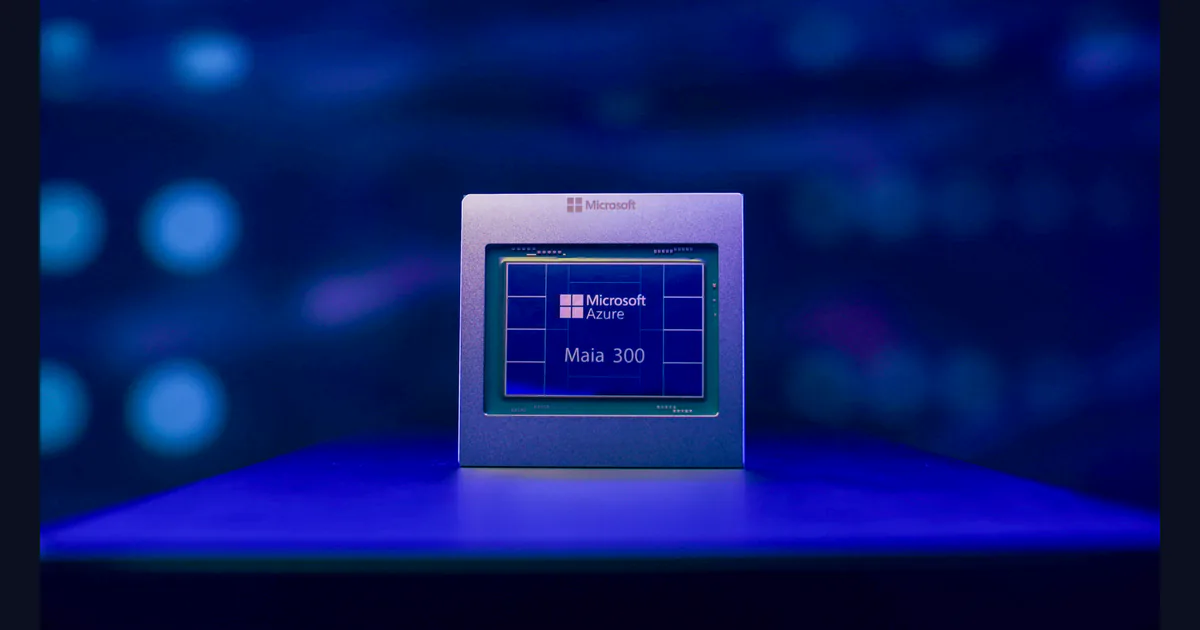
Microsoft has unveiled Maia 300, the third generation of its in-house AI accelerator, and says it will begin production deployments in 2027 as part of a push to scale the Azure Maia family to multi-gigawatt size.
The headline claim is about efficiency rather than raw compute: Microsoft expects Maia 300 to deliver 40% more inference tokens per megawatt than leading GPU-based systems. Reuters reports the company could deploy potentially more than a million of the chips next year to run its own AI services.
What Microsoft announced
The announcement came on Monday, 12 October 2026, in an Official Microsoft Blog post by Scott Guthrie, Executive Vice President of Cloud + AI, titled "Microsoft to expand Azure Maia system to multi-gigawatt deployments".
Microsoft's two headline numbers are its own expectations, not independent benchmarks. The company says it expects Maia 300 "to deliver 40% more tokens per megawatt compared to leading GPU-based systems", without naming which GPU system it compared against. It also says a full 96-accelerator configuration "delivers up to 7x the rack-scale token throughput of Maia 200".
"As we move into the era of Super Intelligence, Microsoft is entering a new phase of infrastructure," Guthrie wrote.
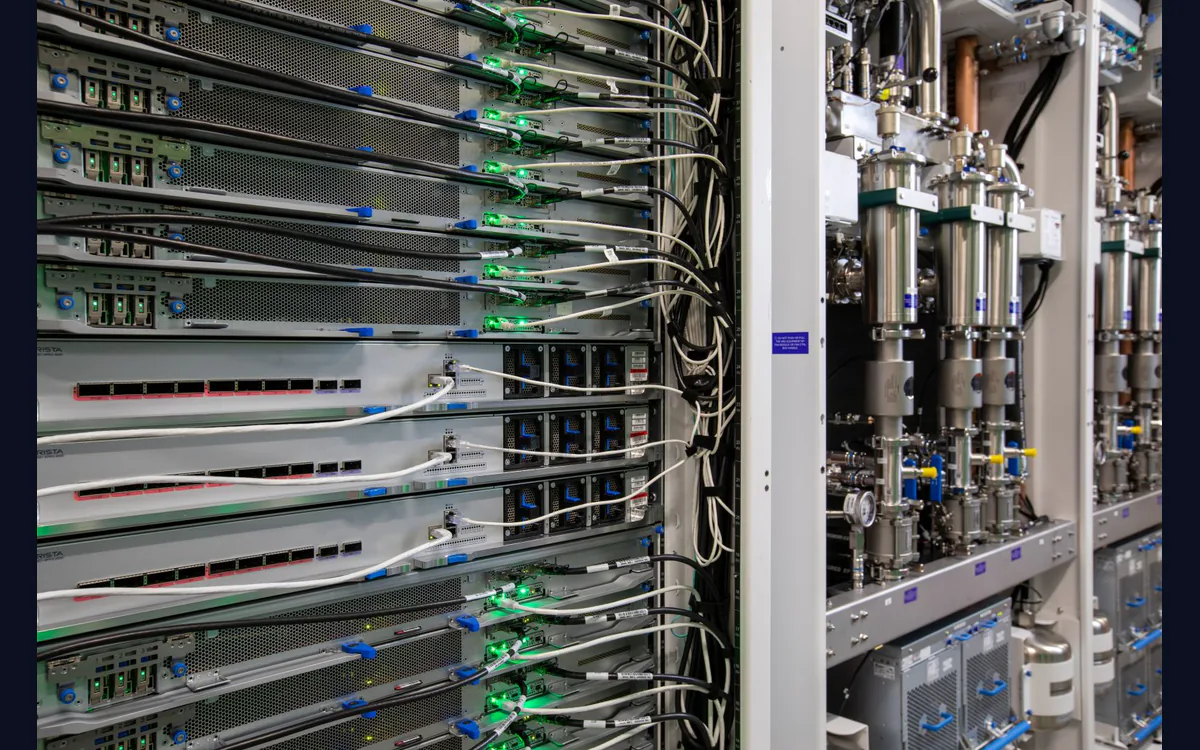
Maia 300 chip and rack specs
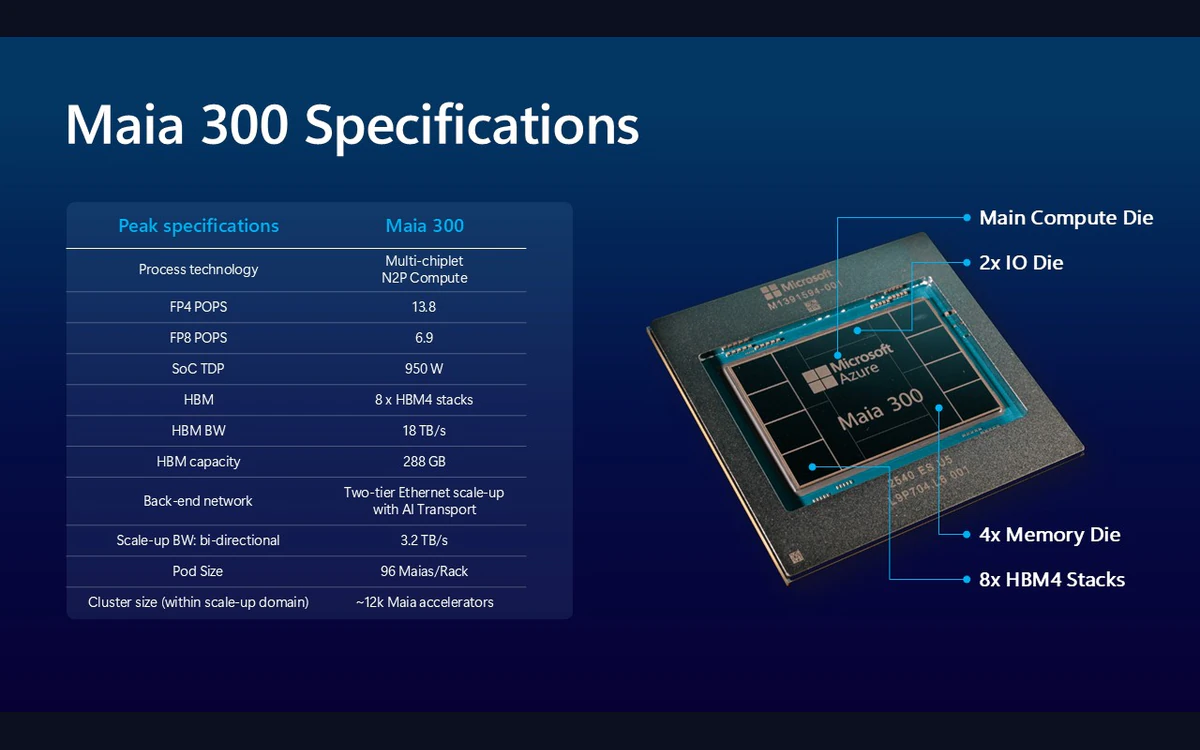
Maia 300 is a chiplet design, with compute, memory controller and I/O split onto separate dies. Reuters notes this contrasts with Nvidia's monolithic approach.
Per accelerator
- Compute chiplets built on TSMC's N2P process node
- Eight HBM4 stacks with 18.0 TB/s of peak memory bandwidth
- 950-watt TDP
- Enhanced MXFP4 support for low-precision inference
Per rack
- 96 accelerators within a 167-kilowatt power envelope
- 27.6 TB of HBM capacity
- 1.7 PB/s of aggregate HBM bandwidth
On the architecture side, Microsoft describes a software-defined dataflow design, on-die SRAM used as a software-managed scratchpad, AI-assisted kernel optimization, Ethernet-based unified networking, and a custom AI transport for scale-up communication tuned for tensor parallelism.
What Maia 300 will run
Maia 300 is built for Microsoft's own services. The blog post does not announce Azure VM availability, pricing or an SDK for outside customers.
The workloads Microsoft lists for it are:
- GitHub coding experiences
- Cloud-scale model serving in Microsoft Foundry
- Inference and data generation for the MAI team as it develops next-generation models
- Latency-sensitive Dragon Copilot clinician workflows
Its predecessor is already in production. Microsoft says Maia 200 "is deploying across the United States, Europe and Australia and delivering up to 1.7x more tokens per watt for built-in AI capabilities in Microsoft Teams, Copilot and Cowork experiences compared with leading GPU infrastructure." Maia 200 serves Microsoft Copilot today, with GitHub Copilot and Microsoft Foundry to follow by the end of the year. It runs OpenAI models, Microsoft's MAI models and open-source model families.
Why it matters: cost, power and Nvidia
The choice of metric is the story. Tokens per megawatt measures how much AI output a datacenter gets for the power it draws, and power has become the binding constraint on AI buildouts. A chip that is more efficient at inference, the work of actually answering prompts, directly lowers the cost of running products like Copilot at scale.
Reuters frames Maia 300 as part of Microsoft's effort to reduce its reliance on outside chip suppliers and loosen Nvidia's grip on the market. "It's basically delivering more intelligence for every watt, every dollar, and every byte of memory by optimizing across the entire system," Rani Borkar, President of Azure Hardware Systems and Infrastructure, told Reuters.
The scale is substantial. Microsoft expects capital expenditure above US$175 billion this calendar year, according to Reuters, and its spending on property and equipment reached $35.80 billion in the quarter ended June, up from $17.08 billion a year earlier. For now, Microsoft remains a major buyer of Nvidia hardware.
Read the claims carefully
The 40% and 7x figures are Microsoft's expectations for a chip that is not yet in production. Microsoft does not name the GPU systems it compared against, and the 1.7x tokens-per-watt figure applies to Maia 200, not Maia 300.
Sources
- Official Microsoft Blog, "Microsoft to expand Azure Maia system to multi-gigawatt deployments" (12 October 2026): https://blogs.microsoft.com/blog/2026/10/12/microsoft-to-expand-azure-maia-system-to-multi-gigawatt-deployments/
- Reuters via The Standard, "Microsoft plans huge deployment of its own AI chips with an eye on saving costs": https://www.thestandard.com.hk/innovation/article/345262/Microsoft-plans-huge-deployment-of-its-own-AI-chips-with-an-eye-on-saving-costs
Key takeaways
- Maia 300 is Microsoft's third-generation in-house AI accelerator, announced 12 October 2026.
- Microsoft expects 40% more inference tokens per megawatt than leading GPU-based systems and up to 7x the rack-scale throughput of Maia 200.
- Production deployments begin in 2027, with Reuters reporting potentially more than a million chips next year.
- Each chip pairs TSMC N2P compute chiplets with eight HBM4 stacks at 950 W; a 96-chip rack draws 167 kW.
- The chip runs Microsoft's own services, including GitHub, Foundry, MAI and Dragon Copilot, with no external customer offering announced.
More in Tech News
Browse Tech News