How to Create Unbreakable Passwords in 2026
Learn the science behind strong passwords, password managers, and passkeys – and why your current password strategy is probably not enough.
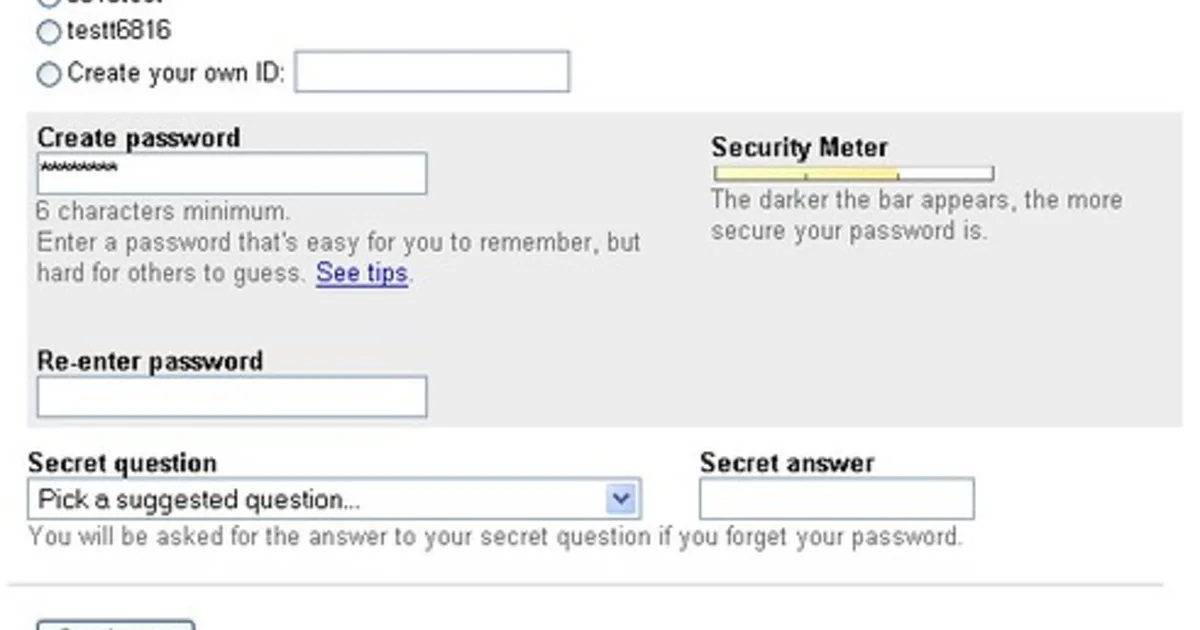
Passwords remain the front door to your digital life, and weak ones are the leading cause of account compromise. Yet most people still rely on short, reused, or guessable passwords that attackers crack in seconds.
This guide explains what actually makes a password strong and how to manage credentials effortlessly in 2026.
What Makes a Password Strong
Length beats complexity. A long passphrase of several random words is both harder to crack and easier to remember than a short string of symbols. Each additional character multiplies the number of possibilities an attacker must try.
- Aim for at least sixteen characters where allowed.
- Make every password unique to its account.
- Avoid names, dates, and common words an attacker could guess.
Use a Password Manager
Stop trying to memorize
A password manager generates and stores a unique strong password for every site, so you only need to remember one master password. This single tool eliminates the root cause of most password problems.
Reputable managers encrypt your vault so that not even the provider can read it, and they autofill credentials to protect against fake login pages.
The Rise of Passkeys
Passkeys are a newer, phishing-resistant alternative that replaces passwords with cryptographic keys tied to your device and unlocked by your fingerprint or face. As more services adopt them, they offer both stronger security and a smoother experience than typing passwords.
What to Do After a Breach
Check whether your accounts appear in known data breaches, change affected passwords immediately, and enable two-factor authentication. Because you used a unique password everywhere, a breach on one site cannot cascade into your other accounts.
Plan the Work Before Choosing the Tools
A credible plan for a practical password policy starts with account value, recovery channels, password-manager adoption, breach response, and resistance to automated guessing. Write these constraints down before comparing products or copying reference architectures. The exercise exposes assumptions that otherwise appear only during an incident or migration.
Define success in operational terms: who owns the system, what failure looks like, how a change is approved, and how the team will recover. This keeps the design focused on durable outcomes rather than a fashionable tool list.
A Practical Implementation Workflow
The safest implementation path is to deploy a reputable password manager, create unique generated passwords, enable MFA, and replace credentials exposed in known incidents. Keep the first change deliberately small enough to inspect, reverse, and explain. Record the commands, policies, and decisions so the second implementation is repeatable rather than improvised.
- Establish a baseline and capture the current behavior.
- Implement one bounded change through version control and peer review.
- Validate normal operation, failure behavior, and rollback.
- Document ownership and expand only after the evidence is convincing.
Operational Risks and Common Mistakes
The recurring failure patterns are forced complexity patterns, frequent changes without evidence, password reuse, shared vault exports, and weak account-recovery questions. These are governance and operating problems as much as technical ones, so another product rarely fixes them by itself.
Review access, dependencies, logs, capacity, recovery steps, and cost on a regular cadence. Test the uncomfortable path: remove a dependency, revoke a credential, restore from backup, or roll back a release. Rehearsal converts documentation into demonstrated capability.

Architecture and System Boundaries
A useful reference system is an identity system that combines unique generated passwords, a protected password manager, MFA, and a hardened recovery process. The boundary matters because reliability and security failures usually occur between components rather than inside the most visible component. Draw the data flow, identities, network transitions, state stores, and external dependencies before selecting an implementation pattern.
For every boundary, document the input contract, owner, timeout, retry policy, capacity assumption, and failure response. Decide which component is authoritative for state and how duplicate, delayed, or malformed input is handled. These decisions prevent ambiguous recovery work when several systems report different outcomes.
Keep the first architecture intentionally legible. Fewer independently changing parts mean fewer credentials, dashboards, deployment paths, and failure combinations. Add a component only when it provides a measurable capability or isolates a meaningful risk; novelty by itself is not an architectural requirement.
A Decision Framework That Survives the Demo
Evaluate password length, uniqueness, blocklists, rate limiting, storage, autofill behavior, account recovery, and administrator support. Weight each factor according to the workload rather than assigning every category equal importance. A regulated customer database, an internal reporting job, and a short-lived experiment can rationally produce different decisions even inside the same company.
Create a short scorecard, but attach evidence to every score: a measured latency, a tested recovery step, a policy excerpt, a representative invoice estimate, or feedback from the people who will operate the result. Unsupported numbers only turn preference into something that looks objective.
Set rejection criteria before the evaluation. A candidate that cannot meet a mandatory data boundary, recovery objective, accessibility need, or operational constraint should not win by accumulating points elsewhere. Record uncertainties separately and give them an owner and a deadline.
A Realistic Implementation Example
Consider this practical sequence: a user remembers one strong manager passphrase while the manager creates a different random credential for every service. The team defines the expected result and failure signal first, then captures a baseline before changing production. It uses representative data and normal access controls rather than a frictionless demonstration account.
During the pilot, operators intentionally create one timeout, one authorization failure, and one malformed input. They verify that the event is visible, the user receives an appropriate result, retry behavior is bounded, and the documented recovery step actually works. This exercise often reveals more than a successful happy-path demo.
The final review includes application developers, operations, security, finance or procurement when relevant, and the business owner. Each group signs off on the risks it will own. The decision record states what was excluded from the pilot so limited evidence is not mistaken for universal proof.
Security, Reliability, and Cost Trade-offs
Security work should include this concrete control set: services should hash passwords with an appropriate salted password hashing scheme, protect reset channels, throttle attempts, and monitor credential stuffing. Controls need owners and observable failure states. A setting that was enabled once but is never checked, tested, or reviewed is weaker than its configuration screen suggests.
The financial trade-off is equally contextual: enterprise password managers add licensing and administration but reduce reset burden and reuse; adoption and recovery support determine realized value. Estimate normal demand, peak demand, failure recovery, retained data, support, and operator time. A cheaper unit price can produce a more expensive system when it requires additional tooling or scarce expertise.
Do not optimize away the margin needed for recovery. Redundancy, logs, backups, test environments, and skilled review all cost money because they reduce uncertainty. Make those costs visible and compare them with the impact and likelihood of an interruption rather than labeling every unused percentage as waste.
Migration, Maintenance, and Long-Term Ownership
For migration, import credentials carefully, remove duplicates, rotate exposed secrets, enroll MFA, test emergency access, and phase out browser or document stores only after verification. Establish data reconciliation and acceptance criteria in advance. A rollback is credible only when the team knows which writes occurred, which state must be reversed, and how users will be informed during the transition.
After launch, maintain a small operating calendar: review privileged access and dependencies, test restoration or rollback, inspect cost and capacity trends, update runbooks, and remove obsolete integrations. Link each recurring check to a named role instead of relying on collective memory.
Revisit the original decision when scale, regulations, staffing, product criticality, or vendor capability changes. Architecture is a managed position, not a permanent verdict. A concise decision log makes later changes faster because the next team can see which assumptions still hold.
Troubleshooting and Incident Response
When the system behaves unexpectedly, begin with scope and time. Identify which users, environments, regions, or transactions are affected and establish the first known bad event. Avoid making several speculative changes at once; every simultaneous change destroys evidence and makes recovery harder to reason about.
Collect account alerts, breach exposure, reused credentials, reset events, recovery-channel changes, suspicious sessions, manager health, and MFA status. Preserve relevant evidence before restarting or redeploying components. Compare the failing path with one known-good path and check the most recent configuration, identity, dependency, or deployment change before assuming the underlying platform is broken.
Contain impact with the smallest reversible action. Pause a trigger, reduce a rollout, revoke one credential, isolate one resource, or route traffic back to a known version as appropriate. Communicate what is known, what is not yet known, who owns the next decision, and when the next update will arrive.
After recovery, build a timeline from durable evidence and distinguish the initiating event from the conditions that allowed it to spread. Assign follow-up work to owners with deadlines, add a test or signal that would catch recurrence earlier, and verify the corrective action instead of closing the review when a document is published.
A Sustainable Review and Maintenance Checklist
Review password-manager membership, emergency access, exposed credentials, inactive accounts, reset policy, recovery verification, MFA adoption, and administrator exceptions. High-risk access and active failure queues may justify weekly attention, while architecture assumptions and vendor fit may be quarterly topics. The cadence should follow the speed at which the underlying risk changes rather than an arbitrary reporting calendar.
Maintain a short service record containing purpose, owner, data classification, dependencies, support contacts, recovery objective, current version, cost center, and links to code and runbooks. This simple index shortens investigations and prevents critical knowledge from living only in one person's memory.
Track a balanced set of signals: an outcome for users, a reliability indicator, a security control, operating effort, and cost per useful unit. Review trends and meaningful exceptions rather than rewarding a single number. Metrics become dangerous when people optimize them while the original purpose is forgotten.
Finally, define retirement while the system is healthy. Know how to export required data, revoke identities, remove network paths, preserve audit evidence, stop billing, and inform dependents. Responsible lifecycle management includes a clean ending; otherwise temporary experiments become permanent, poorly understood attack surface.
Connect every review to the current threat model and evidence from the environment. New internet exposure, acquisitions, remote access patterns, privileged integrations, and valuable datasets can change priority faster than an annual checklist. Examine near misses and suspicious events for signals that controls are difficult to use or easy to bypass. Validate contact details and decision authority before an incident, including counsel, insurers, critical suppliers, and public communication owners where applicable. Security exceptions should state the risk, compensating controls, owner, and expiry date. When a control is retired or replaced, verify that coverage remains continuous and that old agents, accounts, certificates, and network rules are actually removed.
Frequently Asked Questions

How long should a password be?
There is no universal answer. Evaluate it against account value, recovery channels, password-manager adoption, breach response, and resistance to automated guessing, then document why the chosen boundary fits the organization rather than copying another team's architecture.
Are passphrases safer than complex passwords?
Begin with the smallest useful scope. A narrow pilot makes deploy a reputable password manager, create unique generated passwords, enable MFA, and replace credentials exposed in known incidents observable and reversible before the approach becomes a dependency for other teams.
Is a password manager a single point of failure?
Measure the outcome that matters to users and operators, not activity alone. Reliability, recovery effort, security exposure, and maintenance time usually reveal more than a raw feature count.
When should a password be changed?
Assign a named owner, keep the configuration and decisions reviewable, and schedule periodic checks. A system without an owner quietly becomes operational debt.
Key takeaways
- Long passphrases are stronger and easier than complex short ones.
- Every account needs its own unique password.
- A password manager solves the memorization problem.
- Passkeys offer phishing-resistant, password-free login.
- Unique passwords contain the damage of any single breach.
More in Cybersecurity
Browse Cybersecurity