AI-Powered Automation: Transform Your Business Operations
Explore how AI agents, LLM-powered workflows, and intelligent automation are replacing manual processes across marketing and operations.
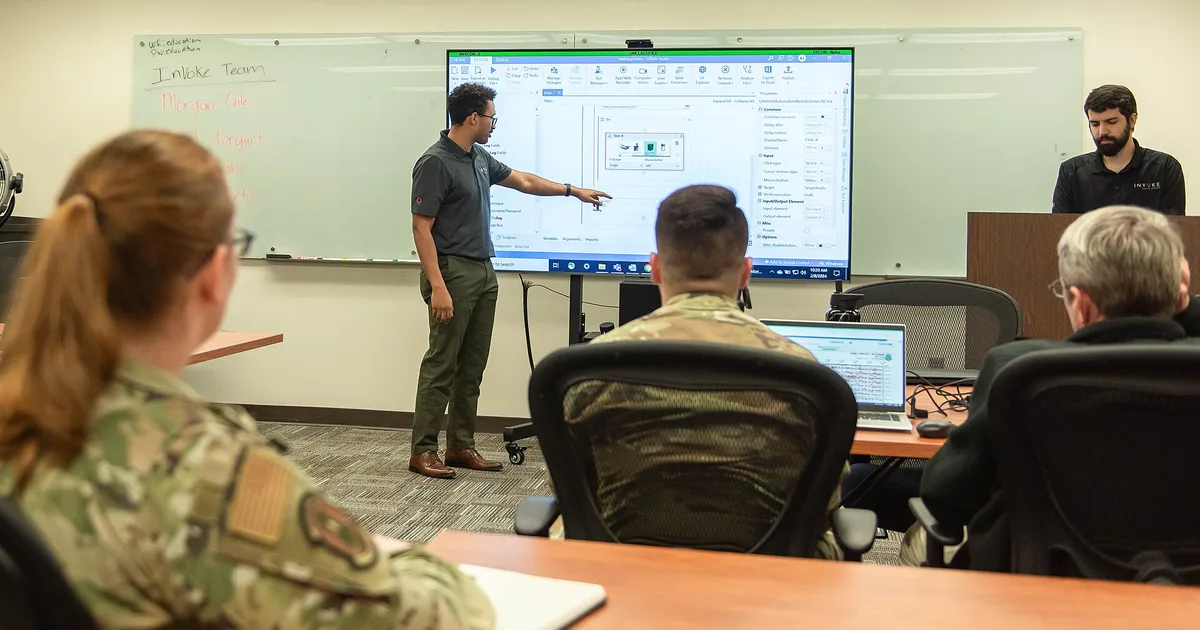
Traditional automation handles repetitive, rule-based tasks, but AI-powered automation goes further, tackling work that requires understanding language, making judgments, and handling unstructured information. It is reshaping how businesses operate.
This article explores how AI automation transforms business operations and how to adopt it wisely.
Beyond Rule-Based Automation
Classic automation follows fixed rules and breaks when faced with anything unexpected. AI automation uses models that can interpret messy inputs, like emails, documents, and conversations, and respond intelligently. This unlocks automation of tasks that were previously impossible to script.
Where It Delivers Value
- Customer support handled by capable AI assistants.
- Summarizing and extracting information from documents.
- Drafting content, emails, and reports.
- Routing and prioritizing incoming requests intelligently.
Augment, then automate
The fastest wins come from using AI to assist employees first, then automating fully once the process is proven. This builds trust and reveals where human oversight remains essential.
Adopting AI Automation
Start with a well-defined, high-volume process where mistakes are recoverable. Measure the impact, keep humans in the loop for important decisions, and expand gradually. The goal is to free people from drudgery so they can focus on creative and strategic work.
Proceed Thoughtfully
AI automation can make mistakes and reflect biases, so guardrails matter. Review outputs, protect sensitive data, and be transparent with customers about when they are interacting with AI. Responsible adoption earns trust and avoids costly missteps.
Plan the Work Before Choosing the Tools
A credible plan for a responsible business AI automation starts with decision risk, data classification, human review, model variability, evaluation criteria, and a clear fallback when output is uncertain. Write these constraints down before comparing products or copying reference architectures. The exercise exposes assumptions that otherwise appear only during an incident or migration.
Define success in operational terms: who owns the system, what failure looks like, how a change is approved, and how the team will recover. This keeps the design focused on durable outcomes rather than a fashionable tool list.

A Practical Implementation Workflow
The safest implementation path is to start with an assistive workflow, assemble representative test cases, measure errors, and require review before irreversible actions. Keep the first change deliberately small enough to inspect, reverse, and explain. Record the commands, policies, and decisions so the second implementation is repeatable rather than improvised.
- Establish a baseline and capture the current behavior.
- Implement one bounded change through version control and peer review.
- Validate normal operation, failure behavior, and rollback.
- Document ownership and expand only after the evidence is convincing.

Operational Risks and Common Mistakes
The recurring failure patterns are sending sensitive data without approval, treating fluent output as fact, autonomous high-impact decisions, prompt-only testing, and no record of model changes. These are governance and operating problems as much as technical ones, so another product rarely fixes them by itself.
Review access, dependencies, logs, capacity, recovery steps, and cost on a regular cadence. Test the uncomfortable path: remove a dependency, revoke a credential, restore from backup, or roll back a release. Rehearsal converts documentation into demonstrated capability.
Architecture and System Boundaries
A useful reference system is an AI-assisted support workflow that retrieves approved knowledge, drafts a response, cites evidence, and asks a person to approve sensitive cases. The boundary matters because reliability and security failures usually occur between components rather than inside the most visible component. Draw the data flow, identities, network transitions, state stores, and external dependencies before selecting an implementation pattern.
For every boundary, document the input contract, owner, timeout, retry policy, capacity assumption, and failure response. Decide which component is authoritative for state and how duplicate, delayed, or malformed input is handled. These decisions prevent ambiguous recovery work when several systems report different outcomes.
Keep the first architecture intentionally legible. Fewer independently changing parts mean fewer credentials, dashboards, deployment paths, and failure combinations. Add a component only when it provides a measurable capability or isolates a meaningful risk; novelty by itself is not an architectural requirement.
A Decision Framework That Survives the Demo
Evaluate task risk, evaluation data, retrieval boundaries, acceptable error, escalation, latency, model change, and evidence retention. Weight each factor according to the workload rather than assigning every category equal importance. A regulated customer database, an internal reporting job, and a short-lived experiment can rationally produce different decisions even inside the same company.
Create a short scorecard, but attach evidence to every score: a measured latency, a tested recovery step, a policy excerpt, a representative invoice estimate, or feedback from the people who will operate the result. Unsupported numbers only turn preference into something that looks objective.
Set rejection criteria before the evaluation. A candidate that cannot meet a mandatory data boundary, recovery objective, accessibility need, or operational constraint should not win by accumulating points elsewhere. Record uncertainties separately and give them an owner and a deadline.
A Realistic Implementation Example
Consider this practical sequence: the system automates categorization and drafting but never invents refund policy or sends a high-impact answer without review. The team defines the expected result and failure signal first, then captures a baseline before changing production. It uses representative data and normal access controls rather than a frictionless demonstration account.
During the pilot, operators intentionally create one timeout, one authorization failure, and one malformed input. They verify that the event is visible, the user receives an appropriate result, retry behavior is bounded, and the documented recovery step actually works. This exercise often reveals more than a successful happy-path demo.
The final review includes application developers, operations, security, finance or procurement when relevant, and the business owner. Each group signs off on the risks it will own. The decision record states what was excluded from the pilot so limited evidence is not mistaken for universal proof.
Security, Reliability, and Cost Trade-offs
Security work should include this concrete control set: minimize prompts and retrieved data, isolate tenants, defend against prompt injection, validate tool calls, restrict actions, and monitor for sensitive output. Controls need owners and observable failure states. A setting that was enabled once but is never checked, tested, or reviewed is weaker than its configuration screen suggests.
The financial trade-off is equally contextual: larger models can improve difficult cases but raise latency and cost; route simple tasks conservatively and measure quality by segment. Estimate normal demand, peak demand, failure recovery, retained data, support, and operator time. A cheaper unit price can produce a more expensive system when it requires additional tooling or scarce expertise.
Do not optimize away the margin needed for recovery. Redundancy, logs, backups, test environments, and skilled review all cost money because they reduce uncertainty. Make those costs visible and compare them with the impact and likelihood of an interruption rather than labeling every unused percentage as waste.
Migration, Maintenance, and Long-Term Ownership
For migration, collect a trusted baseline, shadow the new workflow, compare failures, version prompts and models, and keep a deterministic fallback for essential work. Establish data reconciliation and acceptance criteria in advance. A rollback is credible only when the team knows which writes occurred, which state must be reversed, and how users will be informed during the transition.
After launch, maintain a small operating calendar: review privileged access and dependencies, test restoration or rollback, inspect cost and capacity trends, update runbooks, and remove obsolete integrations. Link each recurring check to a named role instead of relying on collective memory.
Revisit the original decision when scale, regulations, staffing, product criticality, or vendor capability changes. Architecture is a managed position, not a permanent verdict. A concise decision log makes later changes faster because the next team can see which assumptions still hold.
Troubleshooting and Incident Response
When the system behaves unexpectedly, begin with scope and time. Identify which users, environments, regions, or transactions are affected and establish the first known bad event. Avoid making several speculative changes at once; every simultaneous change destroys evidence and makes recovery harder to reason about.
Collect retrieved evidence, prompt and model version, evaluation segment, confidence signal, tool-call arguments, policy filters, reviewer action, and downstream impact. Preserve relevant evidence before restarting or redeploying components. Compare the failing path with one known-good path and check the most recent configuration, identity, dependency, or deployment change before assuming the underlying platform is broken.
Contain impact with the smallest reversible action. Pause a trigger, reduce a rollout, revoke one credential, isolate one resource, or route traffic back to a known version as appropriate. Communicate what is known, what is not yet known, who owns the next decision, and when the next update will arrive.
After recovery, build a timeline from durable evidence and distinguish the initiating event from the conditions that allowed it to spread. Assign follow-up work to owners with deadlines, add a test or signal that would catch recurrence earlier, and verify the corrective action instead of closing the review when a document is published.
A Sustainable Review and Maintenance Checklist
Review model changes, evaluation-set coverage, drift by use case, data permissions, prompt-injection defenses, latency, unit cost, escalation load, and user appeals. High-risk access and active failure queues may justify weekly attention, while architecture assumptions and vendor fit may be quarterly topics. The cadence should follow the speed at which the underlying risk changes rather than an arbitrary reporting calendar.
Maintain a short service record containing purpose, owner, data classification, dependencies, support contacts, recovery objective, current version, cost center, and links to code and runbooks. This simple index shortens investigations and prevents critical knowledge from living only in one person's memory.
Track a balanced set of signals: an outcome for users, a reliability indicator, a security control, operating effort, and cost per useful unit. Review trends and meaningful exceptions rather than rewarding a single number. Metrics become dangerous when people optimize them while the original purpose is forgotten.
Finally, define retirement while the system is healthy. Know how to export required data, revoke identities, remove network paths, preserve audit evidence, stop billing, and inform dependents. Responsible lifecycle management includes a clean ending; otherwise temporary experiments become permanent, poorly understood attack surface.
Revalidate the underlying business rule, not just whether the automation still runs. A perfectly reliable flow can produce the wrong outcome after a policy, form, API field, team structure, or customer expectation changes. Ask the process owner to review representative successful, rejected, duplicate, and ambiguous cases. Sample completed records against the source system and verify that notifications reach a monitored destination. Use versioned test fixtures for important transformations and keep a small canary transaction where appropriate. Before increasing volume, confirm downstream quotas and human exception capacity. Automation transfers work; it does not eliminate accountability for the decisions encoded in the workflow.
Frequently Asked Questions
Which business processes are safest to automate with AI?
There is no universal answer. Evaluate it against decision risk, data classification, human review, model variability, evaluation criteria, and a clear fallback when output is uncertain, then document why the chosen boundary fits the organization rather than copying another team's architecture.
Where should a human remain in the loop?
Begin with the smallest useful scope. A narrow pilot makes start with an assistive workflow, assemble representative test cases, measure errors, and require review before irreversible actions observable and reversible before the approach becomes a dependency for other teams.
How can an AI workflow be evaluated?
Measure the outcome that matters to users and operators, not activity alone. Reliability, recovery effort, security exposure, and maintenance time usually reveal more than a raw feature count.
What data should not be sent to an AI service?
Assign a named owner, keep the configuration and decisions reviewable, and schedule periodic checks. A system without an owner quietly becomes operational debt.
Key takeaways
- AI automation handles unstructured, judgment-based work.
- It interprets messy inputs that rules cannot handle.
- Support, documents, content, and routing are prime uses.
- Augment employees first, then automate proven processes.
- Use guardrails, oversight, and transparency for safety.
More in Automation
Browse Automation