Claude Personal Finance Beta Reads Your Bank Accounts Through Plaid, but Can't Move a Dollar
Anthropic's new Personal Finance beta lets US Pro, Max and Ultra users link up to 16 banks through Plaid. Claude sees balances and two years of transactions, read-only. Here is what it can see, what it can't do, and the privacy fine print.
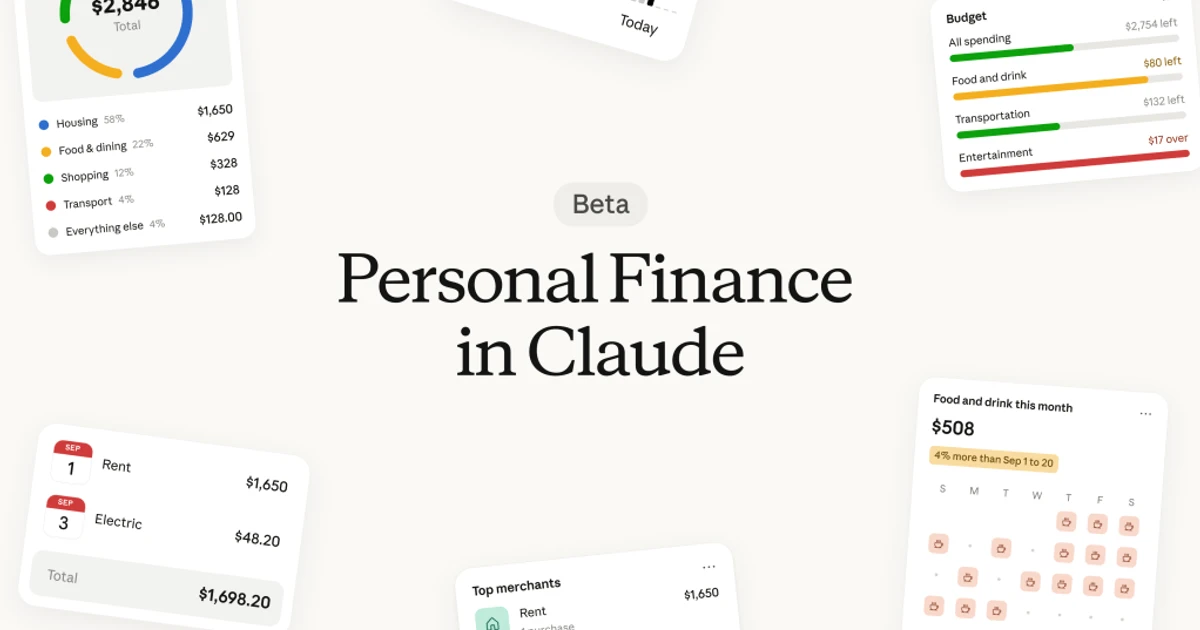
Anthropic launched Personal Finance in Claude on Thursday, November 5, 2026. The beta lets you link bank and card accounts through Plaid and then ask Claude plain-language questions about your money: where it went, what is left before payday, which bills keep creeping up.
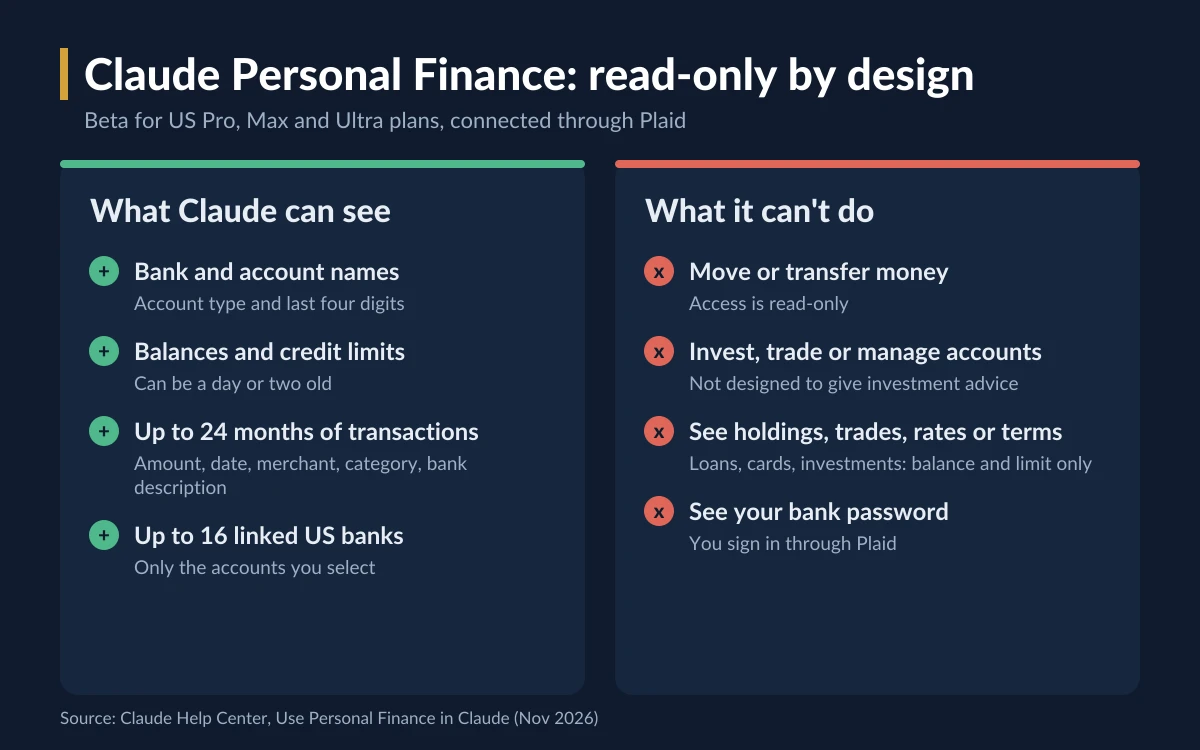
The access is read-only. Claude can see balances, credit limits and up to 24 months of transactions, but it cannot move, manage or invest money. The feature arrives six months after OpenAI shipped a similar Plaid-based tool for ChatGPT, and just ahead of Anthropic's expected IPO.
Who gets it and where
The beta started rolling out the week of November 5 to Claude Pro, Max and Ultra subscribers in the US only. Anthropic is releasing it gradually, so it may not appear for every eligible account yet.
- Plans: Pro, Max and Ultra. Not Free, Team or Enterprise.
- Region: US accounts and US banks only.
- Apps: Claude on the web, Claude Desktop, and the iOS and Android apps.
- Not available in Claude Duet, Claude Code, Cowork tasks or scheduled tasks, and it may not work inside projects.
- Price: no separate charge was announced. It comes with the existing paid plans.
How linking works
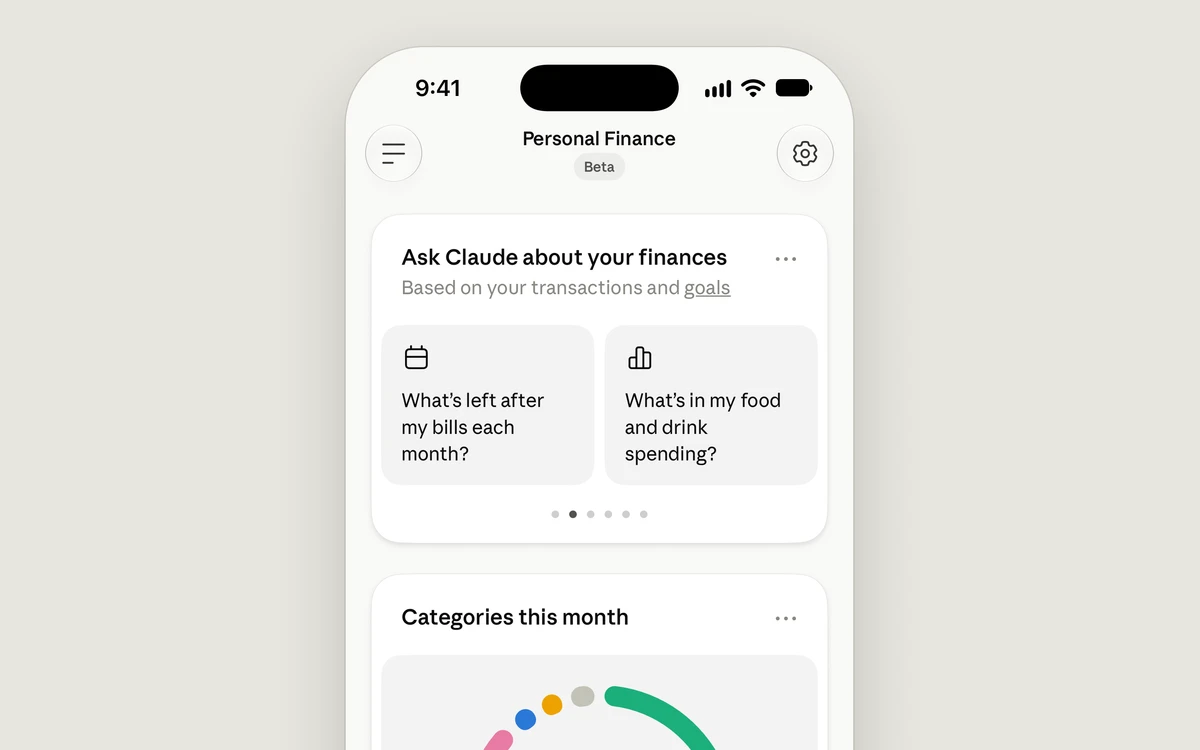
Accounts connect through Plaid, the same aggregator many budgeting apps use. You sign in to your bank inside Plaid's flow, so Claude never sees your bank password. Anthropic's help center lists the steps:
- Open Personal Finance from the side menu (under More if it is not shown).
- Choose Get started, then Link accounts with Plaid.
- Sign in to your bank and pick which accounts to share. The flow has to be finished within 10 minutes.
You can link up to 16 banks. Anthropic's help page does not publish a list of supported institutions; it only says US banks are supported.
What Claude can see, and what it can't do
For the accounts you select, Claude gets bank names, account names and types, the last four digits of each account, balances, credit limits, and up to two years of transactions with amount, date, merchant, category and the bank's description.
For investment, loan and card accounts the view is narrower: balances and credit limits only. Claude does not see holdings, trades, interest rates or loan terms.
One catch on account numbers
Plaid only passes along the last digits of an account number, but Anthropic warns that a full number can still show up if it appears in an account name or a transaction description.
With that data Claude totals spending by category, compares months, flags duplicate charges, unexpected fees and bills that keep rising, explains terms like APR, works out how much interest you paid over the past year, and builds spending charts, bill calendars and budget dashboards. "Claude gives you answers in everyday language, from your balances and transactions, and explains any term that's new to you," Anthropic said.
What it looks like in Anthropic's demo
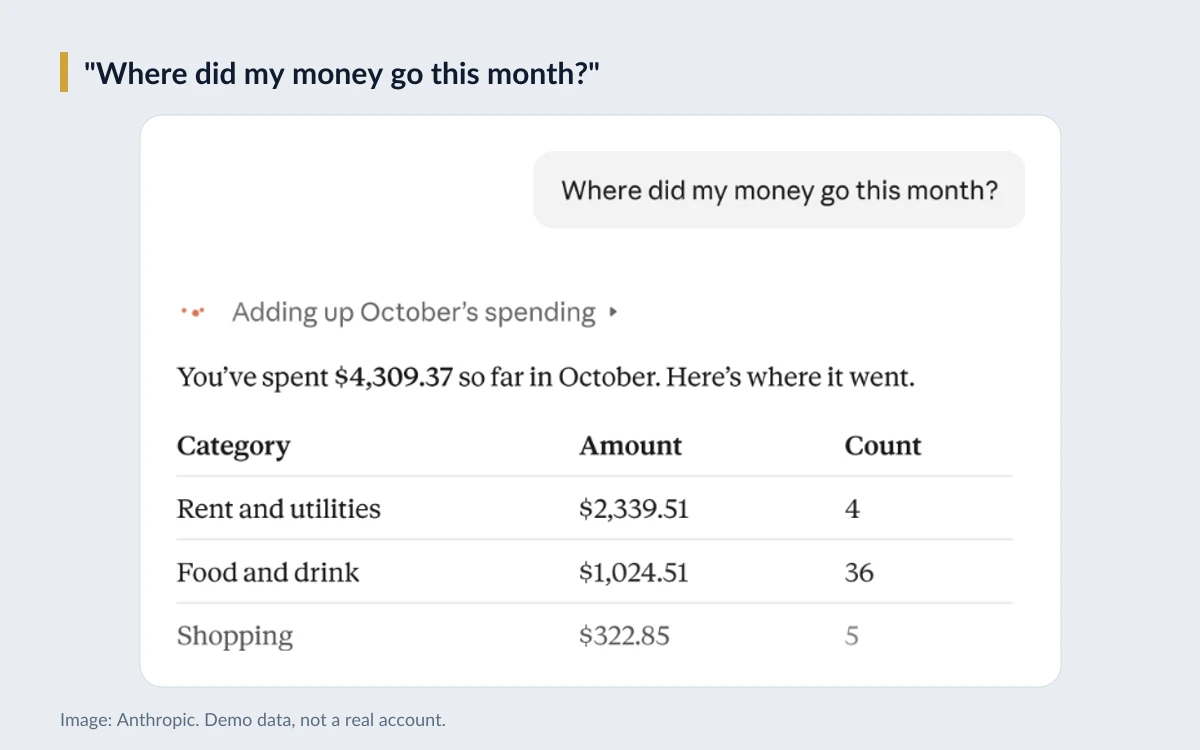
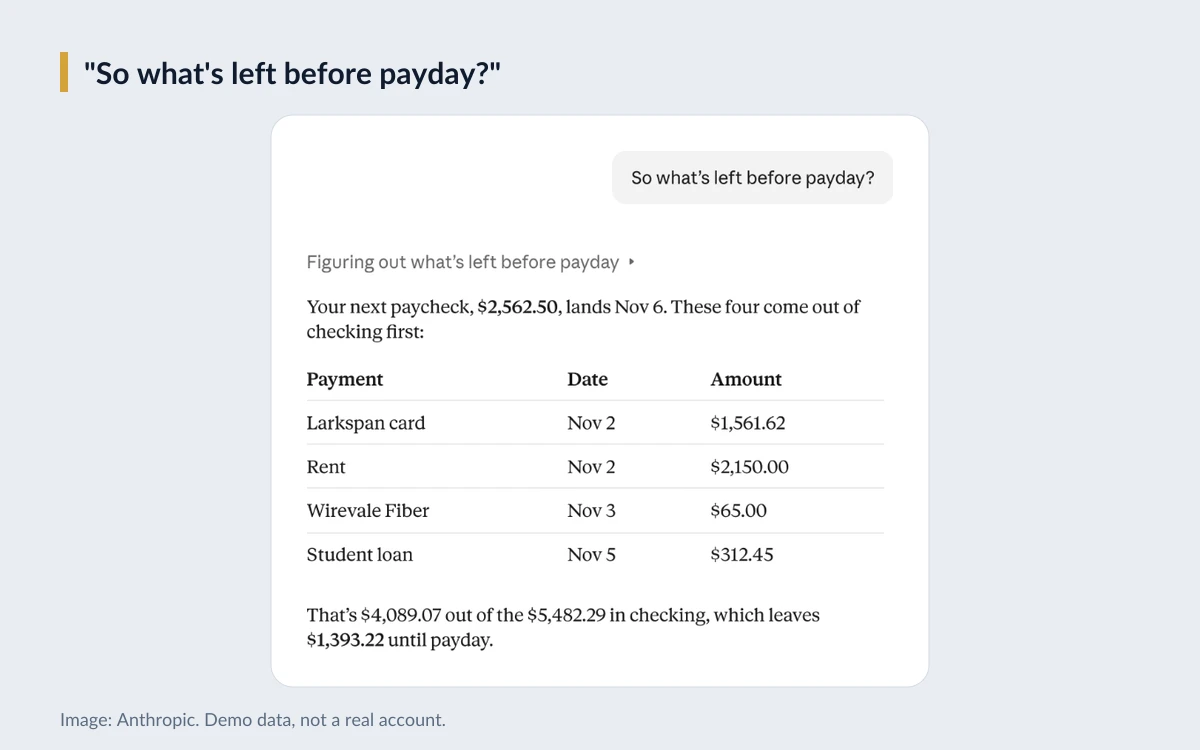
Anthropic's launch screenshots use made-up accounts, so the figures below are demo data, not real users' numbers. Asked "Where did my money go this month?", Claude answers that $4,309.37 has gone out so far in October: $2,339.51 on rent and utilities across 4 transactions, $1,024.51 on food and drink across 36, and $322.85 on shopping across 5.
A follow-up, "So what's left before payday?", lists four payments due before a $2,562.50 paycheck on November 6: a card payment of $1,561.62, rent of $2,150.00, a $65.00 internet bill and a $312.45 student loan. That is $4,089.07 out of $5,482.29 in checking, leaving $1,393.22 until payday.
The privacy fine print
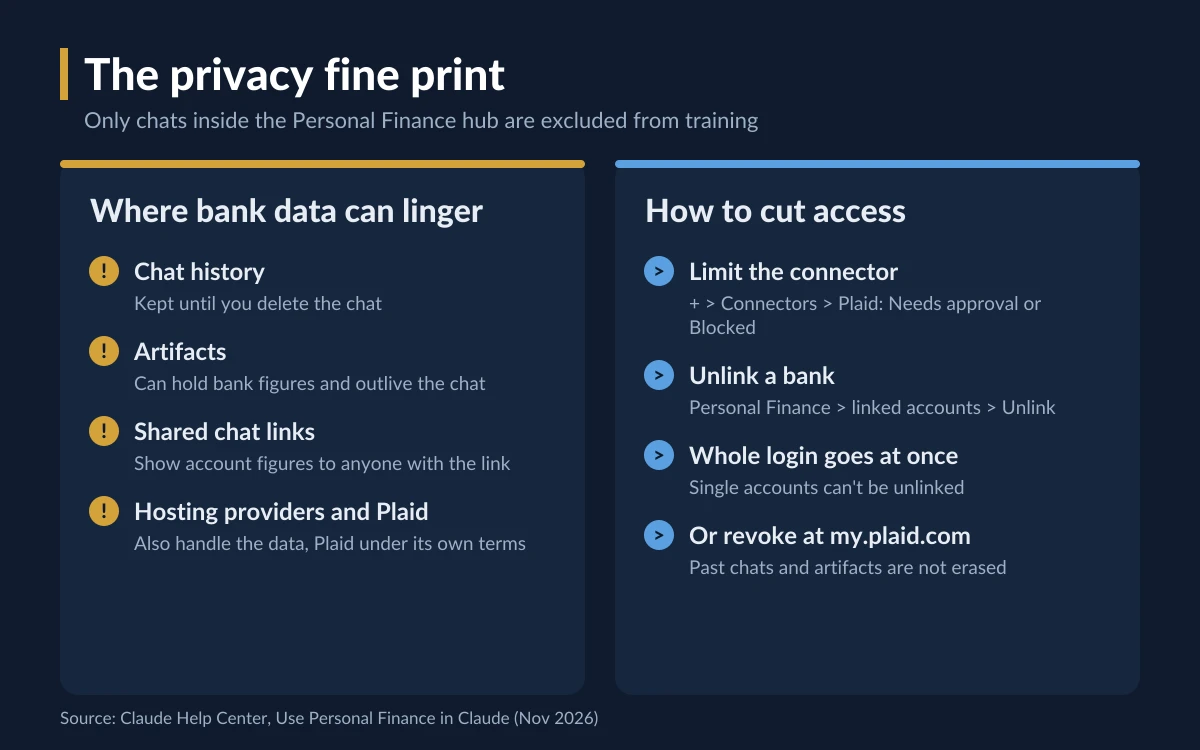
Anthropic says the feature carries no ads or sponsored recommendations, and the company sells no credit cards, loans or savings accounts of its own. Conversations inside the Personal Finance hub are not used to train models. That promise is narrower than it may sound: if you paste or discuss bank data in a normal chat outside the hub, your usual Claude privacy settings apply.
The help center lists several other details worth knowing before you link an account:
- Bank data stays in your chat history until you delete the chat, subject to Anthropic's retention practices.
- The service providers that host Claude also handle the data, and Plaid processes it under its own terms.
- Chats that use linked accounts are designed to stay out of memory, later search and the monthly recap.
- Artifacts built from those chats, such as a budget dashboard, can contain bank figures and survive even after the chat is deleted. Claude asks before publishing one.
- Shared chat links show account figures to whoever opens them.
- By default Claude uses linked accounts in chats without asking each time. You can switch the Plaid connector to Needs approval or Blocked under + > Connectors > Plaid.
Unlinking and known limits
To disconnect, open Personal Finance, go to linked accounts (the three-dot menu, or the gear icon on mobile) and choose Unlink. It removes every account under that bank login, because single accounts cannot be unlinked on their own. You can also revoke access at my.plaid.com.
Unlinking does not erase history
Removing the last bank resets the dashboard, including budgets and setup answers, and that cannot be undone. It does not remove what Claude already wrote in chats, artifacts or shared links. And if your paid plan ends, banks stay linked until you unlink them yourself.
Anthropic also lists the beta's rough edges: balances can be a day or two old, totals may not match your bank's, and an account linked through two logins can be counted twice. Data exports do not yet include the Personal Finance dashboard. Claude is not designed to give investment advice, and Anthropic tells users to check important figures with their bank.
Why it matters
This is catch-up as much as launch. OpenAI introduced personal finance in ChatGPT on May 15, 2026, also through Plaid, starting as a preview for US ChatGPT Pro subscribers on web and iOS with support for more than 12,000 institutions. Google's Gemini can already analyze spending through its Wallet integration. Claude's feature was first spotted in testing in September.
It also extends a run of vertical products from Anthropic this year, after Claude for Legal and Claude for Financial Services, and Reuters-based coverage notes it lands ahead of the company's highly anticipated IPO (see our coverage of Anthropic's S-1 filing at /anthropic-s1-ipo-nasdaq-ant-16-billion-revenue). Anthropic calls Personal Finance a first step and says it is exploring how Claude could work with licensed professionals and regulated firms on bigger decisions, inviting banks and wealth managers to get in touch.
The trade-off for users is familiar from every bank-aggregation app, with one twist: banks such as Bank of America have warned customers not to hand banking passwords to AI assistants. Plaid's sign-in flow avoids that particular risk, but the artifact and shared-link caveats mean your balances can end up in places a bank statement never would.
Sources
- Anthropic, Introducing Personal Finance in Claude: https://claude.com/resources/articles/introducing-personal-finance-in-claude
- Claude Help Center, Use Personal Finance in Claude: https://support.claude.com/en/articles/18185620-use-personal-finance-in-claude
- TechCrunch, Claude can now analyze your spending: https://techcrunch.com/2026/11/05/claude-can-now-analyze-your-spending-with-its-new-personal-finance-tool/
- TechCrunch, OpenAI launches ChatGPT for personal finance: https://techcrunch.com/2026/05/15/openai-launches-chatgpt-for-personal-finance-will-let-you-connect-bank-accounts/
- Global Banking & Finance Review (Reuters): https://www.globalbankingandfinance.com/anthropic-rolls-out-personal-finance-feature-claude/
- Android Authority: https://www.androidauthority.com/claude-personal-finance-launch-3732213/
Key takeaways
- Personal Finance in Claude is a US-only beta for Pro, Max and Ultra, on web, desktop, iOS and Android.
- Accounts link through Plaid: up to 16 US banks, balances, credit limits and up to 24 months of transactions.
- Access is read-only. Claude cannot move, manage or invest money, and sees no holdings, trades or loan terms.
- Only chats inside the Personal Finance hub are excluded from training; artifacts and shared links can still expose bank figures.
- Unlinking removes a whole bank login and does not erase what Claude already wrote.
More in Tech News
Browse Tech News