Google Puts Its AI Chips in Orbit: Project Suncatcher Prototype Launches With Four TPUs
Google's first Project Suncatcher satellite, built with Planet, launched on SpaceX Transporter-18 on October 1 with four TPUs aboard. Here is what the test covers, its limits, and why Google says space compute will not be cheaper anytime soon.
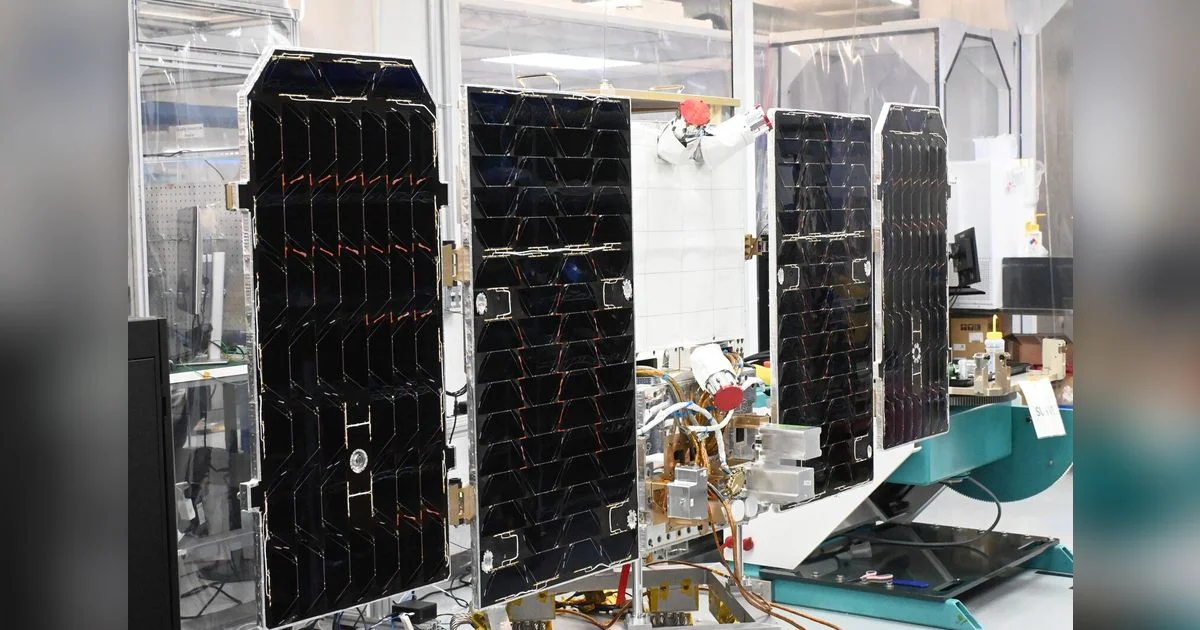
Google has put its own AI chips into orbit for the first time. The prototype satellite for Project Suncatcher, built with Planet, launched on October 1, 2026 aboard SpaceX's Transporter-18 rideshare mission, and Google says it has confirmed contact and the satellite "is operating as expected."
The spacecraft carries four of Google's Tensor Processing Units (TPUs), according to NPR. It is a small, deliberately limited experiment: the first real hardware test of Google's long-shot idea that solar-powered AI data centers could one day run in space. The hard problems - heat, radiation and cost - are exactly what it was sent up to measure.
What launched on October 1
Transporter-18 lifted off on a Falcon 9 from Vandenberg Space Force Base in California, carrying about 130 payloads to a sun-synchronous orbit. Its first-stage booster, B1082, was flying for the 25th time, according to Spaceflight Now.
Planet Labs had 20 of those satellites on board: the first Project Suncatcher demo, its Tanager-2 hyperspectral satellite and 18 SuperDoves. Planet said initial contact was made with Tanager-2, the Suncatcher prototype and two SuperDoves, while the other 16 SuperDoves will deploy later from a D-Orbit ION vehicle. Planet called the Suncatcher satellite "the first-ever test of Google's Tensor Processing Units (TPUs) in space."
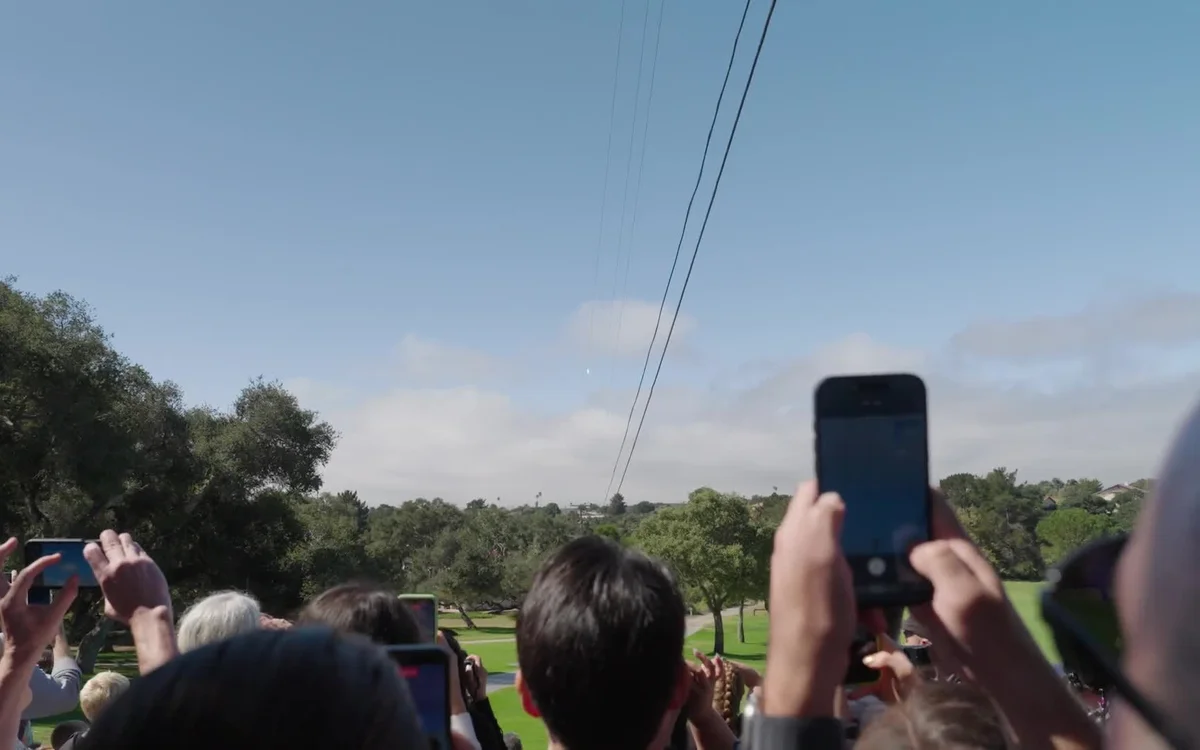
In its launch-day post, Travis Beals, Senior Director at Google's Paradigms of Intelligence team, described the mission as "the first step in a long-term research moonshot exploring whether space could one day host scalable machine learning infrastructure."
How small the test really is
This is not an orbital data center. NPR describes a refrigerator-sized satellite that will run a version of Google's Gemma AI model in bursts of 15 minutes at a time, because the chips have to stop and shed heat between runs.
According to The New York Times, the satellite is designated "MVP", its computing power is roughly comparable to a single data-center server, and it draws about 1 kW - in the range of a household hair dryer. The Times also reported that the satellite could remain in orbit for up to six years before orbital decay.
- Chips: four Google TPUs (per NPR)
- Power: roughly 1 kW (per The New York Times)
- Compute runs: about 15 minutes before a cooling break
- Orbit: sun-synchronous, where its solar panels are almost never in shade
- Planned mission length: about one year, operated by Planet
Why Google wants compute in space
The pitch is energy. In a pre-launch post, Google wrote that "in low Earth orbit, satellites can access near-constant sunlight, generating up to eight times more solar power than on Earth." AI data centers on the ground are increasingly limited by how much power and land they can get.
Google's long-range concept, laid out in a November 2025 research paper, is a cluster of 81 satellites flying within a 1 km radius at a mean altitude of 650 km, linked by lasers. A bench test of that optical link reached 800 Gbps each way (1.6 Tbps total). The same paper projected launch costs could fall below $200 per kilogram by the mid-2030s - the economics depend heavily on that happening. Google says the research is now published as a peer-reviewed paper in the journal Joule.
Heat, radiation and launch stress
Over the coming weeks, Google says it will gather in-orbit data on "how our TPUs handle the physical stress of spaceflight and the radiation and thermal extremes of space." Each of those was tested on the ground first.
Cooling without air
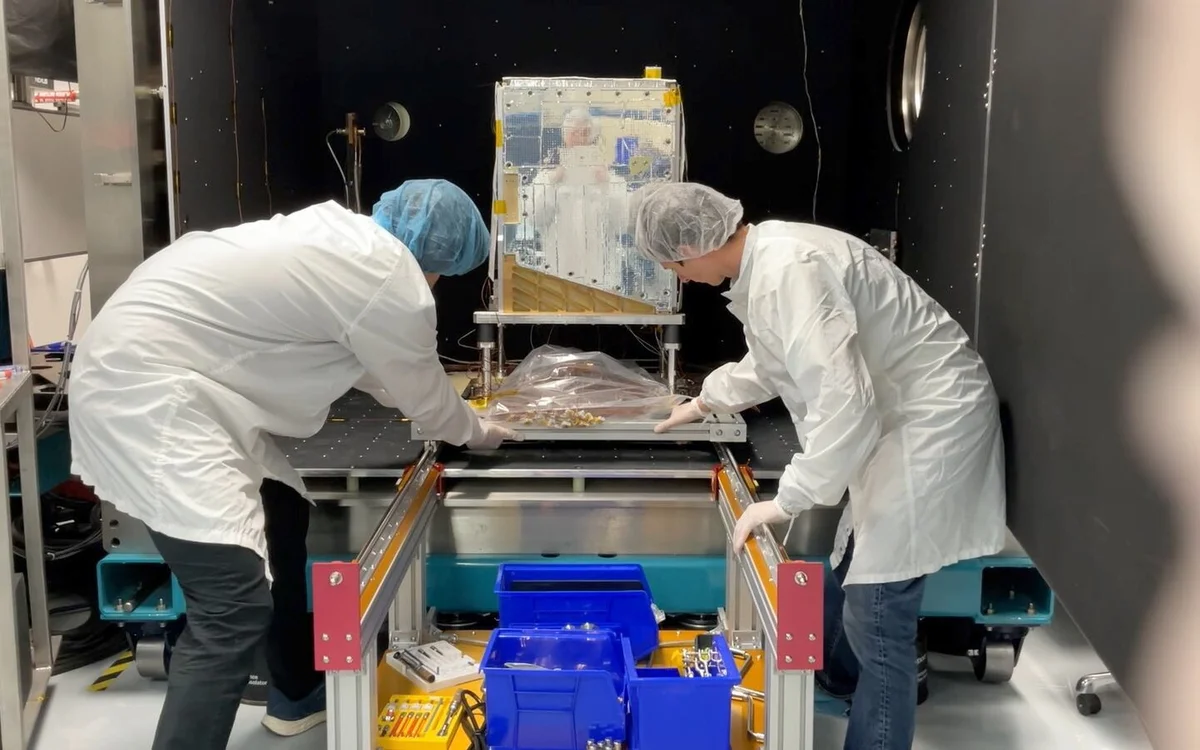
"In space, there's no airflow. In a vacuum, you can only diffuse heat via radiators," Google wrote. The satellite uses a mix of heat pipes and radiators and was tested in a thermal vacuum chamber. Brandon Lucia, a professor of electrical and computer engineering at Carnegie Mellon, told NPR the core trade-off: "In a satellite in particular, using more power to do the computations means dumping more heat into the confined environment."
Radiation
Google ran its TPUs through a proton beam at UC Davis's Crocker Nuclear Laboratory while they ran AI workloads. It says its Trillium TPUs "can survive a radiation total ionizing dose greater than what they would receive during a five-year space mission." In the 2025 paper, high-bandwidth memory began showing irregularities after 2 krad(Si), against an expected five-year shielded dose of 750 rad(Si), with no hard failures up to the maximum tested 15 krad(Si).
Launch loads
Google says the roughly 10-minute ride to low Earth orbit brings acceleration loads up to 10 g on the spacecraft, and that TPU chips can see 50 to 100 g. The team shook the satellite on all three axes to mimic launch before it shipped.
What comes next - and the cost caveat
Google plans to put two more satellites into orbit in 2027 to test laser links between them, NPR reported. Future designs would each carry dozens of TPUs and fly in clusters that talk to each other by laser, according to Google.
Google is not promising cheaper AI from orbit. "I don't see this being something where it's cheaper to do this in the next five years," Beals told NPR. There is no product, customer offering or Google Cloud service attached to the mission; it is a research prototype meant to find out what breaks.
Sources: Google's launch announcement (blog.google), Google's pre-launch Project Suncatcher explainer, Planet Labs' October 1 press release, NPR via OPB, Google Research's November 2025 system-design post, and Spaceflight Now's Transporter-18 coverage.
Key takeaways
- Google's first Project Suncatcher satellite, built with Planet, launched on SpaceX Transporter-18 on October 1, 2026 and is operating as expected.
- It carries four TPUs and runs AI workloads in roughly 15-minute bursts because of heat limits.
- The mission is planned to last about a year and will measure how the chips cope with radiation, heat and launch stress.
- Two more satellites are planned for 2027 to test laser links between spacecraft.
- Google's project lead does not expect space-based compute to be cheaper than ground data centers within five years.
More in Tech News
Browse Tech News