OpenAI DevDay 2026: GPT-6.1 Sol, always-on dots and a $500 ChatGPT Pro plan
OpenAI's DevDay 2026 brought GPT-6.1 Sol at one-fifth of GPT-6 Astra's API price, always-on dot agents, Astra Ultrafast behind a new $500 Pro plan, and plugin extensions inside ChatGPT.
OpenAI held DevDay 2026 in San Francisco on Tuesday, September 29, and used Sam Altman's keynote to push ChatGPT further from a chat app toward an agent platform. OpenAI billed it as its biggest DevDay yet, with more than 20 major announcements across ChatGPT, Codex and its models.
Four launches matter most for everyday users and developers: GPT-6.1 Sol, a cheaper model that OpenAI says comes close to GPT-6 Astra; dots, an always-on cloud agent for paying subscribers; Astra Ultrafast, a much faster and much pricier way to run Astra behind a new $500 Pro plan; and plugin extensions that let third-party apps live inside ChatGPT's interface. Here is what launched, who gets it and what it costs.
GPT-6.1 Sol: near-Astra performance at one-fifth of the price
OpenAI describes the new model plainly: "GPT-6.1 Sol delivers near-Astra performance at a lower cost for complex coding, computer use, and professional work." In the API it is called gpt-6.1-sol and has a 1,050,000-token context window, up to 128,000 output tokens and an April 30, 2026 knowledge cutoff.
The headline is price. Standard input and output cost one-fifth of what GPT-6 Astra charges ($10 input and $50 output per million tokens). Per million tokens, Sol is priced as follows:
- Standard (prompts up to 272K input tokens): $2.00 input, $0.10 cached input, $2.50 cache writes, $10.00 output
- Long context (over 272K input tokens): $4.00 input, $0.20 cached input, $5.00 cache writes, $15.00 output
- Batch and Flex: $1.00 input, $0.05 cached input, $1.25 cache writes, $5.00 output
- Fast mode: $4.00 input, $0.20 cached input, $5.00 cache writes, $20.00 output
Inside ChatGPT, Sol is rolling out to Plus, Pro, Business, Enterprise and Edu, but only in Codex (the desktop app and CLI) and ChatGPT Work on web and mobile. It is not available in ordinary chat, and Free and Go users do not get it at launch. On Enterprise and Edu plans it stays off until an admin turns it on.
Standard and Fast modes are available now. OpenAI says Ultrafast support for GPT-6.1 Sol "is coming later".
Dots: an always-on agent with its own computer
The most visible consumer launch is dots. In OpenAI's words, "Your dot is an always-on agent that keeps work moving across your tools and projects." It is "powered by GPT-6 Astra", lives in the cloud and "has its own computer and browser", so it can keep working when your laptop is closed.
The same dot is reachable in several places: "You reach the same dot in ChatGPT, Slack, Teams, or a call." You create one in the ChatGPT desktop app or in ChatGPT in a desktop browser; mobile web is not supported for setup.

Who can use dots
- Pro $100, Pro $200 and Pro $500 subscribers who are over 18 and live outside the EEA, the UK and Switzerland
- Business Premium, rolling out worldwide
- Enterprise, rolling out worldwide but off by default until a workspace admin enables it
Conversations with your dot do not count toward ChatGPT usage limits. Plans include a separate allowance for deeper work, with extended limits for the first month after launch. According to Engadget, the first dot is included at no extra charge for eligible Pro and Business Premium users and additional dots can be purchased; OpenAI's product page does not list that pricing.
Astra Ultrafast and the new $500 Pro plan
Ultrafast is OpenAI's "fastest API service tier, with up to 8x faster speeds than Standard mode". At launch it works with GPT-6 Astra only, and speed is expensive: Astra Ultrafast costs $60 per million input tokens and $300 per million output tokens, six times Astra's Standard price. Cached input is $6 and cache writes are $75.
Every API user can try it, but at low rate limits: 500,000 tokens per minute on Tiers 1-3, 1,000,000 on Tier 4 and 5,000,000 on Tier 5. Processing is US or global only, with no EU or other regional endpoints.
Ultrafast in ChatGPT and Codex
In Codex and ChatGPT Work, Astra Ultrafast is limited to the Pro $500 plan and eligible Enterprise and Edu plans. Other self-serve plans get no Ultrafast at launch, even if they buy extra credits. It draws down included subscription limits at 8x the Standard rate, while purchased credits and Enterprise pay-as-you-go are billed at 6x. OpenAI stresses that those multipliers are billing rates, not a measure of speed.
Three Pro price points
ChatGPT Pro now comes at $100, $200 or $500 per month, with Astra Ultrafast reserved for the $500 tier. OpenAI's DevDay summary says Pro $500 includes 25 times the Plus usage allowance. The $200 plan is open to new subscribers again, but new sign-ups get a smaller allowance than existing ones; OpenAI says current $200 subscribers keep their previous allowance through October 29, 2026.
Plugins move into ChatGPT's sidebar, panels and file viewers
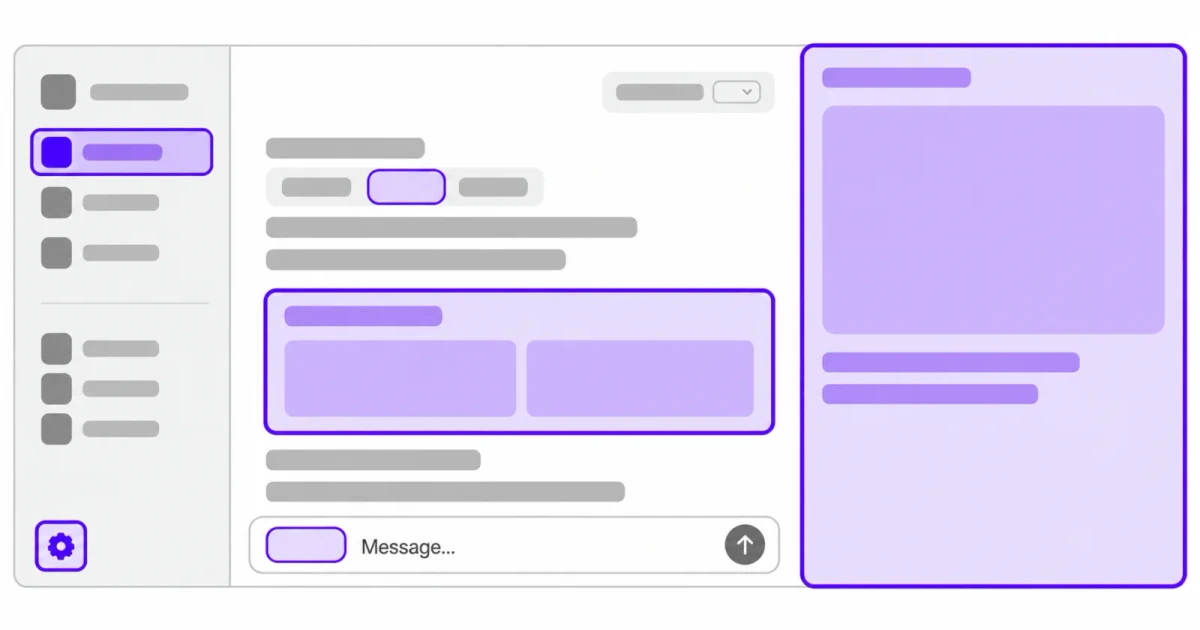
For developers, the biggest change is plugin extensions. OpenAI says MCP Extensions "enables developers to hook their plugins into key surfaces of the ChatGPT user experience, including the sidebar, composer, and file viewers."

- Sidebar apps open fullscreen inside ChatGPT
- Conversation panels open beside a chat
- File viewers and editors open supported files in the developer's own interface
- Composer mentions work only in the ChatGPT desktop app
Extensions on the web are "coming soon" to ChatGPT Free and Go users, and existing plugin features keep working unchanged.
A second addition, MCP Events, "lets ChatGPT subscribe to updates from your MCP server, such as new messages, content updates, or status changes", so automations can fire when something happens in a connected app. It requires MCP 2.0 (protocol version 2026-07-28). TechCrunch lists Slack, SharePoint, Airtable and Google Drive among the integrations shown with plugins and automations, and ChatGPT Sites can now host plugins to share with colleagues.
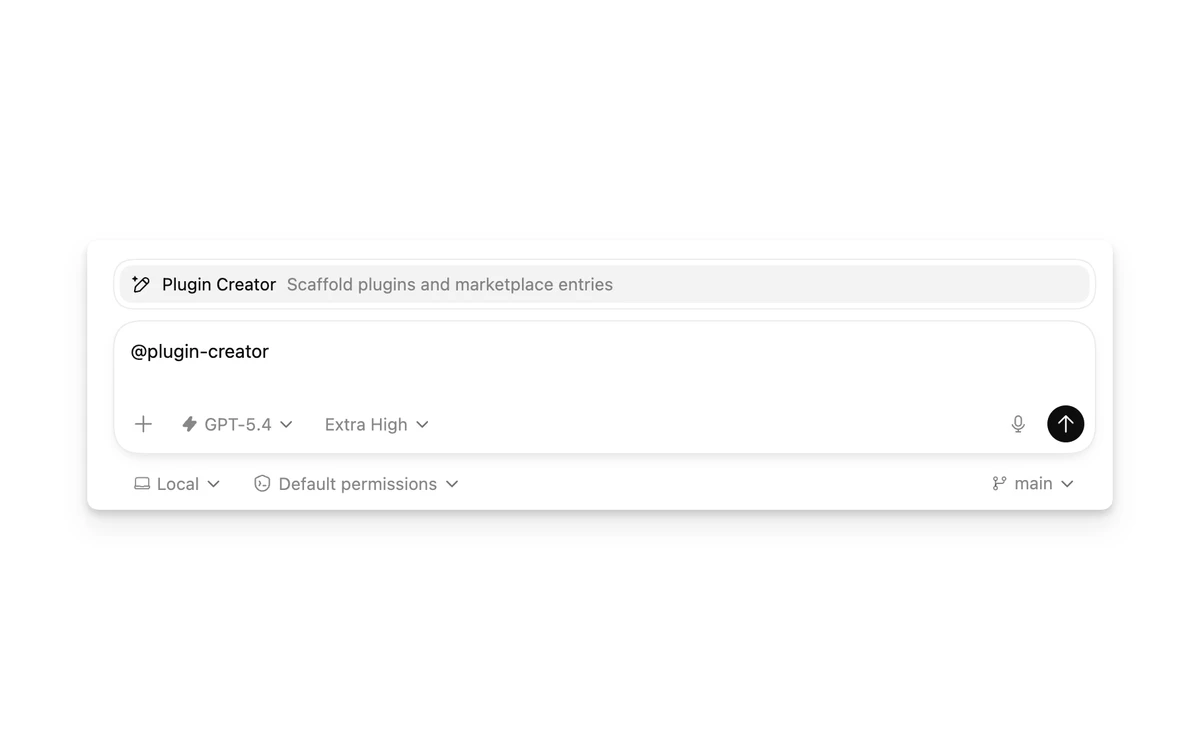
To help developers get started, OpenAI added a built-in Plugin Creator skill, invoked as @plugin-creator in ChatGPT Work and $plugin-creator in Codex, and redesigned the plugin directory submission flow with clearer feedback and better ranking and recommendations.
Everything else OpenAI announced
- Computer use in the Agents API: agents can now complete tasks in an OpenAI-hosted browser. The Agents API itself entered public beta earlier, on September 10. In ChatGPT Work and Codex, computer use is for Pro $500 and Enterprise.
- Sign in with ChatGPT: Plus and Pro users can spend their Work and Codex allowance inside partner apps, with per-app limits. Partners include Amp Code, Devin, Kilo Code, Notion, Vercel and Warp, with Lovable coming soon; Airtable, Canva, GitLab, HubSpot and Supabase support sign-in only.
- ChatGPT Space: a shared home where teammates, ChatGPT and dots work together, including Pages for real-time collaborative documents. It is available on Pro, Business and Enterprise, on desktop and web first.
- @ChatGPT in Slack and Microsoft Teams channels for Business and Enterprise.
- OpenAI Marketplace: eligible enterprise customers can spend part of their OpenAI commitment on partner products. Runtimewire reports 32 launch partners, including Adobe, Figma, Salesforce, ServiceNow and CrowdStrike.
- Codex now runs fully in the cloud with reusable environments, so a local machine no longer has to stay on. The Codex CLI adds voice steering, a new /agents view, prompt editing, session resume and Git worktree improvements.
- Amazon Bedrock Managed Agents runs OpenAI's agent harness on AWS: agents run in the customer's environment, inference runs on Bedrock and data stays within AWS.
What it means
DevDay 2026 splits OpenAI's offer into two lanes. GPT-6.1 Sol makes near-flagship quality cheap enough for everyday API workloads, while Ultrafast, dots and computer use are aimed at people and companies willing to pay much more for speed and autonomy. For API customers already running GPT-6 Astra, Sol is the obvious thing to benchmark first, since a fivefold price cut on input and output adds up quickly.
For ChatGPT subscribers, the picture is more fragmented. Sol is limited to Work and Codex, Ultrafast needs the $500 plan, and dots are unavailable to Pro users in Europe, the UK and Switzerland. Free and Go users get little at launch beyond the promise of web extensions. If you rely on ChatGPT for work, check which of these features your plan actually includes before upgrading.
Frequently asked questions
How much does GPT-6.1 Sol cost in the API?
$2 per million input tokens and $10 per million output tokens on Standard, for prompts up to 272K input tokens. That is one-fifth of GPT-6 Astra's $10 and $50.
Can I use GPT-6.1 Sol in regular ChatGPT?
No. Sol is available only in ChatGPT Work and Codex, on Plus, Pro, Business, Enterprise and Edu. Free and Go plans do not get it at launch.
Which plans include dots?
Pro $100, $200 and $500 for adults outside the EEA, UK and Switzerland, plus Business Premium and Enterprise as they roll out worldwide. Enterprise admins must enable it first.
Do I need the $500 Pro plan for Astra Ultrafast?
In ChatGPT and Codex, yes, unless you are on an eligible Enterprise or Edu plan. In the API, every developer can use Astra Ultrafast at six times the Standard price, with lower rate limits.
Is Ultrafast available for GPT-6.1 Sol?
Not yet. Sol launched with Standard and Fast modes, and OpenAI says Ultrafast support is coming later.
Sources
- OpenAI API docs, GPT-6.1 Sol model page: developers.openai.com/api/docs/models/gpt-6.1-sol
- OpenAI API pricing: developers.openai.com/api/docs/pricing
- OpenAI Ultrafast mode guide: developers.openai.com/api/docs/guides/ultrafast-mode
- OpenAI plugin extensions docs: developers.openai.com/plugins/build/extensions
- ChatGPT docs on dots: learn.chatgpt.com/docs/dots
- ChatGPT docs on models and speed: learn.chatgpt.com/docs/models and learn.chatgpt.com/docs/agent-configuration/speed
- TechCrunch, Engadget, Thurrott and Runtimewire DevDay 2026 coverage
Key takeaways
- GPT-6.1 Sol costs $2 input and $10 output per million tokens, one-fifth of GPT-6 Astra, with a 1.05M-token context window.
- In ChatGPT, Sol is limited to Work and Codex on paid plans; Free and Go do not get it at launch.
- Dots are always-on GPT-6 Astra agents with their own cloud computer, reachable in ChatGPT, Slack, Teams or a call, for Pro users outside the EEA, UK and Switzerland.
- Astra Ultrafast runs up to 8x faster at 6x the API price, and in ChatGPT it requires the new $500 Pro plan.
- Plugin extensions put third-party apps in ChatGPT's sidebar, panels and file viewers, and MCP Events enables event-driven automations.
More in Tech News
Browse Tech News