Anthropic's Claude Fable 5.2 cuts API prices 20% and formalizes Fermat's Last Theorem in 30 hours
Anthropic released Claude Fable 5.2 and Mythos 5.2 on Nov 9: $8/$40 per million tokens, up to 30% faster outputs, and a 1,000-agent Lean proof of Fermat's Last Theorem in 30 hours.
Anthropic released Claude Fable 5.2 and Claude Mythos 5.2 on Monday, November 9, and the headline for developers is the bill: the new models cost $8 per million input tokens and $40 per million output tokens, down from $10 and $50 for the 5.1 generation. That is a 20% cut on every line of the official pricing table, while Anthropic says outputs arrive up to 30% faster.
The launch also came with an eye-catching demo. A team of about 1,000 Fable 5.2 agents fully formalized Fermat's Last Theorem in the Lean proof assistant in 30 hours, a job that took Anthropic's first attempt 11 days.
What Anthropic released
Fable 5.2 and Mythos 5.2 are the same underlying model shipped with different safeguards. Fable carries strong cybersecurity and biology protections, which is why Anthropic can offer it to all users. Mythos goes only to organizations doing beneficial cybersecurity or biomedical work, which apply through the recently expanded Life Sciences and Cyber Verification Programs.
Anthropic says the new models produce outputs up to 30% faster than Fable 5.1 and Mythos 5.1, and that testers found them to communicate more clearly than earlier Fable and Mythos releases. On the Claude Platform the API model ID is claude-fable-5-2.
Fable vs Mythos in one line
Same model, different guardrails. Fable is generally available and blocks most cyber and research-biology work; Mythos is for vetted organizations and is where the cybersecurity results below come from.
Pricing: 20% cheaper on every line
Anthropic's announcement only says the price is lower. The 20% figure is our arithmetic from the official pricing page, which lists the same rates for Fable 5.2 and Mythos 5.2:
- Input: $8 per million tokens (was $10 on Fable 5.1 and Mythos 5.1)
- 5-minute cache writes: $10 (was $12.50)
- 1-hour cache writes: $16 (was $20)
- Cache hits: $0.20 (was $0.25)
- Output: $40 per million tokens (was $50)
- Batch API: $4 input and $20 output (was $5 and $25)
An optional fast mode speeds token generation by up to 2.5x and costs double the standard rate, $16 per million input tokens and $80 per million output tokens. Fast mode does not work with the Batch API. Long prompts are not penalized either: the pricing page says Claude 4.6 and later models, except Haiku 5.5, get the full 1M-token context window at standard pricing.
For consumer and team plans there is a launch-week promotion. Plans and seats that include Fable get one to three "Fable resets" depending on how long they have subscribed, and Fable is included for up to 50% of weekly usage limits on Pro plans and standard Team seats. Anthropic describes both as applying this week, not as permanent plan terms.
Benchmarks, by Anthropic's own numbers
Anthropic published the following scores in the order Fable 5.2 / Fable 5.1 / Opus 5.5 / GPT-6 Astra / Gemini 4 Carbon. They are the company's own results and have not been independently verified.
- FrontierCode 2.0: 49.1% (Xhigh effort) / 32.4% / 45.5% / 42.8% / 41.1%
- FrontierSWE v2: 69.9 / 56.3 / 62.3 / 65.5 / 61.2
- OSWorld 2.1: 89.3 / 83.5 / 87.2 / 79.5 / 81.5
- Humanity's Last Exam (with tools): 74.2 / 65.6 / 67.7 / 57.2 / not reported
- Remote Labor Index: 41.3 (High effort) / 17.9 / 21.3 / 20.8 / not reported
- AutomationBench: 51.4 / 31.4 / 42.5 / 41.4 / 53.9
- RoboDojo Sim: 64.9 / 27.6 / 39.4 / 29.8 / not reported
- Chartography (no tools): 73.4 / 44.8 / 64.4 / 71.0 / 72.5
Fable 5.2 does not lead everywhere. Gemini 4 Carbon scores higher on AutomationBench, 53.9% against 51.4%, and Opus 5.5 keeps a slightly higher Elo score in one of Anthropic's charts, 1800 against 1785.
The efficiency claims may matter more than the top-line scores. At High effort, Fable 5.2 scores 45.3% on FrontierCode 2.0, roughly level with Opus 5.5's 45.5%, at about half the cost per task. On Chartography at Medium effort it reaches 66.4%, ahead of Opus 5.5 at Max effort (64.4%), for less than one-tenth the cost per task.
Fermat's Last Theorem in 30 hours
Anthropic's first formalization of Fermat's Last Theorem was done by an unreleased research version of Claude. It took 11 days and relied on a purpose-built harness plus guidance from a human researcher.
This time a team of 1,000 Fable 5.2 agents completed the full formalization in Lean in 30 hours with minimal human intervention. The agents started from minimal prompts, built their own coordination, and used no mathematical references, only a list of intermediate theorem statements to score progress. Anthropic says the run used one-third as many action tokens and produced a proof seven times shorter.
For comparison, Opus 5.5 in the same 1,000-agent setup completed only 26% of the work in 18 hours and barely moved after being resumed for 12 more hours.
Coding, an operating system and circuit boards
Anthropic says more than 90% of the changes merged into its core codebase are now written by Claude, with human guidance. Agents running an earlier Fable 5.2 build migrated a production service from Python to Rust, and that service now starts about 26x faster.
In a larger stunt, one engineer had Fable 5.2 build a prototype operating system from an empty folder. More than 1,000 subagents worked on it for eight days. The result boots on a laptop and includes drivers for disk, keyboard and network, file storage, windows, a login screen, an installer and built-in Claude.

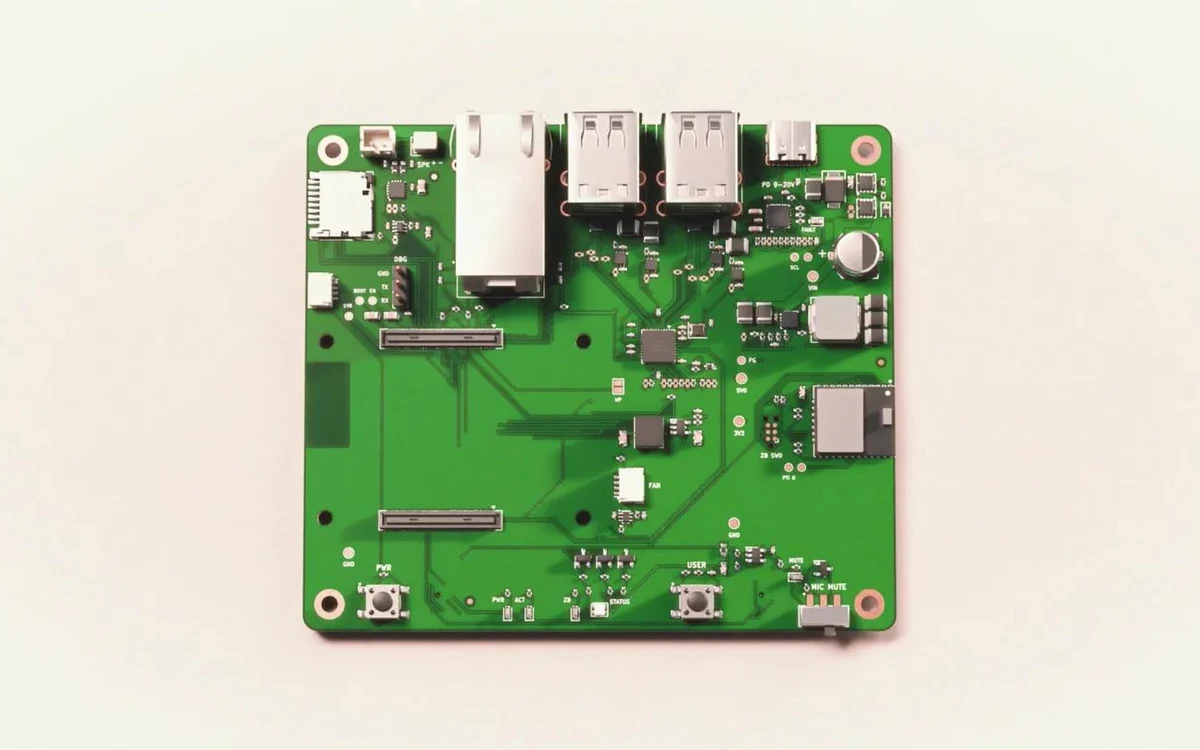
With the hardware company Diode, Fable 5.2 designed three working devices, each with a board ready for manufacturing in under a day: a home voice-assistant hub, a USB speakerphone and a handheld virtual pet.
Customers quoted in the launch were enthusiastic. Vercel's Joe Haddad said, "I haven't had to say 'No, I meant…' a single time." Shopify's Tom Pritchard said, "It feels like working with another staff-level engineer."
Science and robotics
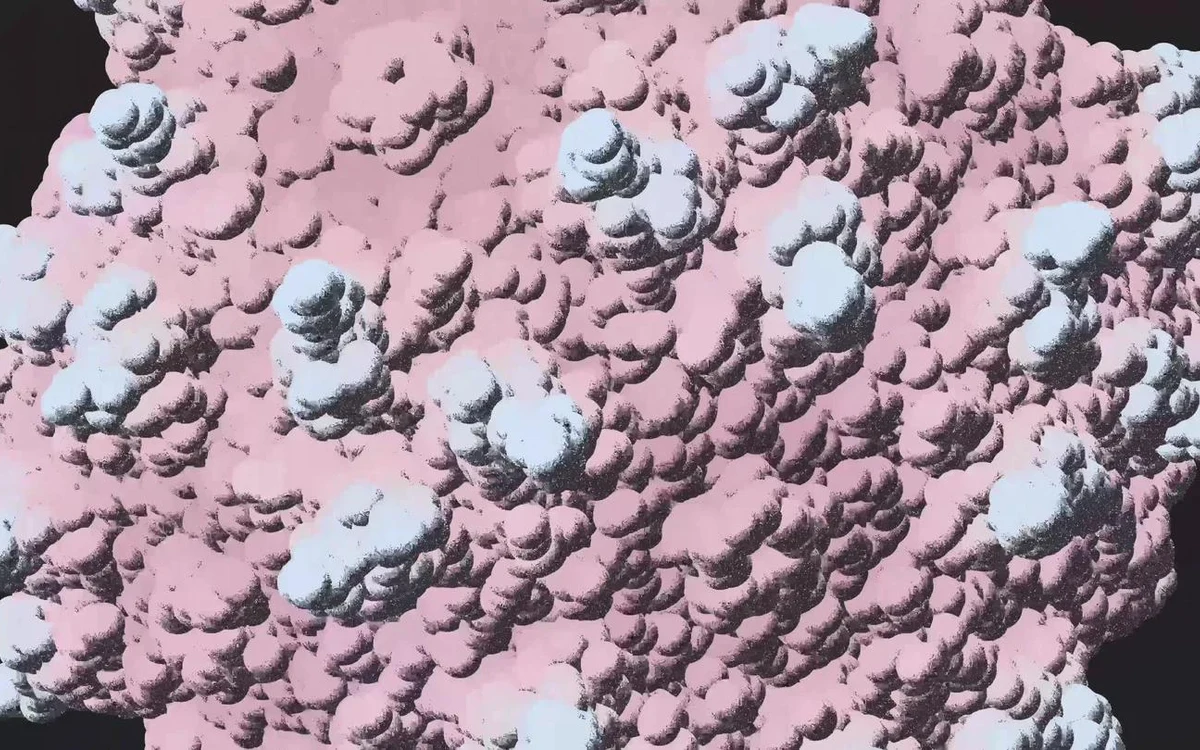
Anthropic says Fable 5.2 solved two open black-hole problems related to holographic duality. Mythos 5.2 modeled adeno-associated virus capsid structures, getting 28 of 34 attempts accurate. That biology work is a Mythos result: Fable's safeguards block most research-biology tasks.
In robotics, Fable 5.2 controlled a simulated two-arm robot from camera images. Anthropic says it beat other frontier models on the same harness as well as most robot-specific AI systems.
Mythos 5.2 and cybersecurity
The security results belong to Mythos 5.2, not Fable. On Anthropic's CVE Rediscovery test, an October 2026 run covering 1,829 CVEs, Mythos 5.2 scored 89.6%, against 78.3% for Mythos 5.1 and 81.3% for Opus 5.5 without safeguards. Anthropic frames that as 10.2% more vulnerabilities found than Opus 5.5 and 14.4% more than Mythos 5.1, with Mythos 5.2 leading at every effort level.
One security company found that one in six confirmed bugs it found with Mythos 5.2 were missed by every other frontier model it tested. Claude Enterprise customers can use Claude Security, which now includes Mythos 5.2, even outside the Cyber Verification Program.
Safeguards and safety testing
Fable blocks high-risk cyber activity, including penetration testing, exploit generation and binary-based vulnerability work, as well as most research-biology tasks. Blocked queries are answered by an older model instead: Opus 4.8 for cyber and Opus 5 for biology. In early testing across claude.ai, Claude Code and Cowork, Fable 5.2 triggered about 55% fewer blocks than Fable 5.1, roughly 60% fewer in cyber and 40% fewer in biology.
- Behavioral audit of about 1,900 scenarios (lower is better): Mythos 5.2 2.67, Opus 5.5 2.79, Sonnet 5.5 3.10, Mythos 5.1 3.28
- Adversarial sandbox-escape test, share of scenarios where the model used out-of-sandbox credentials or files: Mythos 5.2 3.1%, Opus 5.5 3.3%, Sonnet 5.5 5.1%, Mythos 5.1 21%, Mythos 5 39%
- AI R&D capability in kernel optimization and LLM architecture was intentionally held to about Opus 5.5 level
- External testers included the UK AI Security Institute and METR
Anthropic also says Fable 5.2 has its strongest anti-distillation protections yet, cutting the data harvested by distillers by 90% to 99%. Preserved thinking now applies to all API accounts. Enterprise Frontier Safeguards, in private beta with Bridgewater, Salesforce and Stripe, offers safety monitoring compatible with zero data retention; other customers have 30-day retention for safety monitoring.
Availability
Fable 5.2 is available now on all platforms, including Amazon Web Services, Google Cloud and Microsoft Azure. Fast mode for Fable 5.2 and Mythos 5.2 runs on Claude Code, the Claude Platform, Claude Models on Google Cloud (Anthropic-managed and Google-managed) and Microsoft Foundry (Anthropic-hosted). Mythos fast mode is limited to Verification Program organizations.
Sources
- Anthropic, Claude Fable 5.2 and Mythos 5.2: https://www.anthropic.com/claude-fable-and-mythos-5-2
- Claude Platform pricing: https://platform.claude.com/docs/en/about-claude/pricing
- Anthropic research, formalizing Fermat's Last Theorem: https://www.anthropic.com/research/formalizing-fermats-last-theorem
- Claude blog, safely scaling multi-agent teams with Fable 5.2: https://claude.dev/blog/safely-scaling-multi-agent-teams-with-fable-5-2/
Key takeaways
- Fable 5.2 and Mythos 5.2 cost $8 input and $40 output per million tokens, 20% less than the 5.1 models on every pricing line.
- Outputs are up to 30% faster; optional fast mode adds up to 2.5x speed at double the price.
- About 1,000 Fable 5.2 agents formalized Fermat's Last Theorem in Lean in 30 hours, against 11 days for Anthropic's first attempt.
- Fable 5.2 leads most of Anthropic's published benchmarks but not all: Gemini 4 Carbon wins AutomationBench.
- Fable and Mythos are the same model; Mythos, with the cyber and biology results, is limited to vetted organizations.
More in Tech News
Browse Tech News