Alphabet's Intrinsic Open-Sources Intrinsic Core, Its Industrial Robotics Platform
Intrinsic released Intrinsic Core under Apache 2.0 at ROSCon 2026: the real-time control, motion planning, perception and simulation stack it runs in real factories, plus an open CNC machine tending reference design.
Intrinsic, Alphabet's robotics company, has open-sourced Intrinsic Core, the foundation of its industrial robotics platform. The company announced the release on September 22, 2026 at ROSCon 2026 in Toronto and published the code on GitHub under the permissive Apache 2.0 license.
The pitch is simple: the same capabilities and services Intrinsic uses day to day in real manufacturing deployments are now free to download and run on local hardware. Instead of writing motion planning, perception or control infrastructure from scratch, developers and machine shops can start from pre-made building blocks of robotic behavior.
What Intrinsic released
Intrinsic describes Intrinsic Core as an open source set of ROS-compatible capabilities for building sophisticated robotic applications. The project README puts it more concretely: "Intrinsic Core provides an open, local runtime, SDK, and hardware agnostic, real-time control framework for industrial robotics."
According to Intrinsic's announcement, the first release includes:
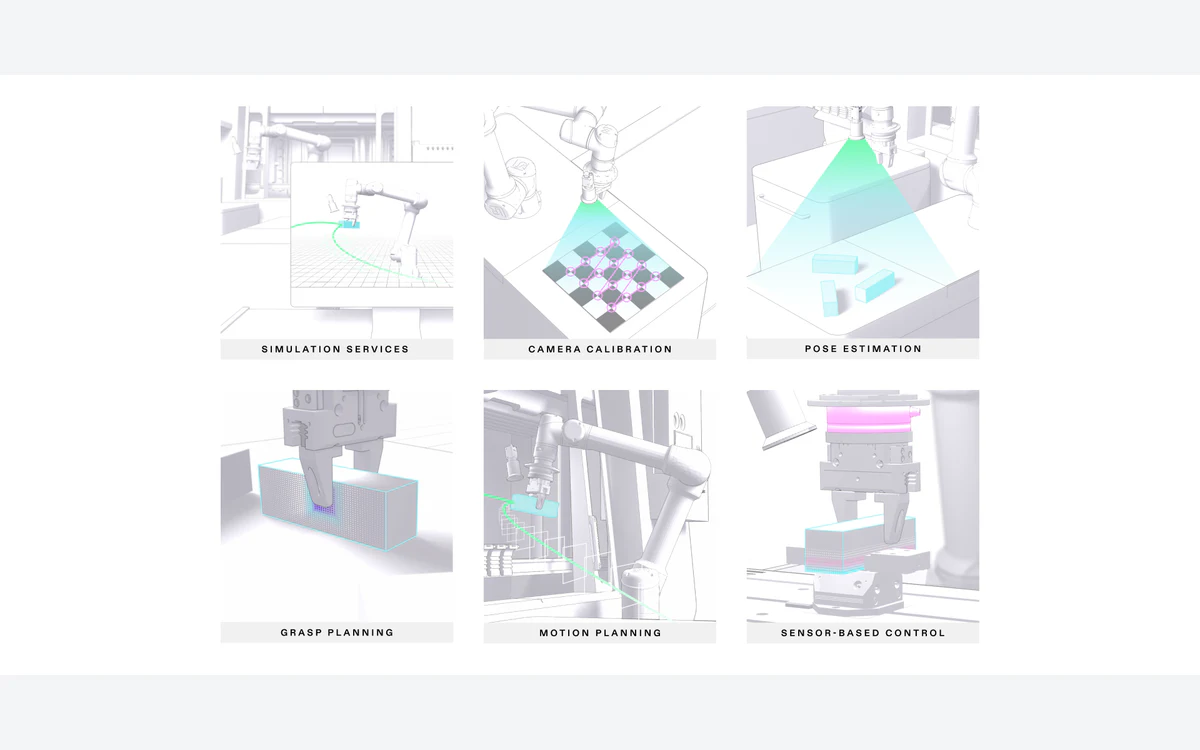
- Intrinsic Control (ICON) - a hardware-agnostic, real-time control framework with sensor-based, adaptive behavior.
- Pose estimation - 6-DoF part detection built on NVIDIA FoundationPose.
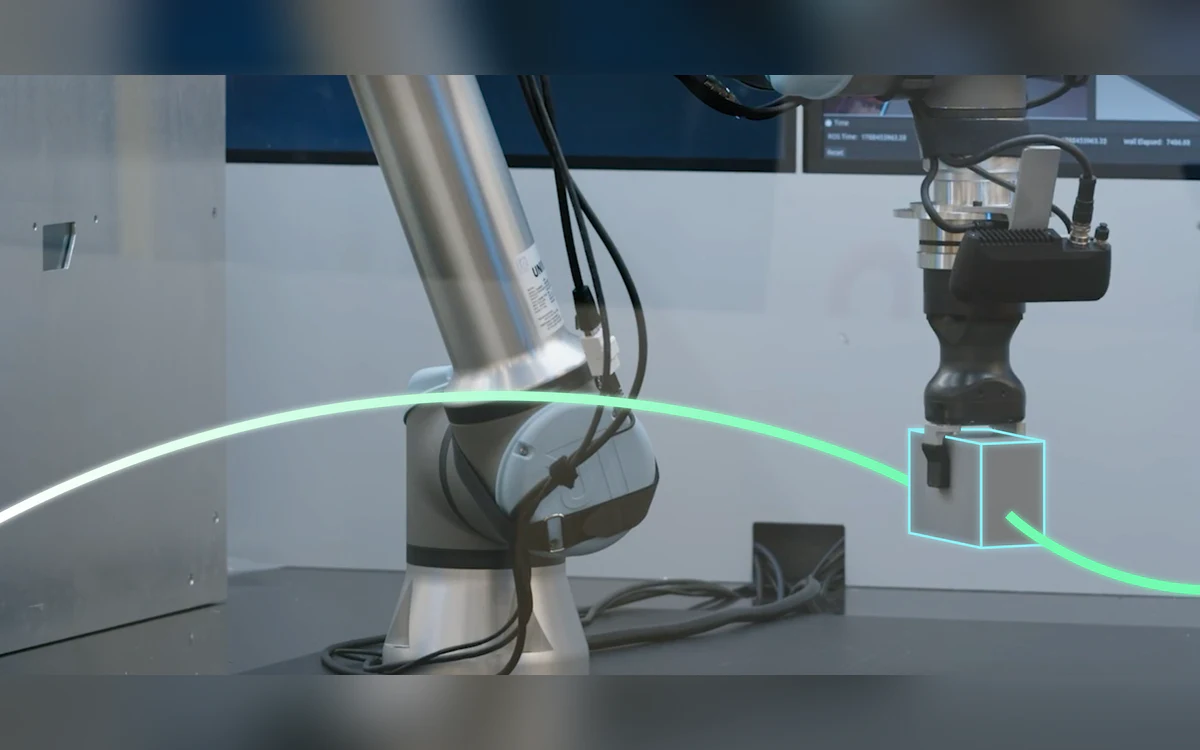
- Motion planning - generation of collision-free paths.
- Grasp planning - adapts the gripper using live sensor feedback.
- Simulation services powered by Gazebo.
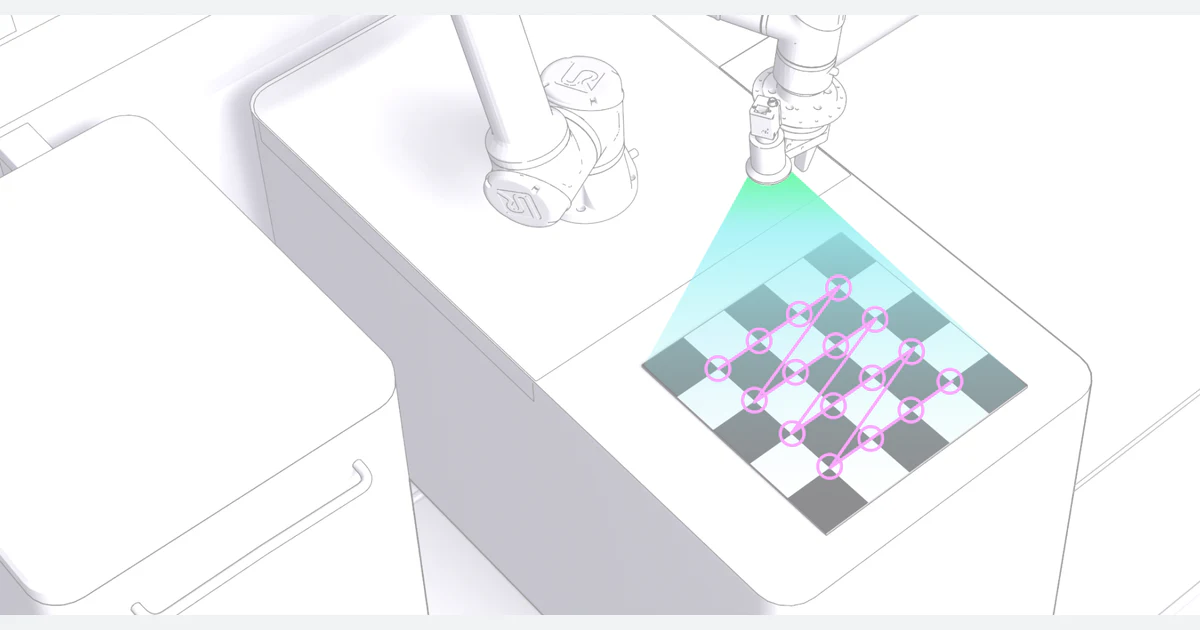
- Automated camera calibration.
- Pre-configured Intrinsic-ROS drivers for robots, grippers and cameras.
How the code is organized
The GitHub repository (github.com/intrinsic-ai/intrinsic-core) splits the platform into modules that map closely to the capabilities above:
- intrinsic_runtime - a local execution engine that runs components as k3s containers.
- intrinsic_control - the ICON real-time control framework.
- intrinsic_motion_planning - collision-free path planning.
- intrinsic_perception - perception services, including 6-DoF pose estimation.
- intrinsic_inference - ML model serving at the edge.
- intrinsic_sdk and intrinsic_apis - the developer SDK and service interfaces.
- intrinsic_hardware - device drivers.
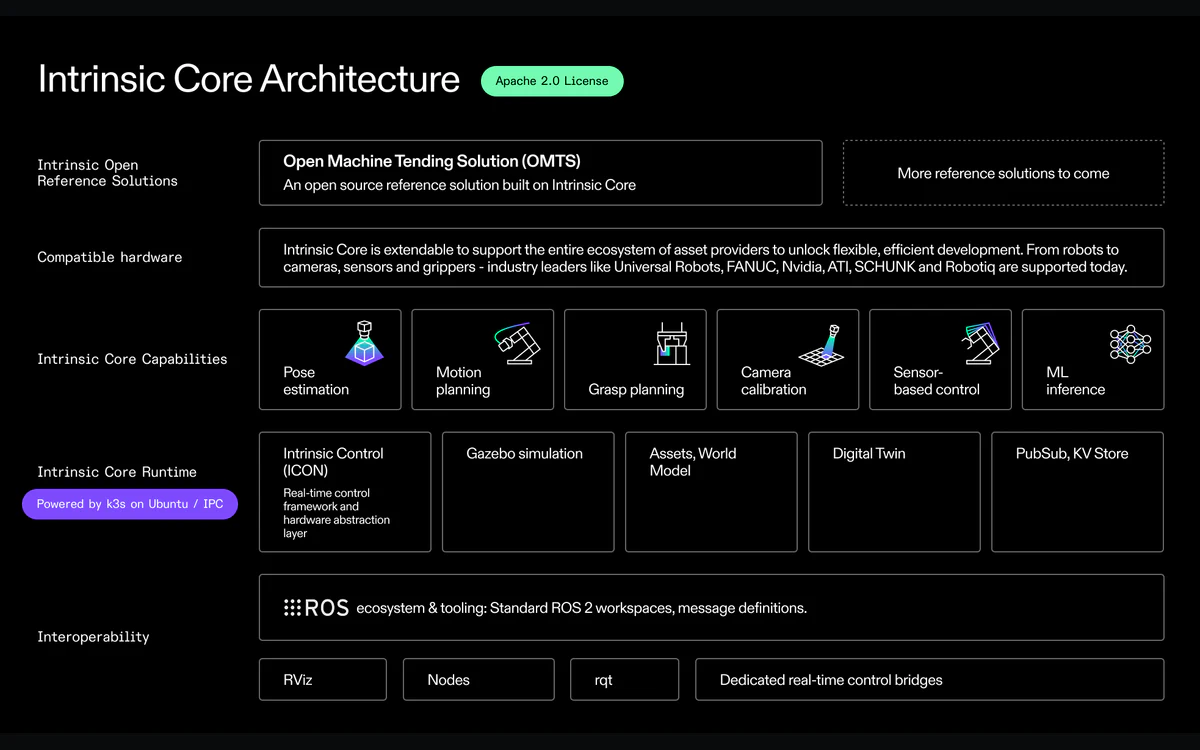
Everything runs on local hardware in a pre-configured software environment. Supported operating systems are Ubuntu 22.04 LTS, 24.04 LTS and 26.04 LTS, and the project targets the ROS 2 Lyrical Luth distribution. The first release is tagged 20260922.0.
An open reference design for CNC machine tending
Alongside the core, Intrinsic released the Open Machine Tending Solution (OMTS), an open, industrial-grade reference design for AI-enabled CNC machine tending. Machine tending - loading raw parts into a CNC machine and unloading finished ones - is one of the most common jobs small and mid-sized shops try to automate.
OMTS runs on both Intrinsic Core and the Open Robotics Suite and supports FANUC and Universal Robots hardware. It is a reference design rather than a product for sale: Intrinsic positions it as a customizable starting point for fabricators and machine shops. Coverage of the launch names NVIDIA, FANUC, ATI, Schunk, Robotiq and Basler as part of the partner ecosystem around it.
Why it matters
Industrial robot applications have long been built on vendor-specific controllers and custom integration code, which keeps automation expensive for smaller manufacturers. By releasing production-tested building blocks under Apache 2.0, Intrinsic lowers the cost of getting a working cell off the ground and lets integrators reuse the same perception, planning and control stack across different robot brands.
It is also a bet on ROS 2 as the common layer for industrial work. Shipping ROS-compatible capabilities and ready-made drivers makes Intrinsic Core easier to slot into the existing ROS ecosystem than a closed platform would be.
The commercial path
Intrinsic Core works alongside Flowstate, Intrinsic's enterprise offering. Intrinsic says projects can move from the open source core to its enterprise services without refactoring.
Early interest is visible: the repository gathered about 300 GitHub stars within days of launch.
Frequently asked questions
Is Intrinsic Core free?
Yes. It is open source under the Apache 2.0 license, and Intrinsic has not announced any pricing for the core.
Does it need the cloud?
No. Intrinsic Core runs on local hardware, using a local runtime built on k3s containers.
Which operating systems and ROS version does it support?
Ubuntu 22.04 LTS, 24.04 LTS or 26.04 LTS, with the ROS 2 Lyrical Luth distribution.
Which robots does it work with?
The control framework is hardware-agnostic and ships with pre-configured Intrinsic-ROS drivers for robots, grippers and cameras. The OMTS reference design specifically supports FANUC and Universal Robots hardware.
How does it relate to Flowstate?
Flowstate is Intrinsic's enterprise offering. Intrinsic Core works alongside it, and Intrinsic says moving to its enterprise services requires no refactoring.
Sources
- Intrinsic blog - Introducing Intrinsic Core: https://www.intrinsic.ai/blog/posts/introducing-intrinsic-core
- GitHub - intrinsic-ai/intrinsic-core: https://github.com/intrinsic-ai/intrinsic-core
- Unite.AI - Intrinsic open-sources core robotics capabilities at ROSCon 2026: https://www.unite.ai/intrinsic-open-sources-core-robotics-capabilities-at-roscon-2026/
- The Robot Report - Intrinsic open-sources key parts of its platform: https://www.therobotreport.com/intrinsic-open-sources-key-parts-platform-easier-development/
Key takeaways
- Intrinsic open-sourced Intrinsic Core on September 22, 2026 at ROSCon 2026, under Apache 2.0.
- It includes real-time control (ICON), motion and grasp planning, 6-DoF pose estimation on NVIDIA FoundationPose, Gazebo simulation, camera calibration and ROS drivers.
- It runs locally on Ubuntu 22.04, 24.04 or 26.04 with ROS 2 Lyrical Luth.
- The Open Machine Tending Solution is a free reference design for CNC machine tending on FANUC and Universal Robots hardware.
- Projects can move up to Intrinsic's enterprise Flowstate platform without refactoring.
More in Tech News
Browse Tech News