Meta Connect 2026: VR Glasses, Camera-Free Ray-Ban Meta Audio and Muse on Your Face
Meta unveiled 100-gram VR Glasses at $1,299.99, its first camera-free Ray-Ban Meta Audio at $349, Ray-Ban Meta Gen 3 at $449 and plans to bring its Muse AI agent to glasses.

Meta used its Connect 2026 keynote on September 23 to turn its AI glasses into a full device family, and to make its personal AI agent, Muse, the thing that ties them together. The lineup now runs from a $249 pair of Meta Glasses to a $1,299.99 VR headset shaped like a pair of glasses.
Mark Zuckerberg put it plainly on stage: "The centerpiece of our vision for what we're building is Muse." Here is everything Meta announced, what it costs and when it ships.
What Meta announced at Connect 2026
- Meta VR Glasses: a roughly 100-gram VR headset in a glasses form factor, $1,299.99, coming spring 2027.
- Ray-Ban Meta Audio: Meta's first AI glasses without a camera, from $349, shipping October 13.
- Ray-Ban Meta (Gen 3): a new camera model with longer battery life, from $449, available now.
- Muse on glasses: Meta's AI agent is coming to AI glasses hands-free "in the coming months".
- Muse Charm: a pocket-sized Muse device, with no price or date yet.
- Hearing enhancement: FDA-cleared software for Meta glasses, $149.99, launching in the US later this year.
Meta's own summary of the event was "We're building personal AI agents for everyone and a whole family of devices". The prices announced this week span from $249 to $1,299.99, which says a lot about how broad that bet is.
Meta VR Glasses: 100 grams and a tethered puck
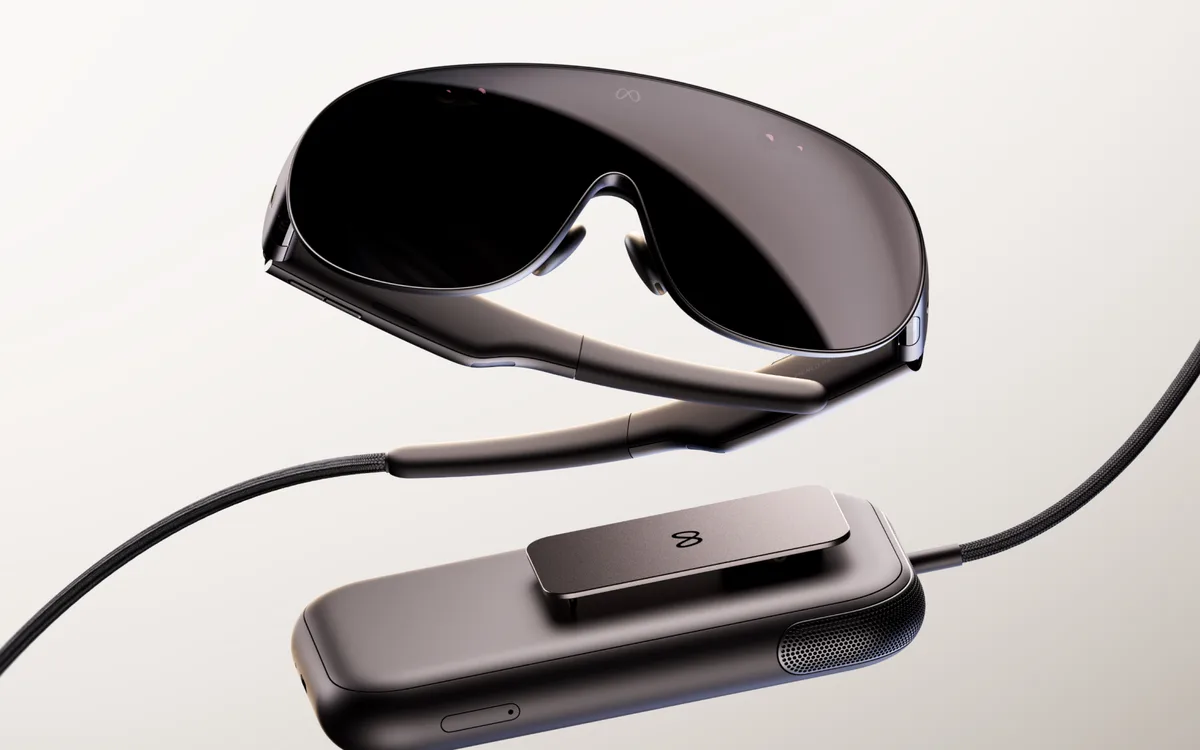
The headline device is Meta VR Glasses. Meta says they weigh about 100 grams, roughly the same as a deck of cards, and are five times lighter than Meta Quest 3. They get there by splitting the hardware in two: the glasses sit on your face, and a separate puck connected by an optical tether holds the compute, battery and storage. They are not a standalone headset.
Inside the frames is what Meta calls a 5K Infinite Display built on micro-OLED panels with 37 pixels per degree, behind ultra-compact pancake lenses. The system runs on Qualcomm's Snapdragon Reality Elite chip and supports Dolby Vision, with Dolby Atmos spatial audio built into the frames. Meta quotes up to three hours of continuous high-resolution media playback and 45W fast charging.
There are no controllers. You drive the device with your voice, eye tracking and hand gestures, and the Meta AI agent is built into the operating system. Full-color passthrough, a multi-screen workspace that turns a flat surface into a keyboard and touchpad, and hologram calling round out the productivity side.
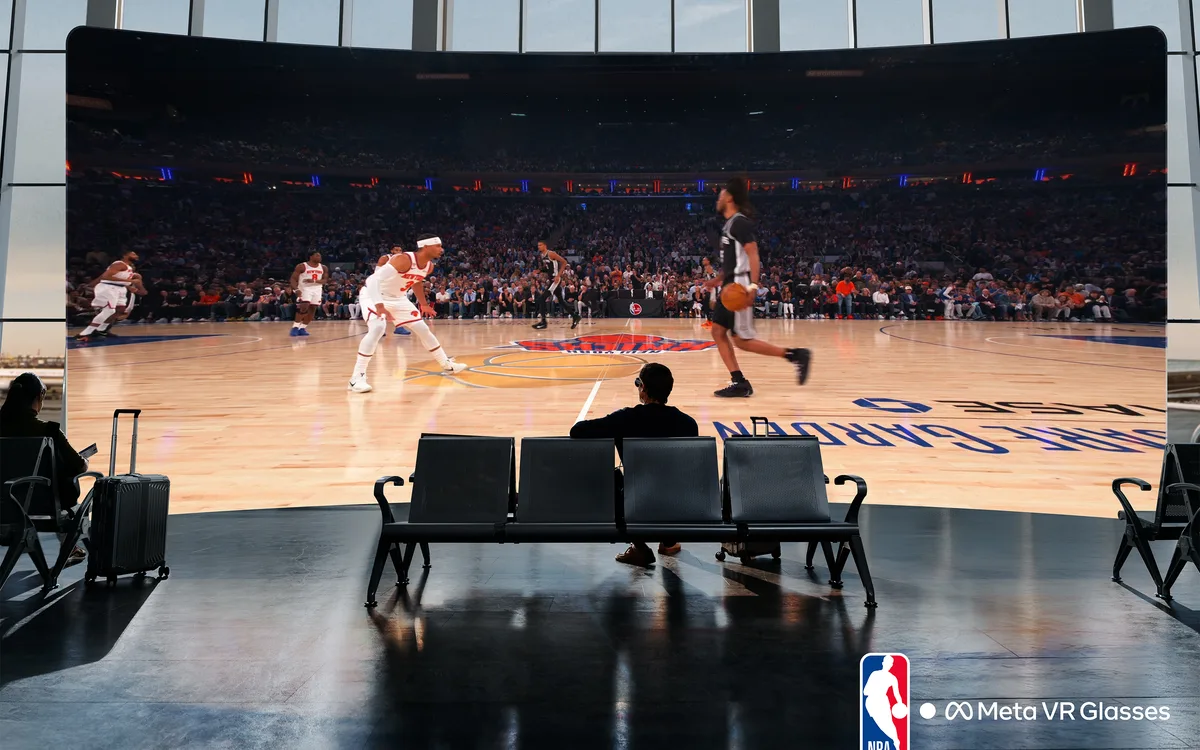
Entertainment is the main pitch. Meta VR Glasses are the first IMAX Enhanced certified VR device, launch with more than 75 games and support Xbox Cloud Gaming. Meta also promises over 100 immersive live sports events a year with ESPN, MLB, NBC Sports, TNT Sports and UFC, and lists Disney+, Prime Video, YouTube, DIRECTV, AMC+, Crunchyroll, Plex, ESPN, Peacock, HBO Max, Paramount+ and Tubi as media partners.
Not this year
Meta VR Glasses cost $1,299.99 and are listed as coming spring 2027. Nothing was announced about pre-orders.
Ray-Ban Meta Audio and Ray-Ban Meta Gen 3
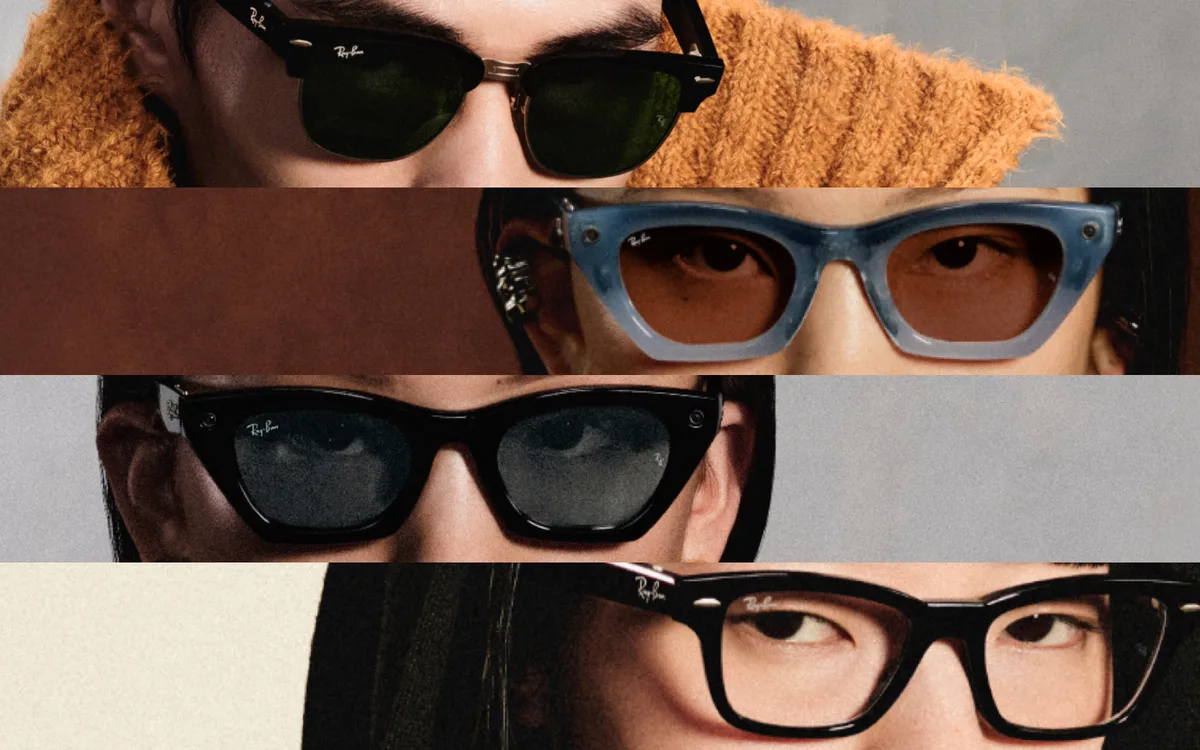
Ray-Ban Meta Audio is the more surprising launch: Meta's first AI glasses with no camera at all. They keep the open speakers, microphones and Meta AI, and Meta calls them its lightest and slimmest AI glasses yet at 43 grams. Battery life is up to 12 hours per charge, plus 48 hours from the case. They come in Clubmaster and Burbank styles with 23 color and lens combinations, work with prescription lenses and have swappable nose pads. Pricing starts at $349, pre-orders are open, and they ship October 13.
Dropping the camera is a notable choice. Meta itself only describes them as its first glasses without a camera, but for buyers who want an AI assistant in their ears without pointing a lens at everyone around them, that is the obvious appeal.
For people who do want a camera, the Ray-Ban Meta (Gen 3) is on sale now from $449. It gets up to 9 hours of battery, one hour more than Gen 2, a 12 MP camera with 3K Ultra HD video, and a 6-mic array that Meta says cuts more than 90% of background noise. A new customizable action button calls up Meta AI. Styles are Aviator, Zena and Wayfarer, in 27 color and lens combinations.
Meta also says its AI glasses will be the first consumer devices that let users capture and experience videos in Dolby Atmos with 360-degree spatial sound.
Cheaper Meta Glasses and celebrity editions
At the bottom of the range, the Meta Adventurer in black and grey starts at $249, is up for pre-order now and goes on sale October 23. Meta also added Capri and Nova styles, a Kylie Jenner edition in Ivory at $399, and a LISA Edition, Meta's first international collaboration, in two styles at $399 each.

"We're building AI glasses for everyone," Meta wrote. By the end of the year it expects to offer more than 100 different glasses options across Ray-Ban, Oakley and Meta Glasses.
Availability is widening too. AI glasses are on sale now in Singapore, South Korea, Mexico and the UAE, with Brazil next. Later in 2026 they reach Turkey, Poland, Portugal, Israel, South Africa, Indonesia, Thailand, Hong Kong, New Zealand, Malaysia and the Philippines.
Muse comes to glasses, plus Muse Charm
Muse is not new. Meta launched it on September 8, 2026 as a personal AI agent that "doesn't just answer questions, it actually does the work", powered by the Muse Spark model and running in a per-user cloud VM. It is rolling out in the US on iOS, Android and muse.ai, with a free basic tier and paid plans.
What Connect added is Muse on AI glasses "in the coming months", hands-free by voice and able to recognize what is in your field of view. "You'll soon be able to say your agent's name, and Muse can act on what you're looking at," Meta said.
Muse also gets new connectors for Walmart, Best Buy, American Eagle, DICK'S Sporting Goods, Fanatics, Gap, Michael Kors, Sephora, Ulta, Wayfair, Shop Pay, PayPal, Instacart, Notion, Granola, GitHub and Box, with Expedia coming soon. According to TechCrunch, it also picks up a Realtime Avatar model for live video chat and Mac desktop control, and Meta's developer program drew more than 1,500 connector applications in under a week.
The shopping connectors fit Zuckerberg's business model for Muse. "We're standing behind this by making Muse free for a huge number of tokens, with the expectation that over time we will profit by taking a small fee from transactions," he said.
Muse Charm
Muse Charm is a pocket-sized device built around a real-time voice model. Meta gave no price or release date, only "More to share later this year". ForkLog describes it as a palm-sized device that attaches to a keychain, with a small screen showing a digital character called Jolly and a fingerprint scanner that starts a conversation with Muse on touch. ForkLog also reports a December holiday target, which Meta has not confirmed.
Hearing enhancement and Meta Ray-Ban Display updates
Meta announced hearing enhancement software for its glasses that is FDA-cleared for mild to moderate hearing loss. It costs $149.99 (HSA and FSA eligible) or comes with a Meta One subscription, sets up at home in minutes with no clinic or prescription needed, and launches in the US later this year. It is software for the glasses, not a separate hearing aid. The update also adds left and right audio balance and mono audio.
Meta Ray-Ban Display gains hands-free navigation, a personalized hologram for video calls and Dolby Atmos. It is expanding to the UK, Canada, France, Italy and Germany, and online ordering is now available.
Prices and release dates
- Meta Adventurer (Meta Glasses): from $249, pre-order now, on sale October 23.
- Ray-Ban Meta Audio: from $349, pre-order now, ships October 13.
- Kylie Jenner edition (Ivory) and LISA Edition: $399 each.
- Ray-Ban Meta (Gen 3): from $449, available now.
- Hearing enhancement software: $149.99 or via Meta One, US, later this year.
- Meta VR Glasses: $1,299.99, spring 2027.
- Muse Charm: no price or date announced.
All prices are Meta's US starting prices.
Why it matters
Last year's Connect was about proving that people would wear AI glasses. This year's is about what they are for. Almost every announcement points back to Muse: glasses that can see what you see, a keychain gadget for talking to it, and a VR headset with the agent built into the operating system. Zuckerberg said he expects Muse to "grow into the personal superintelligence that billions of people around the world are going to use".
The spread of hardware also hedges that bet. A camera-free $349 pair answers the privacy objection to camera glasses, the $249 Adventurer lowers the entry price, and the $1,299.99 VR Glasses aim at people who want a big screen without a heavy headset. The biggest of those devices is still months away, and Muse on glasses has no firm date, so the next few months will show how much of the plan actually ships.
Sources
- Meta Newsroom, The biggest news from Connect 2026: https://about.fb.com/news/2026/09/the-biggest-news-from-connect-2026/
- Meta Newsroom, Introducing Meta VR Glasses: https://about.fb.com/news/2026/09/introducing-meta-vr-glasses-3d-movies-immersive-live-sports-100-grams/
- Meta Newsroom, Introducing Ray-Ban Meta Audio glasses: https://about.fb.com/news/2026/09/introducing-ray-ban-meta-audio-glasses-new-styles-plus-muse/
- Meta Newsroom, Introducing Muse: https://about.fb.com/news/2026/09/introducing-muse-personal-ai-agent/
- TechCrunch, Everything new coming to Meta's AI agent Muse: https://techcrunch.com/2026/09/23/everything-new-coming-to-metas-ai-agent-muse/
- ForkLog, Meta unveils new AI devices at Connect 2026: https://forklog.com/en/meta-unveils-new-ai-devices-at-connect-2026/
Key takeaways
- Meta VR Glasses weigh about 100 grams, use a tethered puck for compute and battery, and cost $1,299.99 in spring 2027.
- Ray-Ban Meta Audio is Meta's first camera-free AI glasses: $349, 43 grams, shipping October 13.
- Ray-Ban Meta Gen 3 is on sale now from $449 with up to 9 hours of battery and a 12 MP camera.
- Muse is coming to AI glasses hands-free in the coming months; Muse Charm has no price or date yet.
- FDA-cleared hearing enhancement software for Meta glasses costs $149.99 and launches in the US later this year.
More in Tech News
Browse Tech News