V2Ray Review 2026: Is Project V Still Worth Running?
V2Ray review for 2026: why v2ray.com is a frozen 2019 manual, what V2Fly v5 offers, the September QUIC fix, best clients and how it compares with Xray.

Type v2ray.com into a browser in late 2026 and you land on a tidy GitBook manual for "Project V". It looks official, it loads fine, and its version history stops at v4.18 on 1 March 2019. Nothing on the page tells you that the project moved years ago.
The living project is V2Fly: github.com/v2fly/v2ray-core and the docs at v2fly.org. It shipped a QUIC handshake fix in September 2026, an iOS client bundle and WireGuard chain proxy support, and a maintenance release on 20 October 2026. This review covers what V2Ray is, which build to trust, how setup works, which clients to pair it with, and the real risks of running it today.
V2Ray is free MIT-licensed software. There is no price, plan, trial or refund. Your real cost is the server you run it on and the time you spend configuring it.
What V2Ray actually is
V2Ray is the core tool of Project V, which the original site describes as "a set of tools that helps you build your own dedicated basic communication network". The GitHub description is blunter: "A platform for building proxies to bypass network restrictions." It is written in Go, licensed under MIT, and its first release (0.1) dates to 18 September 2015.
It is not a VPN service. There is no company running servers for you, no account, no logging policy and no audit to read. You install the core on a server you control, install a client on your devices, and the two talk over whatever protocol and transport you configure.
- Protocols: VMess (its primary protocol), VLESS, Trojan, Shadowsocks, SOCKS and HTTP.
- Transports: TCP, mKCP, QUIC, gRPC and WebSocket, chosen per protocol.
- Multiple inbounds and outbounds running in parallel in one process.
- Native builds for Windows, macOS and Linux; mobile support comes from third-party clients.
What you find at v2ray.com today
Both v2ray.com and www.v2ray.com return the original "Project V official site" with no redirect to v2fly.org (checked 30 October 2026). The footer says it is generated by GitBook and hosted on GitHub, with edits going to github.com/v2ray/manual. It is offered in Chinese, English, Russian, Korean, Persian and Vietnamese, and still lists v2net as a sponsor.
The English homepage lists the familiar features - parallel inbound and outbound proxies, routing by region or domain, TLS-based obfuscation that can sit alongside a web server, and a reverse proxy for reaching localhost - but shows no version number and never mentions V2Fly or v5. The changelog runs from v1.7 (8 February 2016) to v4.18 (1 March 2019), and nothing warns you that it is frozen.
Use v2fly.org, not v2ray.com
v2ray.com is not a scam and not dead - it is simply the 2019 manual. For current docs, configs and binaries use www.v2fly.org and github.com/v2fly/v2ray-core. The old github.com/v2ray/v2ray-core repo itself carries the notice "Move To https://github.com/v2fly/v2ray-core".
Why the project moved
In February 2019 the founder, Victoria Raymond, suddenly disappeared and their public accounts stopped updating; the GitHub account made a last commit in November 2019. The open-source community reorganized as V2Fly and carried on. The same year, on 25 March 2019, a Beijing Institute of Technology professor and two students filed a patent on V2Ray traffic identification; its status changed to "withdrawn after publication" on 25 October 2019.
In November 2020 V2Fly removed XTLS from v2ray-core, citing reasons including open-source licensing. The VLESS and XTLS authors formed Project X and released Xray 1.0.0 on 25 November 2020 under MPL 2.0. That split is why "V2Ray" today can mean either the V2Fly core or, loosely, the whole family of compatible cores and clients.
Features and protocols in V2Fly v5
The v2fly.org feature list is broader than the old site. Each protocol can run over its own transport, nodes can imitate normal HTTPS websites, packets can be obfuscated, and replay protection is built in. Load balancing supports probing and weighted algorithms, so a client can spread traffic across several servers and drop a dead one.
- Stealth: run VMess, VLESS or Trojan behind TLS so the server looks like an ordinary website.
- Routing: send domestic or private traffic direct and only proxy what you need, using the community geosite and geoip lists (v2fly/domain-list-community is still packaged, for example in Arch Linux builds dated July and October 2026).
- Reverse proxy: expose a service behind NAT through a server you control.
- Unusual transports: v5.51.0 (18 May 2026) added "a new transport based on Tunneling with Google Docs Viewer".
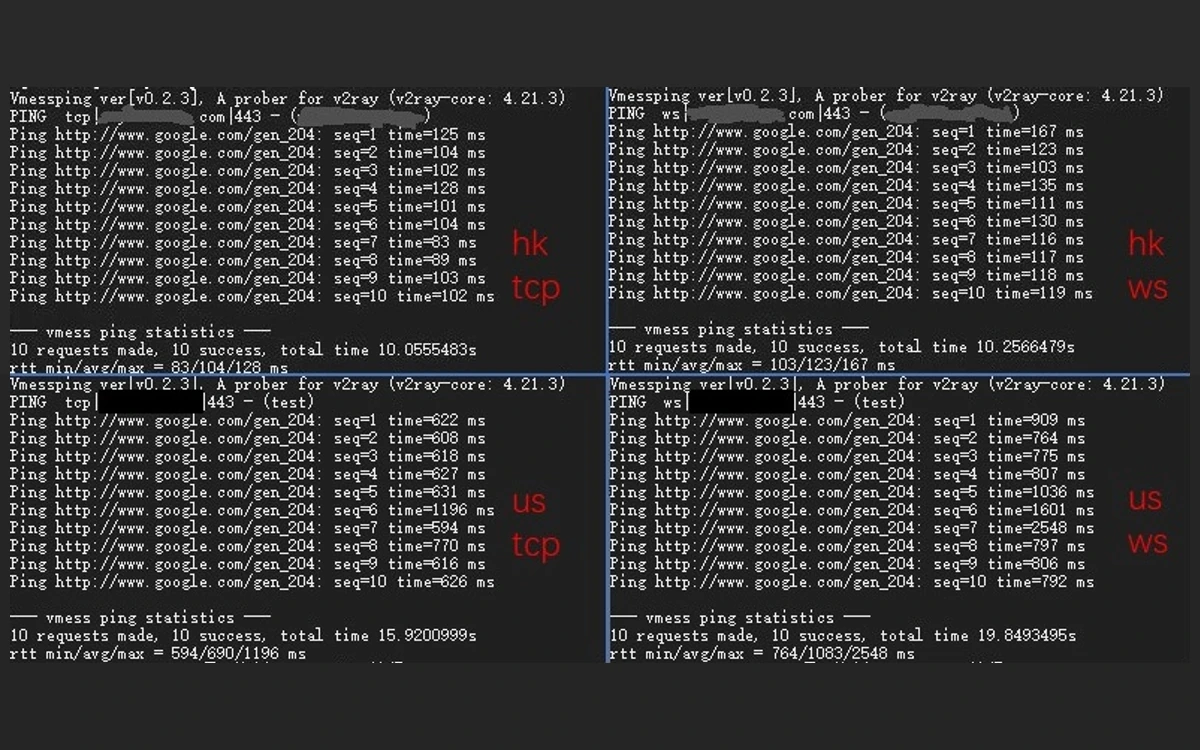
Transport choice has a visible cost. In an older test published in the V2Fly community guide, VMess over plain TCP averaged 104 ms to a Hong Kong server versus 123 ms over WebSocket, and 690 ms versus 1083 ms to a US server. WebSocket buys you CDN and web-server compatibility; it is not free.
Routing and reverse proxy in practice
Most of V2Ray's power, and most of its learning curve, sits in the routing block. Every connection enters through an inbound, is matched against rules (domain, IP, port, protocol or traffic attributes), and leaves through a tagged outbound - a proxy, a direct "freedom" outbound, or a blackhole.
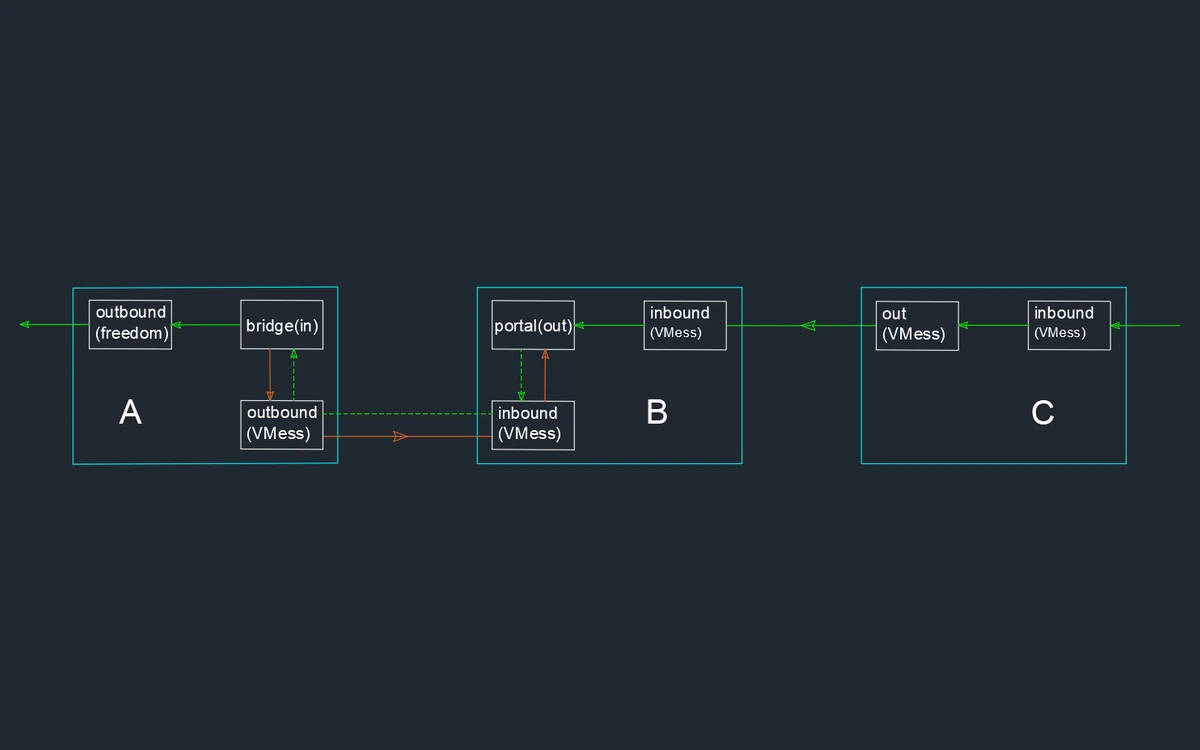
The reverse proxy uses the same pieces: a bridge on the machine behind NAT dials out to a portal on your public server, and the portal hands incoming connections back down that tunnel. It works, but it is configuration by diagram, and you will want the community guide open while you write it.
Release activity in 2026 and the QUIC fix
V2Fly is not abandoned. It shipped more than nine releases in 2026, including v5.52.0 (7 July), v5.53.0 (2 August), v5.54.0 to v5.54.2 (20 to 22 September) and v5.55.0 (20 October). As of 30 October 2026, GitHub marks v5.53.0 as "Latest"; everything from v5.54.0 onward is tagged pre-release.
The important one is v5.54.2. Its notes say it "fixes an issue with quic transport where it sends V2Ray specific handshake parameters that differs from quic-go defaults" - in other words, a QUIC fingerprint that set V2Ray traffic apart. No CVE is listed. The release also sets safe QUIC defaults on client and server and temporarily accepts clients with a mismatched ALPN.
If you use the QUIC transport
Update the server first. V2Fly says: "Please update the server first to allow connections from both older and latest clients with a transition graceful period." The transition lasts until v5.61.0, or you can end it immediately by setting the QUIC transport's server alpn to h3. Because the fix lives in a pre-release, QUIC users should deliberately pick v5.54.2 or later rather than the "Latest" badge.
The same September releases added an iOS client support bundle (packet bridge receiver, subscription and DNS/UDP improvements) and WireGuard chain proxy support. v5.53.0 brought stream-based packet addressing for UDP and a socks5ify command.
Then came v5.55.0 on 20 October, described as "a maintenance release containing security updates for end users". Its only listed change is machine-generated dependency updates, and the notes say those changes "will subject to review and changes once the maintainer recovers from temporary incapacitation and is not covered by API stability policies." That is an honest note, and a clear sign of how few people keep the core moving.
Installation and setup
The core is a command-line program with no official GUI. Official binaries cover Windows (32-bit, 64-bit, arm64), macOS (Intel and Apple Silicon), a long list of Linux architectures from arm32 to riscv64 and loong64, FreeBSD, OpenBSD, DragonFly and android-arm64-v8a.
On systemd Linux distributions (Debian, CentOS, Fedora, openSUSE) the V2Fly install script is the usual route:
bash <(curl -L https://raw.githubusercontent.com/v2fly/fhs-install-v2ray/master/install-release.sh)- Binary: /usr/local/bin/v2ray; routing data: /usr/local/share/v2ray/geoip.dat and geosite.dat.
- Config: /usr/local/etc/v2ray/config.json - the script does not create it for you.
- Logs: /var/log/v2ray/; service unit: /etc/systemd/system/v2ray.service.
- install-dat-release.sh updates only the routing data; adding --remove uninstalls. Docker users should use the official image instead.
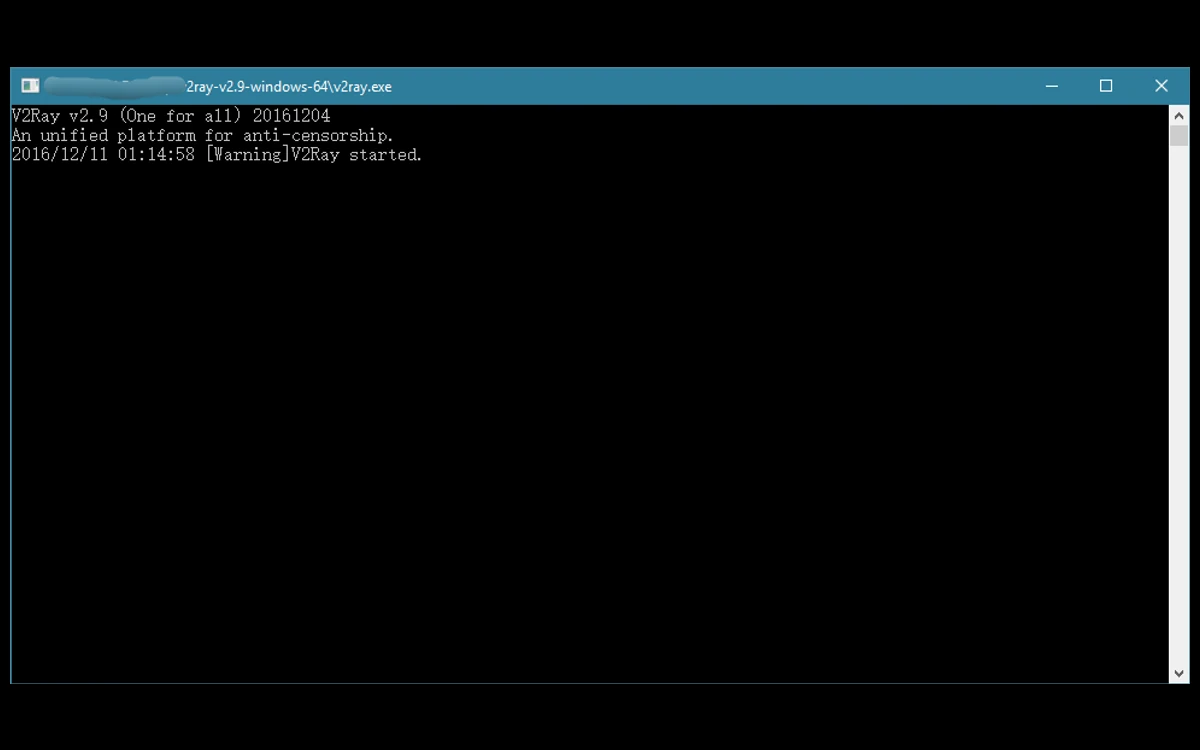
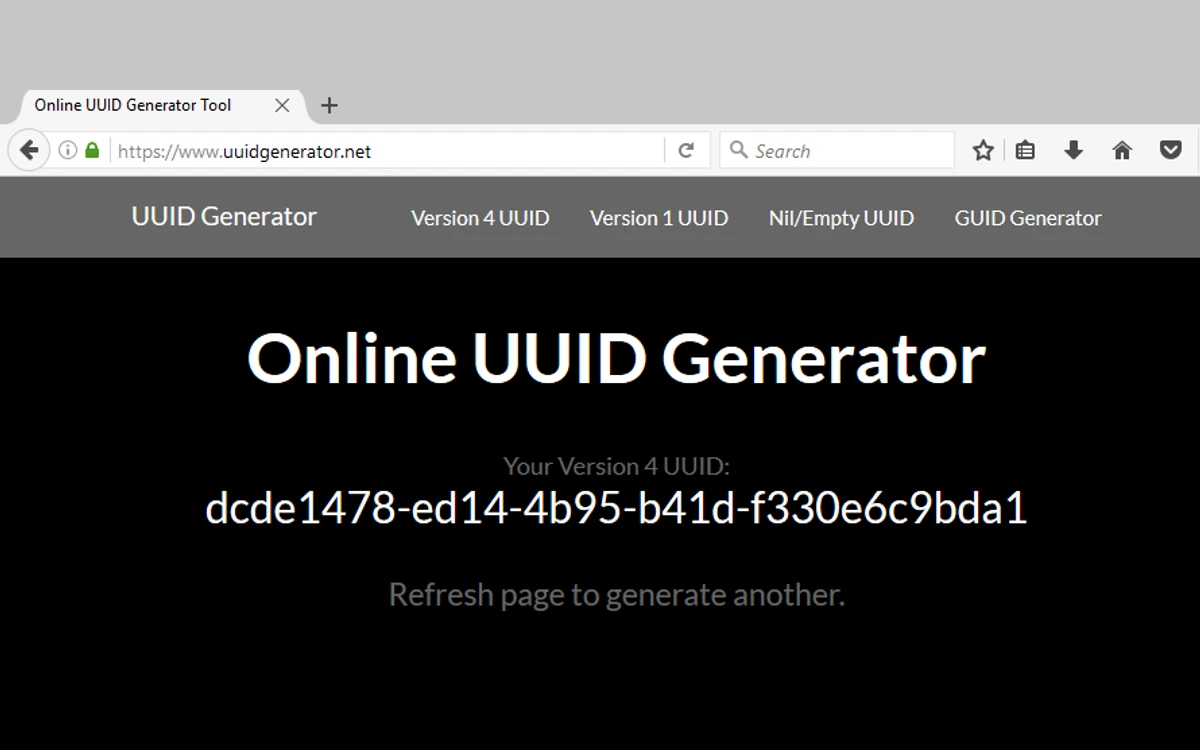
The quick start on v2fly.org gives a minimal pair: a server with a VMess inbound on port 10086 and one client ID, and a client with a local SOCKS inbound on 127.0.0.1:1080 that forwards to the server and routes private IPs direct. In the docs' words, "the only place to change the above configuration is your server IP" - plus a fresh UUID for the client ID, which any UUID generator will give you.
v4 or v5 config?
This is where the docs trip people up. The v5 JSON format "is designed to replace the previous version of configuration format", but the docs also say it is "in the drafting phase, and may change at any time", and the navigation labels it "Config Reference (v5, WIP)". The v4 reference is still published, and the quick start uses the older v2ray --config= syntax. To run a v5 file, the docs give:
Clients for Windows, Android and iOS
Most people never touch the core directly; they import a share link or subscription into a GUI client. The two big ones come from the same developer and are both GPL-3.0:
- v2rayN (Windows, Linux, macOS): "A GUI client for Windows, Linux and macOS, support Xray and sing-box and others". Version 7.25.6 (11 October 2026) bundles Xray-core v26.10.10 and sing-box v1.14, not the V2Fly core.
- v2rayNG (Android 7.0 and later, API 24+): "A V2Ray client for Android, support Xray core and v2fly core". Download it from its GitHub Releases page.
- iOS: v5.54 added an iOS client support bundle to the core, but V2Fly publishes no iOS app of its own; you need a third-party client.
The practical upshot: the most popular "V2Ray" client on desktop no longer runs V2Ray's own core. Your V2Fly server will still talk to it for shared protocols like VMess, VLESS, Trojan and Shadowsocks, but check that your transport is supported on both ends.
V2Ray vs Xray and sing-box
Xray-core describes itself as "Also the best v2ray-core" and was forked from V2Fly at commit 9a03cc5. It is MPL-2.0 and adds REALITY and XTLS Vision (VLESS-TCP-XTLS-Vision), which V2Fly does not offer. It also ships fast: v26.10.21 (21 October 2026) was an emergency update removing three root certificates whose Indian intermediate keys were found too weak, and v26.10.29 followed on 29 October.
- Pick V2Fly if you want the MIT-licensed original, a conservative feature set, unusual transports, or an existing VMess setup that already works.
- Pick Xray if you want REALITY or XTLS Vision, or simply the core your GUI client already bundles.
- Consider sing-box if you want one modern core across many clients; v2rayN now ships it alongside Xray.
If you only need a simple encrypted proxy, our Shadowsocks review covers a lighter option, including the v2ray-plugin that lets Shadowsocks borrow V2Ray-style transports.
Risks and limitations
- Bus factor: the v5.55.0 notes openly say machine-generated changes await review until the maintainer recovers. A core this important resting on so few people is a real risk.
- Stale and split docs: v2ray.com is frozen at 2019, v5 config is still marked WIP, and many tutorials online target v4.
- Pre-release confusion: the QUIC fix is not in the build GitHub labels "Latest".
- No guarantees: there is no company, audit or no-logs promise. Your privacy depends on your server, your host and your configuration.
- Detection: researchers have studied V2Ray traffic identification since at least 2019, and the September 2026 QUIC fingerprint fix shows details still matter.
- Legal risk: running a proxy is legal in most countries, but users in restrictive jurisdictions face real legal risk. Know your local law.
Verdict
V2Ray is still worth running in 2026 if you are comfortable with JSON, a Linux server and reading release notes. V2Fly v5 is flexible, free, actively released and MIT-licensed, and Wikipedia cites the South China Morning Post describing V2Ray as a reliable option for many technically skilled or paying users in China.
Get it from v2fly.org and github.com/v2fly, not the frozen manual at v2ray.com. Take v5.54.2 or later if you use QUIC, updating the server first. And go in aware that the wider ecosystem has drifted toward Xray and sing-box, while the V2Fly core itself depends on a very small team.
Frequently asked questions
Is V2Ray free?
Yes. V2Ray is free, open-source software under the MIT license with no plans, trials or subscriptions. You pay only for the server or VPS you run it on.
Is v2ray.com the official site?
It is the original Project V site, but it is a frozen 2019 manual. Its changelog ends at v4.18 (1 March 2019); current docs and downloads are at v2fly.org and github.com/v2fly/v2ray-core.
Is V2Ray a VPN?
No. It is a proxy platform you run on your own server, not a VPN service. There are no provider servers, accounts or logging policies - you control all of that yourself.
What is the difference between V2Ray and Xray?
Xray is a fork of V2Fly's core made in 2020 by the VLESS and XTLS authors. It adds REALITY and XTLS Vision and is licensed MPL-2.0, while V2Fly stays MIT-licensed without those features.
Which V2Ray client should I use on Windows, Android or iOS?
On Windows, Linux and macOS, v2rayN is the most popular choice, though it now bundles Xray-core and sing-box. On Android, v2rayNG supports both Xray and V2Fly cores. On iOS there is no official app; use a third-party client.
Does V2Ray work in China?
It was built to bypass network restrictions and is widely cited as reliable for technically skilled users in China, but nothing guarantees it keeps working. Detection research exists, and using it there carries legal risk.
How do I update safely after the September 2026 QUIC fix?
Update the server to v5.54.2 or later first, then the clients. The server accepts old and new clients until v5.61.0, or you can end the transition at once by setting the QUIC server alpn to h3.
Should I use the v4 or v5 config format?
v4 is the safer default for now because v5 JSON is still marked as drafting and may change. If you use v5, run it with -format jsonv5 as the docs show.
Key takeaways
- v2ray.com is a frozen 2019 manual (last entry v4.18); use v2fly.org and github.com/v2fly for current builds.
- V2Ray is free MIT-licensed proxy software, not a VPN service - you run and secure the server yourself.
- QUIC users should run v5.54.2 or later, updating the server first; it is still tagged pre-release.
- Popular clients like v2rayN now bundle Xray and sing-box; Xray adds REALITY and XTLS Vision.
- The v5.55.0 notes reveal a thin maintainer bench - a real long-term risk.
More in Virtual Private Network
Browse Virtual Private Network