GitHub Copilot Review 2026: Features, Workflow and Limits
A practical GitHub Copilot review covering coding assistance, agent workflows, plans, security, limitations, and who should use it.
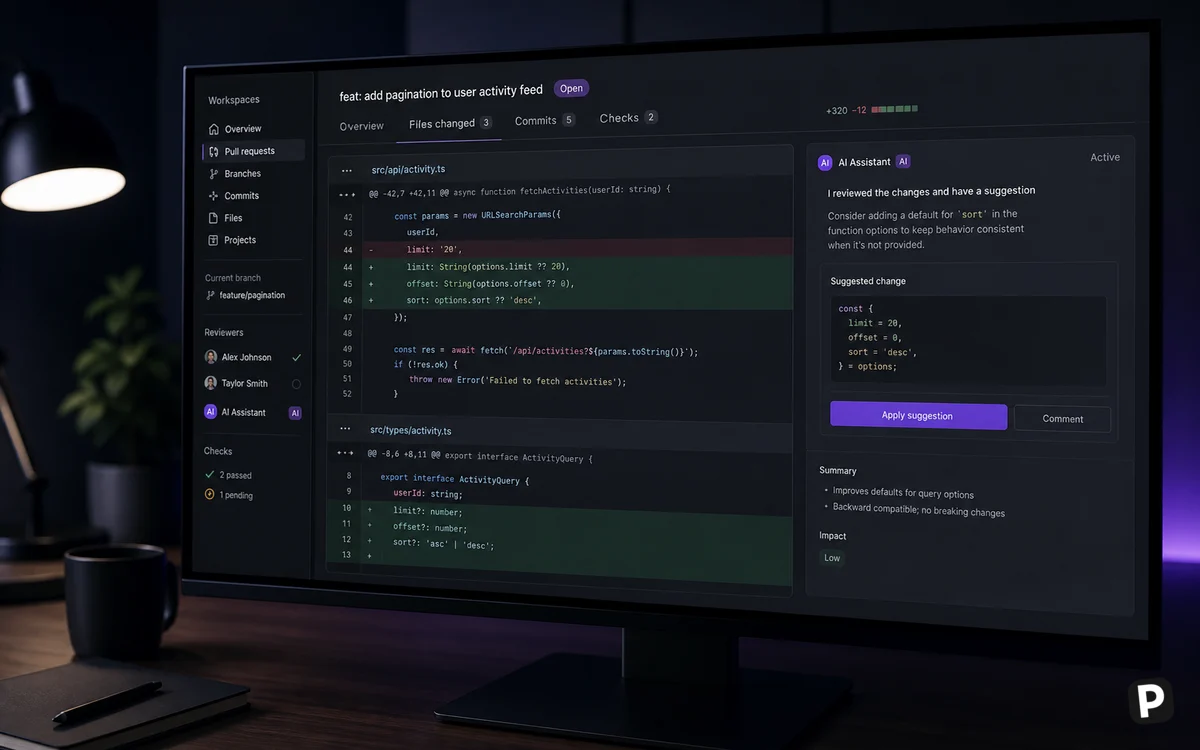
GitHub Copilot has developed from an inline completion tool into a collection of coding assistants that can explain code, propose multi-file edits, review changes, work from issues, and help plan repository-level tasks. That broader scope makes it more useful, but it also makes the buying decision less straightforward than asking whether autocomplete saves keystrokes.
This review examines Copilot as part of a professional development workflow in 2026. It focuses on where the tool saves time, where human review remains essential, how plans and usage limits affect value, and what individuals and engineering organizations should evaluate before enabling an AI assistant across important repositories.
What GitHub Copilot Is in 2026
Copilot operates across several surfaces rather than as one isolated editor feature. Developers can receive inline suggestions, ask questions in chat, request edits, use agent-oriented workflows, review pull requests, and interact with Copilot on GitHub. Exact availability depends on the plan, editor, repository, organization policy, model, and current product rollout.
The important distinction is between assistance and authority. Copilot can prepare code and explanations quickly, but it does not understand product intent, operational risk, or an undocumented constraint with the same accountability as the team maintaining the system. Its output belongs inside the normal engineering process: inspect the diff, run checks, test behavior, and obtain human review.
Where Copilot Helps in Daily Development
The most reliable gains usually come from bounded, verifiable work. Examples include completing repetitive structures, drafting tests from an existing pattern, explaining an unfamiliar function, translating a small routine, proposing documentation, and locating the likely files involved in a change. These tasks have enough local context for the output to be useful and a clear way for the developer to judge it.
- Boilerplate that follows an established repository pattern.
- Small refactors with an explicit acceptance criterion.
- Test cases that a developer reviews for meaningful coverage.
- Explanations that accelerate navigation through unfamiliar code.
- Documentation drafts verified against the implementation.
Vague prompts such as ‘improve this application’ invite broad changes and hidden assumptions. A better request names the goal, constraints, relevant files, expected behavior, commands to run, and boundaries the assistant must not cross. Good prompting resembles a concise engineering task description, not a magic phrase.
Chat, Edits, and Agent Workflows
Chat is appropriate for investigation and iteration: ask how a subsystem works, request a plan, attach relevant context, and refine the answer before making changes. Edit and agent modes can carry out broader work, including changes across files. The larger the scope, the more important it becomes to review the plan, keep the working tree recoverable, and separate unrelated changes.
Cloud agent workflows can research a repository, prepare changes on a branch, and open a pull request when configured to do so. GitHub's documentation makes clear that feature availability and policies vary. Teams should define which repositories are eligible, what checks are mandatory, and who is responsible for reviewing generated changes before treating delegation as routine.
Code Quality, Security, and Privacy
Generated code can compile and still be wrong. It may mishandle authorization, concurrency, error states, data migrations, accessibility, performance, or a library version. Copilot can also repeat insecure patterns present in the surrounding code. Static analysis, tests, dependency review, secret scanning, and human judgment remain part of the workflow.
Organizations should review GitHub's current data handling, retention, content exclusion, model, and policy documentation for their plan. Content exclusion and administrative controls can reduce exposure, but they are not substitutes for repository permissions or a rule against placing secrets in prompts, source files, terminal output, or issue descriptions.
A safe operating rule
Give the assistant only the context needed for the task, never paste credentials, and treat every generated diff as untrusted code until a qualified person and the project's automated checks have reviewed it.
Plans, Usage, and Real Cost
GitHub currently documents individual and organization plans with different feature access and usage allowances. Plan names, prices, AI-credit rules, premium-model access, and included requests can change, so the official plan matrix should be treated as the source of truth rather than an old screenshot or review.
The subscription price is only one part of value. Measure whether Copilot reduces cycle time without increasing review burden, regressions, or low-value code. A tool that produces many suggestions can feel productive while shifting work to reviewers. Teams should compare accepted changes, lead time, escaped defects, developer satisfaction, and the time spent correcting suggestions.
Who Should Use GitHub Copilot?
Copilot is a strong fit for developers who can validate code and work in repositories with tests, linting, type checks, and review. It is also useful for experienced engineers moving into an unfamiliar codebase, teams with repetitive internal patterns, and learners who use explanations as a starting point rather than an unquestioned answer.
It is a weaker fit where code cannot leave tightly controlled environments, where the organization has not evaluated policy and data requirements, or where a beginner lacks the foundation to recognize plausible but incorrect output. Safety-critical and highly regulated systems require a deliberately governed evaluation rather than casual installation.
How to Evaluate Copilot Before Adopting It
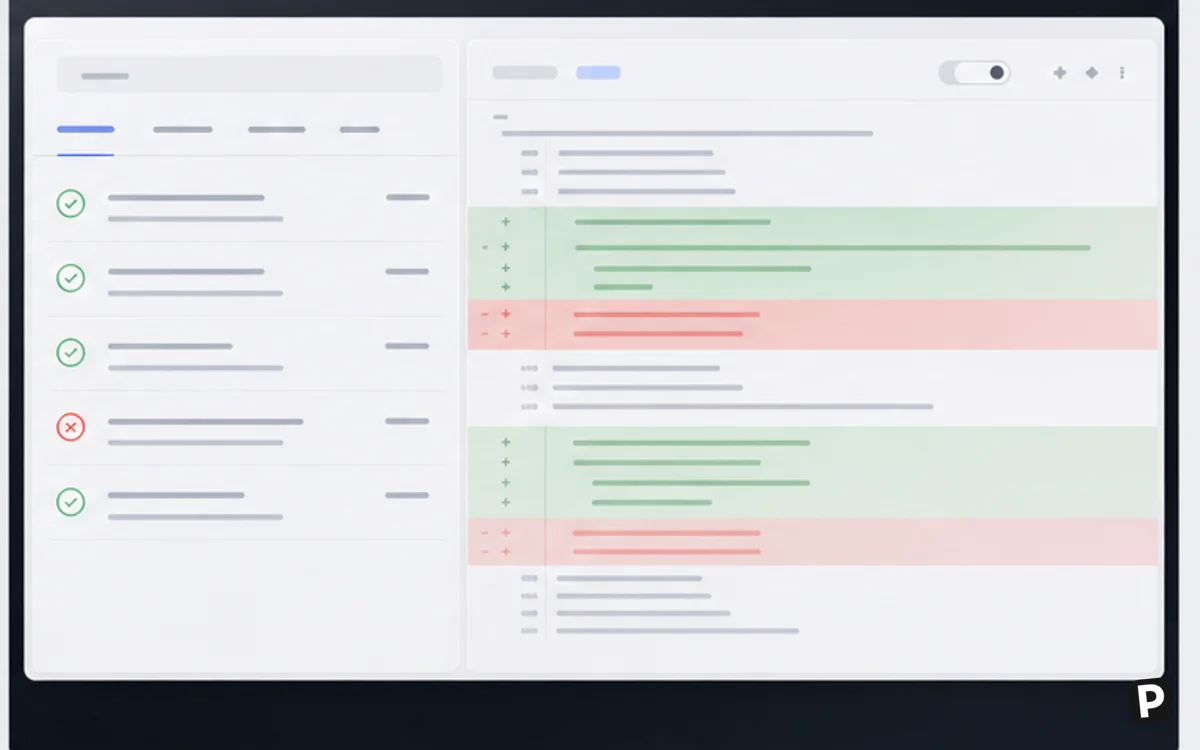
- Choose representative tasks with clear expected outcomes.
- Record completion time and review time without the tool.
- Repeat comparable tasks with Copilot and the same quality gates.
- Inspect defects, unnecessary edits, and maintainability—not only speed.
- Review policy, billing, access, and offboarding requirements before a wider rollout.
A short, measured pilot produces better evidence than counting generated lines. Include routine work, unfamiliar code, tests, documentation, and at least one task where the correct decision is to avoid making a change.
Onboarding Copilot Without Disrupting the Repository
Begin with one editor and a non-critical repository whose build, test, lint, and type-check commands are already documented. Confirm that contributors can run those checks without Copilot before enabling assistance. This establishes an independent quality baseline and prevents the tool from becoming the only explanation for how the project works. During the first week, use completions and questions before allowing broad autonomous edits.
Repository instructions should describe architecture boundaries, preferred commands, generated files, testing expectations, naming, and areas that require specialist review. Keep them concise and verify that they agree with the contribution guide and continuous-integration configuration. An instruction file cannot repair contradictory documentation or teach the assistant a business rule that the team itself has never written down.
- Disable or restrict features that the pilot does not need.
- Use a disposable branch for the first agent tasks.
- Ask for a plan and named files before requesting implementation.
- Require the assistant to report commands run and unresolved assumptions.
- Review generated dependencies, configuration, migrations, and lockfile changes separately.
New developers should not be onboarded solely through AI explanations. Pair Copilot with architecture notes, code ownership, review from maintainers, and real debugging. If an answer matters, follow its references into the code and official library documentation. This develops repository knowledge instead of creating dependence on confident summaries.
Failure Modes, Switching Costs, and Alternatives
A common failure mode is locally plausible code that ignores system behavior: a database update without a migration strategy, a retry that duplicates side effects, a security check in the wrong layer, or a test that merely restates the implementation. Another is change inflation, where a simple request produces formatting, renaming, and abstraction work that obscures the actual fix. Small commits and explicit exclusions make these problems easier to detect.
Model behavior and product surfaces change, so teams should avoid designing a process that depends on one prompt producing identical results forever. Preserve requirements in issues, project decisions in documentation, and checks in the repository. If Copilot is removed, the team should still be able to build, review, deploy, and operate the software using ordinary tools.
Alternatives include editor assistants from other vendors, self-hosted or enterprise-controlled models, command-line coding agents, and a deliberately tool-light workflow using language servers, snippets, search, and documentation. Compare them on repository context, supported editors, model choice, policy administration, data terms, latency, usage limits, and the quality of proposed diffs—not on a staged demo.
For an individual, a realistic value scenario is the monthly fee versus hours saved on routine work, corrected for time spent reviewing weak suggestions. For an organization, include seat administration, premium usage, training, security review, and reviewer capacity. Ten minutes saved by an author can be negative value if a senior reviewer spends thirty minutes untangling an unnecessary change.
Governance for Engineering Teams
A production rollout needs an accountable service owner. That owner should maintain the approved feature set, repository eligibility, instructions, content exclusions, model policy, seat assignment, and incident contact. Code owners still decide whether generated work is acceptable in their areas; purchasing an organization plan does not transfer that responsibility to a central administrator.
Define categories of work that require additional review, including authentication, authorization, cryptography, infrastructure, billing, personal data, dependency changes, database migrations, and generated legal or compliance text. Require a developer to disclose material AI assistance in the pull request when that context helps reviewers focus on assumptions and generated breadth.
Review access when people join, change teams, or leave. Organization policies can conflict with enterprise policies, and features can appear on more than one surface, so administrators should test the effective experience with ordinary member accounts. Audit usage for unexpected repositories or expensive patterns without turning raw activity into an individual productivity score.
When an incident involves generated code, investigate it like any other engineering failure: preserve the prompt and diff where policy permits, identify missing tests or review signals, correct the system, and improve the guardrail. Blaming the model alone misses the process that allowed unverified output to reach users. Conversely, hiding AI involvement prevents the organization from learning which tasks create risk.
Official GitHub Copilot Resources
GitHub Copilot Frequently Asked Questions
Does GitHub Copilot replace a software developer?
No. It can draft and explain code, but a developer remains responsible for requirements, architecture, correctness, security, testing, and maintenance.
Can Copilot work across an entire repository?
Repository-aware chat and agent features can use broader context and change multiple files, subject to the surface, plan, policies, and permissions. Broader access increases the need for scope control and review.
Is Copilot-generated code always original and safe to ship?
No output should be assumed safe or suitable merely because it was generated. Review licensing concerns, security, behavior, dependencies, and project standards before using it.
Is Copilot worthwhile for beginners?
It can explain concepts and reduce syntax friction, but beginners should verify answers with documentation and learn to debug independently. Otherwise plausible output can hide important misunderstandings.
Which Copilot plan should I choose?
Choose from the current official matrix based on whether the account is individual or organizational, the required features, governance controls, models, and usage allowance. Recheck pricing before purchasing.
Should Copilot be allowed to add dependencies?
Only through the repository's normal dependency-review process. Confirm the package, version, license, maintenance, security record, bundle or runtime impact, and whether existing code already solves the problem.
How should a team measure Copilot adoption?
Use a balanced set of lead time, review effort, defects, developer experience, and task completion. Acceptance rate or generated lines alone can reward quantity while hiding rework.
Key takeaways
- Copilot is a workflow of completions, chat, edits, review, and agents—not only autocomplete.
- Bounded tasks with strong tests produce more dependable value than vague delegation.
- Every generated change still requires human ownership and normal engineering checks.
- Organizations should evaluate policy, data handling, usage limits, and review burden before rollout.
- A measured pilot is more meaningful than counting generated lines.
More in Services & Software
Browse Services & Software