Technology reviews & practical guides
Kaspersky VPN Secure Connection costs $40.99 for year one on 5 devices and runs on Pango servers. Pricing, free tier, logging, the US ban and who should skip it.
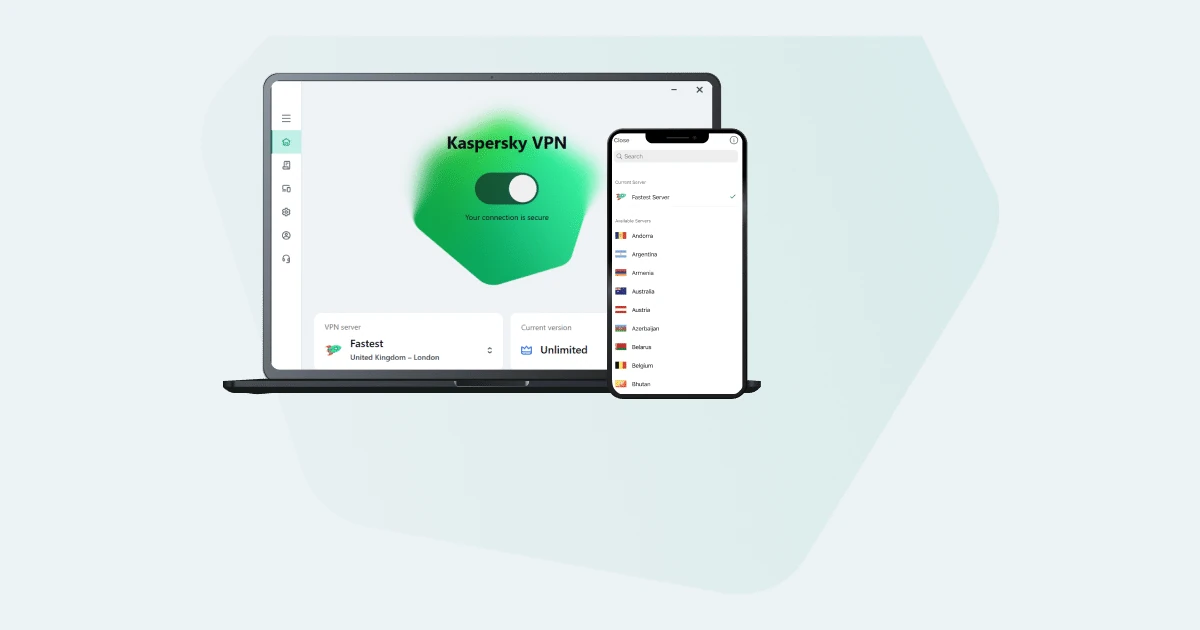
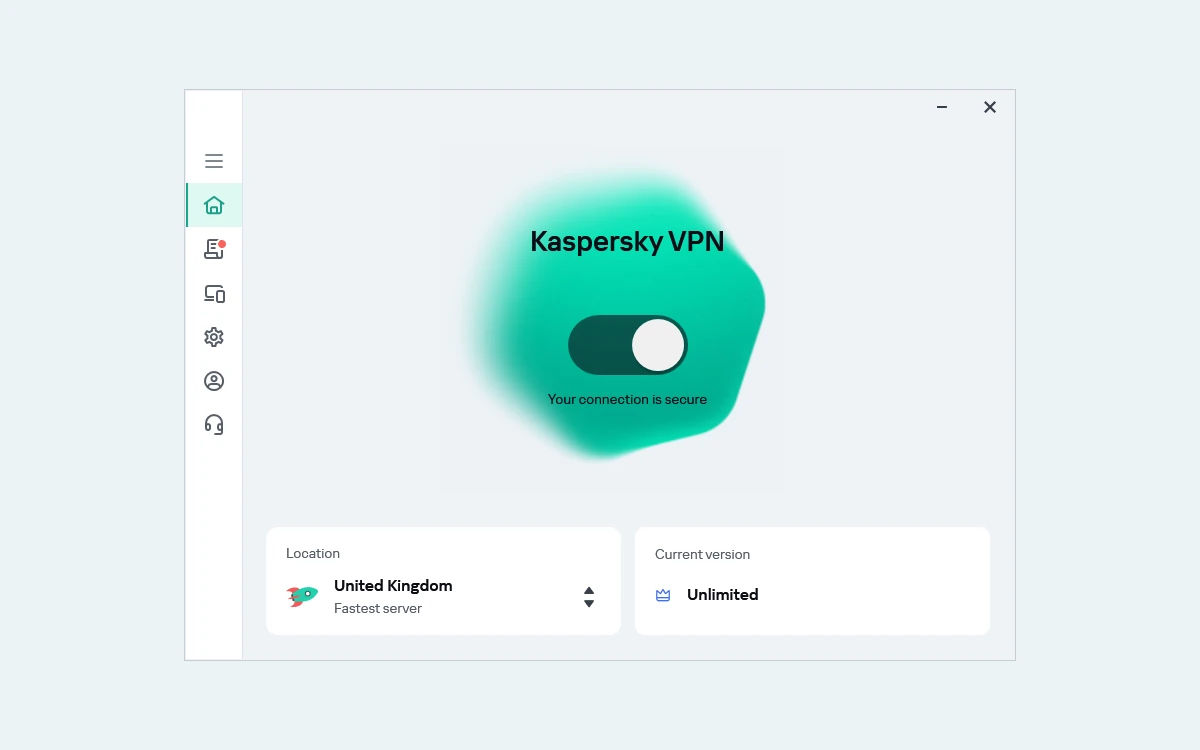
Kaspersky VPN Secure Connection is the VPN sold by Kaspersky, the security vendor best known for its antivirus. On the global store it costs $40.99 for the first year on 5 devices, renewing at $47.99, and there is still a free tier capped at 200 MB a day per device in regions where it is offered.
The part most buyers never see is who runs the network. Kaspersky's own support pages say the servers that encrypt and route your traffic are provided by Pango, the company formerly called AnchorFree and best known for Hotspot Shield. Add a removed logging-policy page, no independent no-logs audit, a March 2026 move to a 'new product infrastructure' and the 2024 US ban on Kaspersky software, and the real question is less about speed than about trust.
This review works from Kaspersky's product pages, help center and archived policy pages as of October 2026. Prices are regional and taken at the time of writing; what you see at checkout may differ.
Affiliate offer
Review the current offer, features, and terms for Kaspersky VPN Secure Connection before deciding whether it fits your needs.
Kaspersky VPN is a competent, inexpensive VPN with the features most people need: Catapult Hydra and WireGuard protocols, a kill switch, split tunneling, Double VPN and labelled server categories for streaming, torrenting and gaming. The $40.99 first-year price is low for 5 devices.
The weak points are on the privacy side. The detailed logging policy now survives only in a web archive, no third party has audited the VPN's no-logs claims, the app sends an installation ID to Google Analytics in many regions, and US readers cannot count on updates or renewals.
Reasonable value if you already trust Kaspersky and live outside the US. If you want a VPN with an audited no-logs policy, or you are in the US, look elsewhere.
Kaspersky sells the VPN on its own and as part of its Plus and Premium security suites. The standalone prices below come from the price data on the global (USD) and UK (GBP) product pages at the time of writing. The global page was running a Cybersecurity Awareness Month banner promising up to 33% off, so first-year prices are promotional.
The annual plan is the obvious pick: twelve months of the monthly plan comes to $107.88, more than double the annual renewal price. Payments on both stores are processed by the reseller Nexway rather than by Kaspersky directly, which is worth knowing when a charge appears on your statement.
Kaspersky's own sources disagree. A July 2026 support article says the premium version 'provides unlimited traffic for five devices', the UK store sells a 10-device plan, and the 7-day trial covers up to 10 devices. Check the device count on the exact plan you buy rather than assuming one figure.
Unlimited VPN is included in Kaspersky Plus and Kaspersky Premium. Kaspersky Standard's product text does not mention a VPN, and a support article states the VPN is 'Available only in Kaspersky Plus and Kaspersky Premium.'
If you want Kaspersky antivirus as well, Plus is cheaper than buying Standard and the VPN separately. If you only want a VPN, the standalone plan is the better deal. The Plus offer was marked as ending 31 October 2026.
Kaspersky still offers a free tier, though 'The availability of the free version depends on your region.' Where it is available, you get 200 MB of encrypted traffic per day on each device, rising to 300 MB if the device is connected to a My Kaspersky account. There is no cap on the number of devices.
The limits are tight. You cannot choose a server location - the app picks one automatically - and 200 MB is enough for some messaging, email and browsing on a hotel or cafe network, not for video. Kill switch, split tunneling, Double VPN and custom DNS over HTTPS are paid features.
If a paid subscription expires and its grace period ends, the app drops back to the free version rather than stopping entirely. You keep basic protection, but with the daily cap and an automatic server.
Kaspersky does not run its own VPN network. A support article updated in July 2026 says: 'Servers encrypting and redirecting user traffic are located in different regions around the world, including the USA, Germany, Singapore, and many others. They are provided by our partner, the software company Pango.' An older Kaspersky blog post names the same partner by its former name, AnchorFree, the Redwood City, California company behind Hotspot Shield.
That matters for two reasons. First, the logging policy covers two companies, Kaspersky and Pango, not one. Second, Pango Group also owns UltraAV and UltraVPN, the products that US Kaspersky customers were automatically migrated to in September 2024 after the US ban, according to reporting by The Hacker News and TechCrunch.
On March 3, 2026, a Kaspersky employee wrote on the official forum that 'Kaspersky is currently migrating its VPN service to a new product infrastructure.' The post was about licenses bought abroad no longer working in Russia, but it signals that the back end is changing. Kaspersky has not said publicly whether Pango remains the server operator after the migration, so treat the Pango arrangement as current but not guaranteed.

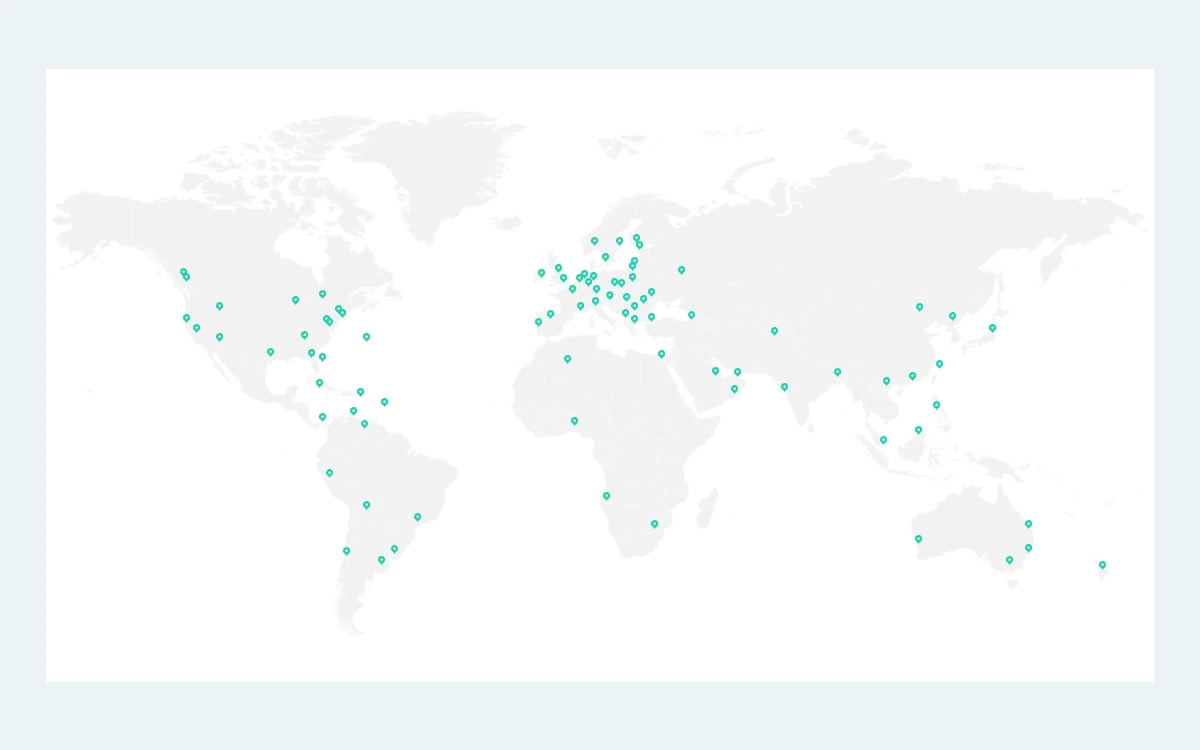
Kaspersky advertises '6000+ servers in 120+ locations', '120+ server locations across 93 countries' and 'Server speeds of up to 20 Gbps'. Those are vendor figures; no independent count was found.
The server list in the help center, updated September 29, 2026, includes 18 US cities as well as locations in Russia (Moscow and Novosibirsk) and Belarus (Minsk), which few Western VPNs offer.
Paid users can pick from labelled server groups: Streaming, Torrenting, Gaming, Double VPN and Ultra-reliable. Gaming and Double VPN servers require the Catapult Hydra protocol.
Kaspersky VPN supports two protocols in its apps:
The catches are in the small print. Protocol selection 'is available only on Microsoft Windows 10 or later', so Mac and mobile users take the default. With WireGuard selected, split tunneling and the Gaming servers are not available. The product page also notes that 'WireGuard protocol support from the Internet Service Provider is required'.
OpenVPN is not offered as an in-app protocol. It appears only as a manual configuration option for other platforms.

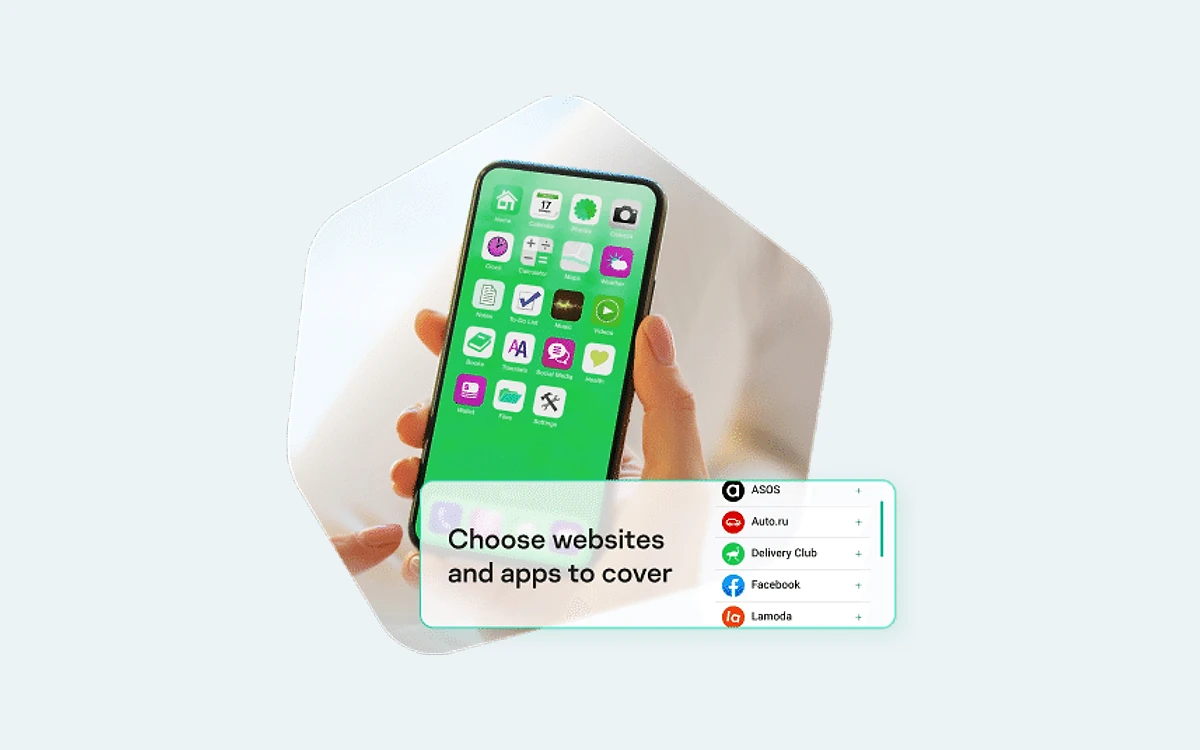
The paid version adds the tools that matter most in daily use:

The app 'Checks the status of the wireless network and prompts you to turn on secure connection if the network is not secure.' Kaspersky notes that 'Traffic encryption only starts with explicit user consent', so it asks rather than connects silently. On Android, Kaspersky has described an Adaptive Security feature that can turn on the VPN automatically based on the reputation of websites and apps.

Kaspersky's product page promises 'global access to Netflix, Amazon Prime Video, Disney+, and more'. That is a marketing claim; streaming unblocking changes often, and it was not tested for this review.
On speed, Kaspersky's own blog reported in December 2022 that the VPN received AV-TEST's 'Approved Virtual Private Network Solution' badge for the third year in a row and was the 'overall fastest VPN product tested in the performance test'. Two caveats: the same post says Kaspersky commissioned AV-TEST to test six additional VPNs alongside the certification, and the result is now nearly four years old. Treat it as a sign the service was fast in 2022, not as a current benchmark.
Kaspersky used to publish a detailed data page for the VPN. The live page now redirects to the product page, so the most specific statements survive only in a web archive copy from January 4, 2025. According to that page:
Taken at face value that is a reasonable policy: no browsing records, no stored IP addresses, but a month of login events and a year of session statistics. The problem is that Kaspersky has taken the page down, and nothing on the live site replaces it with the same level of detail.
For app builds not intended for the EU, UK, Brazil, Vietnam or California, Kaspersky says the app sends 'the unique ID of the software installation' and operating system details to 'the Google Analytics service and to an entrusted third-party service provider'. Readers in those regions get a build without this, everyone else does not.
No independent audit of the VPN's no-logs claims was found. Kaspersky does hold SOC 2 audits (by Deloitte in 2022, and SOC 2 Type II again according to a September 2026 press list), but those cover company processes such as releasing antivirus databases, not what the VPN servers record. A SOC 2 report is not a VPN no-logs audit.
On June 20, 2024, the US Commerce Department's Bureau of Industry and Security announced that 'Kaspersky will generally no longer be able to, among other activities, sell its software within the United States or provide updates to software already in use'. Updates were allowed until September 29, 2024, and new US sales ended on July 20, 2024.
Kaspersky's US statement says 'The ability to buy, renew and download products at usa.kaspersky.com is suspended' and that purchases via other websites 'may also be limited for users visiting from the US'. It does not mention the VPN by name, and usa.kaspersky.com now redirects to the global site. The current VPN help, updated January 12, 2026, warns that updates 'may not be available in the application in the U.S.'
Whether the global store will sell you the VPN today is unclear, and the app may not receive updates in the US. A VPN that cannot be patched is not one to rely on. Treat Kaspersky VPN as unsupported in the US.
Around September 19, 2024, US Kaspersky users were automatically switched to UltraAV, which bundles UltraVPN, according to The Hacker News and TechCrunch. UltraAV's owner, Pango Group, is the same company Kaspersky names as its VPN server partner.
Kaspersky lists several countries where VPN use is legally regulated and says not to use the app in Belarus, Oman, Pakistan, Qatar, Iran, Iraq, Saudi Arabia and China. It has 'suspended sales of Kaspersky VPN in India', and the iOS and macOS apps 'may not be available for download from the App Store in Poland and Ukraine'.
In Germany, the federal security agency BSI warned against Kaspersky antivirus products on March 15, 2022, and a German court later upheld the warning. The warning concerned the antivirus products and the company's Russian origins, not evidence of VPN misuse, but it is part of the context some buyers will weigh.
You can start a 7-day free trial that 'includes all features on up to 10 devices'. If you do not cancel during the trial, the subscription renews automatically into a paid plan, so set a reminder.

Purchases carry a 30-day money-back guarantee. The UK support page says you 'receive a full refund within 30 days from the date of order', and that this applies both to Kaspersky Online Store purchases and to automatic renewal payments - useful if a renewal at the full price catches you out.
Budget for the renewal, not the first year: $40.99 becomes $47.99 on the global store, and £29.99 becomes £48.99 in the UK.
On the global store it is $40.99 for the first year on 5 devices, renewing at $47.99, or $8.99 a month. UK prices were £29.99 for the first year on 5 devices and £35.99 for 10 devices, at the time of writing (October 2026). Prices vary by region.
There is a free version in some regions, limited to 200 MB of traffic per device per day (300 MB if linked to My Kaspersky) on an automatically chosen server. Kill switch, split tunneling and server choice need a paid plan.
Treat it as unsupported. The 2024 US ban stopped Kaspersky sales and updates in the US, and the current VPN help warns that updates may not be available there. Kaspersky's US statement does not mention the VPN by name, so availability through the global store is unclear.
Not of browsing activity, according to an archived 2025 Kaspersky page, but Pango keeps the installation ID and login events for a month and session statistics for a year. That page has since been removed, and no independent audit has verified the claims.
Pango, formerly AnchorFree and the maker of Hotspot Shield, according to a July 2026 Kaspersky support article. Kaspersky said in March 2026 it is migrating the VPN to a new product infrastructure, without saying whether the partner changes.
Yes. Both Plus and Premium include unlimited VPN. Kaspersky Standard does not.
Yes to both. The 7-day trial covers all features on up to 10 devices and auto-renews unless you cancel. Store purchases and automatic renewals carry a 30-day money-back guarantee.
Yes, on paid plans, but it is off by default. Turn it on in the settings after installing so your connection is cut if the VPN drops.
More in Virtual Private Network
Browse Virtual Private Network