Metaview.ai Review: From AI Notetaker to Agentic Recruiting Platform
A hands-on look at Metaview.ai in 2026 — its five recruiting agents, ATS integrations, the new $0/$100/$300 sourcing pricing versus its legacy notetaker plans, reported time savings, and where it falls short.
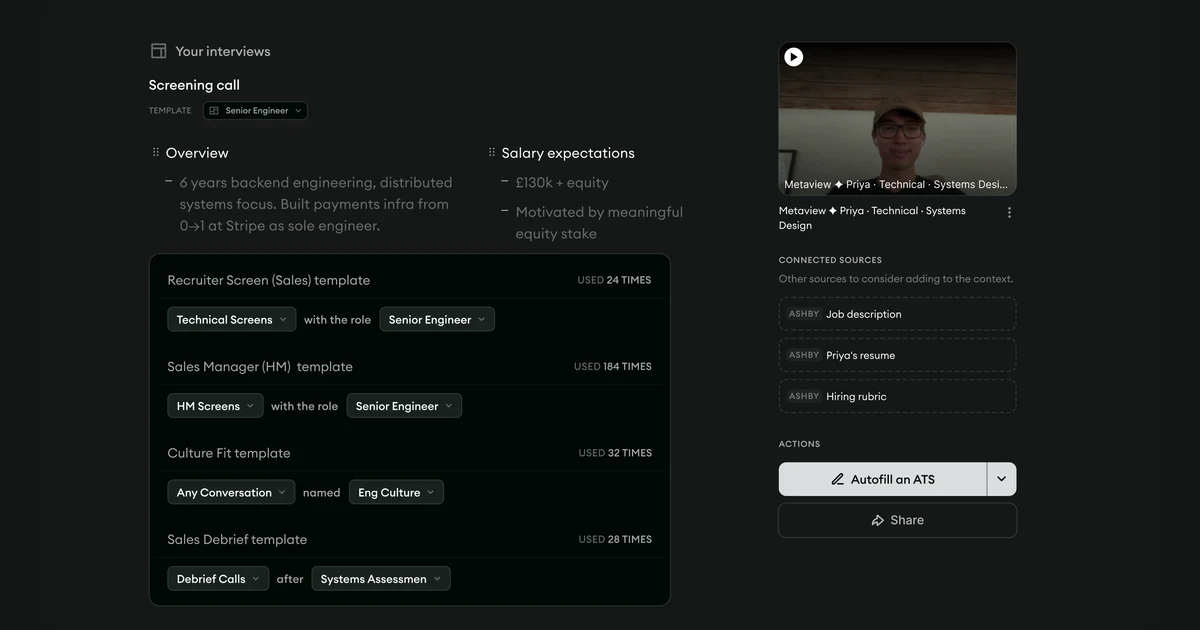
Metaview earned its name as the AI notetaker recruiters actually trusted: it joins hiring calls, transcribes them, and hands back structured, ATS-ready interview notes before the interviewer has closed the tab. That single job made it a fixture in recruiting teams that were tired of scribbling during interviews.
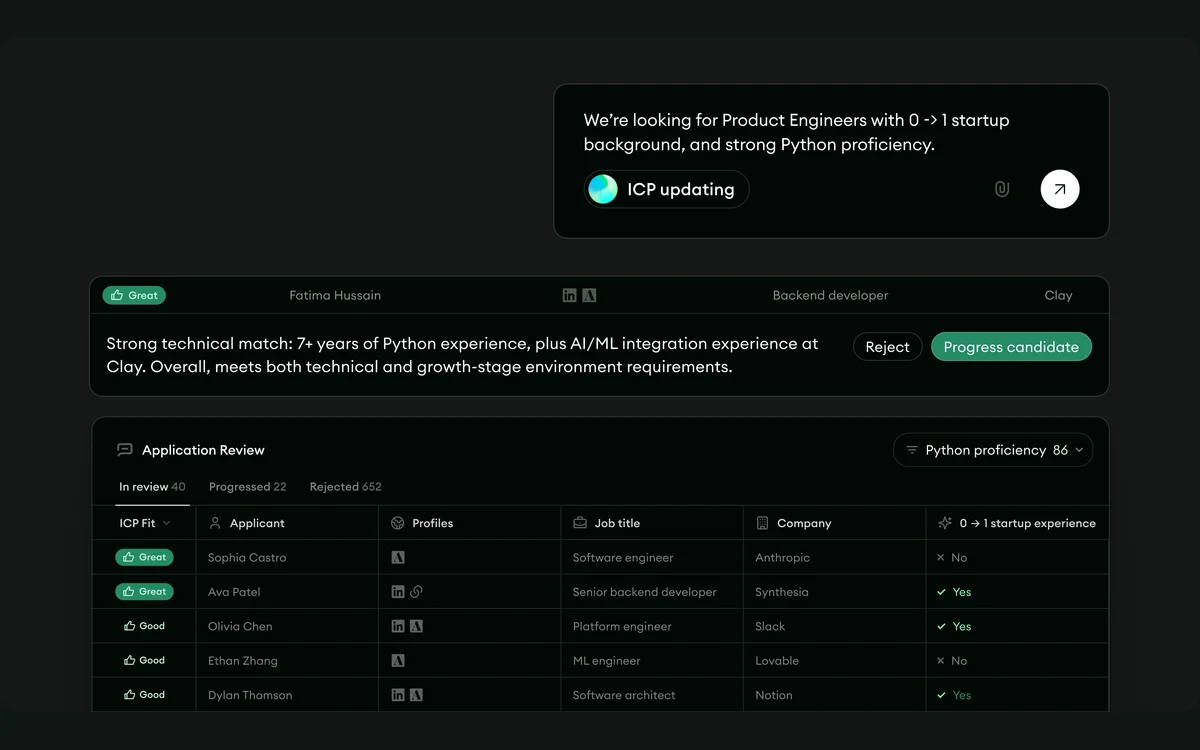
In 2026 the company reframed itself as an 'Agentic Recruiting Platform' built around five autonomous agents — Sourcing, Application Review, Screening, Notetaker and Reports — that aim to cover the funnel from finding a candidate to writing up the debrief. This review looks at what each agent does, how the platform fits an existing ATS, what it now costs, and where it still leaves gaps for hiring and recruiting-ops teams weighing it up.
What Metaview is in 2026
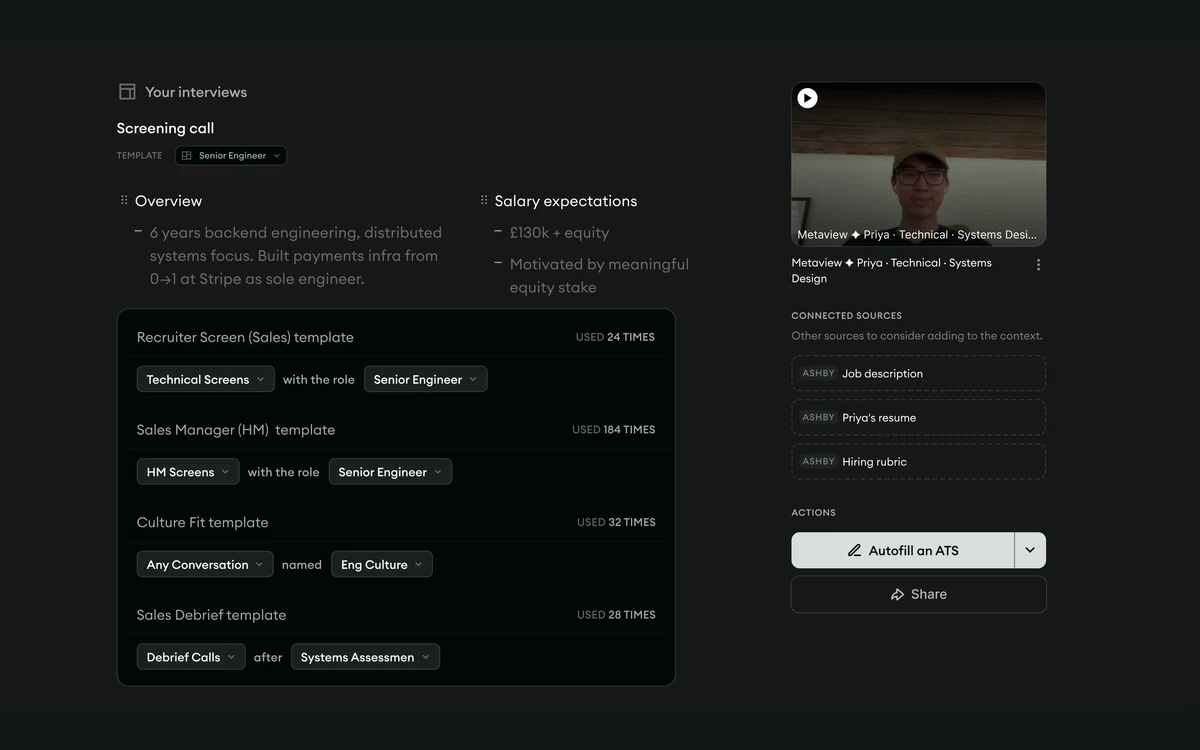
Metaview's original and still-flagship product is an AI notetaker for recruiting calls. It sits in on interviews across Zoom, Microsoft Teams and Google Meet, transcribes the conversation, and delivers structured notes the moment the call ends, pushing them straight into the applicant tracking system so nobody has to retype anything.
The 2026 repositioning wraps that notetaker into a wider platform of five agents that each own a stage of the recruiting workflow. The pitch is no longer 'we take your interview notes' but 'we run the repetitive parts of recruiting end to end' — sourcing candidates, screening applications, sitting in on interviews and compiling reporting for hiring managers.
The five agents, one at a time
Notetaker
The mature core of the product. It captures the call, produces structured notes rather than a raw transcript dump, and files them into the ATS against the candidate. This is the piece with the longest track record and the strongest reviews.
Sourcing
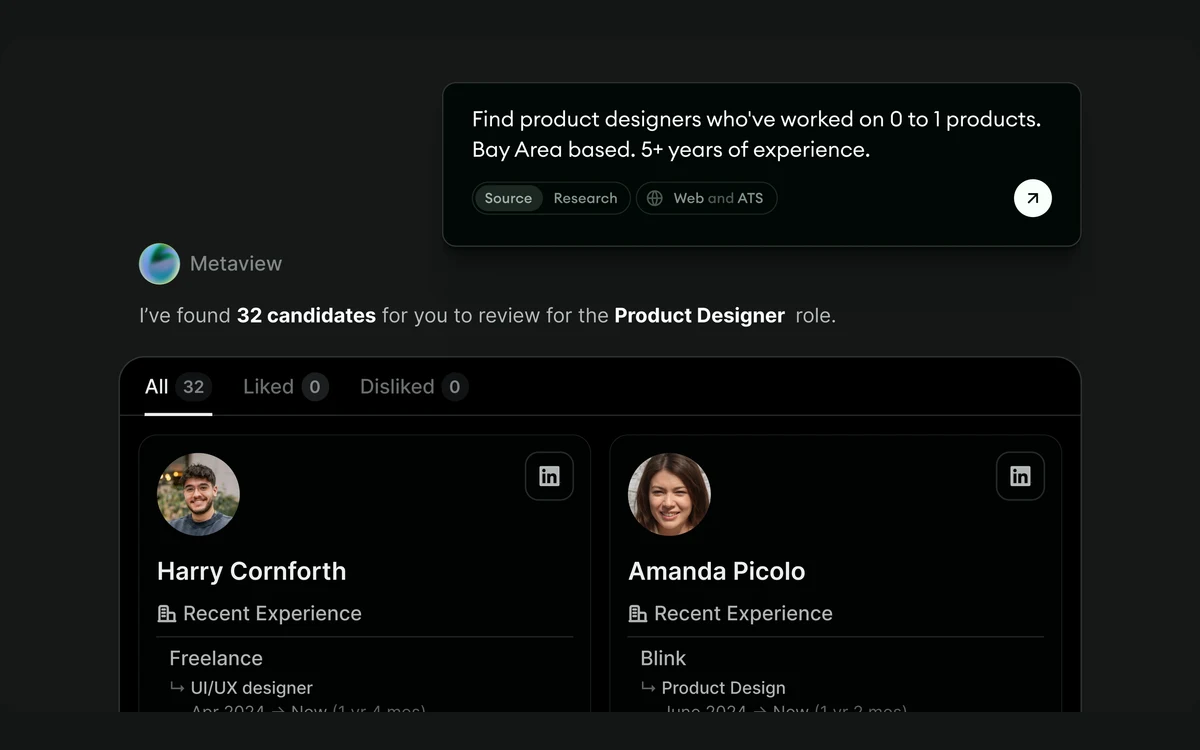
Finds and surfaces candidate profiles that match a role, running searches to build a pipeline. It is also the only agent Metaview publishes self-serve pricing for, which makes it the most concrete entry point into the platform.
Application Review
Works through inbound applications and prioritizes them so recruiters spend their attention on the candidates worth a closer look rather than clearing an undifferentiated queue by hand.
Screening
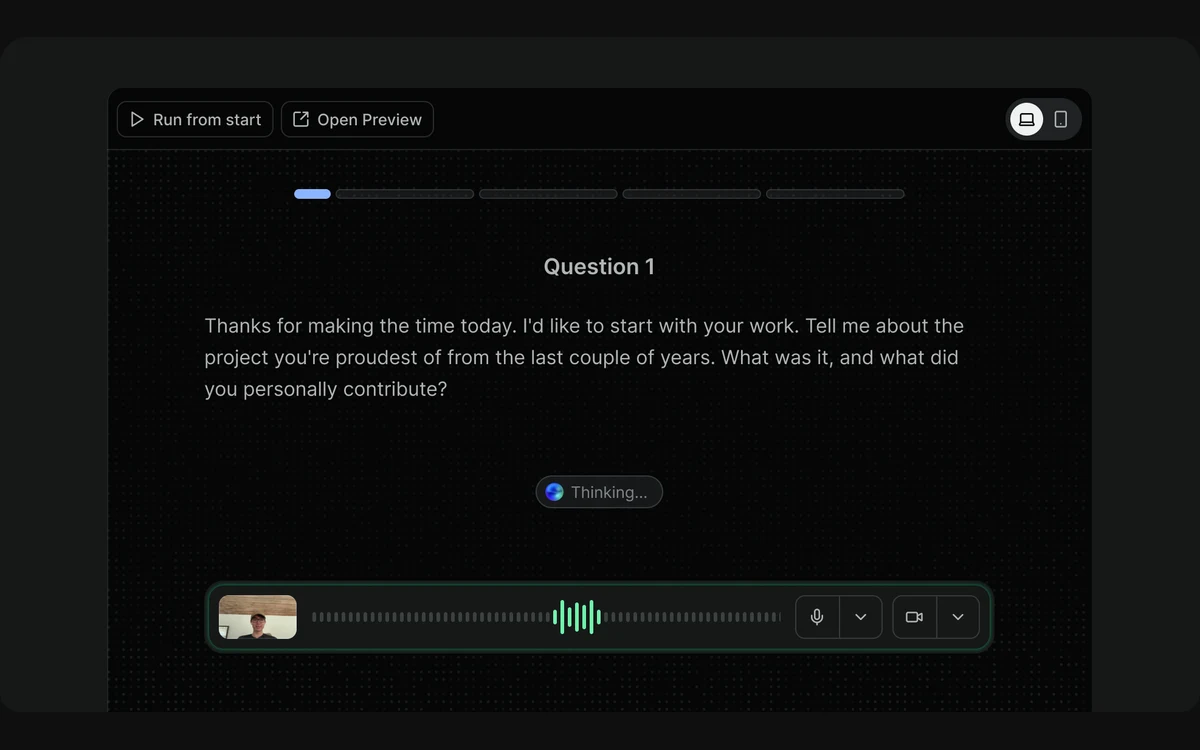
Handles the early screening step, moving candidates through the initial filter so the human recruiter picks up further along the funnel.
Reports
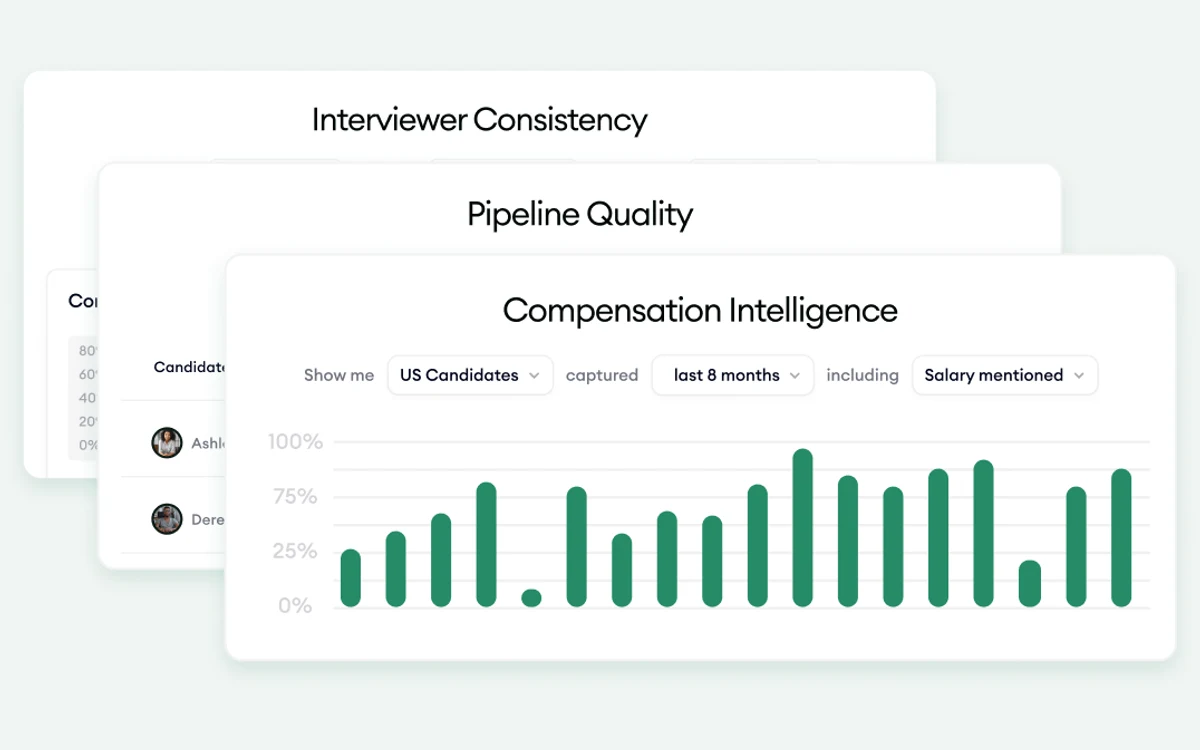
Compiles the reporting and analytics layer — pulling the activity across the other agents into dashboards hiring managers and recruiting leads can read.
Integrations and workflow fit
Metaview is built to sit on top of an existing recruiting stack rather than replace it, and its value depends heavily on the ATS write-back. It integrates with the major applicant tracking systems and the meeting and phone tools that interviews actually run on:
- ATS: Ashby, Greenhouse, Lever, Gem and SmartRecruiters
- Video conferencing: Zoom, Microsoft Teams and Google Meet
- Plus scheduling and phone systems that feed the interview workflow
If your team already lives in one of those ATS platforms, the notes, screening outcomes and sourcing results land where the rest of your hiring data sits. If you run a system it does not connect to, a large part of the appeal — no manual re-entry — evaporates, so confirm the integration before committing.
What Metaview costs
Metaview only publishes self-serve pricing for the Sourcing agent, priced per user per month:
- Free — $0/month per user, with the first 100 profiles sourced free and unlimited concurrent searches
- Pro — $100/month per user for 200 profiles sourced each month
- Max — $300/month per user for unlimited profiles sourced
- Enterprise — custom pricing with custom volume, dedicated support and enterprise security
The full platform — all agents, including sourcing, application review, notetaker and reports together — is sold only as an Enterprise plan with custom pricing that requires a sales conversation. There is no public number for the complete agentic bundle, so budget for a quote rather than a sticker price.
Legacy notetaker pricing (for comparison)
Before the 2026 repositioning, the standalone notetaker was sold on its own tiers that third-party reviews still cite: Free with 5 recruiting calls; Core at $20/user/month billed annually for 12 calls a month; Pro at $50/user/month billed annually for unlimited calls; and a custom Enterprise plan with a dedicated Customer Success Manager. Treat these as legacy reference points — the current published pricing is the sourcing-tier structure above, not these figures.
Reported results and who it fits
Metaview leans on customer-reported outcomes to make its case, and the numbers it cites are in the range you would expect from removing manual note-taking and triage:
- Workleap reports cutting screening time by 50%
- Catawiki recruiters say they save 2–6 hours per week
- Automattic reports saving 50 hours per month
Its customer list skews toward high-volume, fast-moving tech employers — Replit, Deel, Qonto and Deliveroo among them — which is a fair signal of who gets the most out of it. On third-party review sites it carries a reported 4.8 out of 5 rating on G2 across 131 reviews as an AI interview notetaker, though that figure comes second-hand from a review citing G2 rather than a direct read of the page.
The best fit is a recruiting team running enough interviews and inbound volume that the per-user cost is diluted across constant use: in-house talent teams at scaling companies, high-volume staffing functions, and recruiting-ops leads who want the funnel's busywork automated and reported on.
Limitations to weigh
The same review coverage that praises Metaview flags a few real caveats worth pricing into a decision:
- Low-volume teams that only run a handful of interviews a month are unlikely to get enough value to justify the per-user cost.
- It does not cover in-person interviews unless you run a separate recording app to feed it audio.
- Non-English transcription accuracy is weaker than its English performance, which matters for globally distributed hiring.
- The full agentic platform has no public price, so evaluating total cost means going through sales.
Frequently asked questions
How much does Metaview cost?
The Sourcing agent is published at $0/month (Free, first 100 profiles), $100/month per user (Pro, 200 profiles/month) and $300/month per user (Max, unlimited profiles), with a custom Enterprise tier. The full platform with every agent is Enterprise-only at custom, sales-quoted pricing.
Is there a free plan?
Yes. The Sourcing agent has a Free tier at $0/month per user that includes the first 100 profiles sourced and unlimited concurrent searches, which lets you trial sourcing without a contract.
Which ATS platforms does Metaview integrate with?
Ashby, Greenhouse, Lever, Gem and SmartRecruiters, plus video conferencing (Zoom, Microsoft Teams, Google Meet) and scheduling and phone tools. The ATS write-back is central to its value, so confirm your ATS is on the list before buying.
Does Metaview work for in-person interviews?
Not directly. The notetaker is built around calls on Zoom, Teams and Meet; capturing an in-person interview requires a separate recording app to supply the audio, and even then it is outside the core workflow.
How accurate is transcription in other languages?
English performance is its strongest, and third-party reviews report that non-English transcription accuracy is weaker. Teams hiring heavily in other languages should test it on their own calls before relying on the notes.
Is Metaview worth it for a small hiring team?
Usually not. Reviews note that teams running only a handful of interviews a month rarely get enough use out of it to justify the per-user cost; it pays off for high-volume recruiting functions where the automation runs constantly.
Key takeaways
- Metaview is now an agentic recruiting platform of five agents — Sourcing, Application Review, Screening, Notetaker and Reports — built on top of a mature AI notetaker.
- Only the Sourcing agent has public pricing: Free ($0), Pro ($100/user/mo), Max ($300/user/mo) and custom Enterprise; the full platform is Enterprise-only and sales-quoted.
- It fits high-volume, ATS-based recruiting teams best, integrating with Ashby, Greenhouse, Lever, Gem and SmartRecruiters plus Zoom, Teams and Meet.
- Weigh the caveats: weak value for low-volume teams, no native in-person interview support, weaker non-English transcription, and no public price for the full bundle.
More in Services & Software
Browse Services & Software