monday.com Review 2026: Seat Buckets, AI Credits, Limits
How monday.com prices work in 2026: the four plans, the three-seat bucket minimum, AI credits billed beside seats, monthly action quotas, and where the free plan stops.
monday.com is sold as a colourful board you fill with tasks, and that part is easy. The bill is where teams get surprised: seats come in fixed buckets, AI usage is metered separately, and several everyday features sit two tiers above where people expect them.
This review covers what monday.com is in August 2026, what each plan costs, how AI credits and automation actions are counted, and the limits that decide which tier you actually need. Every figure comes from monday's own pricing page and support documentation.
How monday.com is put together
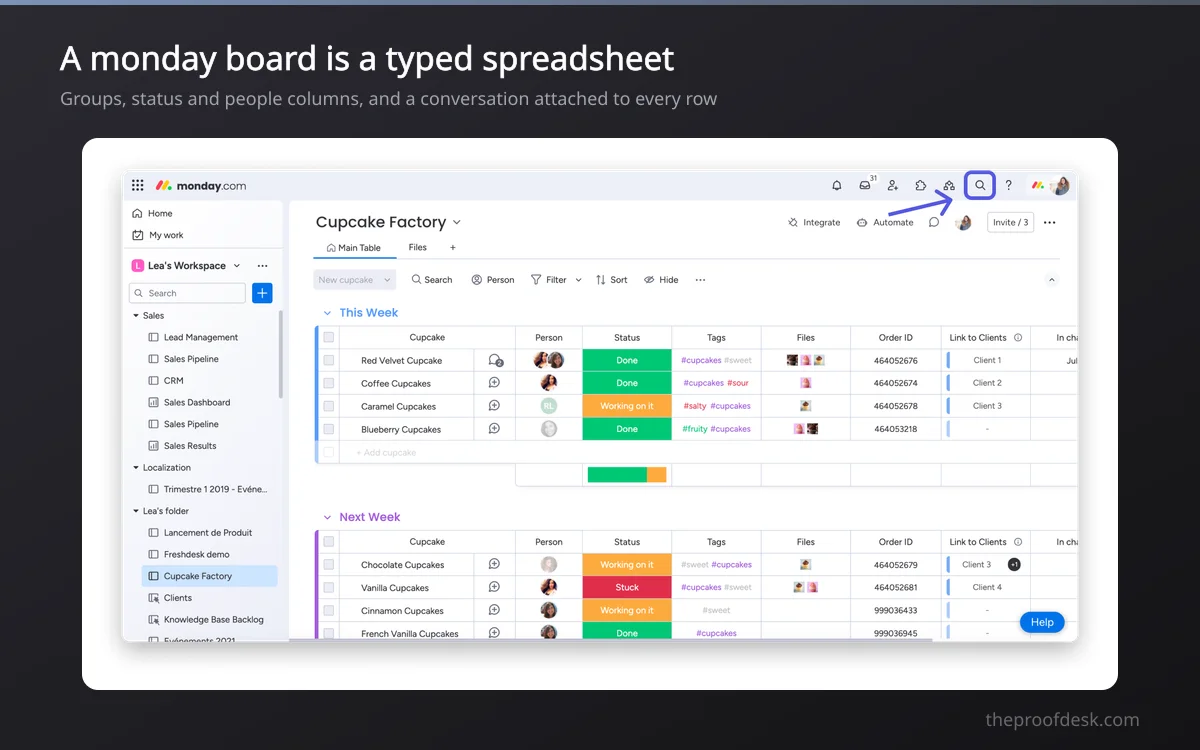
The unit of work is an item, which is a row on a board. Columns are typed rather than free text, so a status is a status, a person is a real account, and a date can drive reminders. Groups split a board into phases or sprints, and every item carries its own conversation thread, so context stays with the work instead of in email.
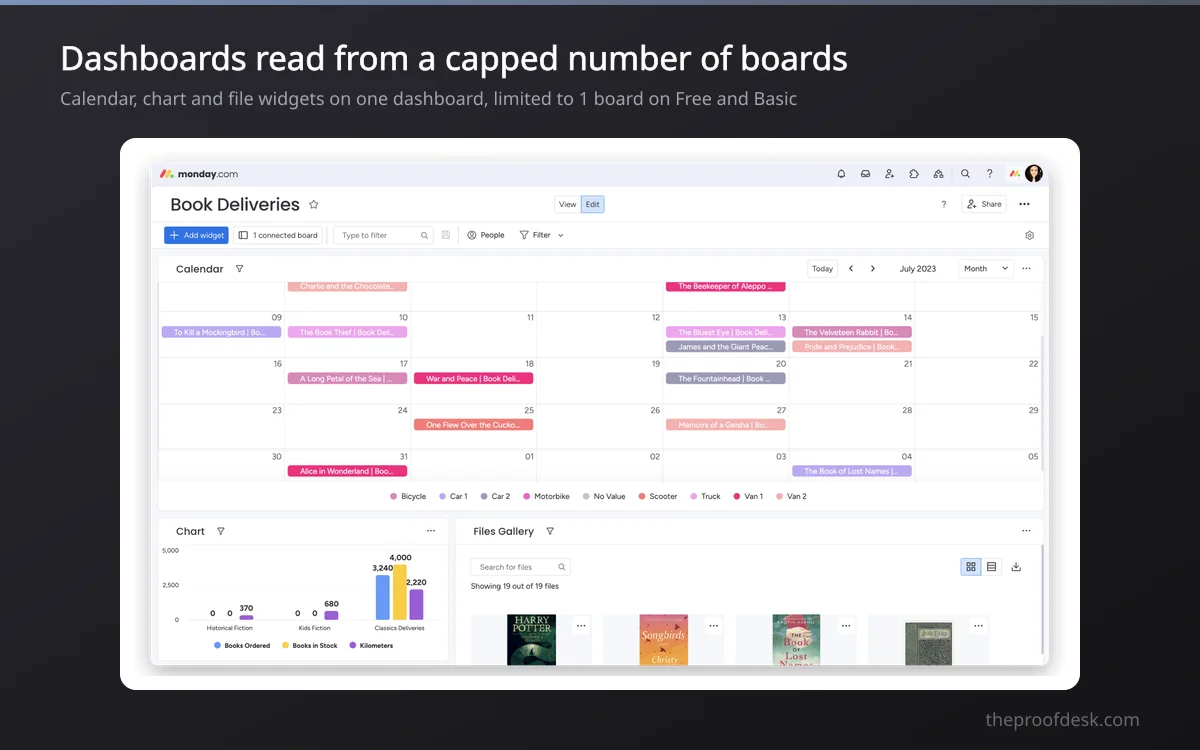
The same board can be read as a table, Kanban, calendar, timeline, Gantt, map, chart or workload view, depending on your plan. Dashboards sit above boards and aggregate them with widgets, but the number of boards a single dashboard can read is capped by tier: one board on Free and Basic, five on Standard, twenty on Pro and fifty on Enterprise.
monday now sells four separate products built on the same engine. You can buy them individually or bundle them, but every product in a bundle must share the same billing cycle, and Enterprise bundles must be Enterprise across the board.
- monday AI work platform, the general project and task product, and the only one with a free plan.
- monday CRM, priced higher, for leads, pipelines and contact records.
- monday dev, for sprints, roadmaps and product feedback.
- monday service, a ticketing and internal-operations product that starts at Standard.
The free plan and where it stops
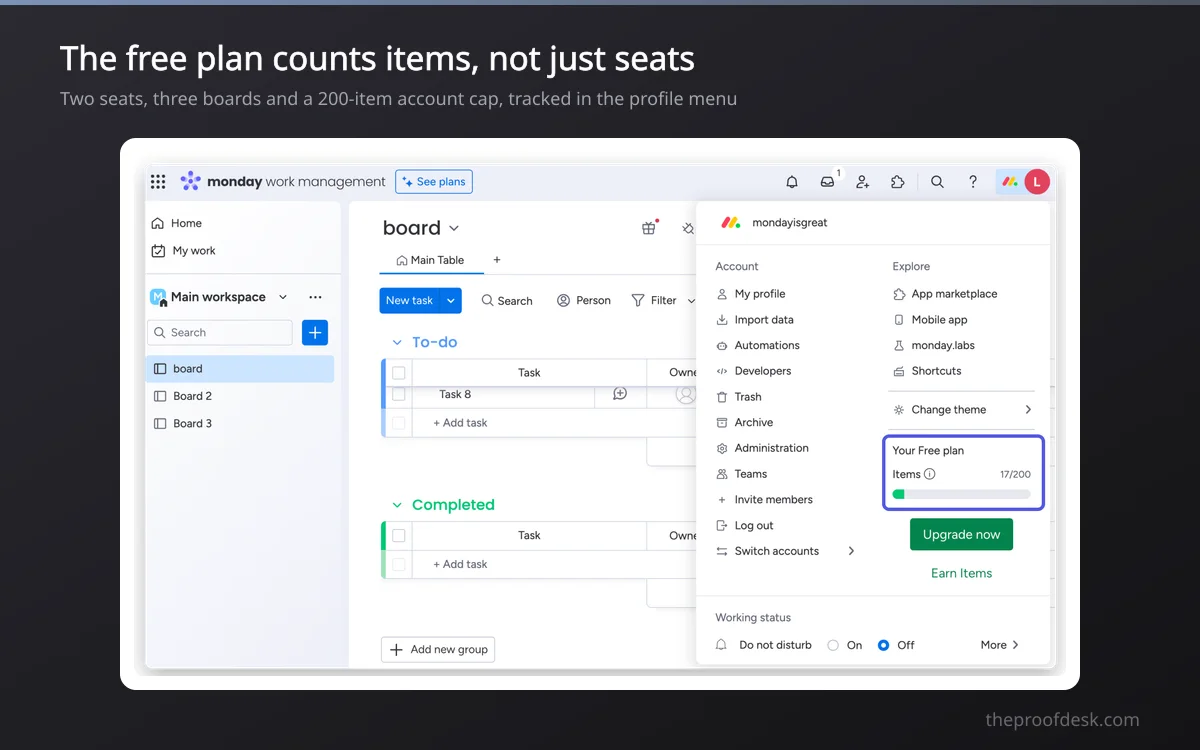
The free plan is permanent, not a trial, but it is small. You get two seats, three boards, three docs and 200 items across the entire account, not per board. You can earn another 100 items for each person you successfully refer. Storage is 500 MB, and each dashboard can read a single board.
What is missing matters more than the caps. Several things people assume are core features are not on Free at all.
- No formula column and no time tracking column; both arrive on Pro.
- No files column, and no account-wide search, which starts on Standard.
- No guests, because shareable boards begin on Standard.
- No AI features of any kind, which monday restricts to paying accounts.
- No automations or integrations, so everything is manual.
The trial is a Pro trial
Signing up starts a 14-day trial of the Pro plan with unlimited members and guests, so the product you evaluate is not the product you land on. Trials cannot be extended. When it expires you either buy a plan or click through to the free plan, which is when the 200-item ceiling appears.
What monday.com costs in 2026
List prices on the AI work platform are $9 per seat per month for Basic, $12 for Standard and $19 for Pro, all billed annually. Enterprise is quoted by sales and carries a minimum term of twelve months. Paying monthly removes an 18 percent discount, so the same Pro seat costs meaningfully more month to month.
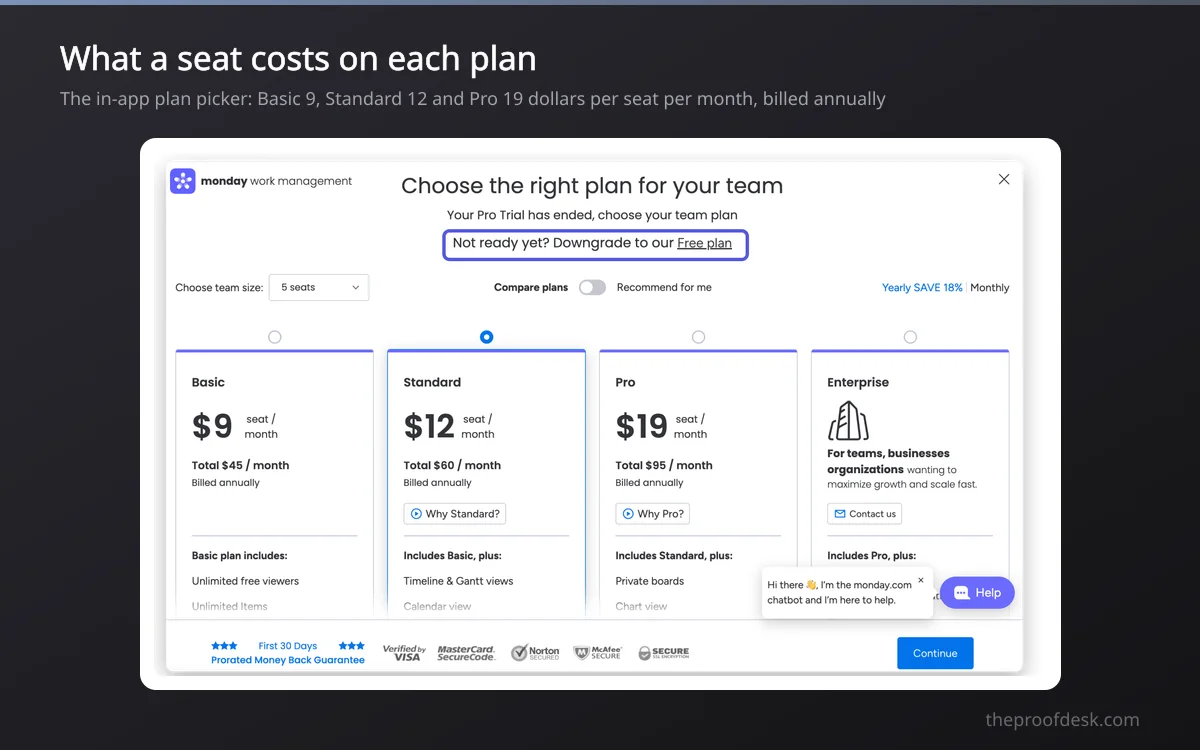
That per-seat number is not the whole price. monday sells seats in buckets, so the team-size selector steps through fixed sizes rather than accepting any number. The smallest paid bucket is three seats, and the steps widen as you scale, so a seven-person team pays for ten seats and a twelve-person team pays for fifteen.
The bucket tax is real
Three seats of Basic is about $27 a month before tax, and three seats of Pro is about $57. If your headcount sits just above a bucket boundary you are paying for seats nobody uses, and monday will not prorate that away mid-term.
Two billing behaviours are worth knowing before you commit. Exceeding your paid seats starts a five-day countdown with three warning emails, after which the account auto-upgrades to the next bucket and you are charged for it; you then have 30 days to remove the extra users and revert. Going the other way is slower. Reducing seats or dropping a tier only takes effect at your next renewal date, and deactivating a user does not reduce your bill on its own.
AI credits are a second meter
For accounts opened on or after 6 May 2026, AI credits are bought alongside seats rather than as an optional add-on. Credits cost one cent each, and the minimum monthly bucket depends on your tier: 1,000 credits on Basic, 2,000 on Standard and 3,000 on Pro. Standard can step up to 4,000 or 8,000, Pro to 4,000, 8,000 or 20,000, and Enterprise is negotiated.
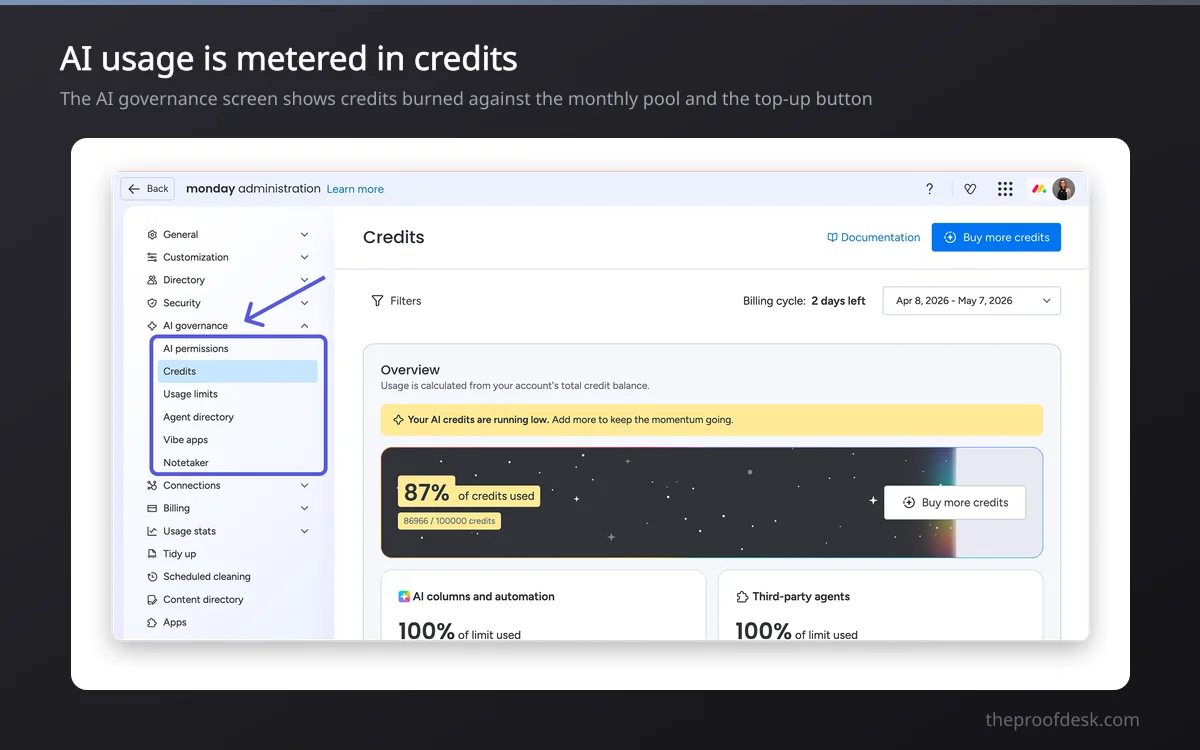
One credit pool covers every AI feature, and each feature draws from it at a different rate. Those rates decide whether the minimum bucket lasts a month or a week.
- AI blocks cost 8 credits per action, counted once per item per 24 hours, with subitems billed separately.
- The AI Notetaker costs 120 credits per meeting hour, so a single 3,000-credit bucket covers about 25 hours of meetings and nothing else.
- Sidekick messages range from roughly 10 credits for a simple ask to 150 or more for a complex one.
- Agent runs range from about 10 credits for a simple task to 250 or more for an extra-complex one, and one prompt can trigger several tasks.
- AI workflows are capped by count as well as credits: 3 active workflows on Standard, 20 on Pro and 250 on Enterprise.
When the pool runs low, notifications fire at 80 and 100 percent and some features keep running briefly before usage is paused. Topping up is a manual purchase from the Credits Usage tab in AI governance. At the time of writing, monday's pricing page itemises the minimum credit bucket as a separate charge of $10 to $30 a month, then cancels it with an introductory discount of the same amount, so the headline seat price is what you actually pay for now. Treat that discount as promotional, not permanent.
The limits that pick your plan for you
Automations and integrations are metered in actions, and the gap between tiers is enormous. Standard allows 250 automation actions and 250 integration actions per month. Pro jumps to 25,000 of each, and Enterprise to 250,000. Because one automation template can consume several actions, and workflow condition steps count too, a moderately busy Standard account can burn its monthly quota in days.
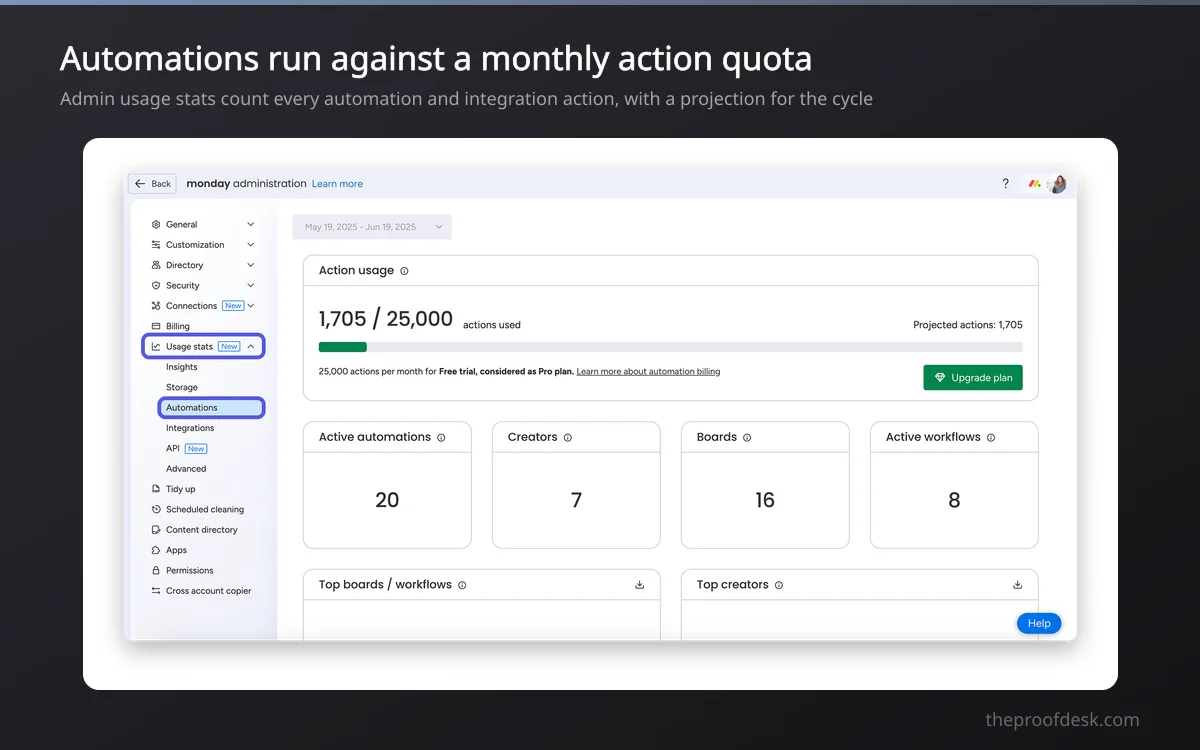
The remaining ceilings are easy to miss until you hit one.
- Boards hold 10,000 items on every plan except Enterprise, which allows 100,000.
- Storage runs 500 MB on Free, 5 GB on Basic, 20 GB on Standard and 100 GB on Pro.
- API calls are capped at 1,000 a day on Standard and 10,000 on Pro, which matters if you are wiring in external tools or agents.
- Guests do not exist on Basic. On Standard every four guests consume one billed seat, with the first three free. Pro and Enterprise allow unlimited guests.
- Private boards, dependencies and advanced permissions are Pro features, not Standard ones.
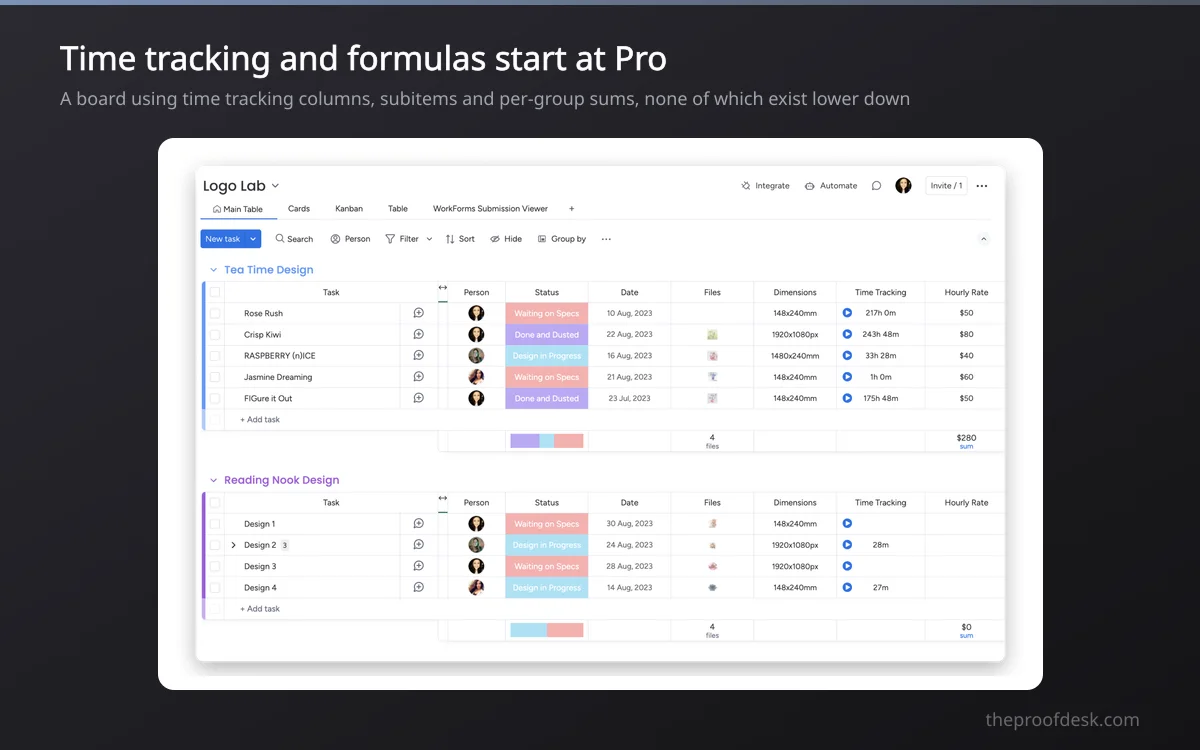
Who Pro is actually for
If you need time tracking, formula columns, private boards, dependencies or more than 250 automation actions a month, you are on Pro whatever your headcount. Teams that only need shared boards, a calendar and a Gantt chart can sit on Standard for a long time.
Frequently asked questions
Is monday.com actually free?
Yes, there is a permanently free plan, but it caps you at two seats, three boards and 200 items across the whole account. It has no automations, no integrations, no AI and no guests, so it suits a pair of people tracking a short list rather than a working team.
How much does monday.com cost per user?
On annual billing, $9 per seat per month for Basic, $12 for Standard and $19 for Pro on the AI work platform. Enterprise is quoted individually. Monthly billing forfeits an 18 percent discount, and monday CRM, dev and service are priced separately from the work platform.
Can I buy just one seat?
No. Seats are sold in buckets and the smallest paid bucket is three, so the cheapest real Basic subscription is roughly $27 a month and the cheapest Pro subscription roughly $57. Solo users either stay on the free plan or pay for two seats they will not use.
What happens when my AI credits run out?
AI features are paused after a short grace period. monday warns you at 80 percent and again at 100 percent of the pool, keeps some capabilities running briefly, then stops them until an admin buys more credits from the Credits Usage tab in AI governance. Seats and boards are unaffected.
Does monday.com give refunds?
Only in narrow circumstances. New customers can request a prorated refund of unused time within 30 days of their first purchase. Monthly renewals are never refundable, and neither is an annual plan more than 30 days after purchase. Refunds reach the card in 7 to 10 business days.
What happens if I add more people than I paid for?
A five-day countdown starts and admins get three warning emails. If nobody acts, the account auto-upgrades to the next seat bucket and is charged for it. You then have 30 days to remove the extra users, revert to the previous plan and request a refund of the difference.
Can I reduce my seat count mid-contract?
No, downgrades only take effect at your next renewal date. Deactivating a user frees the seat inside the product but does not change your bill, and you must already be at or below the new seat total before a reduction can even be scheduled.
Do guests cost extra?
It depends on the tier. Basic has no guest access at all. Standard bills four guests as one seat, so the first three are effectively free. Pro and Enterprise allow unlimited guests at no extra charge. A guest must use a different email domain from the account owner.
Key takeaways
- The advertised per-seat price is a starting point, because seats are sold in buckets with a three-seat minimum.
- AI usage is a separate meter billed at one cent per credit, currently offset by a promotional discount that may not last.
- Standard's 250 monthly automation actions is the limit most growing teams hit first, and Pro raises it to 25,000.
- Time tracking, formula columns, private boards and dependencies all live on Pro, not Standard.
- Adding users upgrades your plan within five days, but removing them only reduces the bill at renewal.
More in Services & Software
Browse Services & Software