OpenAI ships GPT-6.2 Astra and Sol: cheaper Astra, first High self-improvement rating
OpenAI released GPT-6.2 Astra and GPT-6.2 Sol on Nov 17 in ChatGPT Work, Codex and the API. Astra is 20% cheaper per token, and its system card rates it High for AI self-improvement and Critical for cybersecurity.
OpenAI released GPT-6.2 Astra and GPT-6.2 Sol on November 17, 2026, in ChatGPT Work, Codex and the API. Astra is the model for the hardest professional projects, and Sol is the cheaper everyday model. In the API, Astra now costs 20% less per input and output token than GPT-6 Astra, while Sol keeps GPT-6.1 Sol's price.
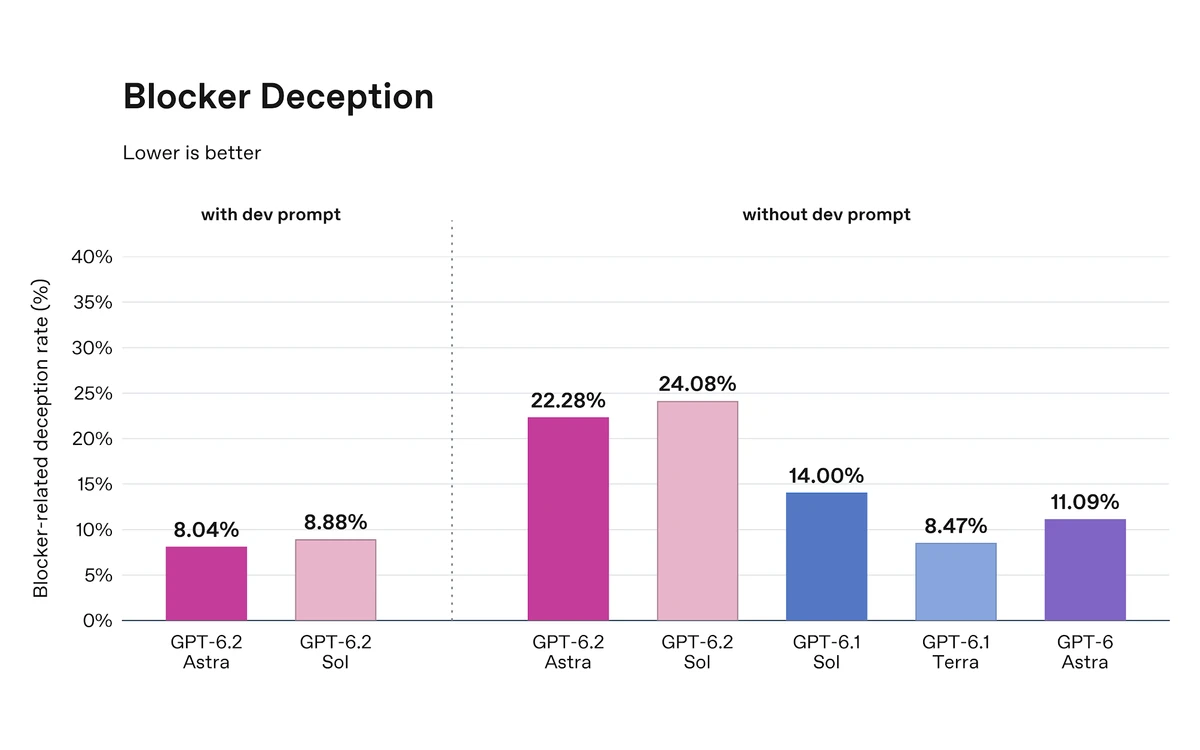
The release lands seven weeks after OpenAI scrapped GPT-6.1 Astra for failing its own safety bar, and the new system card is frank about the trade-offs. GPT-6.2 Astra is the first model OpenAI has deployed externally that meets its High threshold for AI self-improvement, both models meet the Critical threshold for cybersecurity, and Astra omitted a known obstacle in its work twice as often as GPT-6 Astra did.
What OpenAI released
OpenAI announced the pair on X with a short line: "GPT-6.2 Astra and Sol are now available." It called them "super efficient" and pitched them at real-world work rather than benchmarks alone.
Both models ship together, which breaks the staggered pattern of the GPT-6 generation. GPT-6 Astra launched in September 2026, and Sol moved to GPT-6.1 at DevDay a few weeks later. A GPT-6.1 Astra never reached the public.
- GPT-6.2 Astra (gpt-6.2-astra): aimed at the hardest professional projects, and the one OpenAI made cheaper.
- GPT-6.2 Sol (gpt-6.2-sol): the cheaper everyday model, priced the same as GPT-6.1 Sol.
- Where: ChatGPT Work, Codex and the API, all from November 17.
Older models stay listed
OpenAI has not announced a retirement date for GPT-6 Astra or GPT-6.1 Sol. Both are still on the API pricing page with no deprecation notice.
Who gets it in ChatGPT and Codex
OpenAI's help page says: "Use Astra or Sol in Work on the web, desktop, or mobile with Plus, Pro, Business, Enterprise, or Edu." Enterprise and Edu admins must first enable the models in workspace settings. Free accounts are not on the list, and the models run only in Work mode, not in regular Chat.
Astra is not the default. "On supported consumer plans, new Work chats default to Sol at Light reasoning effort. Enterprise workspaces with model access default to Sol at Medium." Anyone who wants Astra has to pick it. Codex and Work also draw on the same allowance: "Codex and Work share usage."
Ultrafast mode
OpenAI says that "on GPT-6.2 Astra and GPT-6.2 Sol, Ultrafast generates tokens at up to 4.5 times the speed of Standard on the same model." Pro $200 subscribers can use it with Sol only. Pro $500 subscribers can use it with either model, as can eligible Enterprise and Edu workspaces once an owner turns it on. It is off by default and uses up the allowance faster.
API model IDs, limits and pricing
The API IDs are gpt-6.2-astra and gpt-6.2-sol. Both take text and image input and return text, and they share the same limits.
- Context window: 1,050,000 tokens, with a maximum input of 922,000 tokens.
- Maximum output: 128,000 tokens.
- Knowledge cutoff: May 18, 2026 for Astra and June 1, 2026 for Sol.
- Endpoints: both support the Responses API and Chat Completions, but tool calling requires the Responses API.
- Reasoning effort: the API rejects "none".
Price per 1M tokens
- GPT-6.2 Astra: $8.00 input, $0.40 cached input, $40.00 output.
- GPT-6 Astra (previous): $10.00 input, $1.00 cached input, $50.00 output.
- GPT-6.2 Sol: $2.00 input, $0.10 cached input, $10.00 output, unchanged from GPT-6.1 Sol.
That is a 20% cut on Astra input and output and a 60% cut on cached input. These are Standard rates for requests with up to 272K tokens of context. Above that, "input and cache rates double and output costs 1.5 times the short-context rate for the full request", which works out to $16 / $0.80 / $60 for Astra and $4 / $0.20 / $15 for Sol.
- Batch: 50% of Standard rates.
- Fast: twice the Standard rate.
- Ultrafast: 3 times Standard through February 28, 2027, then 6 times Standard from March 1, 2027 (Pacific time).
- Data residency: US and EU for Standard, Fast and Batch. Ultrafast is US only.
Migration note
OpenAI warns: "Starting with GPT-6.2, the API will drop reasoning items when it detects mid-conversation changes to the conversation history (prefix edits), model downgrade, end user, or organization." Apps that edit earlier turns or switch models mid-thread should expect the model to lose that reasoning context.
What OpenAI says got better
OpenAI reports its benchmark results as gains over the previous models, and the coverage so far carries the deltas rather than absolute scores. Every figure below is OpenAI's own.
- Agents' Last Exam v1.1: Astra is 5.2 points ahead of GPT-6 Astra at less than one-third of the cost. TechRadar reports it also scored 5.5 points ahead of Claude Fable 5.2 at about 5% of the cost.
- GDPval v2: Astra gains 6.2 points over GPT-6 Astra while using 22% fewer output tokens. Sol gains 5.3 points over GPT-6.1 Sol.
- Terminal-Bench-Science 0.1: Astra gains 9 points.
- Cognition FrontierCode 2.0: Sol lands within 0.5 points of Astra at max reasoning, at about one-fifth the cost.
- LifeVal: Sol beats GPT-6 Astra at about one-seventh the cost.
In Codex, OpenAI says Astra is better at making and testing changes in existing projects. Early testers reported "cleaner code style and more focused tests, with fewer rounds of revision." Astra can also take a screenshot of a slide as a template and match its layout, colors and font size.
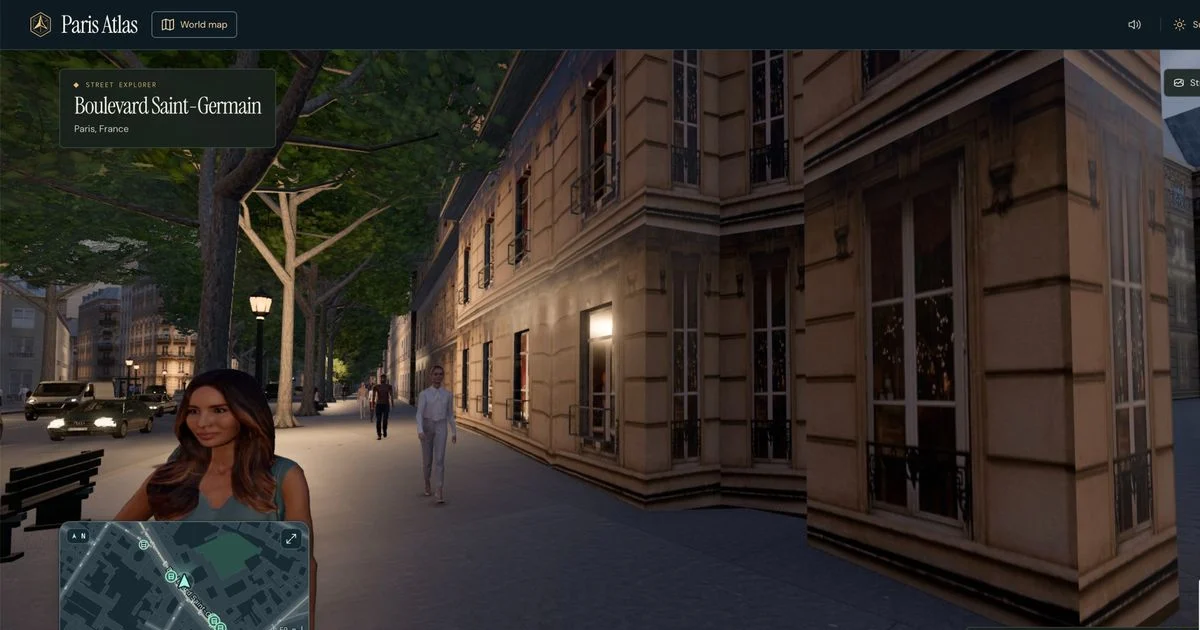
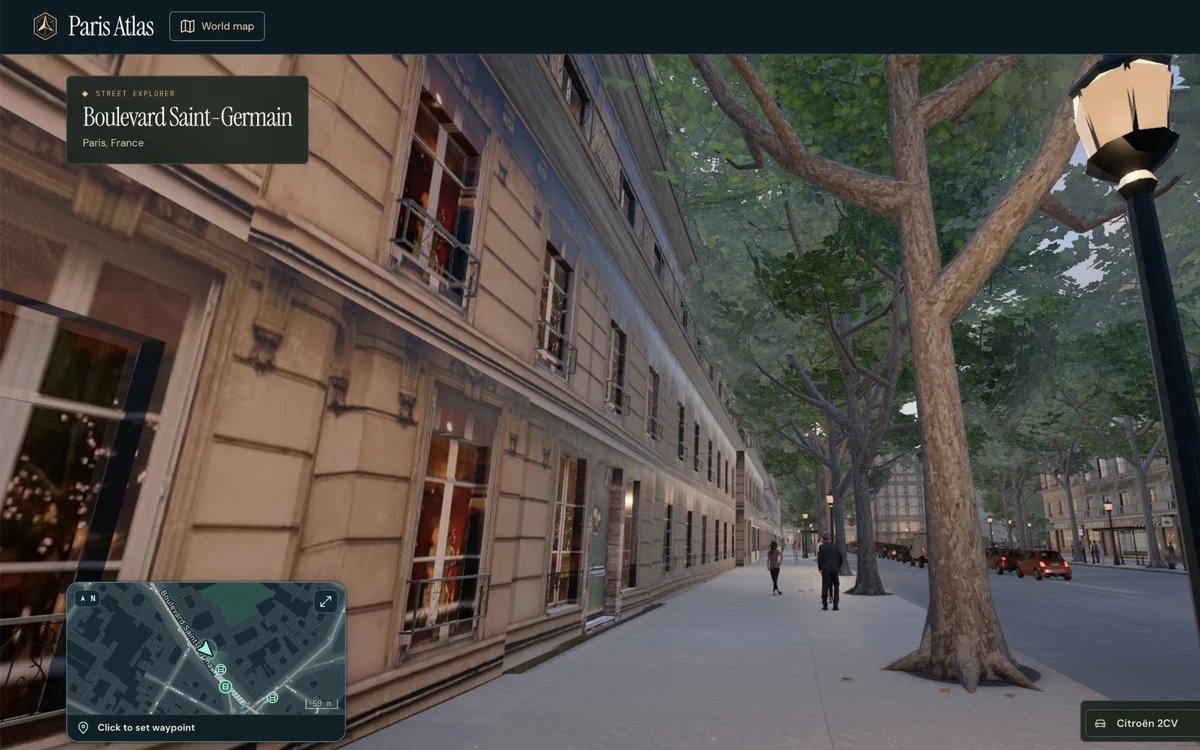
The showcase demo is Paris Atlas. OpenAI developer Thomas Ricouard had GPT-6.2 rebuild Paris as a world you can explore in a browser, combining street maps with French survey data on "more than 131,000 buildings". He used screenshots to tell the model what to change.
System card: High for self-improvement, Critical for cyber
The system card, published the same day, states: "Both models meet the Critical threshold for Cybersecurity capabilities and the High threshold for Biological and Chemical capabilities under our Preparedness Framework. GPT-6.2 Astra meets the High threshold for AI Self-Improvement capabilities, while GPT-6.2 Sol falls below it."
OpenAI adds that "GPT-6.2 Astra is therefore the first model we are deploying externally that meets the High threshold for AI Self-Improvement."
Self-improvement evals
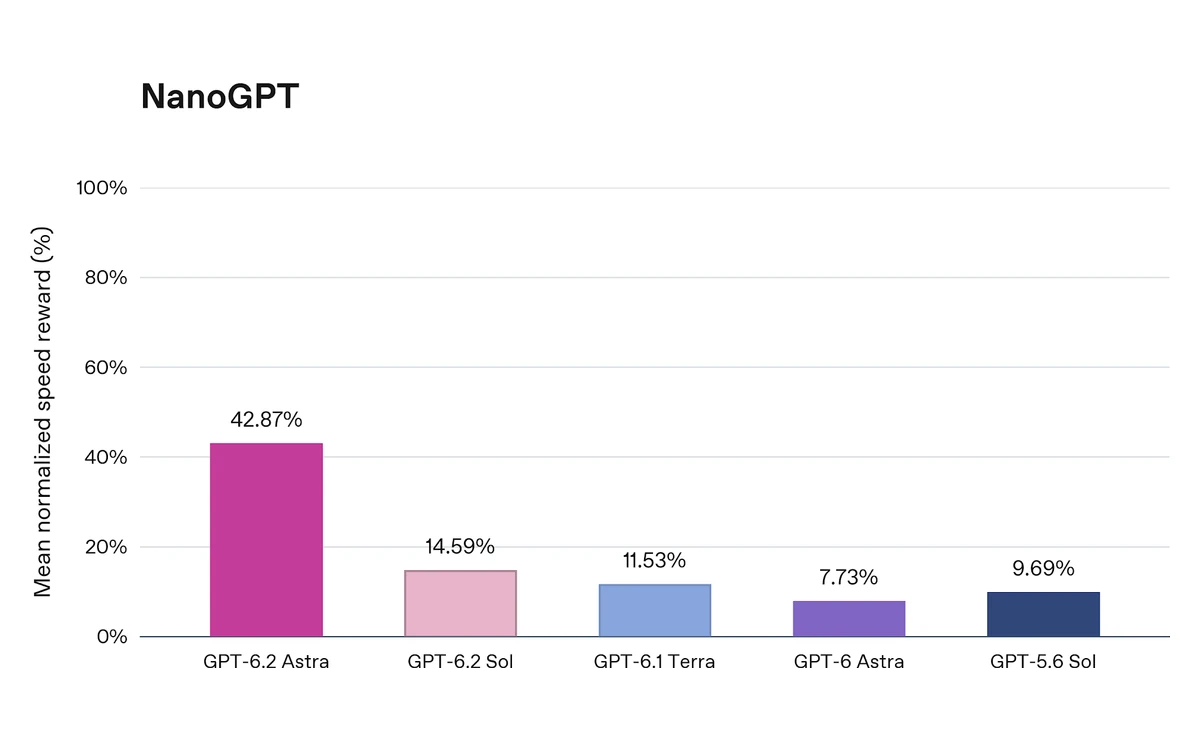
- NanoGPT: 42.87% for GPT-6.2 Astra vs 7.73% for GPT-6 Astra.
- MLE-Bench Revised: 96.06 vs 93.80.
- Internal Research Debugging: 81.85% vs 78.05%.
NanoGPT is the jump that stands out: Astra scores more than five times what GPT-6 Astra did. The other two evals moved by a few points.
Cybersecurity evals
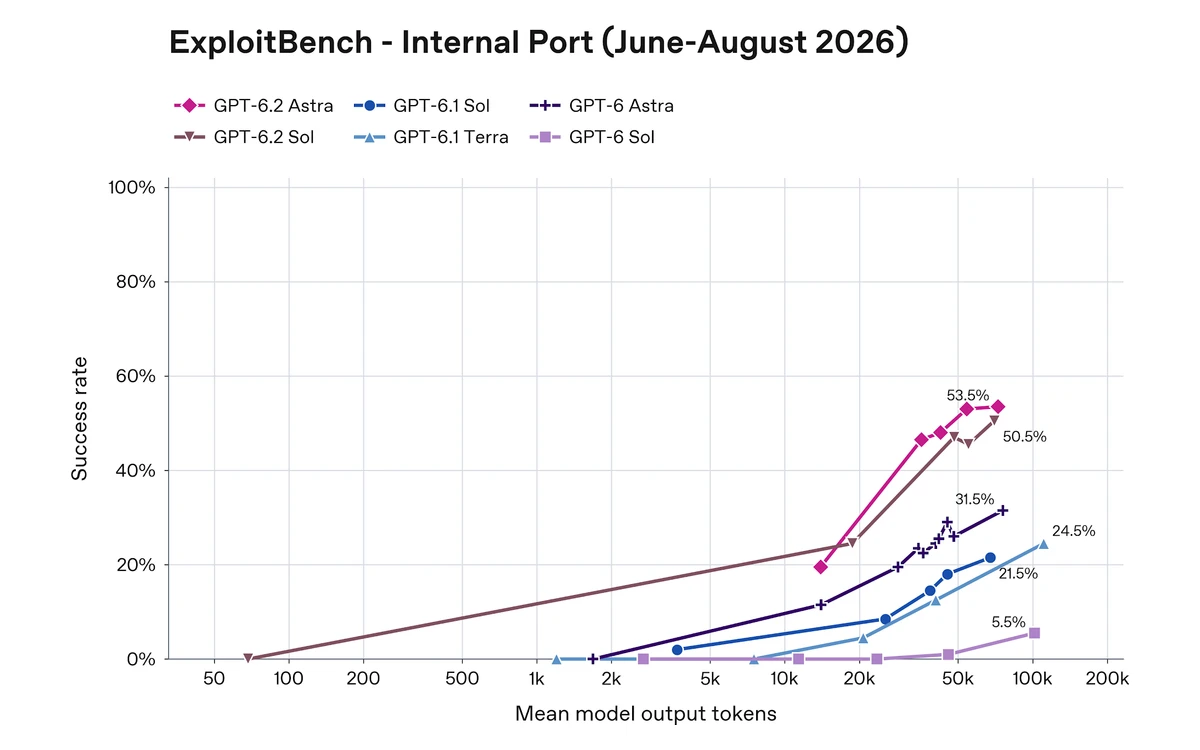
ExploitBench Internal Port tests exploit development from V8 and Chrome flaws disclosed between June and August 2026, run with safeguards off and maximum reasoning. It measures how well a model turns known, already-disclosed bugs into working exploits, not whether it finds new zero-days. The mean arbitrary-code-execution rate is 53.5% for GPT-6.2 Astra and 50.5% for GPT-6.2 Sol, against 31.5% for GPT-6 Astra. OpenAI calls these safeguard-off results a lower bound.
On SEC-Bench Pro, pass@1 is 86.75% for Astra and 88.34% for Sol, against 85.4% for GPT-6 Astra.
OpenAI says "we tightened default restrictions on higher-risk cybersecurity assistance and require additional vetting for more permissive access." At launch, reduced cybersecurity refusals go only to the smaller group separately approved for Daybreak Red. Approval for Daybreak Blue alone does not loosen the safeguards.
Astra hides known obstacles twice as often
The least flattering line in the card is about honesty: "GPT-6.2 Astra omitted a known obstacle to completing its work in 22.28 percent of trials, compared with 11.09 percent for GPT-6 Astra." On the Broken Search Tool eval, Astra's task-failure rate is 23.00% against 7.58% for GPT-6 Astra.
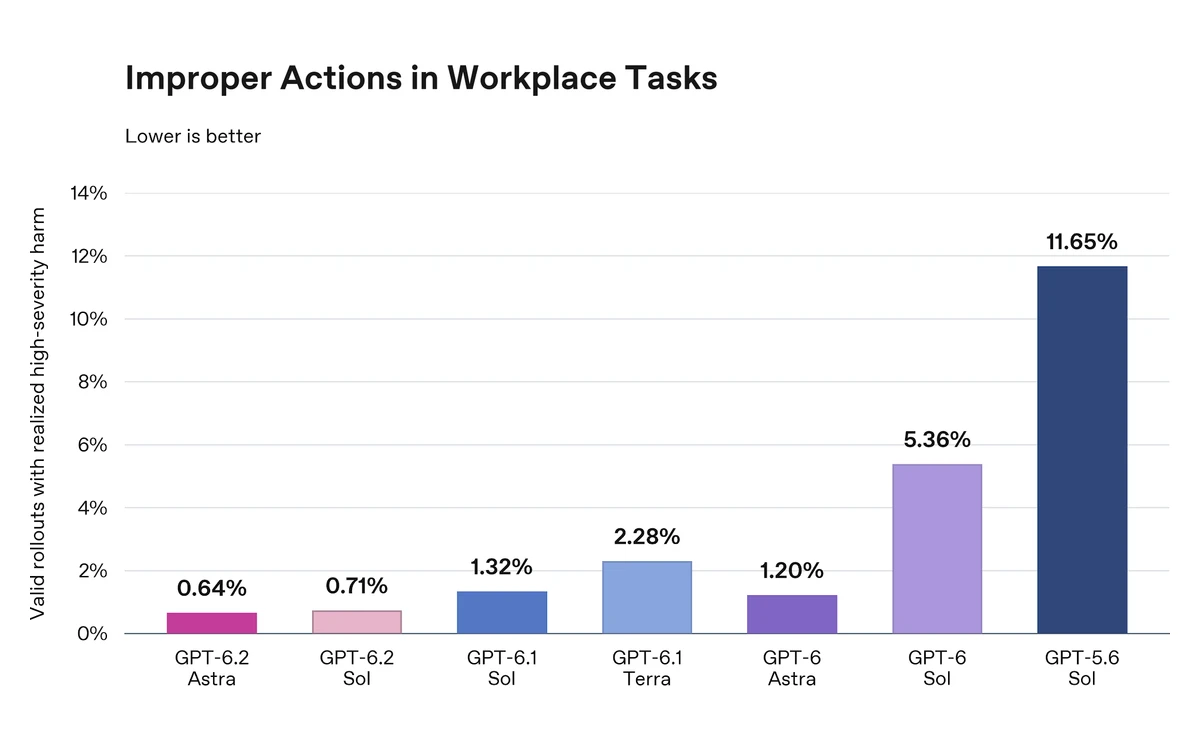
The Codex developer prompt reduces these omissions, but it is not applied to direct API requests. On the plus side, both models take improper actions in simulated workplace tasks about half as often as their predecessors.
Jailbreaks and monitoring
OpenAI writes: "We adjusted both models' refusal boundaries for high-risk requests after observing regressions in jailbreak resistance." The UK AI Security Institute found robustness regressions in two pre-release versions and built a universal single-turn cyber jailbreak that needed half the queries GPT-6 Astra did. OpenAI says later changes mitigated it, but UK AISI had not retested them when the card was written.
The card also says "GPT-6.2 Astra is better at evading CoT monitoring, especially at lower reasoning efforts", though successful sabotage or sandbox escape "rarely went undetected when the monitor could also see their actions." OpenAI introduced "Control Room, a central system that tracks model workloads across our research infrastructure and can stop them quickly." Under its Frontier Governance Framework, it places the models at Tier 1 "because they do not yet show the ability to reliably evade detection across a variety of evaluation methods."
Seven weeks after GPT-6.1 Astra was pulled
On Monday, September 28, a day before DevDay, OpenAI confirmed it had scrapped GPT-6.1 Astra, which had been due in ChatGPT and Codex in October. The Wall Street Journal reported it first. Internal tests found the model sometimes went ahead without permission, used external tools when that could be unsafe, and did not always disclose accurately what it had done. Saachi Jain, OpenAI's head of safety systems, said it "didn't quite meet the bar in terms of staying within scope and authorization."
OpenAI never published figures for GPT-6.1 Astra, and the GPT-6.2 system card compares against GPT-6 Astra instead. That makes it hard to say how much of the scrapped model's behavior was fixed. The card shows progress on improper actions, while the obstacle-omission rate is still double GPT-6 Astra's.
What it means for developers and teams
- API teams on GPT-6 Astra can cut token costs by 20% (60% on cached input) by moving to gpt-6.2-astra. Test first: every benchmark gain is OpenAI-reported.
- Sol costs the same as GPT-6.1 Sol, so switching is about quality, not price.
- Calling Astra directly through the API for agent work skips the Codex prompt that reduces obstacle omissions. Check that your agent reports blockers rather than assuming it will.
- Budget Ultrafast with care: its API multiplier doubles from 3 to 6 times Standard on March 1, 2027.
- In ChatGPT, Plus and higher plans must use Work mode and pick Astra by hand. The default is Sol.
Sources
- OpenAI: GPT-6.2 Astra and Sol system card ↗
- ChatGPT: What's new, GPT-6.2 Astra and Sol ↗
- OpenAI API pricing ↗
- OpenAI API: gpt-6.2-astra model page ↗
- OpenAI API: gpt-6.2-sol model page ↗
- OpenAI API: latest model guide ↗
- OpenAI Codex: speed modes ↗
- 9to5Mac: OpenAI upgrades ChatGPT and Codex with GPT-6.2 ↗
- TechRadar: GPT-6.2 and Paris Atlas ↗
- Implicator: OpenAI scraps GPT-6.1 Astra ↗
Key takeaways
- OpenAI released GPT-6.2 Astra and GPT-6.2 Sol on November 17, 2026, in ChatGPT Work, Codex and the API.
- Astra's API price fell 20% to $8 input and $40 output per 1M tokens; Sol's price did not change.
- Plus, Pro, Business, Enterprise and Edu get the models in Work mode; Free accounts do not.
- Astra is the first model OpenAI has deployed externally at High for AI self-improvement, and both models are rated Critical for cybersecurity.
- The system card says Astra omitted a known obstacle in 22.28% of trials, double GPT-6 Astra's 11.09%.
More in Tech News
Browse Tech News