Taskade Review 2026: Genesis, TSK-1 and the New Lower Prices
Taskade review for late 2026: Genesis app builder, TSK-1 AI, flat per-workspace pricing from $10/mo, credit limits, no refunds and the security trade-offs.
Taskade has changed more in 2026 than in the five years before it. The project and task manager that started as a collaborative outliner now leads with Taskade Genesis, a builder that turns a single prompt into a hosted app, and it runs its AI through a new model layer called TSK-1.
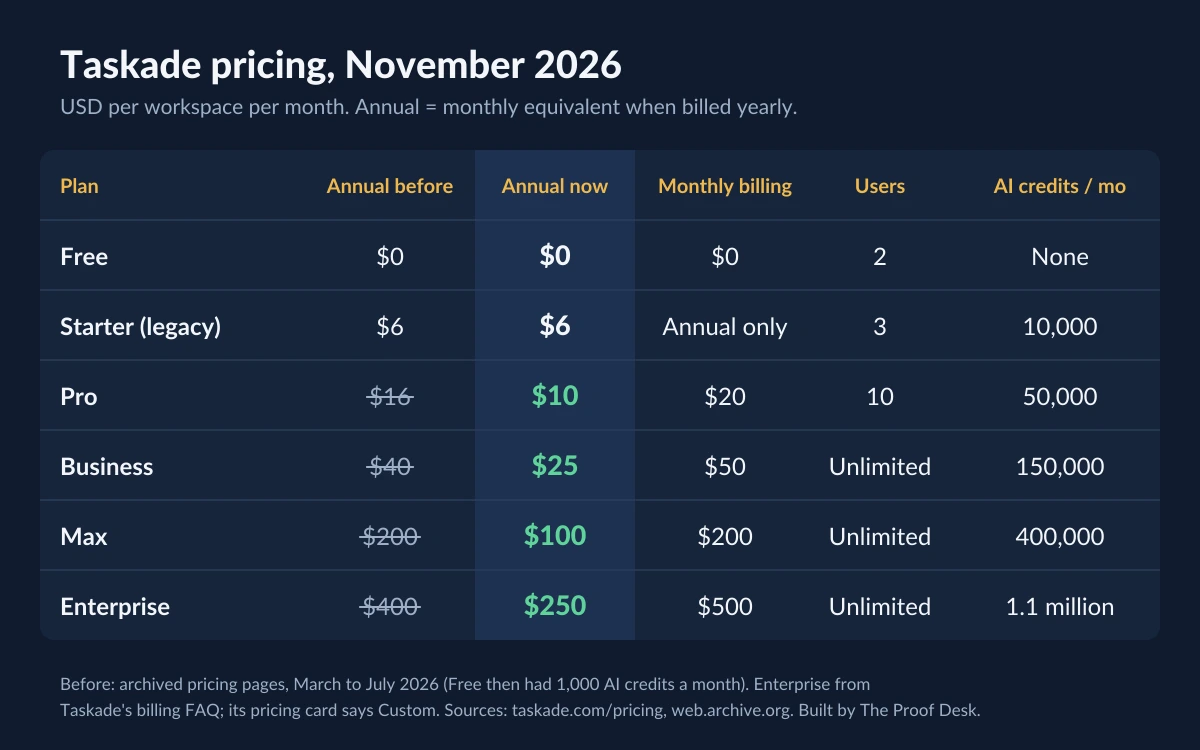
The prices moved too. Between July and October 2026 Taskade cut its annual plans hard: Pro from $16 to $10 a month, Business from $40 to $25, Max from $200 to $100 and Enterprise from $400 to $250. Over the same months it took the AI credits off the Free plan and made Claude bring-your-own-key only.
This review, current to November 3, 2026, looks at what you get now, what the credits really buy, and the trade-offs on refunds, security and data routing that the pricing page does not lead with.
Quick verdict
Taskade in late 2026 is a good deal for small teams that want projects, AI agents, automations and simple hosted apps in one place, and that are happy to pay once a year. The annual Pro plan costs $10 a month for up to 10 users, and pricing is per workspace rather than per seat, which is rare in this category.
The catches are real, though. AI credits are the limit you will actually hit, the Free plan no longer comes with monthly credits, payments are non-refundable, there is no SOC 2 report yet, and Claude is only available if you bring your own API key. Teams with formal compliance needs should wait.
- Best for: small teams and solo builders who want an AI workspace plus prompt-built internal apps at a flat price.
- Skip it if: you need a SOC 2 report, a signed DPA, EU data residency, or the option of a refund.
- Best value: Pro at $10 a month billed yearly ($120 a year), shared by up to 10 users.
What Taskade is in late 2026
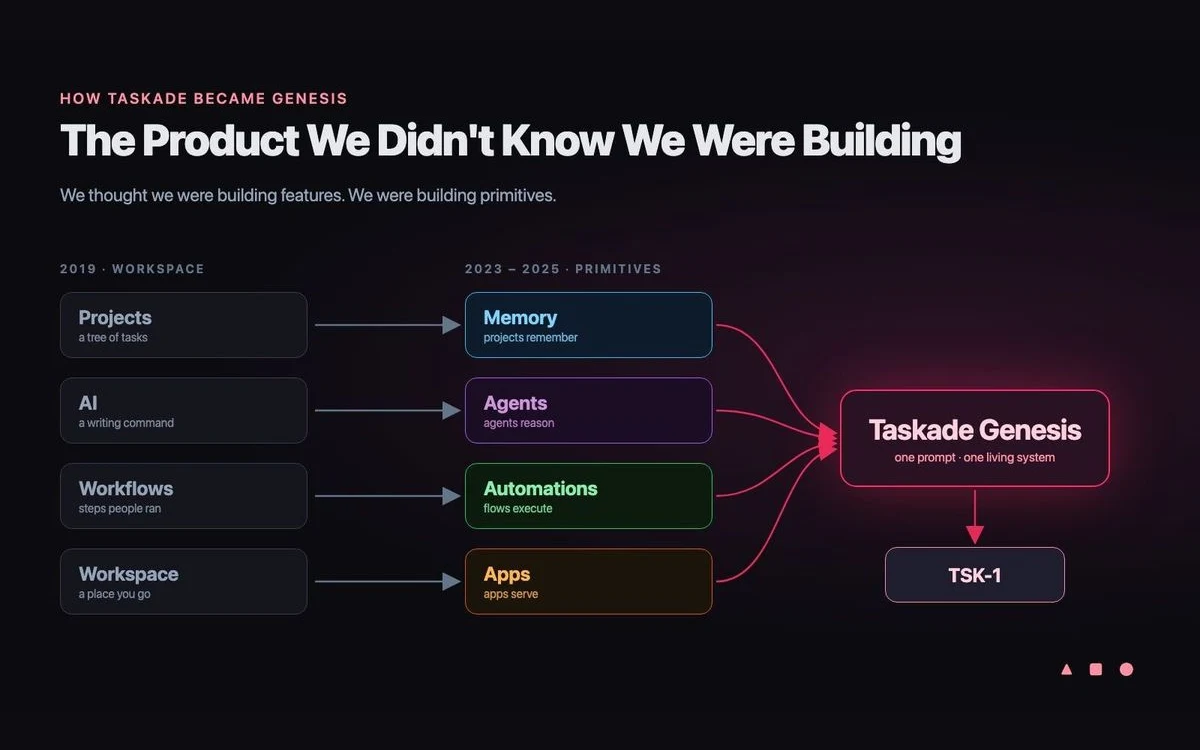
Taskade started as an outliner and task manager. It now sells itself as Taskade Genesis, a prompt-to-app builder. In Taskade's own words, "Taskade Genesis turns one prompt into a live, hosted app. Each app runs on Workspace DNA: Projects hold the data, AI agents add intelligence, and automations act across 100+ integrations."
In practice that means three building blocks sit underneath everything. Projects are the familiar lists, boards, mind maps and Gantt charts. AI agents are assistants you train on your own sources. Automations are trigger-and-action flows that connect to outside services. Genesis wraps the three into an app you can publish and share.
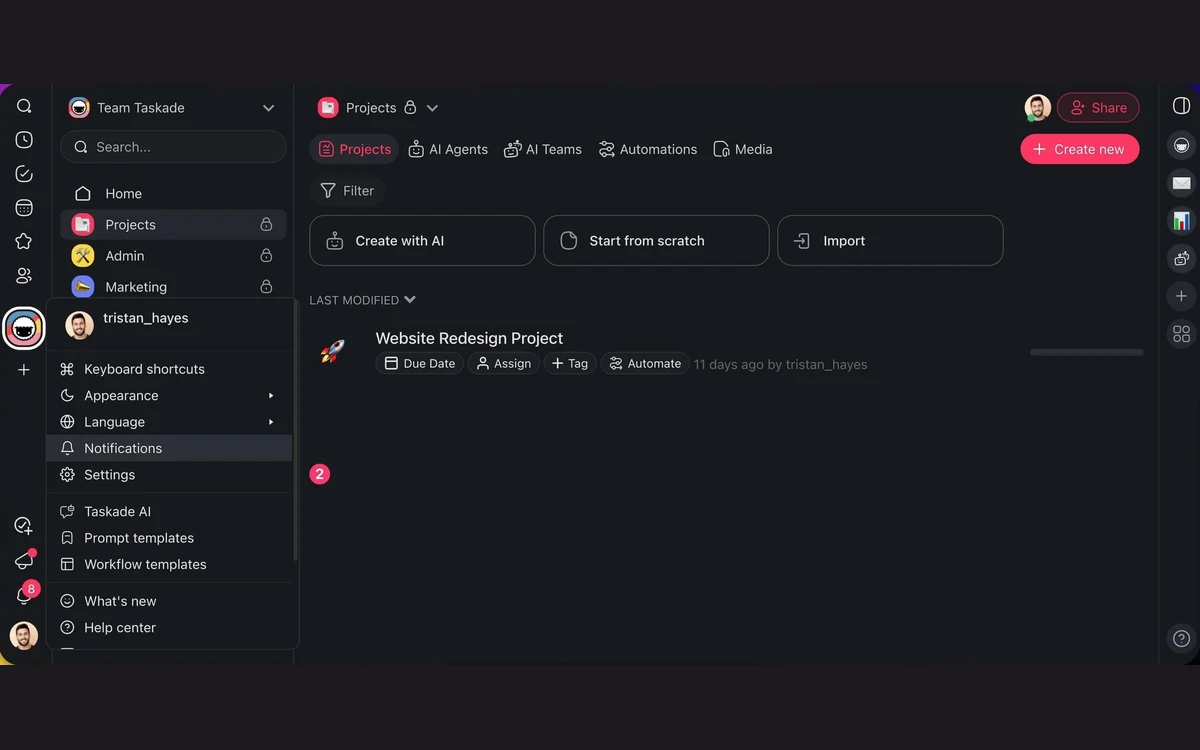
The timeline matters for anyone who read an older review. Taskade introduced its TSK-1 model layer on July 8, 2026, published "How Taskade Became Taskade Genesis" on September 30, 2026, and launched a TSK-Bench AI task leaderboard on October 16, 2026. The changelog lists more than 700 releases, with updates shipping every few days through October.
Taskade runs in the browser and in iOS, Android, Mac, Windows and Linux apps.
Building apps with Genesis
Genesis is the headline feature. You describe what you want, such as a maintenance tracker, a client portal or a restaurant map, and Taskade builds a hosted app on top of a project, with agents and automations wired in. The apps it produces are best thought of as internal tools and lightweight client-facing pages, not replacements for a custom-built product.
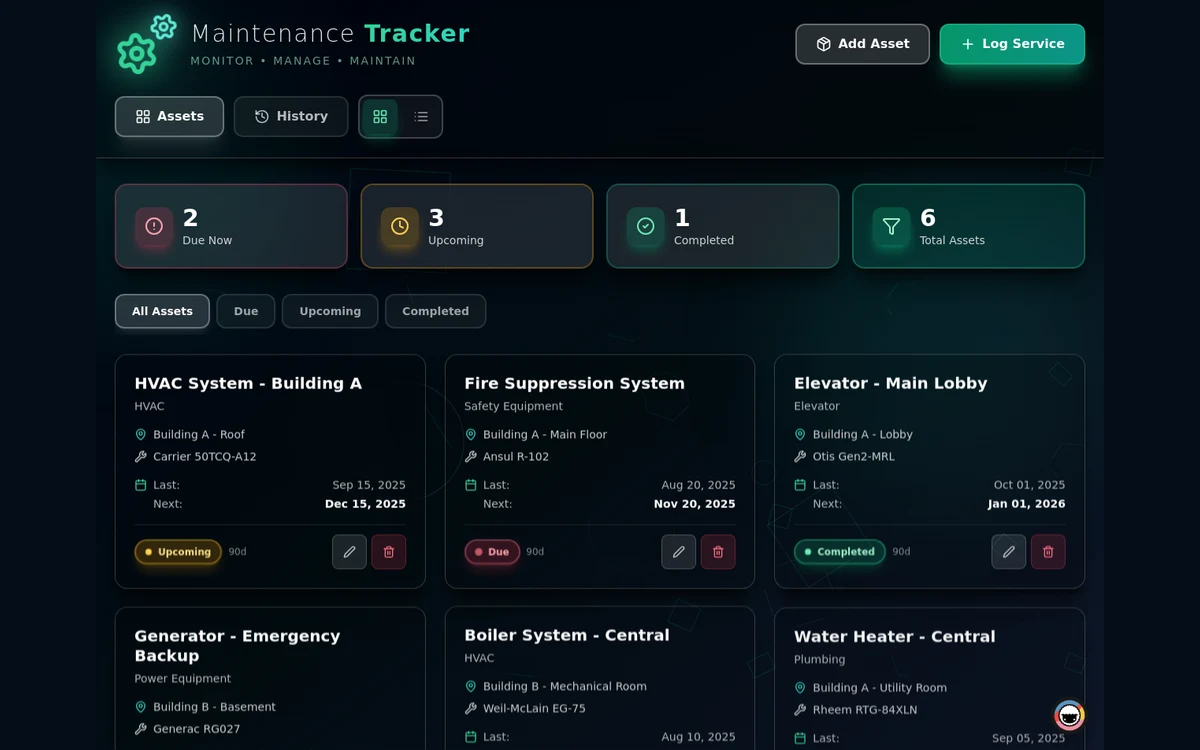
Two details make the model easier to budget for. First, "Published Taskade Genesis apps run free for visitors. Credits pay for building and AI work." Traffic to a published app does not burn your credits by itself, but AI actions inside it do. Second, the publishing options grow with the plan:
- Free: up to 3 Genesis apps, and they carry the Taskade badge.
- Starter and above: unlimited apps, no Taskade watermark.
- Pro: up to 10 custom domains, and apps can be exported to GitHub from the Publish menu.
- Business and above: unlimited custom domains.
The GitHub export is the most important line here. It gives you a way out if an app outgrows Taskade, which lowers the lock-in risk that comes with any no-code builder.
AI models, agents and automations
Taskade no longer lets you pick a named model off a list for most work. It routes requests through its own TSK-1 layer: "TSK-Instant on every plan, TSK-Standard or TSK-Thinking on paid plans, or TSK-Reasoning on Business and up. TSK-1 uses frontier models from top AI labs, including OpenAI GPT and open-weight models such as DeepSeek and Qwen."
Claude is bring-your-own-key only
Taskade's pricing page says "Claude runs on your own API key (BYOK) in custom agents on Pro and up, and in automations." You pay Anthropic directly for that usage, and Claude is no longer a built-in model that your Taskade credits cover.
Bring-your-own-key support depends on the plan. Pro accepts OpenAI, Anthropic, Google Vertex AI and Google Gemini keys. Business and above add xAI, OpenRouter, Groq, Mistral and DeepSeek. Taskade also added BYOK for xAI, Groq, Mistral and Together AI in agents on October 18, 2026.
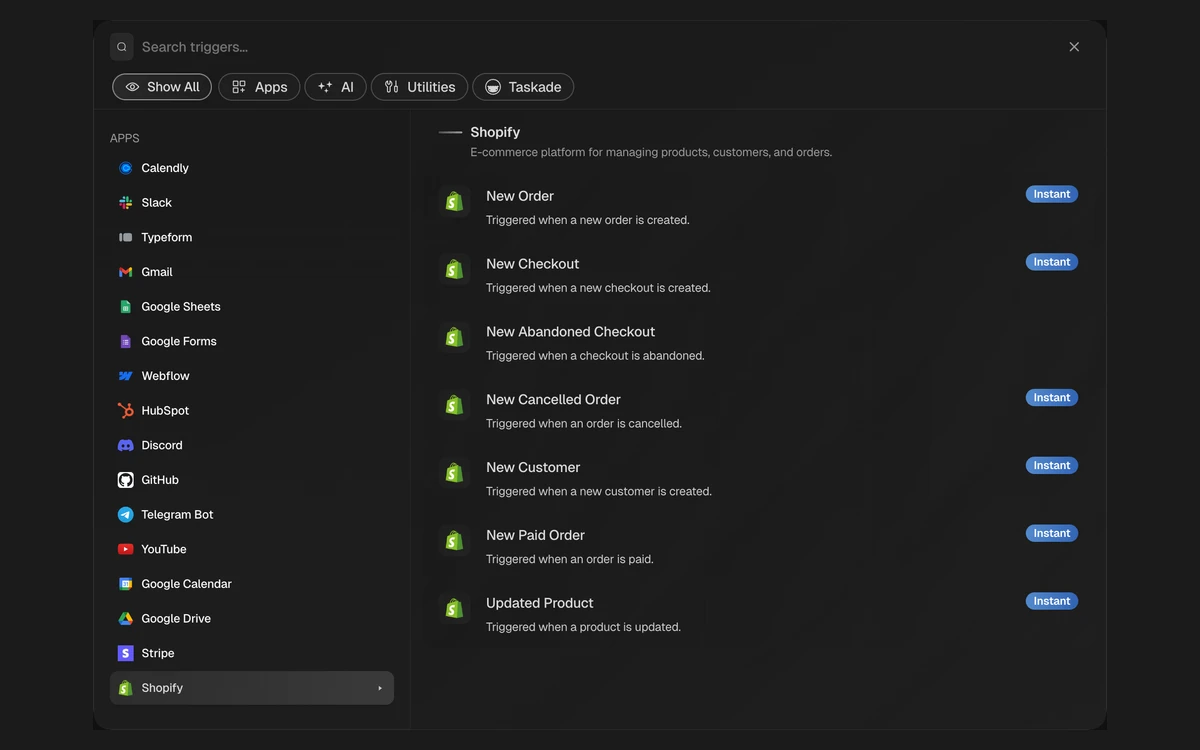
Agents are capped on the lower plans: one on Free, three on Starter, then unlimited from Pro. On Starter each agent can learn from up to 50 sources. Automation runs are capped per month at every tier: 10 on Free, 350 on Starter, 1,000 on Pro and 10,000 on Business. Pro also unlocks webhooks and HTTP requests in automations.
Developer access
For developers, Taskade lists "REST API v1, Action API v2, hosted MCP, local workspace MCP, signed webhooks, OAuth 2.0, and personal access tokens." REST v1 is generally available and Action v2 is in beta. The hosted MCP endpoint works with Claude, Cursor, Windsurf, Zed and VS Code, and the MCP server is open source at github.com/taskade/mcp.
Taskade pricing in November 2026
Every paid plan is priced per workspace, not per user: "the teammates you invite share these credits at no extra cost." Prices below are the monthly equivalent when billed yearly, with the monthly-billing price in brackets. Taskade says annual billing saves 50% compared with monthly billing on Pro, Business, Max and Enterprise.
- Free - $0. No monthly AI credits, 3 Genesis apps, 1 agent, 10 automation runs a month, 250 MB storage, 1 workspace, up to 2 members.
- Starter - $6/mo billed yearly ($72 a year), annual only. 3 users, 10,000 AI credits a month, unlimited apps and workspaces, 3 agents, 5 GB storage, 350 automation runs a month.
- Pro - $10/mo billed yearly ($120 a year), or $20 monthly. 10 users, 50,000 AI credits a month, unlimited agents and automations, 100 GB storage, 1,000 automation runs a month, up to 10 custom domains, hosted MCP, BYOK.
- Business - $25/mo billed yearly ($300 a year), or $50 monthly. Unlimited users, 150,000 AI credits a month, 10,000 automation runs a month, 1 TB storage, unlimited custom domains, SAML single sign-on, advanced analytics, unlimited version history, priority support.
- Max - $100/mo billed yearly ($1,200 a year), or $200 monthly. Unlimited users, 400,000 AI credits a month, and 320,000 requests a day, four times Business's 80,000.
- Enterprise - $250/mo billed yearly ($3,000 a year), or $500 monthly, per Taskade's billing FAQ. 1.1 million AI credits a month, unlimited users, SCIM and a custom SLA. The pricing card itself says Custom with a Contact sales button.
Is Starter still for sale?
The pricing page still shows a Get Starter button. Taskade's billing FAQ, updated October 30, 2026, calls it "The legacy Starter plan, kept for existing subscribers" and says it is "not offered to new buyers". Plan on Pro if you are signing up now.
Credits are the real limit
User counts are generous, so the limit that shapes your bill is AI credits. Building Genesis apps, running agents and AI steps in automations all draw from the workspace's shared monthly pool, and everyone in the workspace spends from the same balance.
The Free plan has moved furthest. As recently as July 2026 it included 1,000 AI credits a month. Today the pricing page says "Free has no monthly AI credits. Earn free AI credits instead: invite a friend or a teammate, or share Taskade on social media." A third-party pricing tracker also recorded that in October 2026 the Free plan stopped including a one-time grant of 6,000 starter credits.
That makes Free a place to organize projects and try the interface, not a way to judge the AI features. It is permanent, though: Taskade says the Free plan "is not a trial, and it has no end date."
Lifetime-deal owners from AppSumo and PitchGround should note one line: "AI features use credits on every plan, lifetime deals included." Taskade says those deals were sold before Taskade AI existed, and that the monthly AI credits it gave those accounts were "a voluntary extension, not part of the original purchase."
Security, privacy and where your data goes
Taskade's security page is unusually candid, and the answers are not what a procurement team wants to hear:
- SOC 2: "SOC 2 Type II readiness (audit not yet complete)" and "We have no SOC 2 report to hand you yet."
- Contracts: "We do not currently offer a signed Data Processing Agreement or Standard Contractual Clauses to customers."
- Hosting: a single AWS region in US East. GDPR, CCPA and ISO 27001 work is described as in progress.
- Encryption: data is encrypted in transit and at rest, with AES-256 for backups and stored credentials.
On training, Taskade says "We contractually prohibit AI providers from using your data to train general AI models", and adds that it "cannot guarantee third-party compliance".
The privacy policy, updated October 26, 2026, lists the AI subprocessors. Microsoft Azure OpenAI and Azure AI Foundry serve the default models, alongside OpenAI, Anthropic, Google, AWS Bedrock, Alibaba (Qwen), DeepSeek, Moonshot AI (Kimi), Z.ai (GLM), MiniMax, xAI and NVIDIA. Taskade states that "Some of these providers are based outside the United States, including in China." If your company restricts where prompts can be processed, that sentence alone may decide the question.
Refunds, cancellation and trials
Taskade's terms, last updated September 30, 2026, are blunt: "Payments are final." Subscription fees, renewals, seat charges, AI credit purchases and paid App Kits are non-refundable, and there are no refunds or credits for partial periods, unused credits or unused seats.
There are three exceptions: where the law requires a refund, purchases made through the App Store or Google Play (the store's rules apply), and when Taskade ends a paid plan without cause. Billing errors are reviewed if raised within 30 days of the charge, but Taskade says that review "is not a refund period."
You can cancel at any time from Settings, then Billing. The plan stays active until the end of the period you paid for, then drops to Free. Plans bought in the iOS or Android apps are managed through the store.
We found no free trial on the web. Taskade's older help center mentions a 7-day trial in the mobile apps only. Combined with the no-refund policy, the safest route is to start on monthly billing for a month, then switch to annual once you know your credit usage.
What users say
Taskade holds a TrustScore of 4.5 from 841 reviews on Trustpilot, but the page notes that the company "hasn't invited customers recently, so reviews may not be representative" and that it "Hasn't replied to negative reviews". On Capterra it rates 4.7 from 67 reviews.
A 4-star Trustpilot review from October 14, 2026 sums up the common complaint: "The app appears to be very helpful but it is not user friendly. There is a lot of information absorb." That matches our read. Taskade does a lot, and with weekly releases the interface keeps shifting, so expect a learning curve.
Who should use Taskade, and who should not
A good fit
- Small teams that want one tool for tasks, docs, AI agents and automations, and would rather not pay per seat.
- Agencies and consultants who want quick client-facing apps on their own domain.
- Developers who want an MCP-ready workspace that Claude, Cursor or VS Code can read and write.
- Growing teams that would pay per seat elsewhere: Business covers unlimited users for $25 a month billed yearly.
A poor fit
- Regulated companies, or anyone whose buyers ask for a SOC 2 report, a DPA or EU hosting.
- Teams whose policies forbid routing data to AI providers based in China.
- People who want to test the AI features for free before paying.
- Teams that rely on Claude and do not want to manage a separate Anthropic bill.
Frequently asked questions
Is Taskade free?
Yes, there is a permanent Free plan, but it has no monthly AI credits. It covers 1 workspace, up to 2 members, 3 Genesis apps, 1 agent, 10 automation runs a month and 250 MB of storage. AI credits on Free are earned by inviting people or sharing Taskade on social media.
Is Taskade priced per user?
No. Paid plans are priced per workspace and the credits are shared. Starter covers 3 users, Pro covers 10, and Business, Max and Enterprise cover unlimited users.
How much does Taskade Pro cost?
Pro is $10 a month billed yearly ($120 a year) or $20 a month on monthly billing. It includes 50,000 AI credits a month for up to 10 users.
Can I use Claude in Taskade?
Only with your own Anthropic API key. Taskade says Claude runs on BYOK in custom agents on Pro and up, and in automations. The built-in TSK-1 models use OpenAI GPT and open-weight models such as DeepSeek and Qwen.
Does Taskade offer refunds?
Generally no. All charges are non-refundable, including unused credits and partial billing periods. The exceptions are refunds required by law, App Store or Google Play purchases, and Taskade ending a plan without cause.
Is there a free trial of the paid plans?
Not on the web. An older Taskade help page describes a 7-day trial in the iOS and Android apps only. Paying monthly for the first month is the lower-risk way to test a paid plan.
Does Taskade use my data to train AI, and where is it stored?
Taskade says it contractually bars its AI providers from training general models on your data, while noting it cannot guarantee their compliance. Data is stored in a single AWS region in US East, and some AI subprocessors are based in China.
Do AppSumo lifetime deals still work?
Yes, for existing holders. Lifetime deals keep their original features, but AI features use credits on every plan, and Taskade no longer sells lifetime deals.
Can I move a Genesis app off Taskade?
On Pro and above you can export an app to GitHub from the Publish menu. Free and Starter do not include the export.
Key takeaways
- Taskade is now an AI workspace plus prompt-to-app builder (Genesis), with projects, agents and automations underneath.
- Pricing is per workspace, not per user. Pro is $10 a month billed yearly for up to 10 users; monthly billing costs twice as much.
- AI credits are the real limit, and the Free plan no longer includes any monthly credits.
- Claude is BYOK only; built-in models include OpenAI GPT, DeepSeek and Qwen via Taskade's TSK-1 layer.
- All payments are non-refundable, there is no web trial, and there is no SOC 2 report or signed DPA yet.
- Best for small teams and builders on a budget; a poor fit for regulated companies.
More in Services & Software
Browse Services & Software