Balsamiq Review 2026: Per-Editor Pricing, AI Credits and the Desktop Sunset
Balsamiq review for late 2026: per-editor Cloud pricing from $16, free reviewers, pooled AI credits, and why the $149 Desktop license stops selling on December 31, 2026.
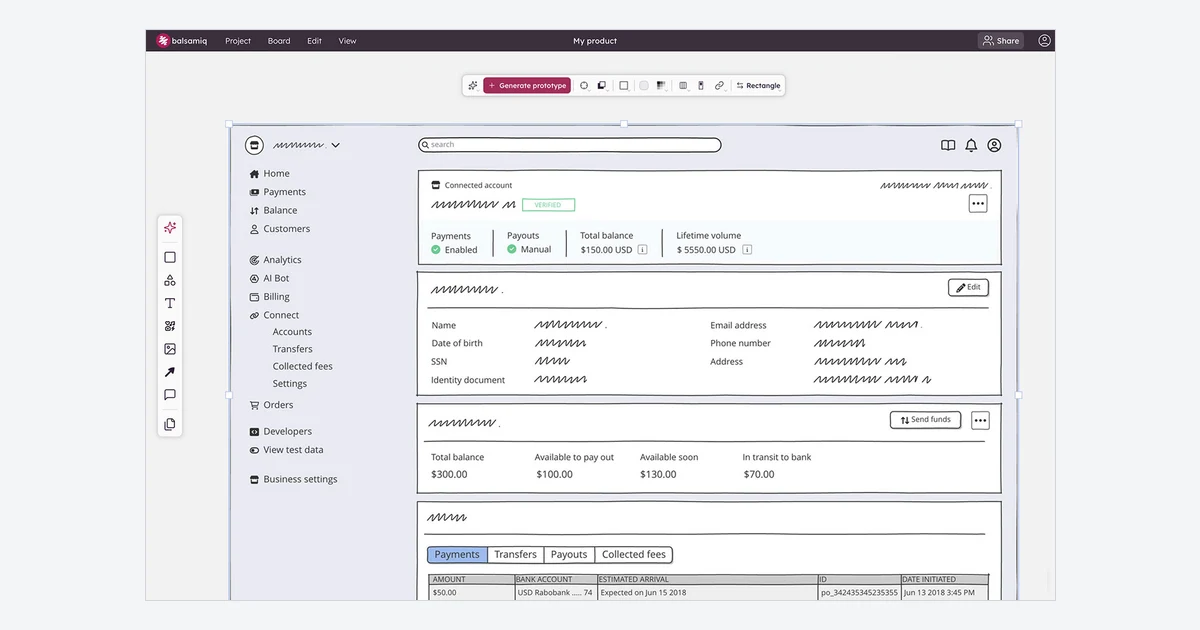
Balsamiq has been the default answer to "how do I sketch a screen without opening a design tool" since 2008. The deliberately hand-drawn look keeps conversations on layout and flow instead of fonts and colors, and that is still the reason to buy it.
What changed is the purchase itself. Balsamiq Cloud now charges per editor ($16, $24 or $35 per editor per month on annual billing) while reviewers stay free, every plan carries a monthly pool of Balsamiq AI credits, and the one-time Balsamiq for Desktop license ($149 per user) is only sold until December 31, 2026. This review covers what you actually pay now, what the AI credits buy, and who should still grab a Desktop license before the cutoff.
Verdict at a glance
Balsamiq is the fastest way for a product manager, founder or developer to get a low-fidelity idea in front of other people. It is not a visual design tool and does not try to be one. If you need pixel-perfect mockups, design systems or developer hand-off specs, Figma or Penpot is the better fit.
- Best for: product managers, business analysts, founders and engineers who need to agree on structure before anyone designs anything.
- Pricing: from $16 per editor per month billed annually ($192 per year); reviewers are free and unlimited.
- AI: prompt-to-wireframe, screenshot conversion, AI edits and generated prototypes, paid for with monthly credits that do not roll over.
- Watch out for: project caps (10, 100 or 400), no monthly Enterprise option, no education discount, and the Desktop app leaving sale on December 31, 2026.
Bottom line
Buy Balsamiq Cloud Starter if a small team needs shared wireframes and stakeholder comments. Buy one Desktop license before December 31, 2026 only if you work solo, offline, and do not need AI or real-time collaboration.
What Balsamiq is and how it feels to use
Balsamiq is a low-fidelity wireframing and prototyping tool. You drag UI controls from a library onto a canvas, and everything renders in a sketchy, marker-like style. Balsamiq describes its library as "hundreds of UI elements, icons, and markup elements" and publishes no exact count.
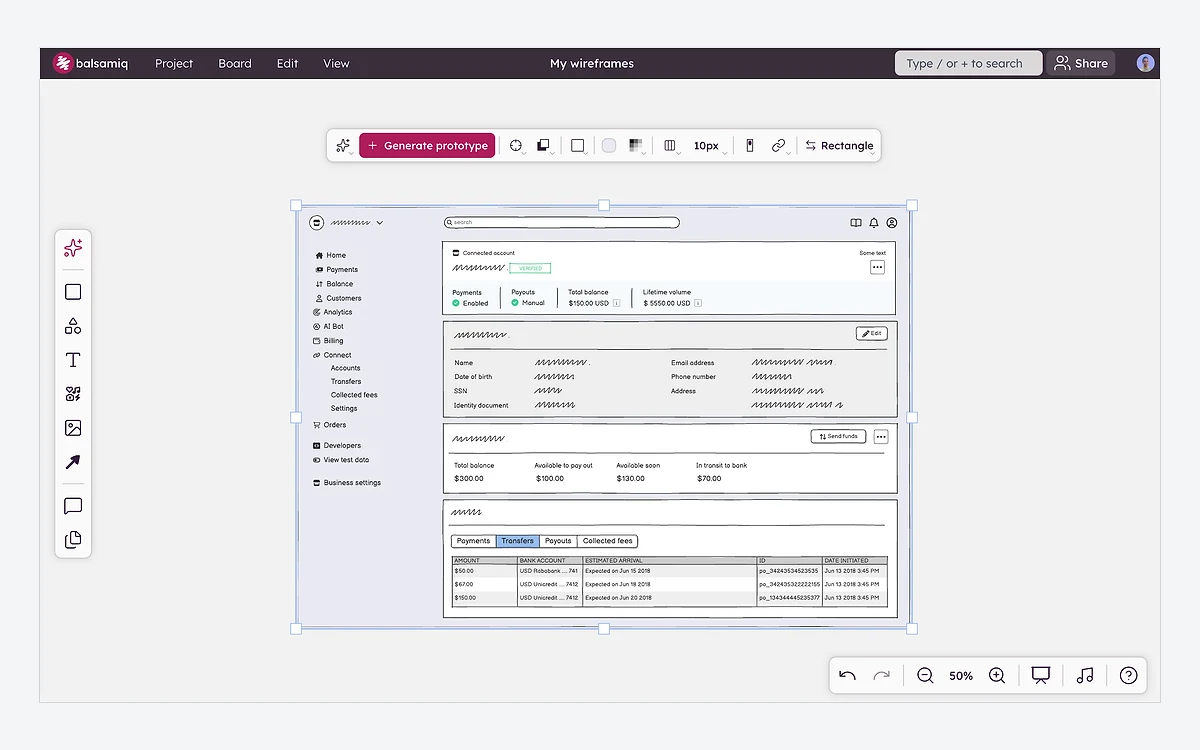
The building blocks are simple. A Space holds projects, each project holds unlimited boards, and boards can link to each other for click-through flows. You also get reusable custom components, alternates for comparing versions of a screen, full-screen presentation mode and export to PDF, PNG or the native BMPR file. Links between boards keep working in exported PDFs, which makes a PDF a surprisingly usable offline prototype.
Balsamiq Cloud runs in the browser and supports Chrome 124+, Edge 142+, Firefox 140+ and Safari 17+. The company was founded in San Francisco in 2008, is bootstrapped with no outside funding, and says more than 16,000 teams use it every month.
Balsamiq pricing in 2026
Balsamiq Cloud switched to per-editor pricing in 2026. The pricing page sums it up as "Only pay for the ones editing" - editors are paid seats, reviewers are free users who can view and comment on projects they have access to.
- Starter: $16 per editor per month billed annually ($192 per year), or $23 billed monthly. Up to 10 projects, unlimited reviewers, 500 monthly AI credits per editor, MCP server, Slack integration, custom reusable components, PDF and image export.
- Teams: $24 per editor per month billed annually ($288 per year), or $34 billed monthly. Up to 100 projects, 1,000 monthly AI credits per editor, billing admin role and priority support.
- Enterprise: $35 per editor per month, annual only ($420 per year). Up to 400 projects, 2,500 monthly AI credits per editor, SSO with SAML, US or EU data storage, legal and security review support, premium support and enterprise SLAs.
Balsamiq advertises the annual toggle as "Save 30%". In practice, Starter costs $276 per year per editor on monthly billing versus $192 on annual. Prices are in USD, sales tax may apply, and the only accepted payment method is a credit or debit card. Invoices, purchase orders and Net 30 terms go through a software reseller.
Worked example: a small product team
Three editors and ten stakeholders on Starter, annual billing: 3 x $192 = $576 per year, and the ten reviewers cost nothing. The same three editors on Teams cost $864 per year and get a shared pool of 3,000 AI credits a month and room for 100 projects instead of 10.
Project caps matter more than seats
You pay per editor, but each plan caps projects at 10, 100 or 400. Boards inside a project are unlimited, so one project per product or client stretches the Starter cap a long way. Agencies juggling many clients will hit the 10-project ceiling first.
Older per-project plans such as Business 20 still exist as legacy plans, and Balsamiq lets those customers move to a per-editor plan at any time.
Balsamiq AI and how credits work
Balsamiq AI is included on every Cloud plan. It can turn a text prompt into a wireframe, convert a screenshot or image into an editable wireframe, edit an existing wireframe on request, generate sketch-style images, generate interactive prototypes, and connect to other AI tools through the Balsamiq MCP server. It is not available in the Desktop app or the Jira and Confluence Server or Data Center apps, and it cannot currently be disabled.
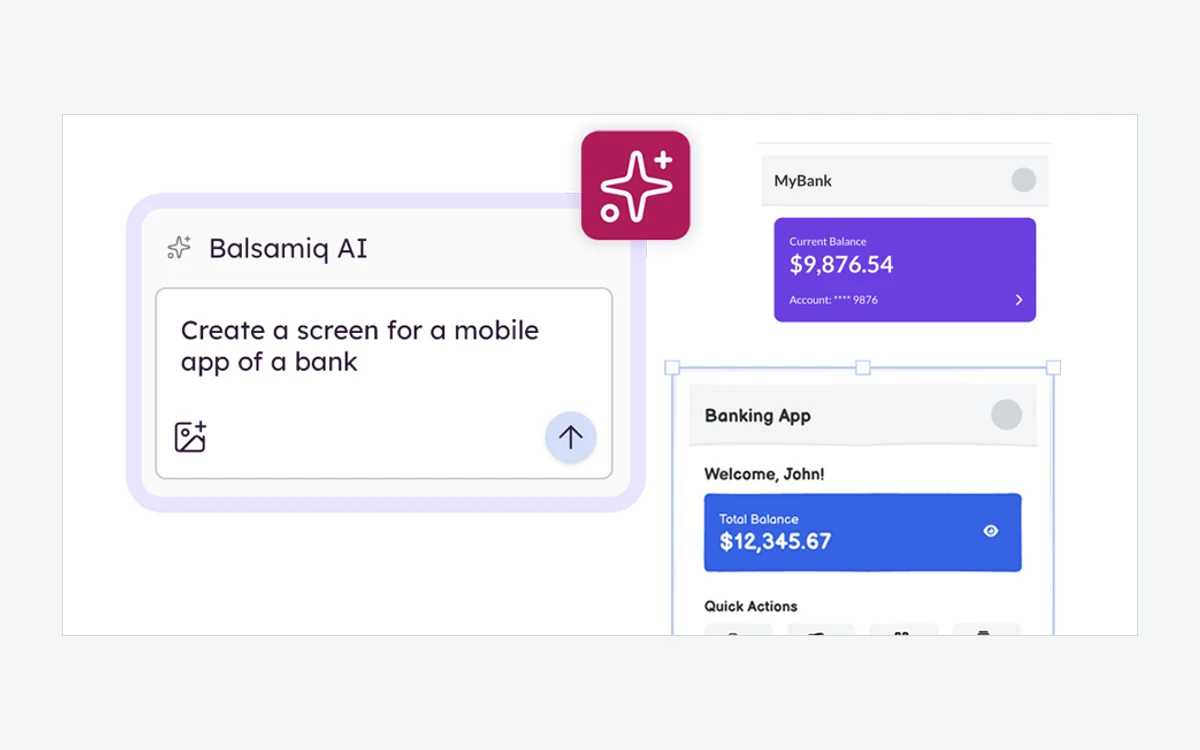
Every action spends credits. Balsamiq lists these approximate costs:
- Generate a screen from text or an image: about 16 credits.
- Edit with AI: about 15-18 credits.
- Generate an image: about 40 credits.
- Generate a prototype: about 8-50 credits, roughly 8-10 per screen.
That is where the pricing page figures come from: Starter's 500 credits are "enough for around 31 wireframes or 10 prototypes", Teams' 1,000 cover about 62 wireframes or 20 prototypes, and Enterprise's 2,500 cover about 156 wireframes or 50 prototypes.
Credit rules to know before you rely on AI
The allowance is stated per editor but lands in one pool shared by everyone in the space. Unused monthly credits do not roll over. Extra credits cost $15 per 500 on every plan and expire 12 months after purchase. Consumed credits are generally non-refundable.
Balsamiq states that customer data is never used to train external AI models. For teams that sketch mostly by hand and use AI to rough out a first screen, the included pool is plenty. Teams that lean on generated prototypes will burn through Starter credits quickly and should price in top-ups or Teams.
Collaboration, prototypes and hand-off
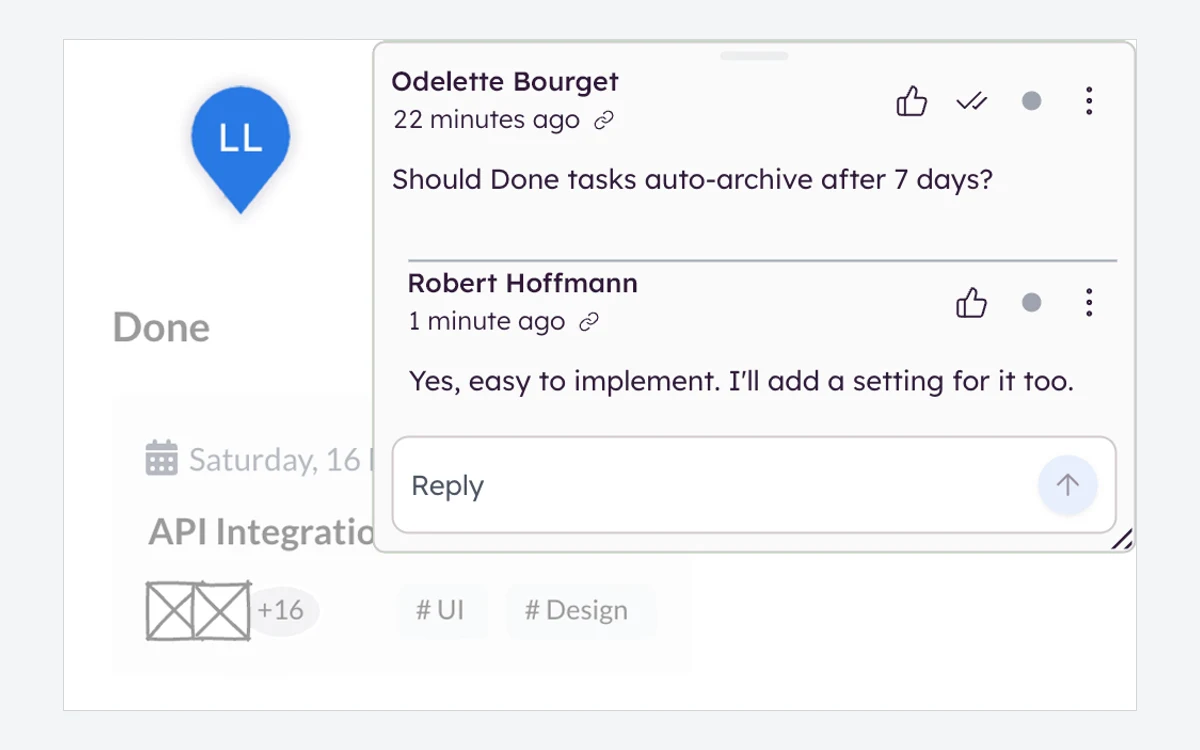
Real-time co-editing and comments are Cloud-only features. Reviewers can open a project, click through linked boards and leave comment threads pinned to specific spots on a wireframe, which is the workflow free reviewer seats are designed for.
Generated or hand-linked prototypes can switch between mobile, tablet and desktop layouts with one click, open in a dedicated viewer mode, or be downloaded as raw HTML. For static hand-off you export PDF, PNG or BMPR, or present full screen in a meeting.
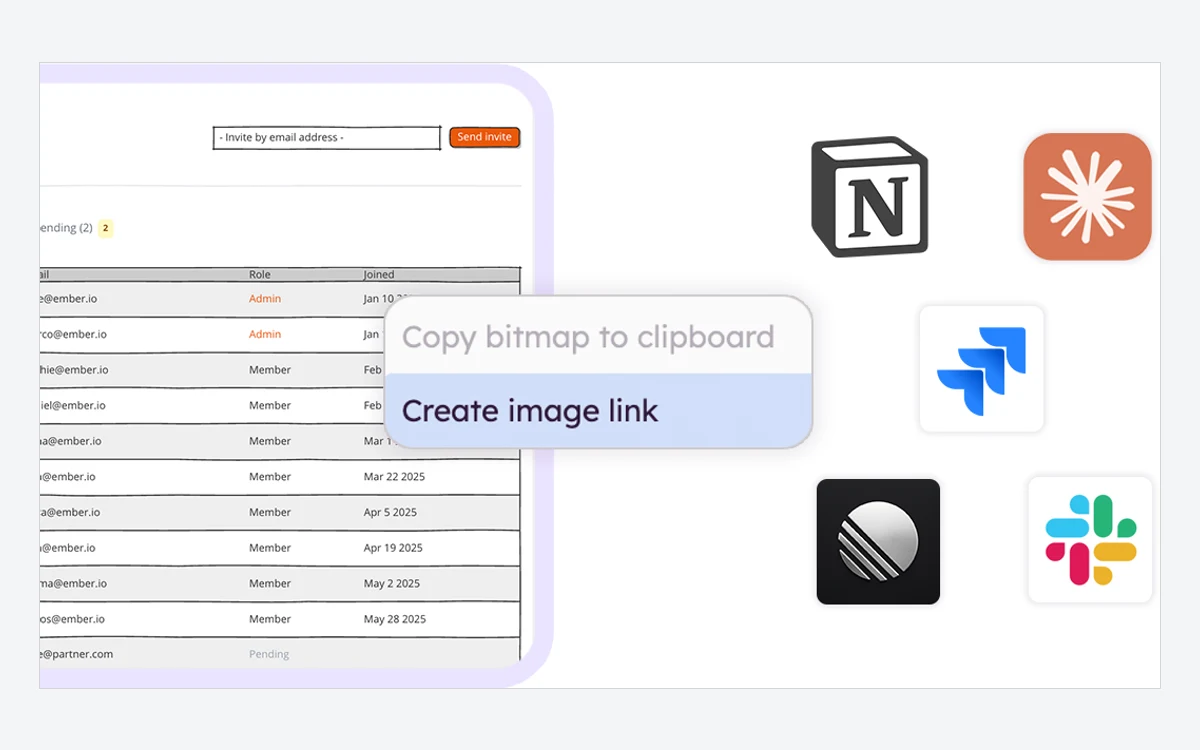
Balsamiq embeds in Jira and Confluence, shares to Slack, and links from Notion and Asana. The older Balsamiq for Google Drive integration was removed in December 2024, so ignore reviews that still list it.
Balsamiq for Jira and Confluence
The Atlassian apps are sold separately through the Atlassian Marketplace and priced by Atlassian user tier, not per editor. On Atlassian Cloud, monthly billing is $8 per month for up to 10 users and $1.00 per user per month up to 100 users, with lower per-user rates above that. Annual tiers run from $80 for 10 users and $1,000 for 100 users to $5,950 for 1,000 users. Data Center versions start at $100 per year for Jira (50 users) and $1,000 per year for Confluence (500 users).
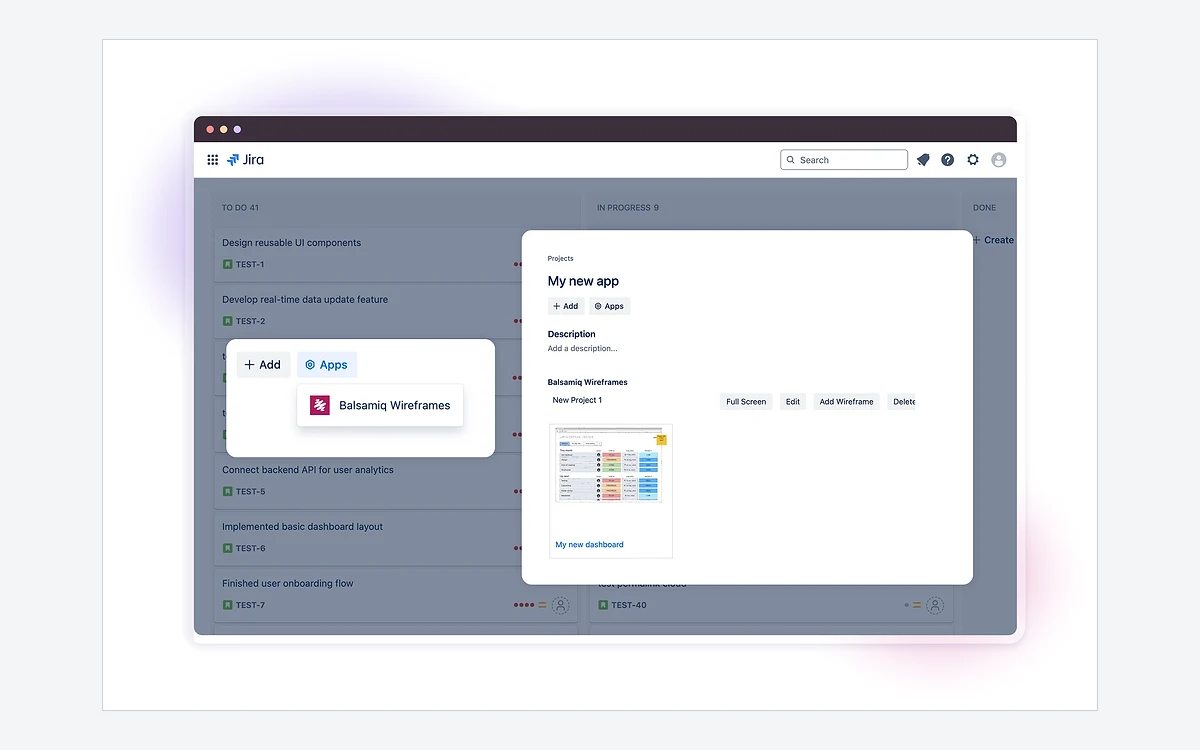
For teams already living in Jira or Confluence, this can be cheaper than Cloud seats because everyone on the Atlassian instance is covered. The trade-off is that Balsamiq AI is not available in the Server or Data Center apps, and Marketplace purchases follow their own trial terms.
Balsamiq for Desktop: buy before December 31, 2026 or skip it
Balsamiq for Desktop is in maintenance mode and, in Balsamiq's words, "will only be sold until December 31, 2026." Support continues through December 31, 2027. It is a one-time, version-based purchase tied to the user, not the computer, with free minor 4.x updates and no new features.
- Price: $149 for 1 user, $298 for 2, $720 for 5, $1,340 for 10, $2,350 for 20, $5,080 for 50 and $7,450 for 100 users.
- No maintenance or renewal fees; named users only, no floating licenses; refunds within 60 days of purchase.
- Works fully offline and saves locally.
- No Balsamiq AI, no real-time collaboration, no comments.
- Runs on Windows 10 (4 GB RAM) and macOS 14 Sonoma (4 GB RAM). Linux is not supported.
Compatibility runs one way: Desktop files can be migrated to Balsamiq Cloud, but BMPR files created in Cloud cannot be opened in Desktop. Balsamiq is nudging Desktop users toward Cloud with the code Cloud20, which gives 20% off a new paid plan for three months.
Should you still buy Desktop?
$149 once versus $192 a year for Starter makes Desktop tempting for a solo consultant who wireframes offline and shares PDFs. Everyone else should go Cloud: collaboration, AI and future features live there, and Desktop support ends with 2027.
Balsamiq vs Figma and Penpot
Balsamiq competes on speed and focus, not on fidelity. Figma covers everything from wireframes to production UI and developer hand-off, and Penpot does much of the same as an open-source option. Both can do low-fidelity work, but they invite polishing too early and are harder for non-designers to pick up.
- Pick Balsamiq when the people sketching are PMs, analysts, founders or engineers, and you want stakeholders to argue about structure rather than colors.
- Pick Figma when wireframes flow straight into high-fidelity design and engineering hand-off. See our Figma review.
- Pick Penpot when you want an open-source, self-hostable design tool. See our Penpot review.
Trial, cancellation, refunds and data
The Cloud trial lasts 14 days with no credit card. It allows up to 2 active projects with unlimited boards, 100 AI credits, and as many co-editors and reviewers as you like.
- Cancellation must be completed in the product; an email request is not enough. You keep access until the end of the billing period.
- Plans auto-renew at the then-current price unless cancelled.
- There is no longer a pause option. Paused spaces were deleted on May 22, 2026.
- After a trial or subscription ends, the space stays read-only for 30 days. Deletion follows within 30 to 60 days, depending on whether you read the Help Center or the Terms.
- Cloud refunds are discretionary and "most favorably reviewed within 30 days of the charge."
Balsamiq Cloud is hosted on AWS. Project files are stored in the US by default, and Enterprise customers can choose the EU (Ireland). Balsamiq is SOC 2 Type II compliant, participates in the EU-U.S. Data Privacy Framework, and offers a DPA with standard contractual clauses.
Registered nonprofits with educational, civic, health or humanitarian purposes get 50% off the first year of Starter or Teams on annual billing. There is no education program: students, teachers and schools get no discount.
Pros and cons
Pros
- Very fast to learn; non-designers are productive in minutes.
- Free, unlimited reviewers keep stakeholder access cheap.
- Sketch style keeps feedback on structure and flow.
- AI features match the low-fidelity style instead of fighting it.
- SOC 2 Type II, EU storage option on Enterprise, no training on customer data.
Cons
- Project caps of 10, 100 and 400 can force an upgrade before seats do.
- AI credits do not roll over and top-ups expire.
- Enterprise is annual only; card payment only unless you use a reseller.
- No education discount.
- Desktop leaves sale on December 31, 2026 and has no AI or collaboration.
Frequently asked questions
How much does Balsamiq cost in 2026?
Balsamiq Cloud costs $16, $24 or $35 per editor per month on annual billing for Starter, Teams and Enterprise. Monthly billing is $23 for Starter and $34 for Teams; Enterprise is annual only. Reviewers are free.
Is there a free version of Balsamiq?
No, there is no free plan, but there is a 14-day free trial without a credit card. Reviewers on a paid space are always free, and viewing Desktop files stays free.
Can I still buy Balsamiq for Desktop?
Yes, until December 31, 2026. A license costs $149 per user one-time, and Balsamiq supports Desktop through December 31, 2027.
Do Balsamiq AI credits roll over?
No. Unused monthly credits are lost at the end of the month. Purchased top-ups ($15 per 500) last 12 months from purchase.
Can I open Balsamiq Cloud files in the Desktop app?
No. BMPR files created in Cloud are not compatible with Desktop, though Desktop files can be migrated to Cloud.
Does Balsamiq offer student or education discounts?
No. Balsamiq says it has no education program. Registered nonprofits can get 50% off the first year of Starter or Teams on annual billing; schools and universities are not eligible.
Can I get a refund from Balsamiq?
Cloud refunds are at Balsamiq's discretion and most favorably reviewed within 30 days of the charge; consumed AI credits are generally non-refundable. Desktop licenses can be refunded within 60 days of purchase.
Where does Balsamiq store my data?
On AWS in the US by default. Enterprise customers can choose EU storage in Ireland.
Key takeaways
- Balsamiq Cloud is billed per editor: $16, $24 or $35 per month on annual billing, with unlimited free reviewers.
- Project caps (10, 100, 400) often decide the plan more than seat count does.
- AI credits are pooled across the space, cost about 16 per generated screen, and do not roll over.
- Balsamiq for Desktop ($149 per user, one-time) is sold only until December 31, 2026 and has no AI or collaboration.
- Choose Balsamiq for fast, low-fidelity alignment; choose Figma or Penpot when wireframes need to become production design.
More in Services & Software
Browse Services & Software