Deno Deploy Review 2026: Pricing, Limits and the Shutdown After Deno Joins Cloudflare
Deno Deploy review: Free, Pro $20 and Builder $200 plans, limits, Postgres, KV and Sandbox, plus what the shutdown after Deno joins Cloudflare means for you.
Deno Deploy is Deno Land's hosted platform for JavaScript and TypeScript apps. The rebuilt version went generally available on February 3, 2026 with framework presets, Postgres, built-in tracing and a new product called Deno Sandbox. On paper it is one of the cleanest ways to ship a Deno, Next.js or Astro app without touching a server.
Then, on October 9, 2026, Ryan Dahl announced that the entire Deno team is joining Cloudflare and that "Deno Deploy will continue operating for six months before shutting down." This review covers what the platform does well, what it costs as of November 2, 2026, where it falls short, and why the shutdown changes the verdict for almost everyone.
Verdict: good platform, do not start anything long-lived on it
Deno Deploy is a pleasant product with fair pricing, and its observability is better than many larger hosts offer by default. None of that matters much now. Deno has said the service ends roughly six months after October 9, 2026, and the only official destination is Cloudflare Workers.
- New long-lived projects: do not start them on Deno Deploy.
- Short experiments, demos and evaluation work: still fine, as long as you accept that the app has an expiry date.
- Existing users: plan a move now. Migration support to Cloudflare Workers is promised for paying customers only.
- Deno runtime users who self-host: you have more time. The runtime gets one more year of monthly bug-fix and security releases.
What is still unclear
Deno has not published an exact shutdown date, and nothing we found says what happens to Deno KV data, Sandbox volumes or Subhosting customers when the service closes. The pricing page still sells every plan and no docs.deno.com page mentions the shutdown. Treat anything beyond "six months" as unknown.
What Deno Deploy is
Deno Deploy runs your code on Deno's own infrastructure. You connect a GitHub repository or paste code into a browser playground, pick a framework preset, and Deploy builds and serves it. Every push creates a new revision, and idle apps shut down on their own, so you pay only while code is loaded in memory.
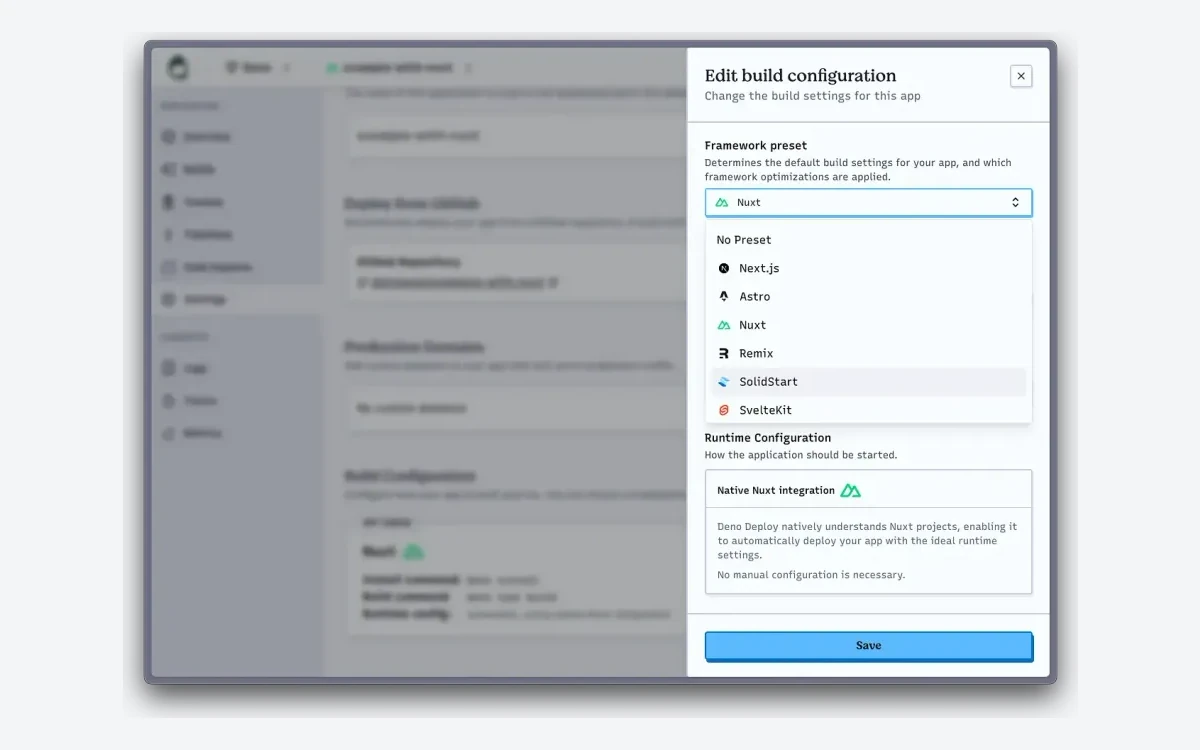
Supported frameworks listed in the docs are Next.js, Astro, Nuxt, SolidStart, TanStack Start, SvelteKit, Fresh, Lume and Remix. Next.js on Deno Deploy always builds in standalone mode. The new Deploy gives these frameworks "first-class support", which the older Classic version did not.
Deno claims cold starts "complete within 100 milliseconds for hello world applications". The idle timeout before an app is unloaded sits between 5 seconds and 10 minutes, and the pricing page says idle apps automatically shut down after about 20 to 30 seconds.
Two shutdowns, not one
Deno Deploy Classic (dash.deno.com) and the subhosting v1 API were already shut down on July 20, 2026, and the deployctl CLI is being sunset. The shutdown announced in October is the second one: it covers the new Deno Deploy itself.
Pricing and plan limits
The pricing page covers all Deno Deploy products, including Deno Sandbox and Deno Subhosting. These are the figures on deno.com/deploy/pricing as of November 2, 2026. Older numbers in the February GA post and the March changelog no longer match.
- Free: $0 per month. 1M requests, 20 GiB egress, 10 hours of active CPU, 150 GiB-hours of memory, 10 GiB revision storage, 10 apps, 5 custom domains, 3 team members.
- Pro: $20 per month. 5M requests, 200 GiB egress, 50 CPU hours, 750 GiB-hours of memory, 50 GiB revision storage, 50 apps, 100 custom domains, 10 team members.
- Builder: $200 per month. 25M requests, 2,000 GiB egress, 500 CPU hours, 7,500 GiB-hours of memory, 500 GiB revision storage, 10,000 apps, 1,000 custom domains, 25 team members.
- Enterprise: custom pricing, unlimited custom domains, and the only plan with a 99.95% uptime SLA.
Overage rates on Pro and Builder
- Requests: $2 per million beyond the included amount.
- Egress: $0.20 per GiB.
- Active CPU: $0.10 per hour.
- Memory: $0.025 per GiB-hour.
- Revision storage: $0.08 per GiB-month.
How memory billing works
You are billed for 768 MB of memory for each second your app is loaded, which is the default allocation. Per-app memory limits range from 512 MB to 4096 MB depending on plan. A busy app that never goes idle burns memory hours around the clock, so check that meter before the CPU one.
Smaller limits worth knowing
- Builds: Free allows 1 concurrent build and 15 per hour, Pro 3 and 60, Builder 20 and 250.
- Wildcard subdomains are not on Free; every paid plan includes them.
- Logs and traces are kept for 1 day on Free and 1 week on Pro and Builder. Metrics history is 1 month on Free and 3 months on paid plans.
- Cron: free organizations can register at most 10 cron jobs per revision. Paid plans remove that limit.
- Support: community support everywhere, email support from Pro up, email SLA and onboarding on Enterprise only.
Deno's usage page promised alert thresholds and hard spending limits before October 1, 2025. We found no current page confirming they shipped, and no page explaining what a Free app does when it hits a quota.
Observability is the strongest feature
Logs, traces and metrics are built into the dashboard on every plan. They use OpenTelemetry and Deno's built-in OpenTelemetry integration, so a fetch call or database query shows up in a trace without extra setup.
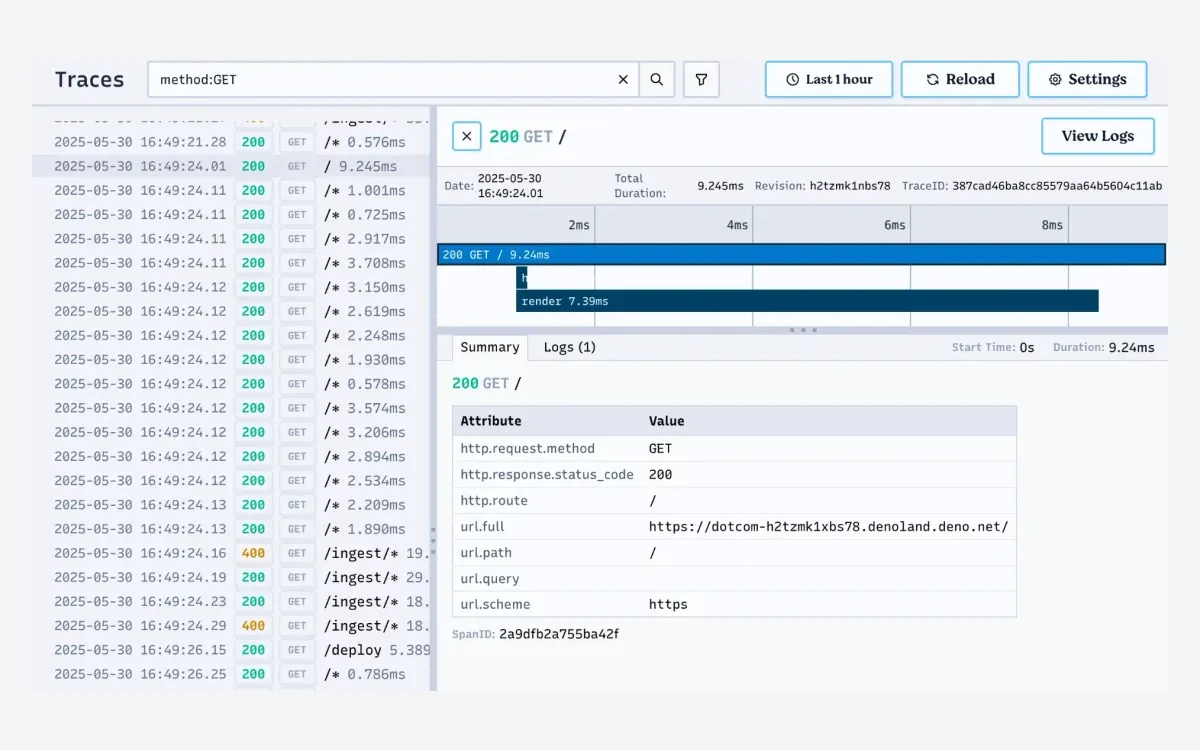
The weak spot is getting that data out. Exporting to your own OpenTelemetry backend is still listed as "Work in progress", and retention is short: one day on Free, one week on paid plans.
Databases: Postgres and Deno KV
The docs state: "Currently, PostgreSQL and Deno KV are supported." Through a partnership with Prisma you can provision Postgres for free from the dashboard, and Deploy can create a fresh database for every pull request, which makes preview environments realistic.
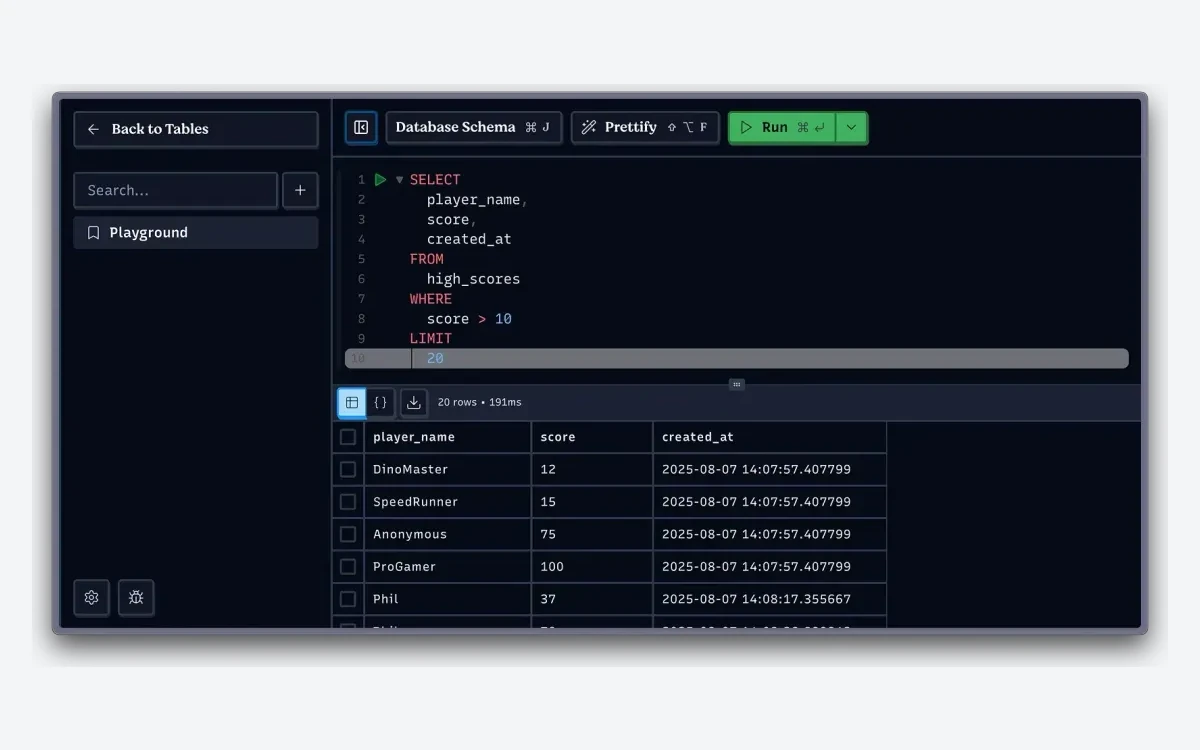
Deno KV quotas are 1 GiB storage on Free, 5 GiB on Pro and 10 GiB on Builder. Pro overage is $0.75 per GiB, $1 per million reads (4 KiB units) and $2.50 per million writes (1 KiB units).
KV gaps on the new Deploy
KV queues, read replication, manual backups and choosing a primary region are not available. KV's primary region is Northern Virginia (us-east4). For strict GDPR needs Deno itself recommends Postgres instead of KV. With a shutdown coming and no backup feature, export any KV data you care about early.
Deno Sandbox
Deno Sandbox is marketed as a way to "run untrusted code in secure Linux VMs", built for AI agents. Each sandbox gets 2 vCPU, 768 MB to 4096 MB of memory (1.2 GB default), 10 GB of ephemeral disk and a lifetime of up to 30 minutes, in Amsterdam or Chicago.
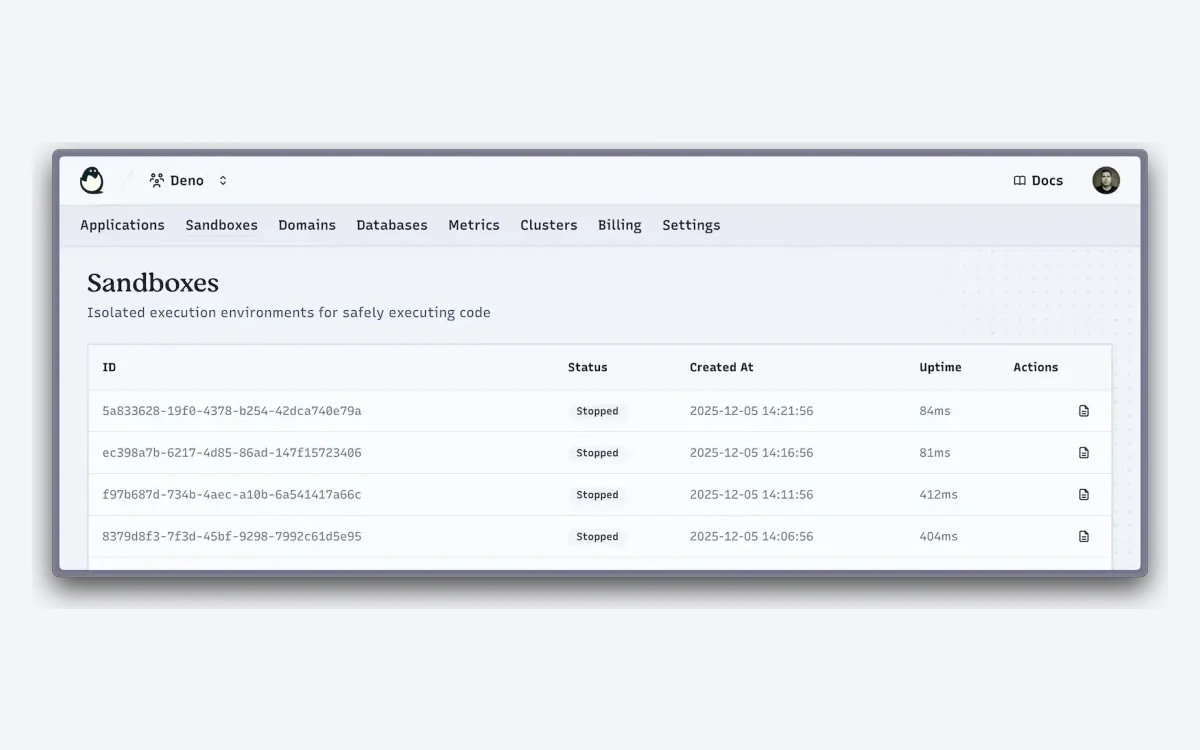
Sandboxes are not available on Free. The pricing page says Pro gets 3 concurrent sandboxes per region and Builder 20, while the docs still quote 5 per organization as the pre-release default. Pricing is also inconsistent: the pricing page says sandbox compute bills through the normal CPU, memory and egress meters, yet its footnote says additional pricing applies, and the launch post quoted lower rates. Confirm with Deno before you rely on any figure here.
Where Deno Deploy falls short
- Only 2 regions, US and Europe, down from 6 on Deploy Classic. You can self-host extra regions on your own infrastructure.
- No queues, which Classic supported.
- No uptime SLA below Enterprise.
- Playgrounds cannot be transferred to another organization.
- The acceptable use policy bans crypto mining, highly CPU-intensive loads such as machine learning, media hosting for external sites, scrapers, forward proxies and VPNs.
- The terms let Deno add or change fees "at any time in its sole discretion".
- The data you provide may be transferred to the United States. The terms reference a Data Processing Addendum but do not link it.
The shutdown and what to do about it

Dahl's post says the team decided "to put our future development work into this shared platform rather than continuing to develop a separate runtime and hosting service." Their next project, celld, builds on the Cloudflare Workers programming model and Durable Objects.
- Deno Deploy: keeps running for six months from October 9, 2026, then shuts down. Deno gave no exact date; third-party coverage estimates around April 2027.
- Migration: Deno will help paying customers move to Cloudflare Workers. Free users get no promised help.
- Deno runtime: one more year of monthly bug-fix and security releases, then Deno ends development. It stays open source.
- JSR: keeps operating, with its infrastructure moving to Cloudflare.
A practical migration checklist
- List every app, custom domain, cron job and environment variable in your organization.
- Export Deno KV data yourself, since manual backups are not offered on the new Deploy.
- Move Postgres data out of the Prisma-provisioned database to a provider you control.
- Remove Deploy-specific APIs from your code, starting with KV and cron.
- If you pay, contact [email protected] about Cloudflare Workers migration support while the team is still staffed for it.
- Point DNS to the new host and keep the Deploy app running until traffic has fully moved.
If you are comparing replacement hosts, our Vercel review and Netlify review cover two of the most common alternatives for framework apps.
Frequently asked questions
How much does Deno Deploy cost?
Free is $0, Pro is $20 per month, Builder is $200 per month and Enterprise is custom. Pro and Builder add usage overages such as $2 per million requests, $0.20 per GiB of egress and $0.10 per CPU hour.
When is Deno Deploy shutting down?
Deno says the service will keep running for six months from October 9, 2026, then shut down. No exact date has been published; around April 2027 is a third-party estimate, not Deno's.
Will Deno help me migrate?
Only if you pay. Deno promises migration support to Cloudflare Workers for paying customers. Free users should plan the move themselves.
What happens to my Deno KV data?
Deno has not said. The new Deploy has no manual KV backups, so export your data yourself before the shutdown rather than waiting for an official tool.
What are the Free plan limits?
1M requests, 20 GiB egress, 10 CPU hours, 150 GiB-hours of memory, 10 apps, 5 custom domains and 3 team members per month. Sandboxes and wildcard subdomains are not included, and cron is capped at 10 jobs per revision.
Can I get a refund if I upgrade now?
Only within 14 days of the initial purchase or upgrade, and only for the first billing cycle. Cancellations take effect immediately, but the service keeps running until the end of the current billing period.
Is the Deno runtime dead too?
Not yet. Deno will ship monthly bug-fix and security releases for another year, then stop development. The runtime remains open source, so others can continue it.
Key takeaways
- Deno Deploy is well built, with first-class framework support, Postgres per pull request and strong built-in tracing.
- Plans run Free $0, Pro $20 and Builder $200 per month, with clear usage overages.
- Deno announced on October 9, 2026 that Deploy shuts down after six months; there is no exact date.
- Migration help to Cloudflare Workers is for paying customers only.
- Do not start long-lived projects on Deno Deploy; existing users should export KV and Postgres data and move now.
More in Cloud Computing
Browse Cloud Computing