Technology reviews & practical guides
Platform.sh is now Upsun. We compare Upsun Fixed and Flex pricing in EUR, the support and SLA surcharges, branch environments, limits and cancellation rules.
If you search for Platform.sh today, you land on upsun.com. On 23 September 2025 the company announced that "Platform.sh is evolving and will become Upsun", and platform.sh, its pricing page and its docs now all redirect to Upsun addresses. The product did not go away. It was renamed and split into two pricing models.
This review covers what a Platform.sh customer or a new buyer actually gets in October 2026: the Git-driven workflow that made Platform.sh popular, the difference between Upsun Fixed (the old Platform.sh plans) and Upsun Flex (usage-based billing), what each costs in euros, and the fine print on support surcharges, storage, inactive projects and cancellation.
All prices below are in EUR and exclude VAT. Flex figures are as listed on Upsun's pricing page in October 2026; Fixed figures are as listed in May 2026, the newest copy of that page we could read.
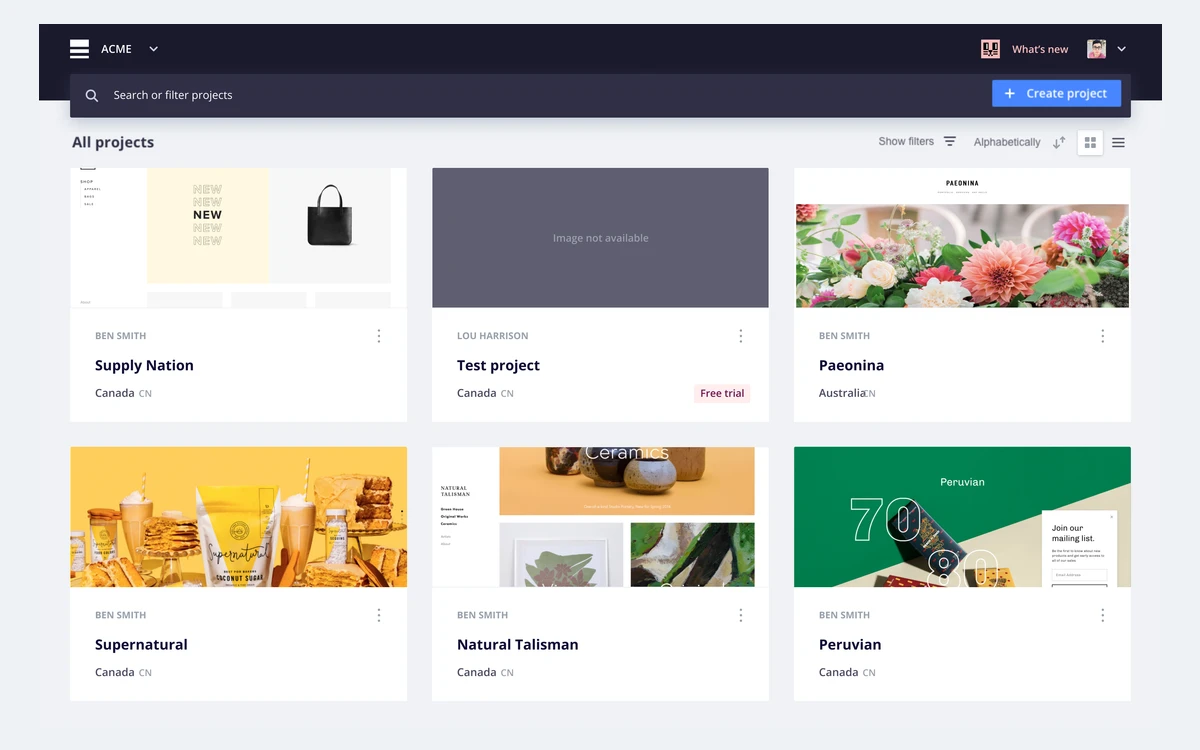
Review the current offer, features, and terms for Upsun (formerly Platform.sh) before deciding whether it fits your needs.
Platform.sh, now Upsun, is still one of the strongest platforms for teams that want every Git branch to become a full, working copy of production, with its databases and files cloned, not just its code. It runs on AWS, Azure, Google Cloud, IBM and OVHcloud, offers a long list of managed services, and carries SOC 2 Type 2, PCI DSS Level 1 and ISO 27001 compliance.
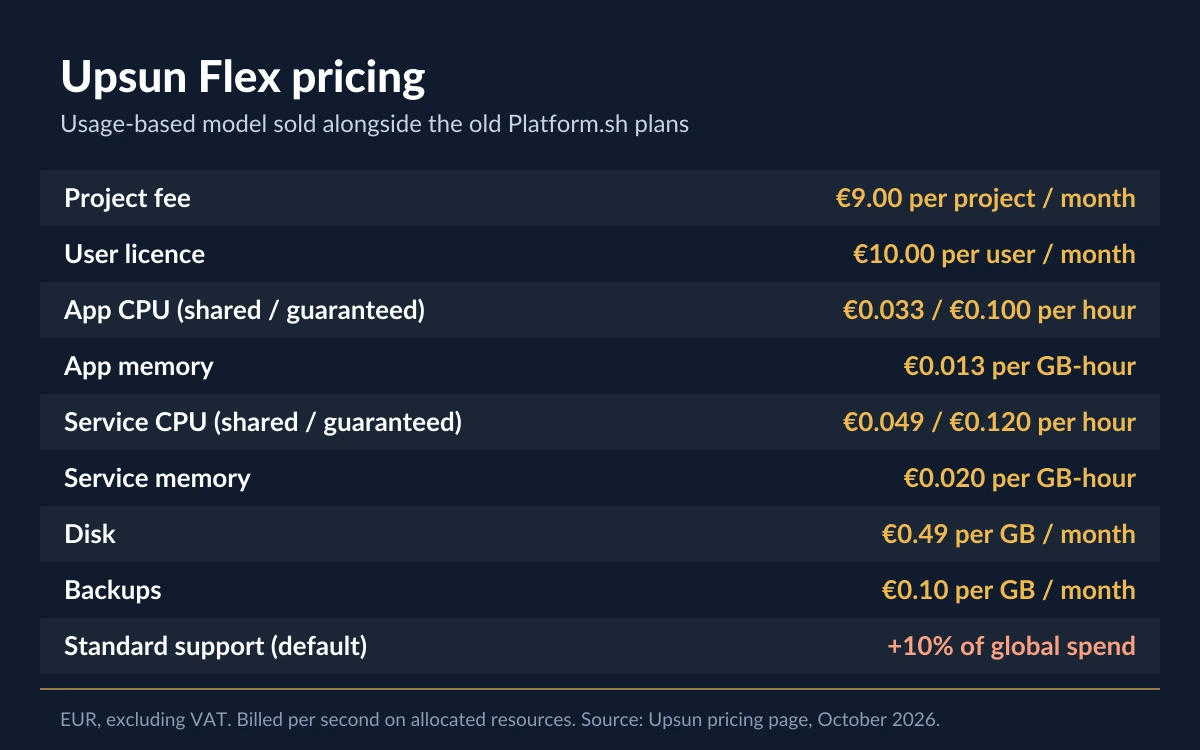
The catch is the bill. Flex looks cheap per hour, but Standard support is applied by default at +10% of global spend, uptime SLAs add 20% or 45% on top and require a paid support upgrade, and every preview environment consumes billable resources. Fixed is easier to predict but packs modest CPU and RAM into each tier. Cancellation is immediate and deletes backups, and there is no phone support.
The rename was announced by the CEO on 23 September 2025. A press release from the same day puts the company's headquarters in Paris and San Francisco, its staff at 290+ people, and its user base at "6,000 enterprises and 16,000 developers". Those figures are the company's own.
For existing customers the message was that nothing changes: "Your current pricing plan stays the same", "Your projects, workflows, and integrations remain untouched" and "Your account, billing, and contract terms are unchanged". In practice the old Platform.sh plans are now called Upsun Fixed. A partner, Pimcore, summed it up as "your current Platform.sh environments = Upsun Fixed", with no migration or downtime required.

Alongside Fixed, Upsun sells Upsun Flex, which the company describes as a model that lets you "pay only for the resources you provision". Flex and Fixed share the same underlying platform but use different configuration files, different docs sites and different price lists.
Upsun still published a Fixed price list in May 2026 and its Fixed docs were updated in October 2026, but we could not confirm whether a brand-new account can choose Fixed today rather than Flex. Ask sales before planning around a Fixed tier.
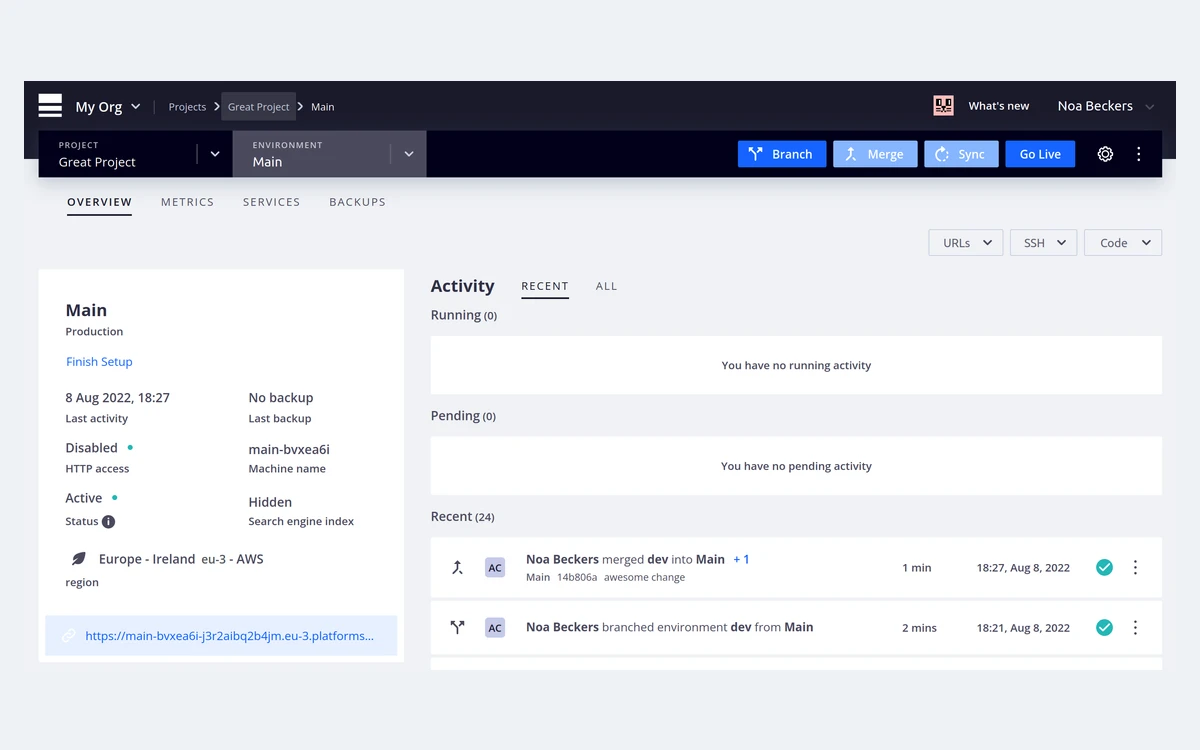
The idea that made Platform.sh popular is unchanged. An environment is tied to a Git branch. In Upsun's words, new environments "can be created in moments through a Git clone" and are "an exact replica of their parent environments". That means a feature branch gets its own running copy of the app, its own database cloned from production, and its own files, so testers review real behaviour rather than a mock.

Infrastructure is declared in YAML that lives in the repository. Flex projects use a single .upsun/config.yaml file. Fixed projects keep the classic Platform.sh layout: .platform.app.yaml for the app and .platform/services.yaml for services. Moving between the two means rewriting that configuration, not just changing a billing setting.
Supported runtimes are C#/.NET Core, Elixir, Go, Java, JavaScript/Node.js, PHP, Python, Ruby and Rust. Managed services include PostgreSQL, MariaDB/MySQL, Oracle MySQL, MongoDB, Redis, Valkey, Memcached, Elasticsearch, OpenSearch, Solr, Kafka, RabbitMQ, InfluxDB, Varnish, Vault KMS, Gotenberg and network storage. ClickHouse appears in the Flex docs only.
That breadth is the main reason teams choose it over simpler platforms: a Drupal or Magento site with MySQL, Redis, Solr and Varnish can be described in one file and cloned per branch without stitching together third-party add-ons.
Flex bills resources "per second on their allocation". The hourly prices Upsun lists are estimates over 732 hours a month. Allocation is what matters: you pay for the CPU and RAM you assign to each app and service in each environment, whether or not the app is busy.

Over a full month, one shared application CPU works out to roughly €24, one GB of application RAM to roughly €9.50, one shared service CPU to roughly €36 and one GB of service RAM to roughly €14.60.
Fastly is sold as metered add-ons: CDN at €0.094 per GB and €0.188 per 100,000 requests, a basic WAF from €85.00 per million requests (falling to €24.00 beyond 3 million), a configurable WAF at €445.00 flat for up to 2 million requests, image optimisation at €56.00 per 10 million, rate limiting at €52.00, TLS at €8.50 for 1 to 5 certificates, customer-generated TLS at €187.00 and DDoS protection at €169.00.
Payment is monthly by card or SEPA. Volume plans, prepayment and custom invoicing start above roughly $1,000 a month, and Enterprise is a sales conversation.
Fixed is the tiered model Platform.sh customers already know. Each plan sets the CPU and RAM of the production environment and includes 1 user, 3 development environments and 5 GB of storage per environment. These are the Professional prices as listed in May 2026.
Enterprise and Elite tiers are quoted by sales. They add 99.9% to 99.99% uptime commitments, urgent-ticket response of 1 hour (Enterprise) or 30 minutes (Elite) around the clock, and 1 TB of Fastly egress plus 50 million CDN requests per month. Overage is listed at €155 per extra TB of origin egress, €65 per TB of edge egress and €49 per extra 50 million requests.
Upsun's help centre says production-sized Fixed subscriptions "cannot be downgraded to a Development plan". Pick the production tier when you are ready to launch, not before.
As a rough illustration only, take a single production environment with one app on half a shared CPU and 1 GB of RAM, a PostgreSQL service on a quarter of a shared CPU and 0.5 GB of RAM, 5 GB of disk and one paid user.
The first-project offer can take up to the equivalent of $19 a month off that. Every preview environment you keep running adds its own allocated resources and disk, so a team with five open branches each cloning production can multiply the compute line. Idle Flex environments pause after 15 days of inactivity, after which only their storage is billed.
The closest Fixed equivalent, Standard at €45 a month, gives 0.96 vCPU and 0.75 GB of RAM in production, 3 development environments and 5 GB per environment, with a fixed bill. Fixed suits a stable site; Flex suits teams whose size and branch count change month to month.
Projects run on AWS, Azure, Google Cloud, IBM Cloud or OVHcloud, with regions across Europe, North America and Australia. For European companies that want to keep data with a European provider, the OVHcloud option and French, German and Swiss regions are a real differentiator. A carbon dashboard shows region intensity, but only for AWS, GCP and Azure.
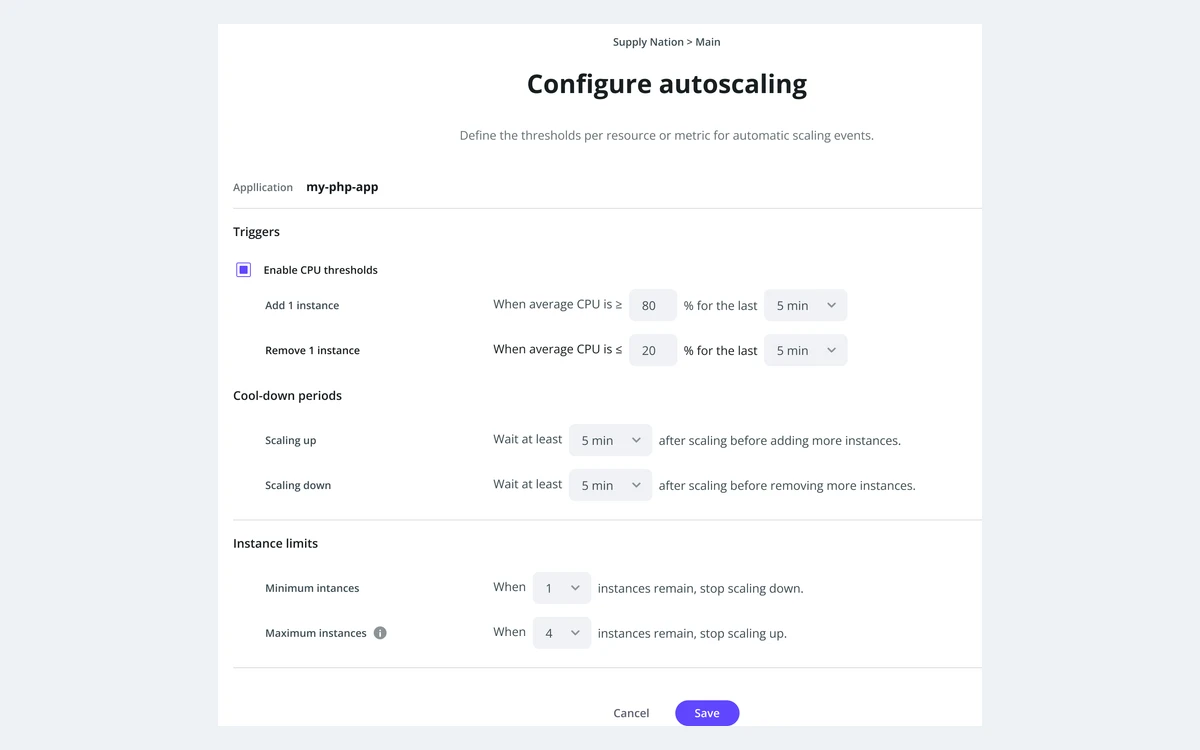
The Upsun console has a "Configure autoscaling" screen with CPU thresholds, cool-down periods and instance limits, so production can scale out under load instead of being sized for peak all month.

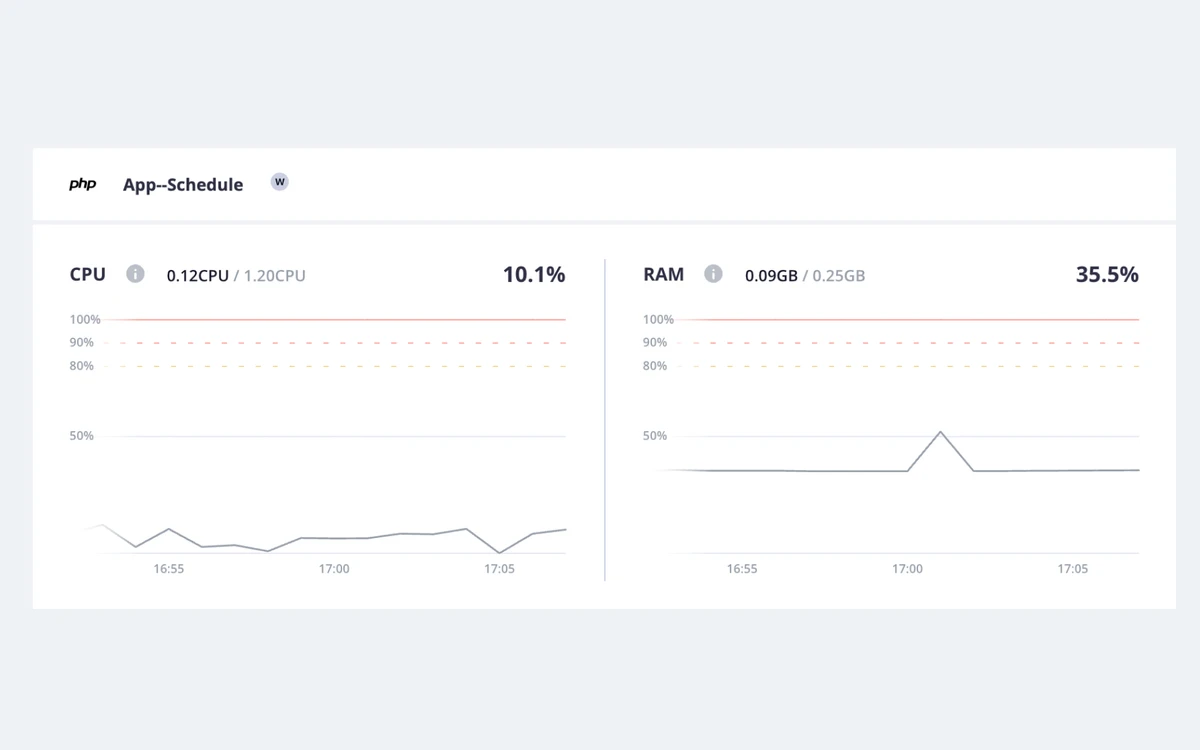
Every Flex project includes 30 days of infrastructure metrics and a short window of continuous profiling. The pricing page lists Blackfire APM and profiling for PHP and Python, which is the same tooling Platform.sh customers used before the rename.

Upsun's docs show an MCP server at mcp.upsun.com that lets an AI coding tool such as Cursor list and manage projects. It is a sign of where the platform is heading rather than a reason to buy on its own.
Upsun says it holds SOC 2 Type 2, PCI DSS Level 1 and ISO 27001, adds FS Cloud certification, and supports GDPR and CCPA compliance. HIPAA is available as the paid add-on described above. On deletion, storage is wiped following NIST 800-88, and all projects except those on the FR-3 region use encrypted volumes.
Compared with the other platforms we have reviewed, Upsun sits at the enterprise, agency-friendly end of the market.
If your app is a stateful CMS or e-commerce site and your team works in branches that need real data, Upsun is the strongest fit of this group. If you mostly deploy a frontend or a single small service, one of the simpler platforms will cost less.
Skip it if you want a permanent free tier, phone support, or a bill you can understand at a glance without accounting for support and SLA percentages.
Yes, under the Upsun name. Platform.sh became Upsun on 23 September 2025, and the old Platform.sh plans continue as Upsun Fixed with the same pricing, contracts and workflows.
Fixed is tiered: you pick a plan size such as Standard at €45 a month. Flex is usage-based: a €9 project fee, €10 per user and per-second billing for the CPU, RAM and disk you allocate to each environment.
Not for free on Flex. Standard support is applied by default at +10% of global spend, Advanced costs +15% and Premium +19%, both with a 12-month minimum.
There is a 15-day free trial with no credit card, covering one project fee and one user licence. There is no permanent free tier, and object storage is not available during the trial.
No. Upsun says billing cannot be paused for archived or inactive projects. Flex environments auto-pause after 15 days without activity, which stops compute charges, but storage is still billed.
It is deleted immediately, including backups, and cancellation cannot be undone. Export databases and files first; you are billed prorated for the time the project ran.
No. Existing projects are Upsun Fixed projects with no migration or downtime. Moving to Flex is optional and means converting your .platform configuration to a single .upsun/config.yaml file.
No. Support is ticket-based, with response targets from 4 hours best effort on Standard down to 30 minutes guaranteed on Premium or Elite.
More in Cloud Computing
Browse Cloud Computing