Fooocus Review 2026: The Free Offline SDXL Generator (and Why fooocus.com Isn't It)
Fooocus is a free, offline SDXL image generator on GitHub. Setup, GPU needs, features, its 2026 bug-fix-only status, and what fooocus.com really sells.
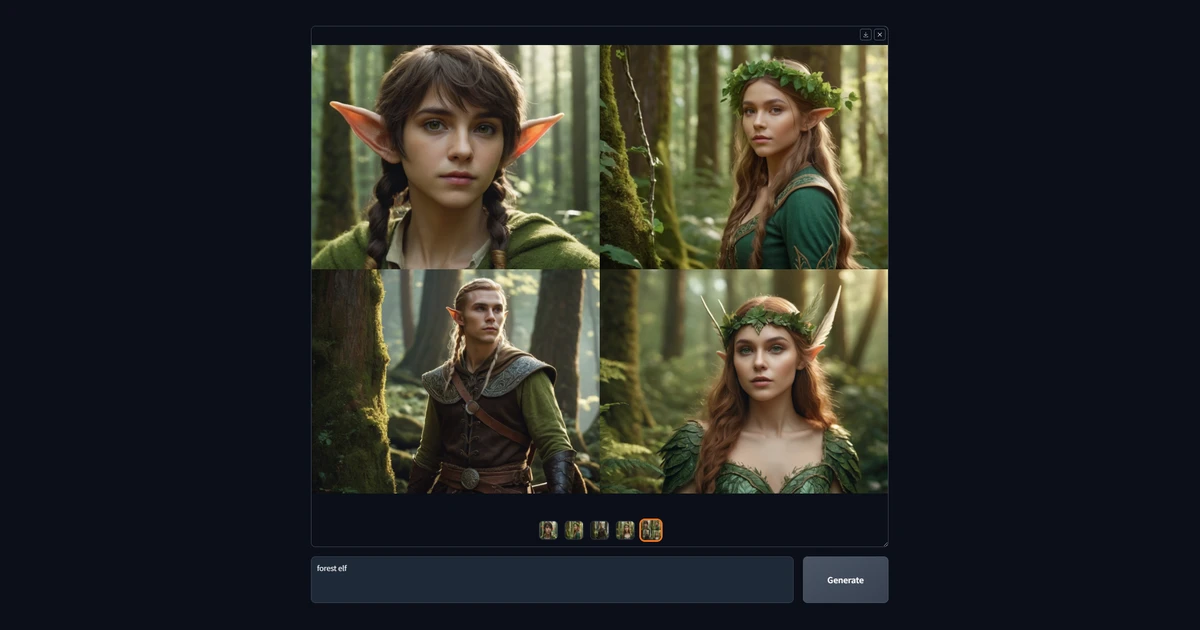
Fooocus is one of the most popular ways to run Stable Diffusion on your own computer: free, open source, offline, and designed to feel as simple as Midjourney. It is also one of the most impersonated, and the domain many people try first, fooocus.com, has nothing to do with it.
We went through the official repository, documentation, release history and hardware guidance as of October 2026 to answer three questions: what Fooocus is good at, what it needs to run well, and whether it still makes sense now that the project only receives bug fixes.
First, fooocus.com is not Fooocus
If you typed fooocus.com into your browser expecting the popular AI image generator, you landed somewhere else entirely. As of October 10, 2026, www.fooocus.com is a simple Google Sites page titled 'Fooocus Timer'. It sells a physical Pomodoro timer in red and black, shows the retail box, says the product is 'Ready to Ship Globally' and credits a company called Zhuhai Wo Ai Sheng Huo Techology Company Ltd. Its Shop Online link goes to an Amazon listing.
There is no mention of AI, Stable Diffusion or GitHub anywhere on that page, and no pricing, terms, privacy or refund pages. The bare domain without www does not even resolve. The Wayback Machine has only four captures of it, the newest from January 2025 showing the same timer page.
The only official source
The Fooocus image generator lives at github.com/lllyasviel/Fooocus and nowhere else. Its README states: 'We never have any website like such as fooocus.com, fooocus.net, fooocus.co, fooocus.ai, fooocus.org, fooocus.pro, fooocus.one. Those websites are ALL FAKE.' In the README's sense, fake means not affiliated with the project.
The same applies to hosted 'Fooocus' generators that show up in search results. fooocus.ai and fooocus.one are named in that README list. Others, such as fooocusai.ai and fooocusai.online, are not named, but they are not the official project either. Fooocus describes itself as '100% non-commercial offline open-source software', so any site asking you to pay for 'Fooocus' is a third party, whatever it calls itself.
The rest of this review covers the real thing: the free, open-source Fooocus you download from GitHub and run on your own machine.
What Fooocus actually is
Fooocus is a desktop image generator built on Stable Diffusion XL (SDXL). It was created by lllyasviel, the developer behind ControlNet and Stable Diffusion WebUI Forge, and started from a mix of the Stable Diffusion WebUI and ComfyUI codebases. It runs a Gradio web interface locally, so you use it in your browser at an address like 127.0.0.1:7860, but the generation happens on your own GPU.
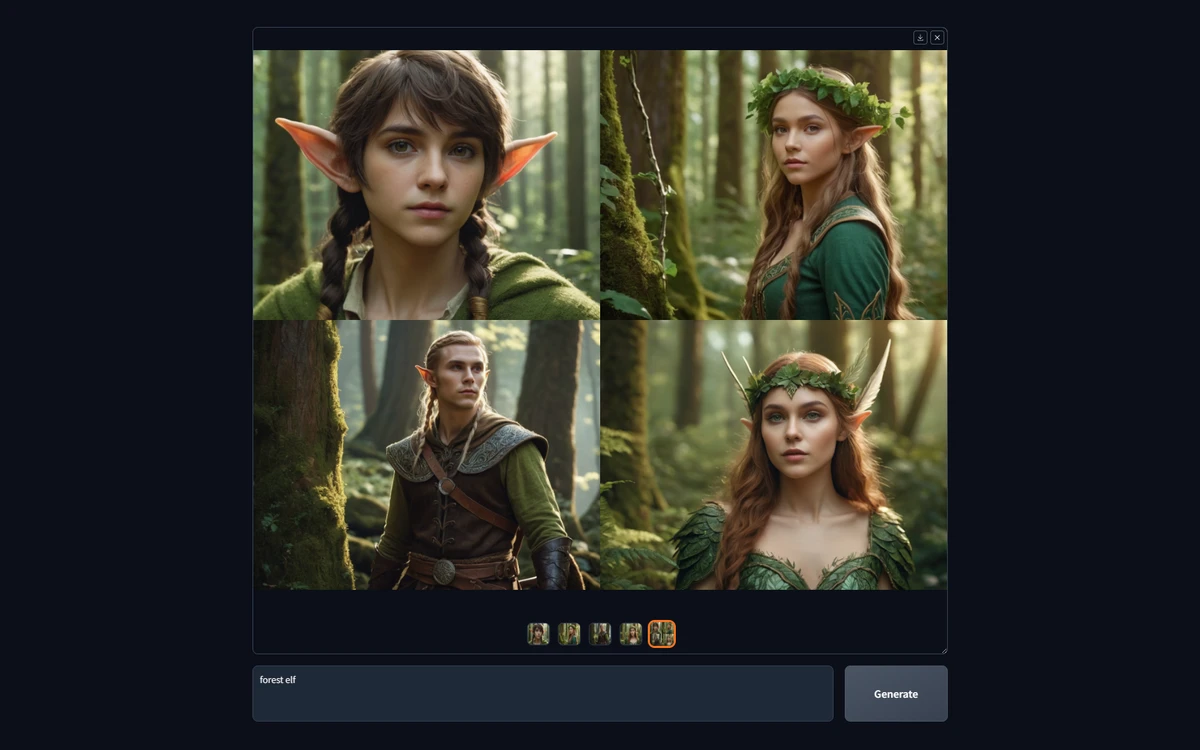
Its pitch, in the README's words: 'The software is offline, open source, and free, while at the same time, similar to many online image generators like Midjourney, the manual tweaking is not needed, and users only need to focus on the prompts and images.' Where ComfyUI hands you a node graph and Automatic1111 hands you dozens of sliders, Fooocus hands you a prompt box and a Generate button, with the advanced options tucked behind a checkbox.
- Price: free. There is no paid plan, subscription or official hosted service.
- License: GPL-3.0.
- Popularity: about 53,300 GitHub stars and 8,600 forks as of October 2026.
- Latest release: v2.5.5, published August 12, 2024.
- Platforms: Windows, Linux, macOS on Apple Silicon, Docker, plus an official Google Colab notebook.
Installation: three clicks, then a large download
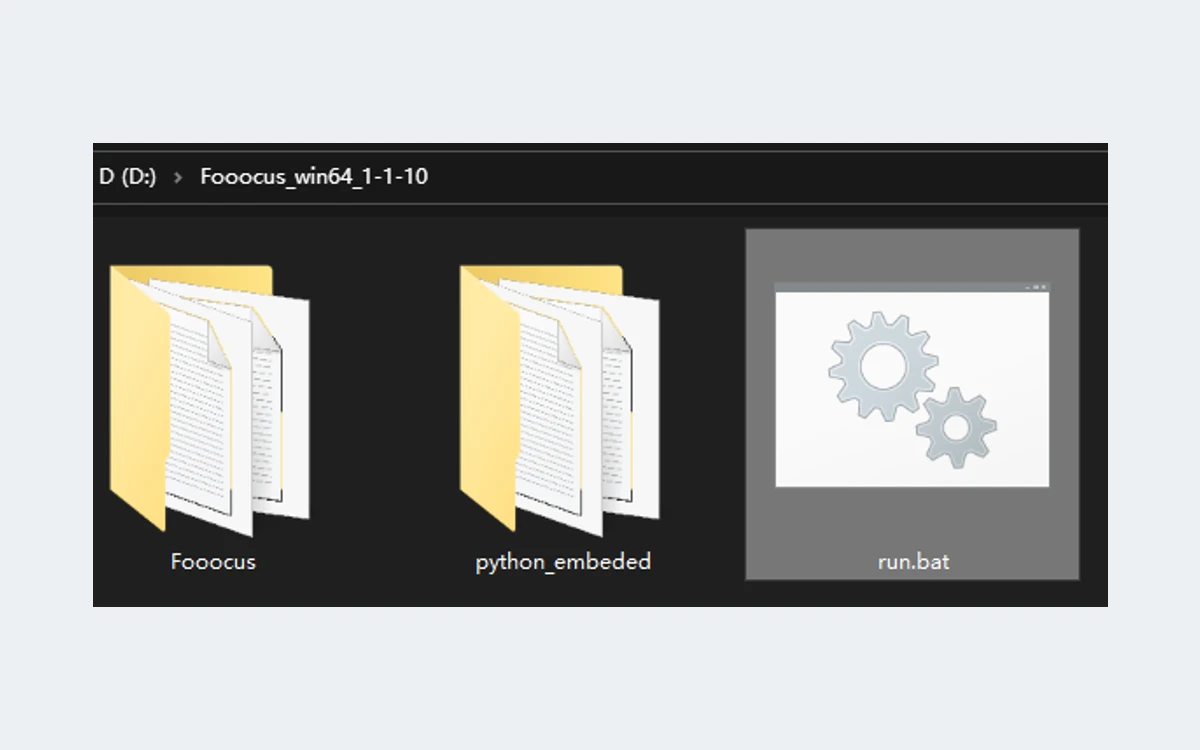
Fooocus promises that between pressing download and generating your first image, 'the number of needed mouse clicks is strictly limited to less than 3'. On Windows that is close to true. You download a 7z archive from the README, extract it, and double-click run.bat. The package ships with its own embedded Python, so there is no Python, Git or CUDA toolkit to install first.
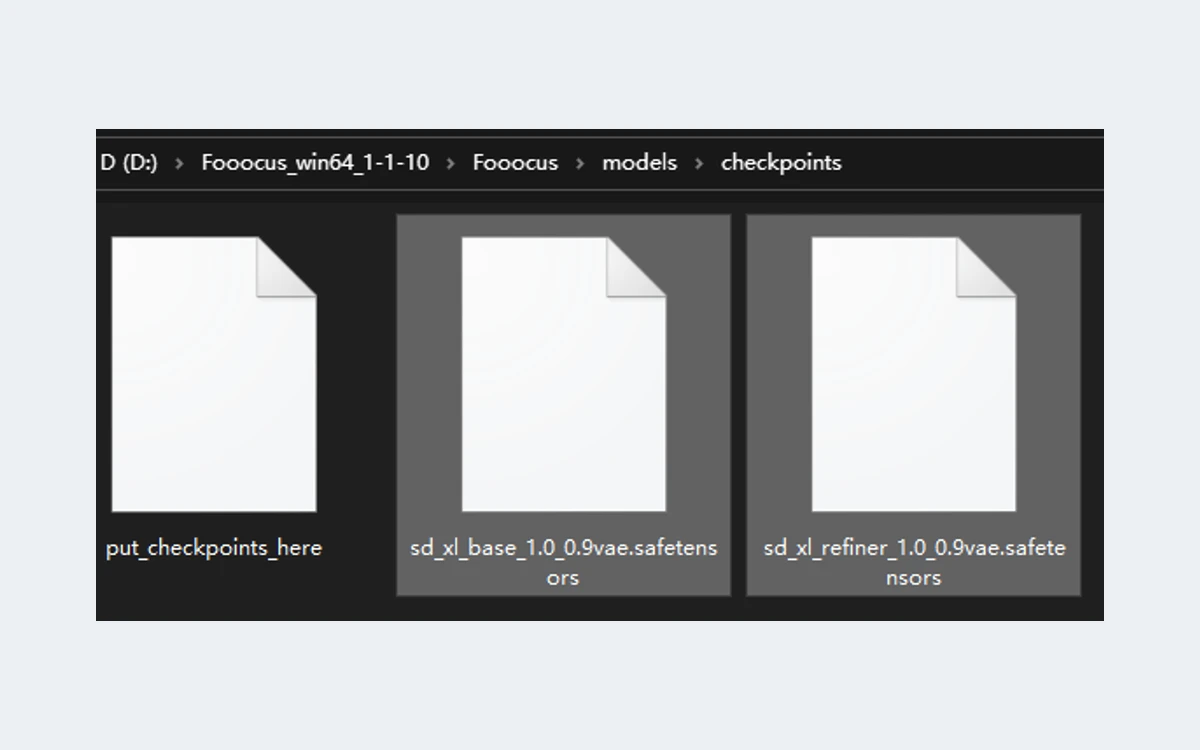
The catch is the first launch. Fooocus automatically downloads its SDXL checkpoint into Fooocus\models\checkpoints, and SDXL models are several gigabytes each, so the first start can take a while on a slow connection. If a download is interrupted and the file is corrupted, you will see errors such as 'MetadataIncompleteBuffer' or 'PytorchStreamReader'; the fix is to delete the file and let it download again.
One small oddity: as of October 2026 the README's Windows download link still points to the v2.5.0 archive, even though the latest tagged release is v2.5.5. Linux users can install with Anaconda, a Python venv or native Python, and there are separate instructions for AMD GPUs, Apple Silicon and Docker.
Presets and default models
Fooocus ships three presets, each with its own default SDXL checkpoint, and you can switch between them in the browser since version 2.3.0. All of them download automatically the first time you pick them.
- General (run.bat): juggernautXL_v8Rundiffusion.
- Realistic (run_realistic.bat or --preset realistic): realisticStockPhoto_v20.
- Anime (run_anime.bat or --preset anime): animaPencilXL_v500.
What Fooocus does well
Simplicity is the headline, but the feature list is deeper than the clean interface suggests. These are the parts that matter most in daily use.
- Prompt expansion ('Fooocus V2'): an offline GPT-2 based model rewrites short prompts, so something as plain as 'house in garden' still produces a detailed image.
- Inpainting and outpainting: Fooocus has its own inpaint algorithm and model, with Inpaint and Up, Down, Left and Right panning to extend an image beyond its edges.
- Upscale and Vary: upscale a result or create Subtle or Strong variations of it.
- Image Prompt and FaceSwap: use reference images to steer composition, style or a face (FaceSwap uses InsightFace).
- Styles: a large library of style presets you tick on and off instead of writing style keywords.
- LoRAs, embeddings and prompt weights: A1111-style weighting such as (happy:1.5) and embeddings via (embedding:file_name:1.1).
- Quality tuning: negative ADM guidance and tuned self-attention guidance aimed at avoiding the 'plastic' look SDXL images can have.
In practice this gives you most of what Midjourney users like, a short prompt and good-looking results, without a subscription and without your prompts or images leaving your computer. What you give up is the polish and range of newer models, which is covered below.
Version 2.5.3 also added a sensible security fix: it only loads weights from non-safetensors files in a way that prevents harmful code injection. If you download community models, prefer .safetensors files anyway.
Hardware requirements and real-world speed
Fooocus is free, but it runs on your hardware, and that is the real cost. The README's minimum requirements are modest for an SDXL tool on Nvidia and steep everywhere else.
- Nvidia RTX 2000, 3000 or 4000 series (Windows or Linux): 4GB VRAM and 8GB RAM minimum, with system swap enabled.
- Nvidia GTX 1000 series: 8GB VRAM (6GB uncertain), and the README says it is 'only marginally faster than CPU'.
- Nvidia GTX 900 series: 8GB VRAM. Anything older is not supported.
- AMD on Windows (DirectML): 8GB VRAM, about 3x slower than an RTX 3000-series card.
- AMD on Linux (ROCm): 8GB VRAM, about 1.5x slower than an RTX 3000-series card.
- Mac M1/M2 (MPS): uses shared memory, about 9x slower than an RTX 3000-series card, and 'not intensively tested'.
- CPU only: 32GB RAM, about 17x slower than an RTX 3000-series card.
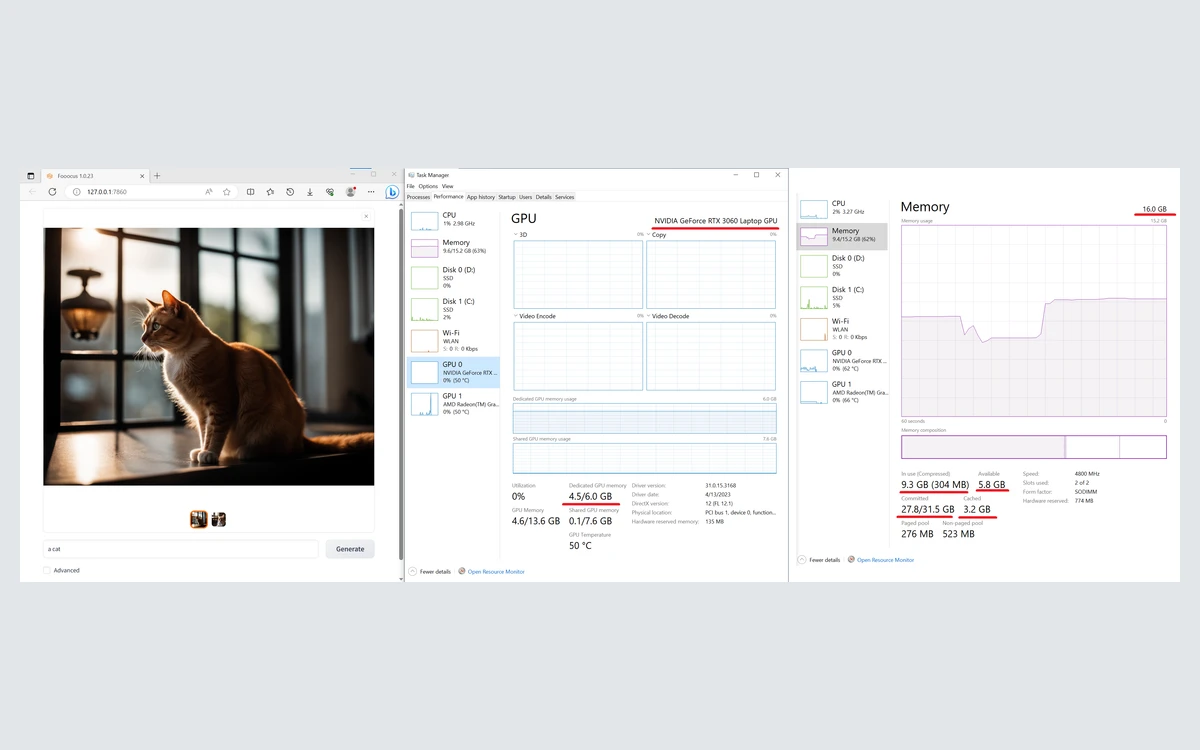
The README's own benchmark is a useful reality check: a 'relatively low-end laptop with 16GB System RAM and 6GB VRAM (Nvidia 3060 laptop)' ran at about 1.35 seconds per iteration. That is perfectly usable for experimenting, though batches of high-step images will still take minutes.
Common problems
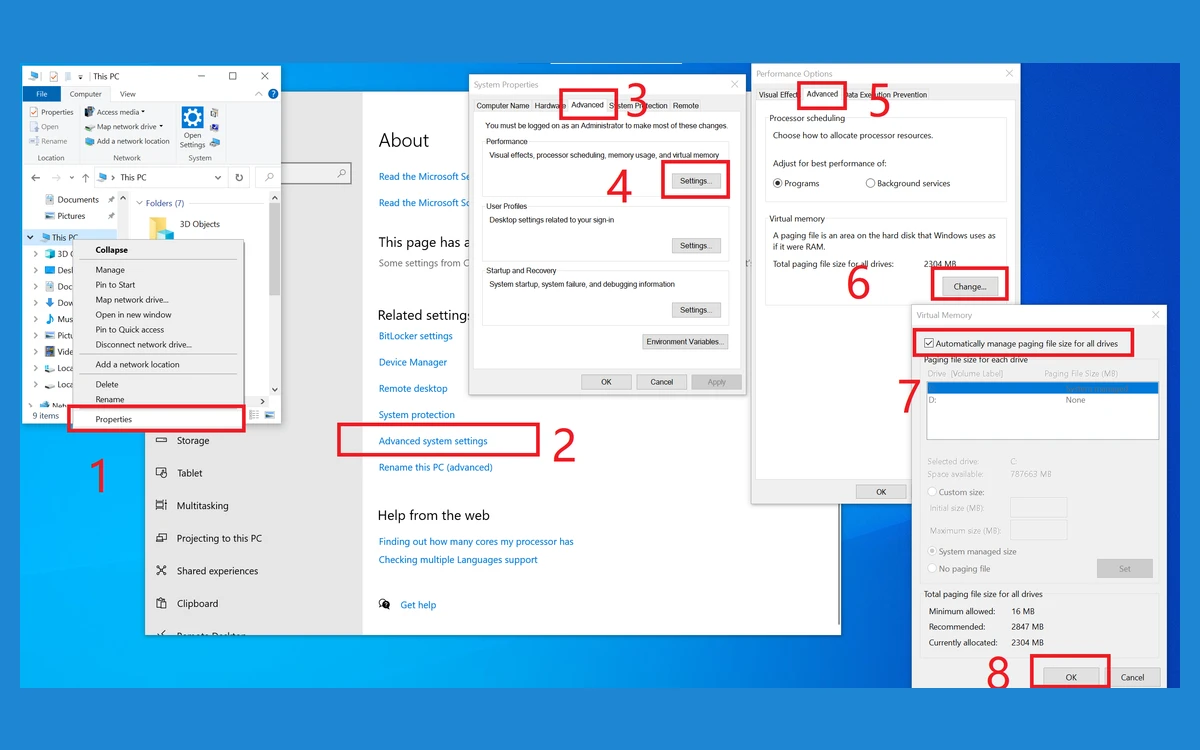
Most early crashes come from memory, not the GPU. If you see 'RuntimeError: CPUAllocator', the README says to enable system swap (virtual memory) and make sure each drive has at least 40GB of free space. It also notes reports that Nvidia drivers newer than 531 were sometimes up to 10x slower than 531, so a driver change is worth trying if generation is unexpectedly slow.
The 2026 catch: bug fixes only, and SDXL only
This is the most important thing to know before you invest an afternoon in Fooocus. The project's own README now carries the heading 'Project Status: Limited Long-Term Support (LTS) with Bug Fixes Only', and says that 'future updates will focus exclusively on addressing any bugs that may arise'.
The record backs that up. The last release, v2.5.5, came out on August 12, 2024, and the commits since early 2025 are housekeeping: a README path fix, a removed link and a CI dependency bump in September 2025. The repository is not archived, but it is not moving either.
Because Fooocus is 'built entirely on the Stable Diffusion XL architecture', it does not support newer model families such as Flux. The maintainers are direct about this: 'For those interested in utilizing newer models such as Flux, we recommend exploring alternative platforms such as WebUI Forge (also from us), ComfyUI/SwarmUI.' They also point to community forks, including RuinedFooocus, Fooocus-MRE and Fooocus-Control, for people who want the Fooocus workflow with more experimentation.
What this means for you
Fooocus still works and still produces good SDXL images, and frozen software has the advantage of not breaking. But you will not get new model support, and SDXL is no longer the state of the art for prompt accuracy or text rendering in 2026.
Verdict: who should use Fooocus in 2026
Fooocus remains one of the easiest ways to run Stable Diffusion locally. If you have an Nvidia RTX card with at least 4GB of VRAM, want private offline generation with no subscription, and are happy with SDXL-quality images, it is a very good choice, and inpainting and outpainting are better than in many tools that are harder to use.
- Choose Fooocus if you want a free, private, Midjourney-like experience on your own Nvidia GPU and SDXL output is good enough.
- Choose Forge, ComfyUI or SwarmUI if you want Flux or other newer models, or fine control over every step.
- Choose a hosted service such as Midjourney, Leonardo.Ai or Playground if you have no suitable GPU and prefer to pay for convenience. Our reviews of each cover their current pricing.
- Avoid any site charging money for 'Fooocus'. The official software is free and only available from GitHub.
Frequently asked questions
Is fooocus.com the official Fooocus website?
No. As of October 2026 fooocus.com is a page selling a physical Pomodoro timer, and the official Fooocus README explicitly lists fooocus.com among domains with no relationship to the project. The only official source is github.com/lllyasviel/Fooocus.
Is Fooocus free?
Yes, completely. Fooocus is GPL-3.0 open-source software with no paid tier, account or subscription. Your only costs are your own hardware and electricity, or cloud GPU time if you run it elsewhere.
What GPU do I need to run Fooocus?
The minimum is an Nvidia RTX 2000-series card or newer with 4GB of VRAM, plus 8GB of system RAM and swap enabled. Older GTX cards need 8GB of VRAM and are slow, and cards older than the GTX 900 series are not supported.
Does Fooocus work on a Mac or an AMD GPU?
Yes, but more slowly. The README estimates Apple M1/M2 Macs at about 9x slower than an RTX 3000-series card, AMD on Windows at about 3x slower and AMD on Linux at about 1.5x slower. Mac support is described as not intensively tested.
Can I use Fooocus without a GPU?
Technically yes. CPU-only mode needs 32GB of RAM and is about 17x slower than an RTX 3000-series GPU. The more practical option is the official Google Colab notebook, which the README tunes for Colab's T4 GPU instance.
Is Fooocus still updated, and does it support Flux?
It receives bug fixes only, and it does not support Flux. The last release was v2.5.5 in August 2024, and the maintainers recommend WebUI Forge, ComfyUI or SwarmUI for newer models.
Are my prompts and images private?
When you run Fooocus locally, yes. It generates images offline on your own machine, so nothing is uploaded unless you choose to share it. The exception is the first run, when it downloads models, and any third-party hosted 'Fooocus' site, which processes your prompts on its own servers.
Key takeaways
- fooocus.com sells a Pomodoro timer; the official README lists it, along with fooocus.ai, .net, .co, .org, .pro and .one, as unaffiliated.
- The only official source of Fooocus is github.com/lllyasviel/Fooocus, and the software is free under GPL-3.0.
- It runs offline on an Nvidia RTX GPU with as little as 4GB VRAM and 8GB RAM; AMD, Mac and CPU work but are much slower.
- Prompt expansion, inpainting, outpainting, image prompts and style presets give Midjourney-like results from short prompts.
- The project is in bug-fix-only LTS mode, last released in August 2024, and supports SDXL only; for Flux, use Forge, ComfyUI or SwarmUI.
More in Artificial Intelligence
Browse Artificial Intelligence