SYSTEME.io: what you need to know about the tool
Systeme is the only Tool you need to launch your online business. is a combination of an e-commerce platform and a complete online marketing suite – with a strong focus on selling online courses and webinars.
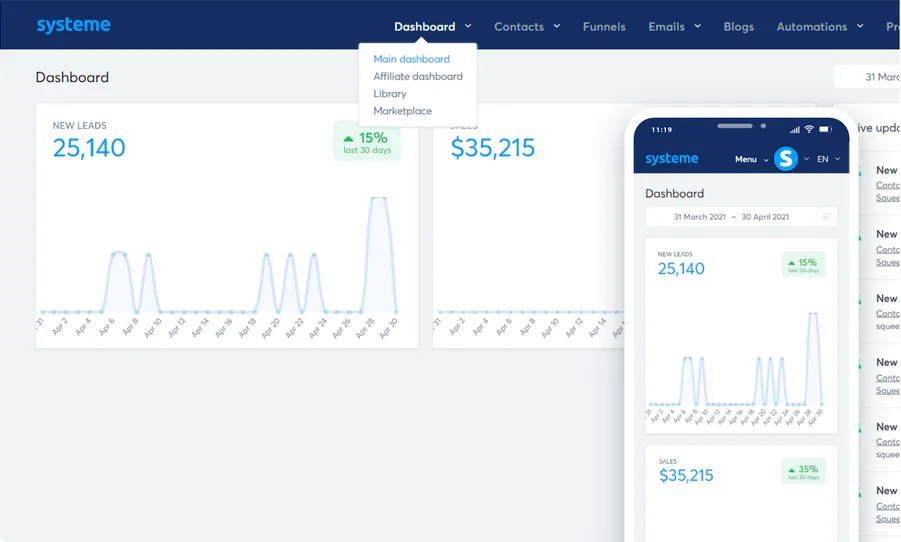
Systeme.io at a glance
Systeme.io is an integrated SaaS platform for building and selling online offers. It combines sales funnels, web pages, email marketing, automation, courses, communities, affiliate management, calendars, and CRM-style pipelines in one account.
Its appeal is operational simplicity. A creator can capture a lead, send a sequence, accept payment, grant course access, and track an affiliate without stitching together several services. The trade-off is that each module may offer less specialist depth than a dedicated product.
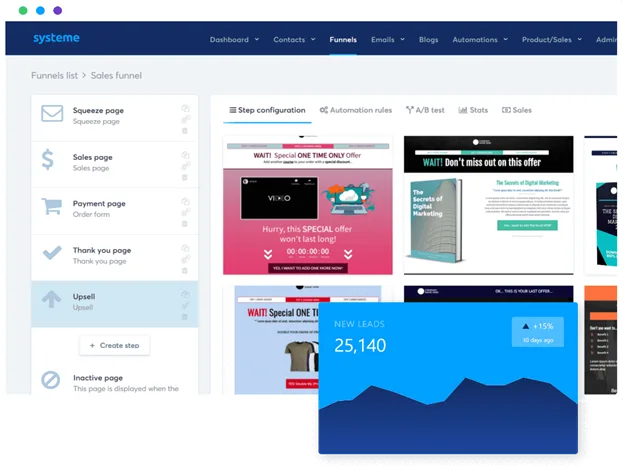
Funnels, websites, and checkout flow
The funnel builder provides templates for opt-in, sales, launch, and webinar journeys without requiring code. Pages, forms, order bumps, upsells, and checkout steps share the same contact and automation layer, reducing integration work.
A template is only a starting point. Test the mobile layout, form validation, analytics, payment handoff, confirmation email, tax handling, and access rules. Conversion claims should be based on your traffic and offer rather than assumed from the template.
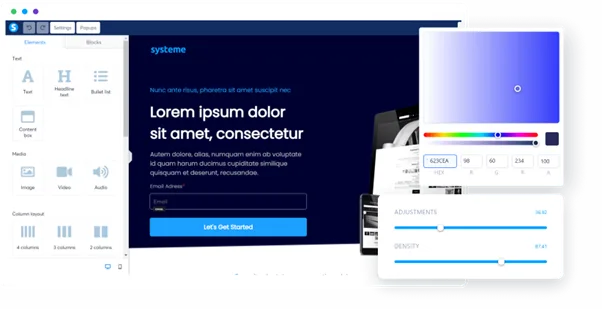
Email marketing and automation
Contacts collected through pages can be tagged, added to campaigns, and moved through workflows. Systeme.io describes automation through triggers, conditions, and actions, allowing a purchase or opt-in to start an email sequence, enroll a customer, or update another part of the account.
This shared data model is convenient, but deliverability still depends on domain authentication, list quality, consent, message relevance, and sending practice. Start with a short lifecycle, test every branch, and monitor failures before building a large automation map.
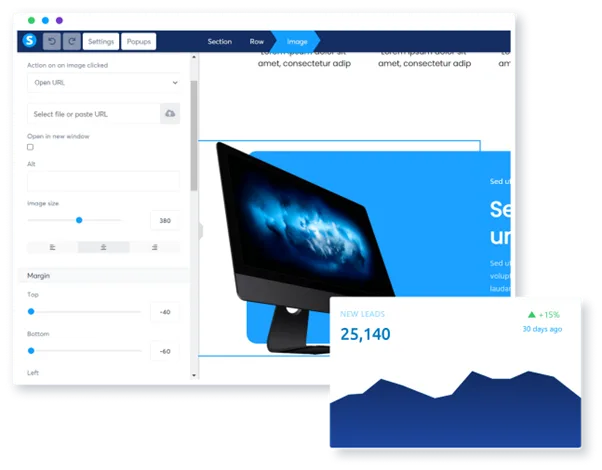
Courses, communities, and digital delivery
Course tools support modules, video lessons, downloads, drip schedules, progress tracking, and access control. Communities and creator-store capabilities broaden delivery beyond a conventional course. A funnel purchase can trigger enrollment without a separate connector.
Creators should test the student experience on mobile, lesson navigation, email notifications, refunds, access removal, downloadable assets, and support workflow. The administrative convenience matters only if learners can reliably consume the material.
Affiliate management, payments, and reporting
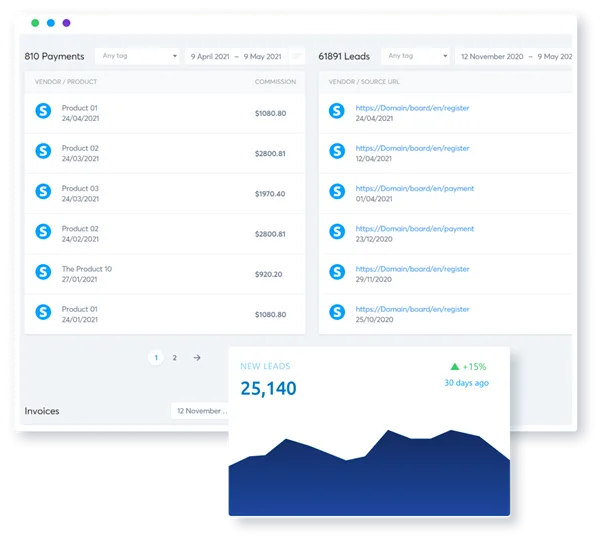
The built-in affiliate system can create referral links, set commissions, track referrals, and support payout management. Keeping affiliate activity beside funnels and sales reduces the number of moving parts for a small program.
Operators remain responsible for program terms, disclosure rules, fraud review, payout reconciliation, refund effects, and tax obligations. Before launch, complete a real test purchase through an affiliate link and verify attribution through cancellation or refund scenarios.
Plans, limits, and the complete cost
Systeme.io currently advertises a no-cost entry tier and paid plans beginning at $17 per month. Its product page says the feature family is available across plans, while higher tiers expand contacts, funnels, workflows, courses, domains, and other capacity. Current regional pages show Startup, Webinar, and Unlimited tiers.
Confirm the live plan for your billing region. Count contacts, active automations, domains, courses, subaccounts, and any payment-processor or external-service costs. Migrating away later also has a cost, so export options and data ownership deserve attention before consolidating everything.
The benefits and risks of an all-in-one platform
A unified platform reduces connectors, duplicate contact records, billing relationships, and failure points. It can be particularly effective for a solo operator who values a dependable basic workflow over best-in-class customization in every module.
Consolidation also increases dependency. An outage, account issue, or poorly designed automation can affect acquisition, email, payment, and delivery simultaneously. Maintain exports, document critical journeys, restrict administrator access, and keep recovery procedures outside the platform.
Who should use Systeme.io?
Systeme.io is a strong fit for course creators, consultants, affiliates, and small online businesses launching a relatively straightforward offer. It is also useful for validating a business before investing in a larger collection of specialist tools.
It is less suitable when a company needs advanced ecommerce operations, deeply customized web applications, complex enterprise CRM, or highly specialized marketing analytics. Compare the missing edge cases—not only the features Systeme.io can replace.
A practical evaluation checklist
Build one complete journey: landing page, opt-in, welcome sequence, checkout, payment, product access, follow-up, and support. Use a second email address and a low-value test transaction so you experience the journey as a customer.
Check domain setup, analytics, consent records, mobile pages, email delivery, taxes, refund behavior, affiliate attribution, and exports. A successful end-to-end test is more informative than exploring each dashboard screen separately.
Verdict and key takeaways
Systeme.io's value comes from connecting the basic systems of an online business in one accessible workspace. For a focused offer, the reduced integration burden can matter more than having the most advanced page, email, or course tool.
Adopt it after proving the full customer journey, understanding plan limits, and planning backups. Choose specialist products instead when a missing advanced capability is central to revenue or compliance.
- Strong fit for simple end-to-end digital offers
- Integrated contact and automation data reduces connectors
- Test payments, access, refunds, and attribution together
- Consolidation makes backups and governance more important
Frequently asked questions
What does Systeme.io replace?
It can combine landing pages and funnels, email campaigns, automations, course delivery, communities, affiliate management, calendars, and pipelines for a straightforward online business.
Can Systeme.io host an online course?
Yes. Its course builder supports modules, video, downloads, drip scheduling, access rules, and progress features, with capacity determined by the current plan.
Does Systeme.io send unlimited emails?
Its current official plan materials advertise unlimited email sends, but contact, campaign, workflow, and other limits vary. Responsible consent and deliverability practices still apply.
Does Systeme.io charge transaction fees?
The vendor says it does not add payment transaction fees, but connected payment processors may charge their own fees. Verify the current terms and your processor pricing.
Is Systeme.io suitable for a large ecommerce store?
It can sell digital and physical products, but complex inventory, fulfillment, merchandising, or enterprise commerce may be better served by a specialist platform.
What should I test before moving my business?
Test one complete customer journey, including email delivery, payment, access, refund, affiliate attribution, mobile layout, analytics, and data export.
A deeper field guide for buyers
Evaluate Systeme.io by mapping one customer journey before building. Identify traffic source, landing page, consent, email sequence, offer, checkout, payment processor, access, support, refund, and retention. Mark the owner and success event at each step. This prevents the attractive page builder from becoming the project while operational gaps remain undiscovered.
Use a separate domain or controlled subdomain for the pilot and configure authentication for marketing email. Seed the account with internal addresses across several providers, test double opt-in or consent behavior where required, and inspect spam placement. Unlimited sends have little value if messages are untrusted or the list was collected without an appropriate basis.
Build automation in small observable stages. A purchase might add a tag, stop a prospect campaign, start onboarding, grant course access, and create a pipeline event. Test each action independently before combining it. Include duplicate purchase, failed payment, refund, cancellation, changed email address, and manual override cases because real customers do not follow only the happy path.
Complete checkout tests with every supported payment method and device type used by the audience. Verify currencies, taxes, receipts, order bumps, upsells, affiliate attribution, access timing, failed-payment messages, and refund consequences. Finance and support teams should be able to reconcile a transaction without reconstructing it from several dashboard screens.
Review the learner experience as carefully as the sale. Test lesson progress, drip dates, download permissions, playback on slow mobile connections, community access, password recovery, notifications, and removal after refund. A smooth funnel cannot compensate for confusing delivery, and retention depends more on the purchased experience than the checkout template.
Document portability before consolidation. Export contacts with tags and consent fields, transactions, affiliate records, course outlines, and page copy. Keep original video and design assets outside the platform and record DNS, sender, payment, and webhook settings. The goal is not immediate migration; it is avoiding a situation where ordinary business continuity depends on memory and screenshots.
After a full month, compare the integrated system with the former stack. Count subscription and connector fees, maintenance hours, support incidents, conversion, delivery failures, and staff learning time. Systeme.io is a strong choice when simpler operations outweigh missing specialist depth. If a limitation directly constrains revenue, reporting, compliance, or customer experience, that module may still deserve a dedicated service.
Onboarding should follow the customer journey rather than the product menu. One owner builds the page and form, another tests consent and email, finance verifies checkout and refund, and a course or service owner confirms delivery. Record expected data at every transition. This makes failures observable and helps a new administrator understand the business logic instead of seeing funnels, tags, campaigns, and workflows as unrelated screens.
Official sources checked
Product features and plan details change. These primary sources were checked for this review; confirm the live plan page before purchasing.
Key takeaways
More in Artificial Intelligence
Browse Artificial Intelligence