Gravity Write Review : AI Writing Tool for SEO Content Creation
Gravity Write is an AI-powered writing tool designed to help bloggers, marketers, and businesses create high-quality content quickly. Instead of spending hours writing articles, users can generate blog posts, product descriptions, ads copy, and marketing content in minutes.
GravityWrite at a glance
GravityWrite is a browser-based AI creation suite aimed at marketers, bloggers, and small businesses. What began as a collection of writing templates now covers long-form blogs, images, video, summarization, websites, books and courses, content repurposing, and social scheduling.
That breadth is its attraction and its main evaluation challenge. A buyer should test the few workflows they will use every week rather than assume a long feature list automatically replaces specialist tools.
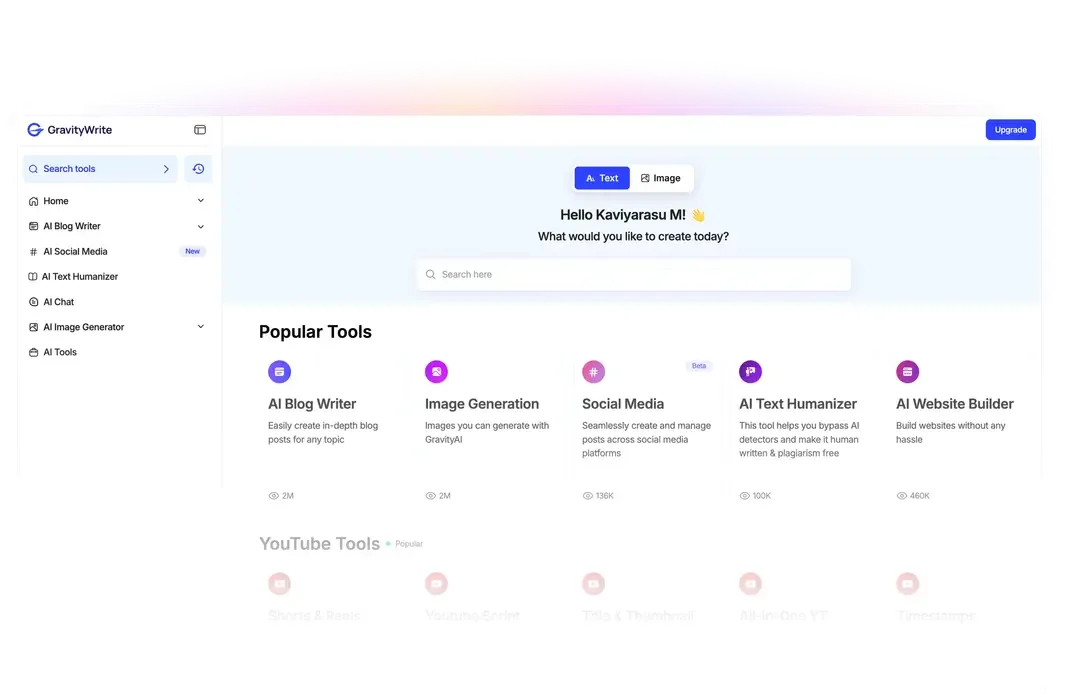
Blog writing and marketing templates
The blog workflow can move from topic and context to outline and draft, while shorter templates address ads, product descriptions, email, and social posts. Tone, language, and model options vary by plan. The tools are effective at producing a structured first pass quickly.
A first pass is not publication-ready by default. Claims, citations, examples, search intent, and brand voice require editorial work. GravityWrite's own terms warn that generated material may contain inaccuracies and place verification responsibility on the user.
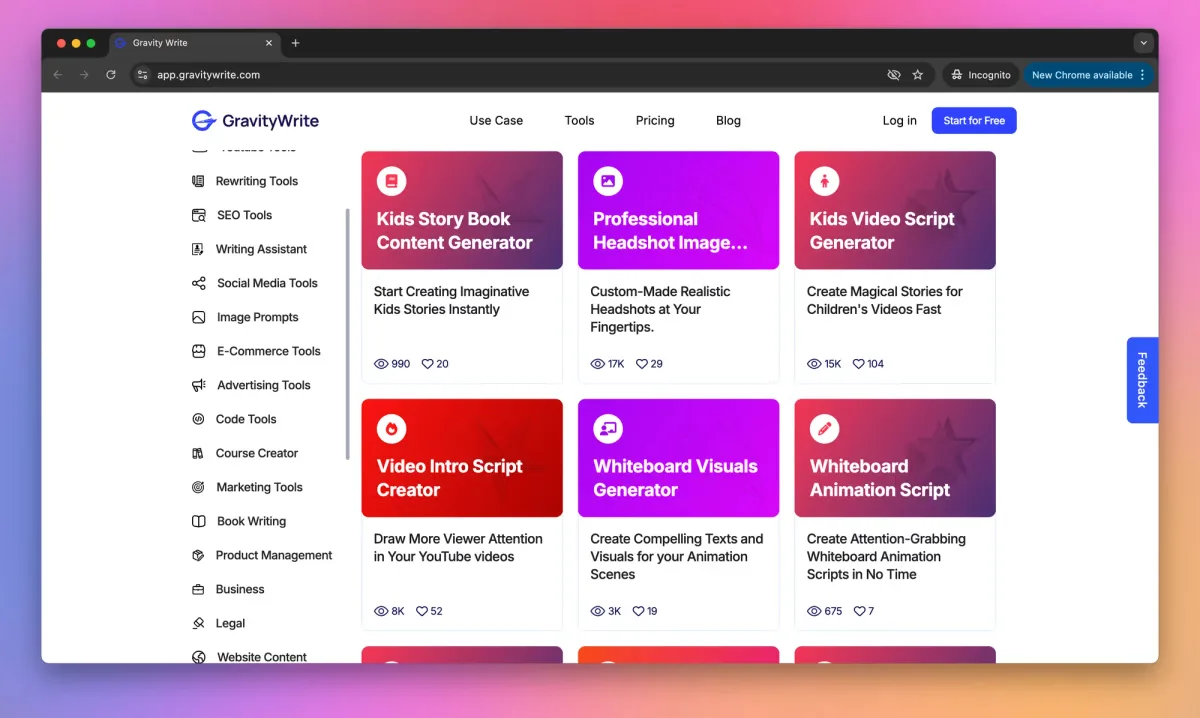
Images, video, websites, and repurposing
Current plans bring text, image, and video generation into a shared credit system. GravityWrite also advertises an AI website builder, audio and video summaries, a text humanizer, book and course tools, and a scheduler. This can reduce context switching for a solo creator producing several formats from one campaign.
The output still needs format-specific review. Generated images need rights and brand checks; video needs continuity and caption review; websites need accessibility, responsive, performance, and conversion testing. One interface does not remove those production responsibilities.

How the credit system affects real cost
GravityWrite now meters paid generation through shared AI credits. Text, image, and video tasks consume different amounts depending on tool, model, quality, and output. The estimates on its pricing page assume credits are devoted to one feature, so they should not be added together as simultaneous allowances.
Build a sample monthly workload: number of blog drafts, images, short videos, summaries, and scheduled posts. Run that mix during a test period and observe actual consumption. This is more reliable than converting a plan into a single words-per-dollar figure.
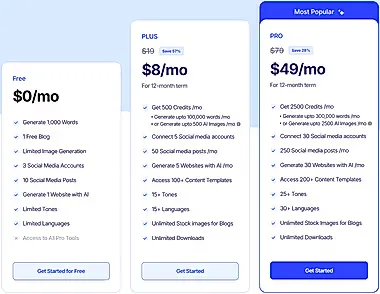
Plans and pricing considerations
GravityWrite currently presents a limited entry tier plus Plus and Pro subscriptions, with monthly and annual options. The live pricing materials list 500 monthly credits for Plus and 2,500 for Pro, while higher tiers expand templates, languages, model access, social accounts, website generations, and processing priority.
The vendor has displayed different promotions and annual-equivalent prices across current pages, so this review does not freeze a headline offer. Confirm the checkout term, renewal amount, tax, refund eligibility, and exact credit allowance on the live pricing page.
A responsible content workflow
Start with a brief containing audience, objective, evidence, exclusions, examples, and voice. Generate an outline before a full article, remove sections that do not answer the reader's question, then add firsthand detail and primary sources. Run a factual review separately from style editing.
For search content, avoid producing near-duplicate articles at scale. Useful pages need a distinct purpose and information gain. AI can accelerate outlining and variations, but the publisher remains accountable for accuracy, originality, disclosure, and quality.
- Write a specific brief before generating
- Verify every factual or commercial claim
- Replace generic examples with real evidence
- Review generated media for rights and consistency
- Measure published outcomes, not raw output volume
Output quality and limitations
Quality varies by prompt, selected model, language, and subject. Generic marketing topics usually need less correction than regulated, technical, financial, or medical material. A fluent paragraph can still be false or unsupported.
The platform is therefore best used as an assisted production environment. Keep source notes outside the generated draft, use plagiarism and originality checks appropriate to your organization, and have a qualified reviewer handle high-stakes content.
Who should use GravityWrite?
It suits solo creators and small marketing teams that value a broad toolkit, produce repeatable campaign assets, and are willing to edit. The shared subscription can be convenient when modest writing, image, scheduling, and summary needs would otherwise sit in separate products.
It is less compelling for teams already committed to specialist creative tools, organizations needing deeply controlled approval workflows, or publishers seeking autonomous factual writing. Compare output quality and credit use with your existing stack before migrating.
Verdict and key takeaways
GravityWrite offers unusual breadth in a single creator workspace. The best reason to choose it is a recurring multi-format workflow, not the promise that AI will publish complete campaigns without supervision.
Test it with a real brief, log credit consumption, and score revision time. If it reduces total production effort while your editorial standard stays intact, the suite can be good value.
- Broad creator suite rather than only an AI writer
- Shared credits make workload testing essential
- Human fact-checking and editing remain mandatory
- Best value comes from using several included workflows
Frequently asked questions
Is GravityWrite only an AI writing tool?
No. It now includes writing, image and video generation, summaries, websites, books and courses, repurposing, and social scheduling, although availability varies by plan.
How do GravityWrite credits work?
Eligible generations draw from a shared balance. Cost varies by tool, model, quality, and output, so test your own monthly mix rather than adding every feature estimate together.
Can GravityWrite publish accurate articles automatically?
It can draft content, but the vendor itself warns that AI output may contain inaccuracies. Research, fact-checking, editing, and final responsibility remain with the publisher.
Does GravityWrite support several languages?
Yes, with the number of languages and available models depending on the current plan. Test your specific language and tone before buying.
Which plan is appropriate for a small creator?
Estimate the mix of blogs, images, videos, summaries, social accounts, and sites. Plus may fit moderate use; Pro offers more credits and broader access, but live terms should decide.
What should be included in a GravityWrite trial?
Use one real campaign brief, create the required formats, record credits and editing time, and compare the final work—not the raw draft—with your current process.
A deeper field guide for buyers
Evaluate GravityWrite with a campaign brief that includes a real audience, offer, primary evidence, prohibited claims, voice examples, and required formats. Generate a blog draft, email, social sequence, image, and short video from the same brief. This exposes whether the suite carries meaning and brand language across formats or merely produces unrelated competent-looking assets.
Separate research from generation. Collect primary sources, interview notes, product specifications, and original examples before prompting. Mark which statements require citations and keep that evidence beside the draft. The model can help organize material, but asking it to invent the research and the prose in one step makes unsupported claims difficult to detect.
Edit in passes. First check factual accuracy and omitted context, then structure and argument, then brand voice, and finally grammar. Combining every concern in one vague request often replaces one generic draft with another. Record recurring corrections in a reusable brief so later generations improve without relying on the editor to remember every rule.
Track credits by deliverable and by approved result. A blog that consumes one generation but needs hours of rewriting may cost more operationally than several targeted generations that produce a strong outline and sections. Image and video models can consume balances differently, so a mixed month must be tested instead of extrapolated from the vendor's single-feature estimates.
Generated visual assets require a production checklist: correct dimensions, coherent subjects, legible embedded text, brand colors, rights review, and consistency between frames. Do not treat a lack of visible watermark as proof that every use is safe. Keep prompts, source assets, licenses, and approvals when work is produced for clients or paid campaigns.
For search publishing, map each page to a distinct reader task and compare it with existing coverage. Remove empty introductions, repeated definitions, fabricated experience, and conclusions that add no decision value. Add firsthand tests, calculations, limitations, and source links. Publishing more pages is not a useful outcome if the collection becomes interchangeable.
At the end of the pilot, compare GravityWrite with the current stack using total subscription cost, setup, credit use, editing time, approvals, scheduling reliability, and campaign performance. Consolidation is valuable when it removes handoffs without lowering standards. If specialists consistently deliver better approved work, use GravityWrite only for the stages where it provides a measured advantage.
Onboarding works best with a controlled prompt library tied to real deliverables. Each template should state audience, objective, evidence, tone, structure, exclusions, and reviewer. Demonstrate how to revise an outline, challenge a claim, and regenerate only a weak section instead of repeatedly requesting an entire article. This reduces credit waste and makes the process teachable to collaborators rather than dependent on one person's informal prompting habits.
Official sources checked
Product features and plan details change. These primary sources were checked for this review; confirm the live plan page before purchasing.
Key takeaways
More in Artificial Intelligence
Browse Artificial Intelligence