Leonardo.Ai Review 2026: What $12 to $60 a Month Actually Buys
Leonardo.Ai plans for 2026, from Free to $60 Ultimate: what tokens buy, the limits on "unlimited" relaxed generation, who owns free-plan images, and refunds.
Leonardo.Ai offers something few AI image generators do: a usable free plan, a deep set of editing tools, and big third-party models such as Veo 3.1 and Nano Banana in a single app. It is also easy to misread. The plans have been renamed, the word "unlimited" comes with a long footnote, and the free plan's ownership terms are stricter than its marketing suggests.
This review explains what each plan gets you as of October 2026: Free, Essential at $12, Premium at $30 and Ultimate at $60 a month. The live pricing page blocks automated access, so prices come from an archived copy of leonardo.ai/pricing captured on 4 October 2026. Policy details come from Leonardo's Terms of Service, last updated on 19 January 2026, and from its help centre. All prices are in US dollars and exclude tax.
Older reviews may mention Apprentice, Artisan or Maestro plans. Those names no longer appear on any current Leonardo page.
What Leonardo.Ai is in 2026
Leonardo.Ai is a browser and mobile platform for generating and editing images and short videos. Canva bought it in late July 2024. At that point Leonardo had a team of about 120 and said more than 19 million people used its products. Canva said Leonardo would "continue to operate independently", and it still sells its own plans under its own brand. You can also open Leonardo images in Canva to edit them.
Its main selling point is how much one account covers:
- Image generation with Leonardo's own models and a long list of third-party ones.
- Video generation, including start and end frames and motion control.
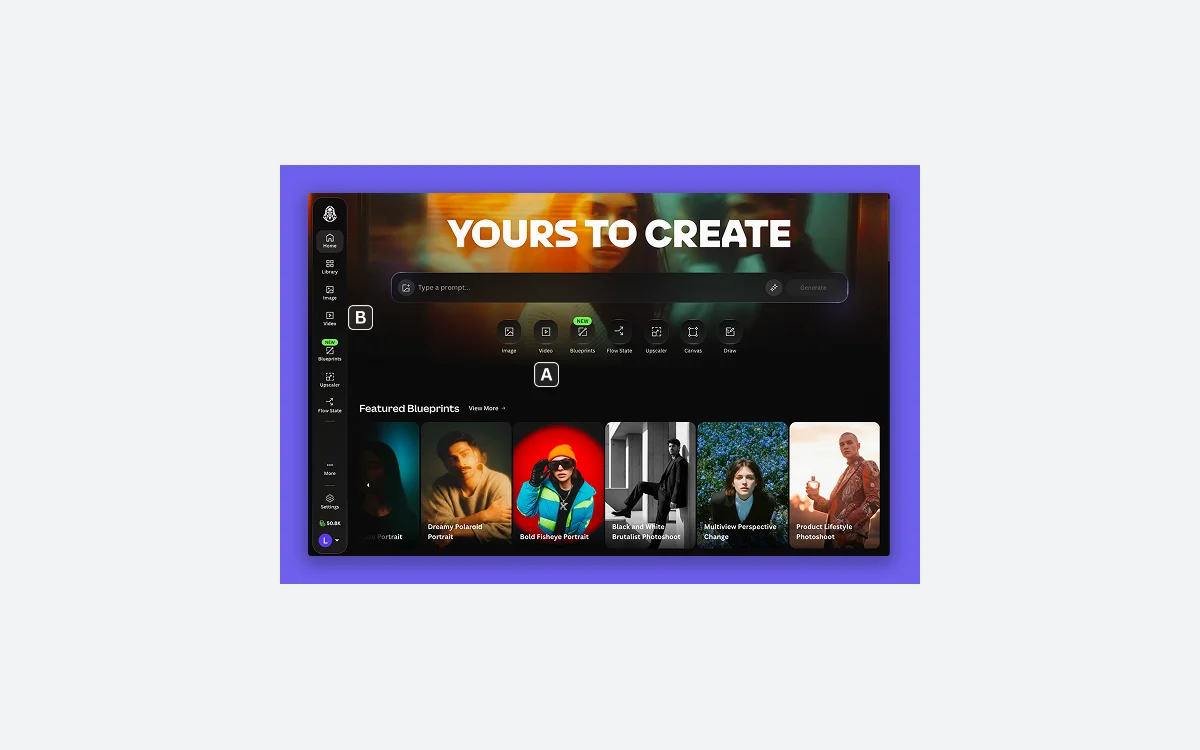
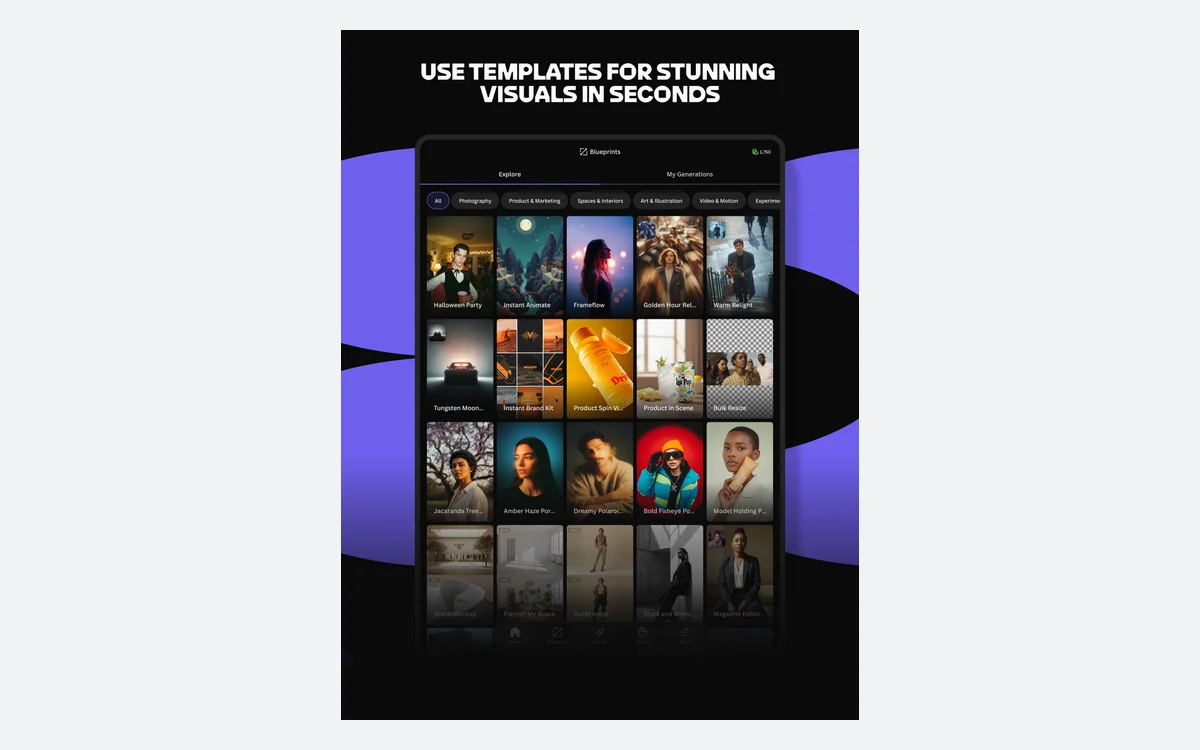
- Blueprints: one-click templates such as Product in Scene, Instant Brand Kit, Bulk Resize, Furnish My Space and Outfit Inspo.
- Flow State: a scrolling feed of quick variations on one idea.
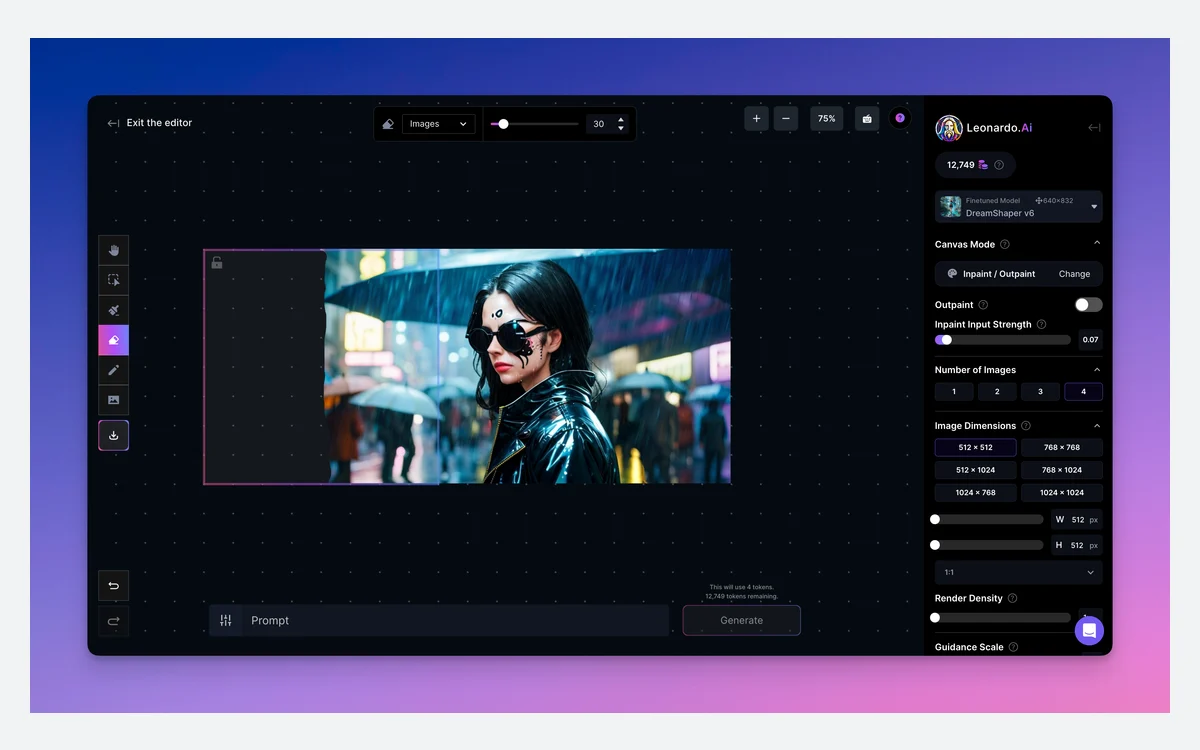
- The Canvas editor for inpainting, outpainting, sketch-to-image and masking, plus Realtime Canvas and Realtime Gen.
- Upscaler and Pro Upscaler.
- Elements training, which builds small custom models (LoRAs) from your own images.
- 3D generation and an iOS app.
The iOS app, "Leonardo.Ai - Image Generator", reached version 2.0.42 on 30 September 2026. When we checked on 6 October 2026, it was rated 4.83 from 11,006 US ratings.
Plans and prices
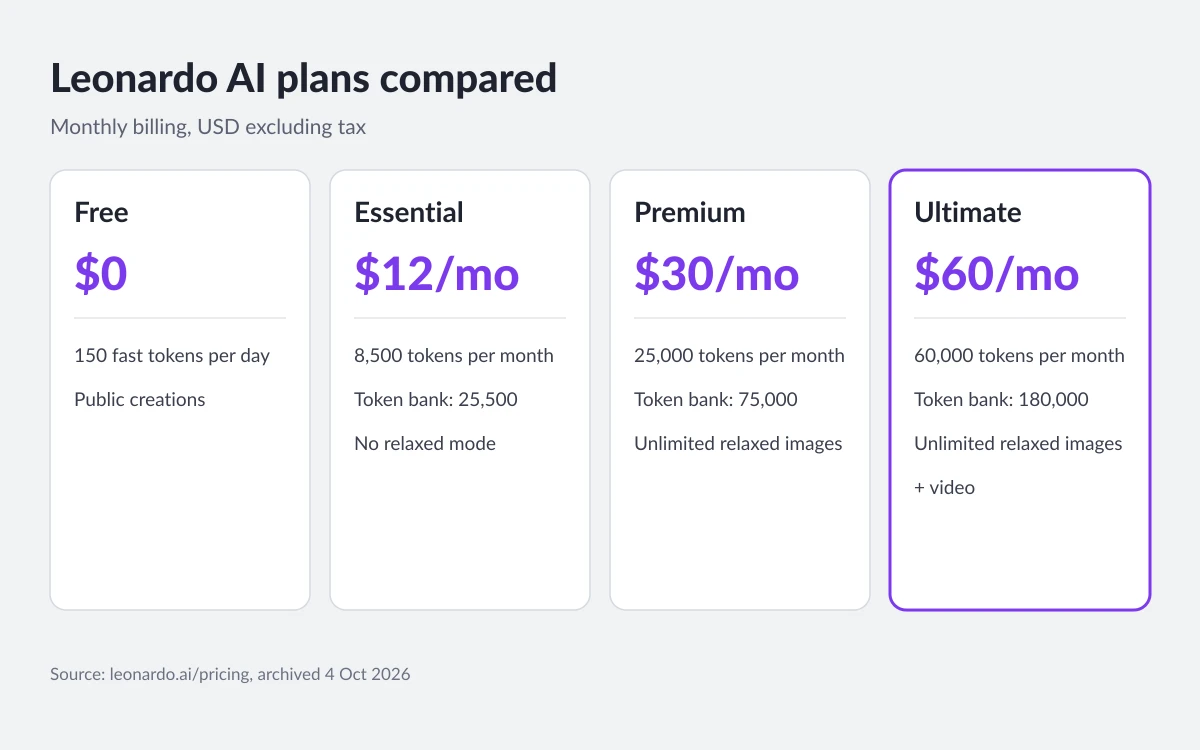
Leonardo sells four individual plans. These are the prices on monthly billing:
- Free - $0. 150 fast tokens a day, and unused tokens do not carry over. Everything you make is public. You get basic quality settings and one personal collection. Blueprints, Ultra quality, image and video guidance, the Realtime tools, Elements and Collections are all limited.
- Essential - $12 a month. 8,500 fast tokens a month and a rollover bank of up to 25,500. Private creations, 10 personal model trainings a month, 2 simultaneous generations, a 5-item queue and top-up tokens. It has no unlimited relaxed generation.
- Premium - $30 a month. 25,000 fast tokens a month and a bank of up to 75,000. 20 model trainings a month, 3 simultaneous generations, a 10-item queue and unlimited relaxed image generation on selected models. It has no relaxed video.
- Ultimate - $60 a month. 60,000 fast tokens a month and a bank of up to 180,000. 50 model trainings a month, 6 simultaneous generations, a 20-item queue and unlimited relaxed image and video generation on selected models.
Leonardo advertises yearly billing as "up to 20% off". On yearly billing the pricing page lists about $10, $24 and $48 a month for Essential, Premium and Ultimate. It does not show a yearly total. By our maths, that is roughly $120, $288 and $576 a year.
Every plan, Free included, can use Flow State, presets, Leonardo's own models and third-party models. Paid plans can use up to 6 image-guidance references. Upgrades take effect immediately. Downgrades take effect when the current billing cycle ends.
Price per 1,000 tokens
On monthly billing you pay about $1.41 per 1,000 fast tokens on Essential, $1.20 on Premium and $1.00 on Ultimate. These are our figures, not Leonardo's. The cheapest plan is also the most expensive per token.
How tokens and "unlimited" really work
Everything you generate on Leonardo costs tokens, and every model and feature has its own price. Leonardo no longer publishes a per-image price list. Instead, the app shows the cost of each action before you run it. Video costs depend on the model and your output settings. Only a few figures are published: Nano Banana costs 40 tokens per image, Flow State costs 1 token per image, and the Pro Upscaler costs between 73 and 1,211 tokens depending on settings. Lucid Origin's cost depends on the quality mode (fast or ultra), the image size and the dimensions.
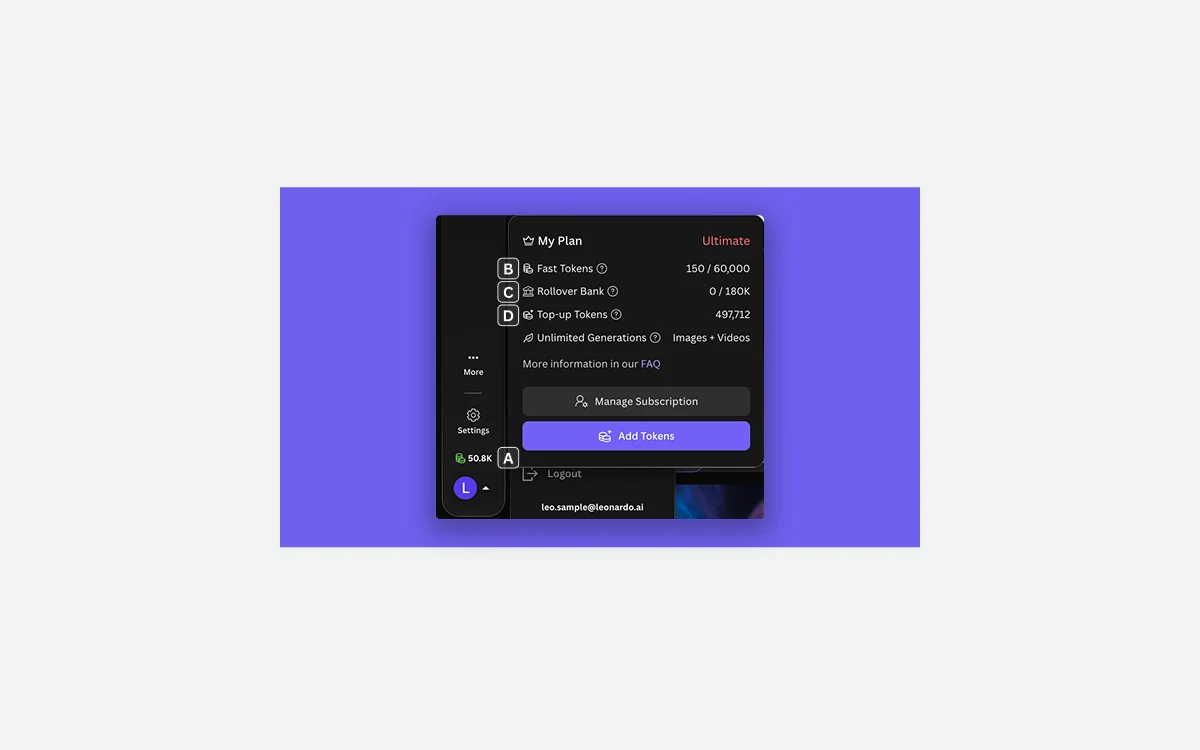
Tokens are spent in a fixed order: rollover tokens first, then this month's fast tokens, then top-up tokens. Only paid plans have a rollover bank, and it holds up to three months of your plan's allowance. You can buy top-up tokens only while you have an active subscription. They never expire, and team plans cannot buy them. We could not find a public price list for top-up packs.
The fine print on "unlimited"
Premium and Ultimate advertise unlimited generations. These are relaxed-queue generations, and three conditions apply:
- Relaxed mode starts only once your tokens are completely gone. Leonardo's help centre says it "cannot be manually enabled", so you cannot save fast tokens by choosing the slow queue.
- Only some models qualify. For images, the pricing card lists Lucid Origin, Lucid Realism, Phoenix 1.0, Phoenix 0.9, Flux Dev, Flux Schnell and Leonardo's preset styles. For video, on Ultimate only, it lists Hailuo 2.3, Hailuo 2.3 Fast, Wan 2.6, Motion 2.0 and Motion 2.0 Fast. Leonardo's own pages give slightly different video lists.
- Relaxed generations can slow down. Leonardo says concurrency and queuing "may be slowed from time to time based on demand".
Models that run on outside providers' servers never qualify for unlimited generation. GPT-Image-2, Nano Banana 2, Seedream 5.0 Pro, Seedance 2.5, Kling 3.0 Turbo, MiniMax H3, FLUX 3 Video and Veo 3.1 always use fast tokens, and so does Flow State. If you want Leonardo mainly for Veo or Nano Banana, plan your budget in tokens and disregard the unlimited label.
Models: Leonardo's own and third-party
Leonardo's own image models are Phoenix 0.9 and Phoenix 1.0, which every plan can use, plus Lucid Origin and Lucid Realism. Its own video models are Motion 1.0, 2.0 and 2.0 Fast. The preset styles are Anime, Cinematic Kino, Concept Art, Graphic Design, Illustrative Albedo, Lifelike Vision, Leonardo Lightning, Portrait Perfect and Stock Photography.
For many buyers, the third-party models are the main reason to sign up. For images there are GPT-Image-2, Nano Banana 2, Nano Banana Pro, Seedream 5.0 Pro and Flux Dev and Schnell. For video there are Veo 3 and 3.1 (including the Fast and Lite versions), Kling 3.0, Seedance 2.5, Hailuo 2.3, Wan 2.6, MiniMax H3 and FLUX 3 Video. Only paid plans can use the Veo models. The inline editor runs on what Leonardo calls Omni models, a set of Nano Banana, FLUX and GPT models.
That makes Leonardo a sensible way to try several leading models on one bill. Just remember that every one of them uses your fast tokens.
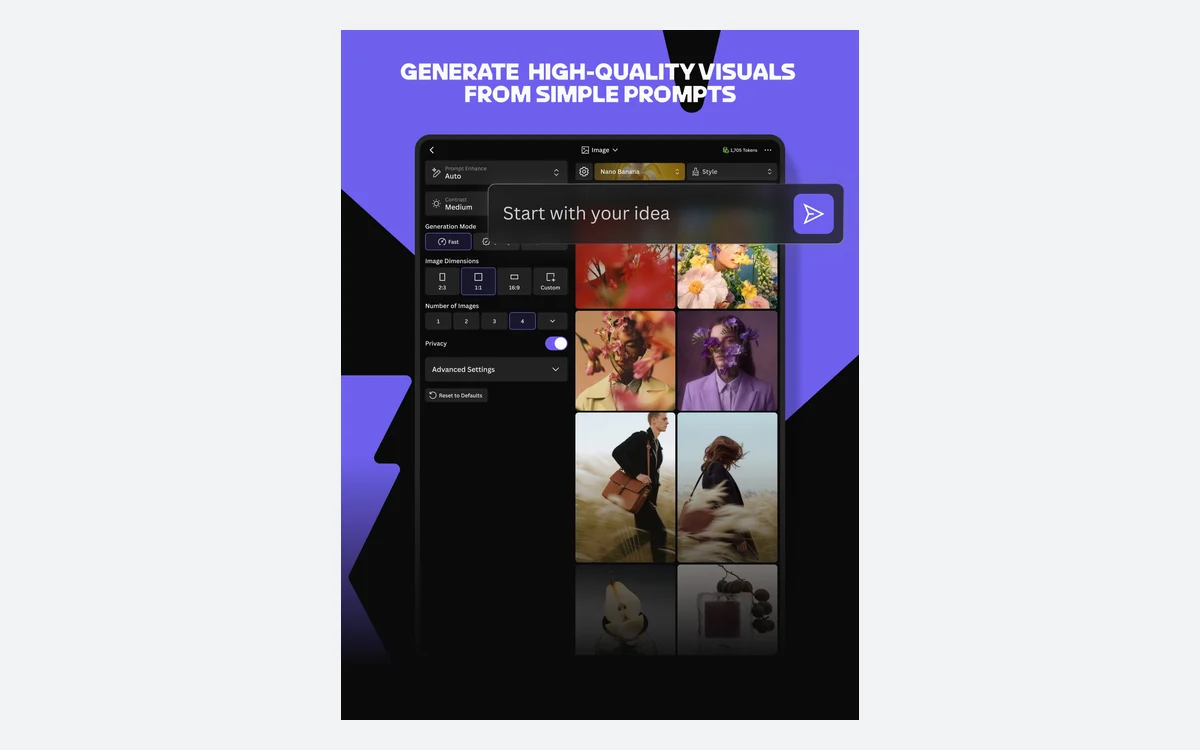
Tools beyond text-to-image
Blueprints is the feature aimed most clearly at people who would rather not write prompts. Its templates are grouped into Photography, Product & Marketing, Spaces & Interiors, Art & Illustration and Video & Motion. A shop owner can drop a product photo into Product in Scene or Brand Mockup and get marketing images without any prompt work. Blueprints concurrency depends on the plan: Free runs 1 at a time with a 5-item queue, Essential 2 with 5, Premium 3 with 10 and Ultimate 6 with 20.
The Canvas editor covers the usual editing jobs. It can paint over part of an image, extend an image past its frame, or turn a rough sketch into a finished image. Flow State is cheap for exploring ideas, at 1 token per image, but it never qualifies for relaxed generation. Elements training lets you teach Leonardo a character, product or style: 10 trainings a month on Essential, 20 on Premium and 50 on Ultimate, with only limited access on Free.
Who owns what you make, and who can see it
Read this section before using the free plan for anything commercial.
For paid plans, clause 8.3 of the Terms of Service says ownership of what you create "will vest in you upon creation". For the free plan, clause 8.7 says the opposite: ownership of the output "will vest in us upon creation", which means Leonardo owns it. The pricing page FAQ and the help centre say free users get a non-exclusive, royalty-free licence to use their images commercially. However, we found no clause in section 8 of the Terms that grants that licence. The Terms are the binding document. If ownership matters, as it does for client work, a logo or product packaging, pay for a plan.
Privacy follows the same split. Everything made on the free plan is public, and other Leonardo users can copy and remix it. Private generation is a paid feature. Even on a paid plan you have to switch the privacy toggle on, or your images are public.
Public or private also decides whether your images can train AI. Clause 8.6 gives Leonardo a perpetual, transferable licence over public content, covering "training AI models, developing new offerings, or for any commercial purpose". Clause 8.5 says private content will not be used to train models or build new products without your express written consent.
The short version
On the free plan, treat everything you make as public and owned by Leonardo. On a paid plan with the privacy toggle on, it is yours and stays out of training.
Cancelling, refunds and your account
A cancellation takes effect at the end of your current billing period. You pay until then, and the plan does not renew. When the plan ends, all unused tokens expire, including the whole rollover bank, so use your tokens before you cancel.
Leonardo does not offer a money-back window. Its help centre says refunds "are assessed manually by a human agent". The Terms promise a pro-rata refund only in three cases: Leonardo changes the Terms, shuts down the service, or breaches its own obligations. Assume your first month is non-refundable.
If you only need a break, the Terms let you pause your subscription for up to three months in each subscription period. Deleting your account erases all your information permanently. Leonardo may also close and delete an account that has been unused for 12 months or more.
Team plans
- Starter - $72 a month ($24 per seat, minimum 3 seats). 75,000 shared tokens a month and a bank of up to 225,000.
- Growth - $144 a month ($48 per seat, minimum 3 seats). 180,000 shared tokens a month and a bank of up to 540,000. Growth is the only team plan that can train models on team tokens.
- Custom - pricing on request.
Both Starter and Growth include unlimited relaxed image and video generation, private team generations, 6 simultaneous generations and a 20-item queue. Team plans cannot buy top-up tokens. A three-seat Starter team gets 25,000 tokens per seat, the same as Premium. Each seat costs $24 instead of $30 and also includes relaxed video, which Premium lacks.
The developer API
API usage has its own pay-as-you-go balance, and Leonardo is moving the API away from subscription plans. There is no upfront commitment or monthly fee, your balance does not expire, and the API page offers $5 of credit to start. Pay-as-you-go includes up to 10 concurrent generations and remove.bg background-removal APIs. API Custom, arranged through sales, adds custom concurrency and per-model discounts. Self-serve accounts do not get discounts by default. Images generated through the API do not expire.
Which plan should you buy?
- Free: for trying out models and styles. Do not use it for anything you need to own or keep private.
- Essential ($12): for occasional use when you want ownership and privacy. It has no relaxed mode, so once the 8,500 tokens are gone you either buy top-ups or wait for next month.
- Premium ($30): the best value for heavy image work on Phoenix, Lucid or Flux. When your tokens run out you can keep generating images in the relaxed queue.
- Ultimate ($60): worth it only if you need relaxed video, 6 parallel generations or a large monthly budget for third-party models.
- Three or more people: Starter costs less per seat than Premium and includes relaxed video.
Leonardo's strengths are a usable free tier, a wide set of templates and editing tools, and many third-party models under one bill. Its weakness is a token system that is hard to predict until you have watched your own usage for a month. If you are weighing it against Midjourney, see our separate Midjourney review.
Frequently asked questions
How much does Leonardo.Ai cost in 2026?
Essential costs $12 a month, Premium $30 and Ultimate $60 on monthly billing, excluding tax. Yearly billing brings these to about $10, $24 and $48 a month. Team plans start at $72 a month for three Starter seats.
What does the Leonardo.Ai free plan include?
You get 150 fast tokens a day, and unused tokens do not carry over. Everything you generate is public, the quality settings are basic, and several tools are limited. You can still use Leonardo's own models, third-party models, Flow State and presets.
Is Leonardo.Ai really unlimited on Premium and Ultimate?
Only partly. Unlimited generations run in a relaxed queue that starts only when your fast tokens run out. They cover only selected Leonardo and open models, and they can slow down when demand is high. Premium gets unlimited images only, while Ultimate adds video. Third-party models such as Veo 3.1 and Nano Banana 2 always use tokens.
Can I use Leonardo.Ai images commercially?
On a paid plan, yes: the Terms of Service give you ownership of what you create. On the free plan, the Terms say Leonardo owns the output, even though the pricing page and help centre describe a royalty-free commercial licence. For commercial work where ownership matters, use a paid plan.
Does Leonardo.Ai train its models on my images?
It can train on anything public, which includes every free-plan image and any paid-plan image made with the privacy toggle off. Under the Terms, private content is not used for training without your express written consent.
Can I get a refund, and what happens to my tokens if I cancel?
There is no guaranteed refund window. Leonardo reviews refund requests by hand, and the Terms promise pro-rata refunds only in narrow cases. A cancellation takes effect at the end of the billing period, and any unused tokens, including your rollover bank, then expire.
Is the Leonardo.Ai API included in my app subscription?
No. The API runs on its own pay-as-you-go balance with no monthly fee, and that balance does not expire. New users start with $5 of API credit.
Key takeaways
- The plans are Free, Essential ($12), Premium ($30) and Ultimate ($60) a month, or about $10, $24 and $48 a month on yearly billing.
- "Unlimited" means a relaxed queue that starts only when your tokens run out, and only for selected Leonardo and open models. Premium covers images only, while Ultimate adds video.
- Third-party models such as Veo 3.1, GPT-Image-2 and Nano Banana 2 always use fast tokens.
- Under the Terms, Leonardo owns free-plan output, and that output is public and can be used for training. Pay for a plan and turn on privacy for anything commercial.
- Cancelling takes effect at the end of the billing period, and the rollover bank is lost. There is no stated refund window.
- Premium is the best value for heavy image work. Starter is the cheaper choice for teams of three or more.
More in Artificial Intelligence
Browse Artificial Intelligence