Lexica.art Review 2026: A Useful Prompt Library, a Risky Subscription
Lexica's free prompt library still helps you learn AI image prompting, but its $10-$60/month Aperture generator draws months of outage reports in 2026.

Lexica started in August 2022 as a search engine for Stable Diffusion images, and for a while it was the place everyone went to learn how prompts work. Every image came with the exact prompt, seed, guidance scale and size that produced it, so you could copy a style instead of guessing at it.
In 2026 Lexica is two products under one roof: a free prompt library that is still worth browsing, and a paid generator built on Lexica's own Aperture models that costs $8 to $48 a month on annual billing. The problem is the second half. Paying users have been reporting for most of a year that generation fails and support does not answer, the founder now works at OpenAI, and the documented search API returned server errors when we tested it on October 7, 2026. This review covers what you actually get today and where the money risk sits.
What Lexica is in 2026
Lexica (lexica.art) was built by Sharif Shameem and launched about 24 hours after Stable Diffusion was released in August 2022. The idea was simple: index the flood of public Stable Diffusion images and make them searchable by prompt. In September 2022 the company announced a $5M seed round led by Daniel Gross and joined AI Grant. No later funding round has been reported.
The product then grew a generator. Instead of plain Stable Diffusion, Lexica trained its own photorealism-focused models under the Aperture name. Aperture V3 shipped by May 2023, and the current generator offers Aperture v5 (the default), v4 and v3.5. No third-party models are available.
- Library: free to browse and search, no account needed for searching.
- Generator: paid only, three plans, Aperture models only.
- Search API: a single documented endpoint, GET /api/v1/search, returning 50 results per query.
- Android app: listed on Google Play as Lexica: AI Art Generator (com.lexica.ai).
Who runs it now
Sharif Shameem's speaker page at ai.engineer says he works on the OpenAI Labs team. The page is undated and Lexica has made no announcement about a change of ownership, a shutdown or a pivot. The site is still online and still sells subscriptions.
The prompt library: still the best part
The library is why Lexica became popular, and it is still the reason to visit. How-To Geek reported in September 2022 that Lexica claimed more than ten million indexed Stable Diffusion images. Lexica has not published a current figure.
Each image page shows the full prompt along with the seed, guidance scale and dimensions. A Copy prompt button puts the text on your clipboard, and Explore this style pulls up visually similar images. That makes it a practical study tool: you see a result you like, read exactly what produced it, and reuse the phrasing in whatever generator you actually use.
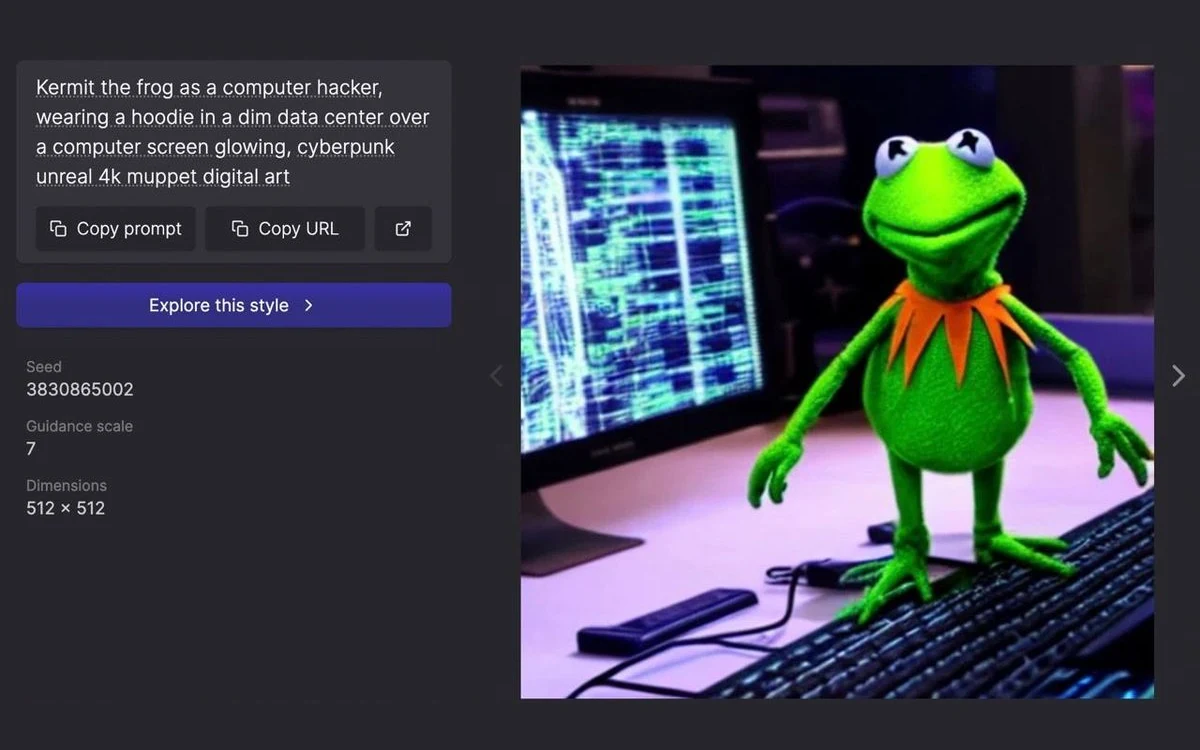
Keep in mind that much of the library comes from older models. Alongside newer Aperture output, it holds Aperture v2 and Stable Diffusion 1.5 images, and prompts written for those models do not always transfer cleanly to current generators. Treat the library as a vocabulary of styles and modifiers, not as copy-and-paste recipes.
The Aperture generator
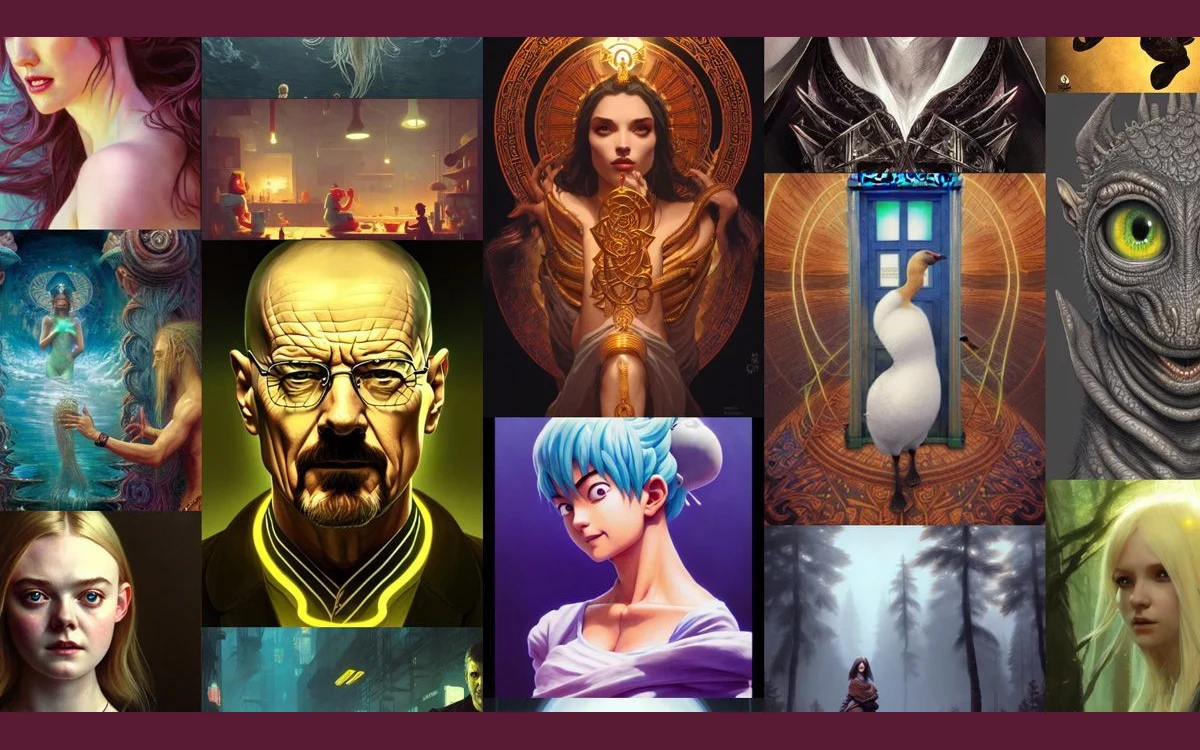
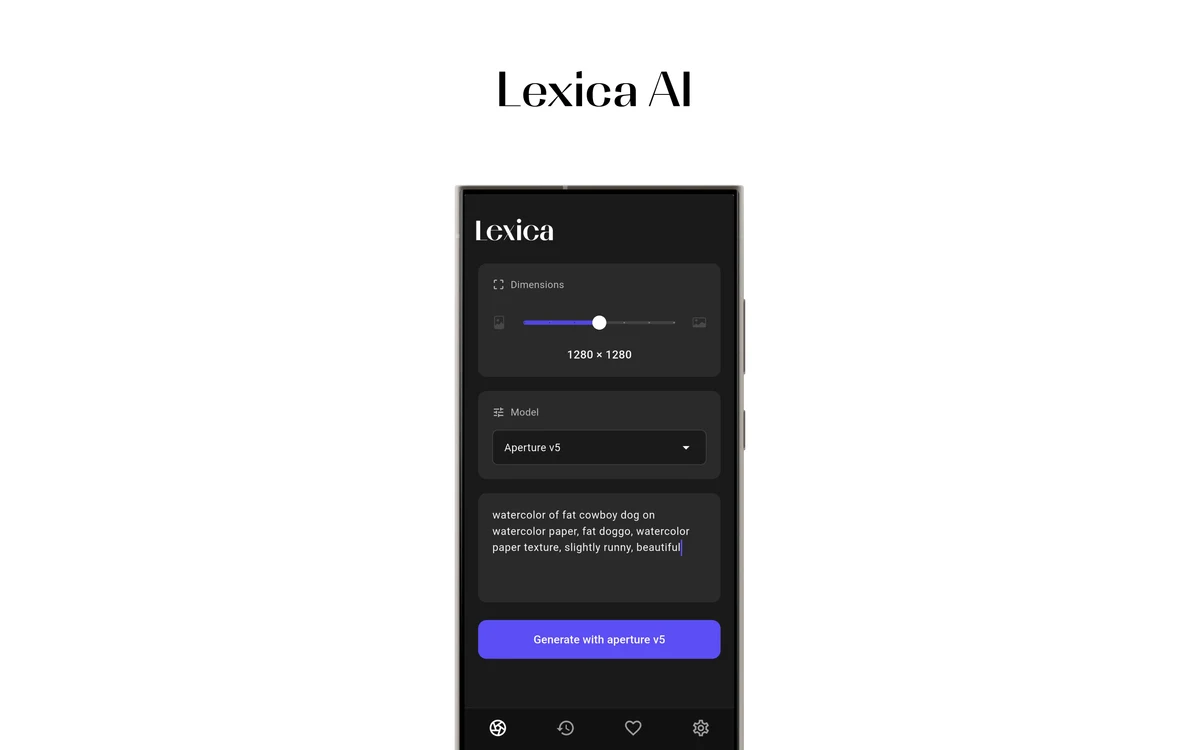
Lexica describes Aperture as a model that can generate photorealistic images, and the sample output on its own marketing pages leans heavily toward portraits and photographic scenes. Aperture v5 offers preset sizes of 1280x1280, 1360x1120, 1440x960 and 1600x832 plus their portrait versions, with 960x1440 as the default. The older v3.5 and v4 models run from 1728x576 to 576x1728, including a square 1024x1024.
Every paid plan includes custom aspect ratios, image uploads of up to 100 MB and early access to new models. Each prompt submission uses 4 image generation credits, so a monthly allowance of 1,000 fast generations works out to roughly 250 prompts.
We could not test generation
There is no free plan, so testing the generator requires a paid subscription. Given the reliability reports covered below, we did not buy one. Everything in this section comes from Lexica's own pages, not from hands-on output.
Pricing and plans
The pricing page shows annual billing by default, which is why the headline numbers look low. The $8, $24 and $48 figures are monthly equivalents of a yearly charge. Monthly billing only appears after clicking View monthly billing.
- Starter: $8/month billed annually ($96 a year) or $10 month to month. 1,000 fast generations a month, no slow generations, 2 concurrent fast jobs, images are public, personal commercial license.
- Pro: $24/month billed annually ($288 a year) or $30 month to month. 3,000 fast generations a month, unlimited slow generations with a daily cap, 3 concurrent fast jobs, images are public, full commercial license.
- Max: $48/month billed annually ($576 a year) or $60 month to month. 7,000 fast generations a month, unlimited slow generations with a daily cap, 3 concurrent fast jobs, images are private, full commercial license.
Once Pro and Max users use up their fast allowance they drop to a slow queue. Lexica does not publish the size of the daily cap on that queue. Extra fast generations cost $0.05 each, never expire, and only work while you have an active plan. In February 2024 the same top-up cost $0.01, so the price has risen fivefold.
What changed since 2023
In January 2023 the same $8, $24 and $48 annual plans gave 800, 3,000 and 6,500 images a month, and there was a free tier of up to 100 images a month. The free tier was gone by January 2025. Some third-party directories still list a free weekly allowance, but Lexica's own page says plainly that the only way to generate images is by subscribing, as there is currently no free plan.
Cancellation and refunds
You can cancel at any time and keep access until the end of the billing period. Upgrades are prorated, and downgrades become a discount on future months. PayPal is not accepted, and receipts and invoices can be downloaded from the account page.
There is no published refund policy. The cancel flow checks whether you are eligible and can issue a full refund, but the criteria are not public. In 2023 the rule was a refund if you had used less than 1% of your monthly limit. On an annual plan, that uncertainty is the main financial risk.
Does it actually work?
This is the question that decides the review. Lexica has a 1.5 out of 5 rating on Trustpilot from 42 reviews, about 83% of them one star, and the recent ones describe the same problem: you pay, and generation fails.
- January 25, 2026: "The service has been effectively unusable for days... complete lack of response from support."
- February 4, 2026: "Sometimes you can't generate anything for weeks."
- June 24, 2026: "Every attempt to generate images resulted in errors for more than eight months."
- July 28, 2026: "Does not work and there is ZERO CUSTOMER SUPPORT."
- August 3, 2026: "Lexica image generation is not functional anymore."
- August 19, 2026: "I haven't been able to generate images for several months. I have a paid yearly subscription."
Our own check points the same way. On October 7, 2026, the documented search endpoint (GET https://lexica.art/api/v1/search?q=apples) returned HTTP 500 on two attempts. Meanwhile the pricing page text is unchanged between January 2025, July 2026 and today, and checkout still works. A site that keeps taking payments while its core feature is reported broken, with no status page or statement, is the pattern to be careful with.
Read this as user reports, not a confirmed shutdown
Lexica has not announced an outage, a shutdown or a pivot. The evidence is user reviews plus our own API check. It is possible generation works for some accounts. It is also possible it does not, and nobody will tell you either way before you pay.
The search API
Lexica documents one endpoint. A GET request to /api/v1/search with a q parameter returns 50 matching images with their prompts. Passing an image URL as the query runs a reverse image search instead, which is useful for tracing where a style came from.
GET https://lexica.art/api/v1/search?q=applesThere is no documented generation API, no key management and no published rate limits. Combined with the HTTP 500 responses we got in October 2026, we would not build anything that depends on it.
Licensing, privacy and commercial use
The same terms cover images you find on Lexica and images you make there. For personal use, Lexica's terms point to a Creative Commons Attribution NonCommercial 4.0 license. Commercial use needs a paid plan: Starter for individual creators, Pro for teams of 2 to 5, and Max for teams of 5 or more. You cannot resell images on stock sites unless you are the original creator.
Lexica's license page adds that anything you download or generate while on a paid plan can be used commercially forever, even after you cancel, and that paid users can use any image on Lexica commercially, including other people's. Images in the library made with Stable Diffusion 1.5 are CC0 and can be used commercially without a plan.
Your images are public unless you pay for Max
Only images created on the Max plan are private. Starter and Pro generations show up in public search, and other paying users may use them, commercially included. On top of that, every user grants Lexica a perpetual, worldwide, non-exclusive, sublicensable, royalty-free, irrevocable copyright license to their images and prompts. If you are working on client material or anything confidential, Starter and Pro are not suitable.
The terms contradict each other
The terms page says personal use falls under CC BY-NC 4.0, which requires attribution, while the license page says no image credit is required. The terms also still mention a Free plan that no longer exists. Lexica's terms do not say outright that you own what you generate. If licensing matters for your project, get the answer in writing before relying on it.
Verdict: who should use Lexica
Use the library. It is free, needs no account to search, and seeing real prompts next to real results is still one of the quickest ways to learn how image models respond to wording. The reverse image search is a handy extra when it is up.
Be careful with the generator. Lexica asks for money up front with no free tier, defaults you to annual billing, has no published refund policy, keeps Starter and Pro output public, and has a year of reports from paying users that generation does not work and support does not reply. If you still want to try Aperture, take Starter on monthly billing at $10, generate on day one, and cancel straight away if it fails.
If you need a generator for real work, choose one with an active company behind it, a free tier or trial you can test first, and support that answers. Lexica is a useful reference site. Based on what paying users report in 2026, we cannot recommend it as a paid tool.
Frequently asked questions
Is Lexica free to use?
Browsing and searching the library is free, but generating images is not. Lexica's pricing page says there is currently no free plan. The old free tier of 100 images a month was removed by January 2025.
How much does Lexica cost?
Starter is $10 a month on monthly billing or $96 a year, Pro is $30 a month or $288 a year, and Max is $60 a month or $576 a year. The $8, $24 and $48 prices on the pricing page are annual billing divided by twelve. Extra fast generations cost $0.05 each.
Does the Lexica image generator still work in 2026?
Many paying users say it does not. Trustpilot reviews from January to August 2026 describe months of failed generations and no support replies, and Lexica's search API returned HTTP 500 errors when we checked on October 7, 2026. Lexica has made no official statement.
Are images I generate on Lexica private?
Only on the Max plan. Starter and Pro images appear in public search and other paying users can use them, including commercially. Every user also grants Lexica a perpetual, irrevocable, sublicensable license to their images and prompts.
Can I use Lexica images commercially?
Yes, with a paid plan. Lexica says images you download or generate while subscribed can be used commercially forever, even after you cancel. Stable Diffusion 1.5 images in the library are CC0 and need no plan, but you cannot resell images on stock sites unless you made them.
Can I cancel Lexica and get a refund?
You can cancel any time and keep access until the end of your billing period, but refunds are not guaranteed. There is no published refund policy; the cancel flow checks eligibility using criteria Lexica does not disclose. If you were charged for a service that never worked and cannot get a reply, your card issuer's dispute process is the usual fallback.
Does Lexica have an API?
Only for search. GET /api/v1/search returns 50 images per query and accepts an image URL for reverse image search. There is no documented generation API, and the endpoint was returning server errors in October 2026.
Key takeaways
- Lexica's free prompt library is still a good way to learn how wording shapes AI images.
- Generation is paid only: $10, $30 or $60 a month, or $96, $288 or $576 a year. There is no free plan.
- Paying users have reported failed generations and no support replies throughout 2026, and the search API returned HTTP 500 errors on October 7, 2026.
- Starter and Pro images are public and usable by other subscribers; only Max is private.
- There is no published refund policy, so avoid annual billing. Test on monthly Starter first, or pick a generator with active support.
More in Artificial Intelligence
Browse Artificial Intelligence