Lovo AI (Genny) in 2026: A Voice Tool Selling Subscriptions While Its Owner Liquidates
Lovo's Genny is still online and taking money in September 2026 — even though parent company Lovo Inc. filed for Chapter 7 liquidation on May 27, 2026, weeks before a voice-actor lawsuit over how its clones were built was due in court. What the tool does, what it costs, and why creators should look hard before paying.
Lovo's AI voice studio, Genny, is one of the odder products on the market in 2026: you can still open it, still start a trial, and still hand over a credit card — while the company that owns it is being wound up in a U.S. bankruptcy court.
On May 27, 2026, Lovo Inc. filed for Chapter 7 liquidation, weeks before it was due to argue for the dismissal of a class-action lawsuit brought by two voice actors who say the platform cloned and sold their voices without permission. This is not a story about a dead app — Genny is very much alive and charging subscribers. It is a story about whether you should be one of them.
What Genny actually is
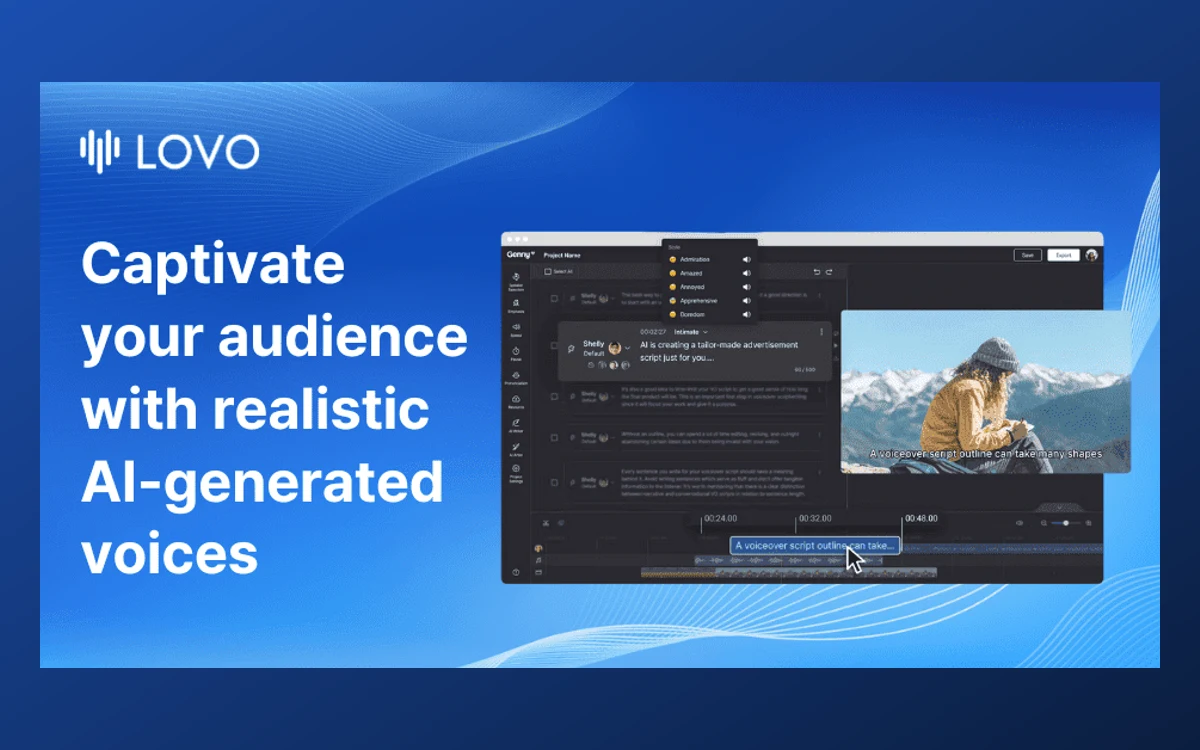
Genny is Lovo's browser-based text-to-speech and voice-cloning studio. You paste a script, pick a voice, and it renders speech you can drop into videos, ads, e-learning modules or podcasts. It is pitched at creators and small teams rather than developers.
On paper the feature list is competitive. Lovo advertises more than 500 voices across over 100 languages, plus a built-in timeline video editor, an AI script writer, auto-subtitles, a pronunciation editor and voice cloning from your own recordings.
Its 2026 headline feature is Pro V2, a delivery engine that reads inline natural-language cues you type straight into the script. Bracketed tags such as [sobbing] or [british accent] tell the model to shift emotion, accent or delivery style mid-sentence, instead of forcing you to split the text and tune each clip separately.
The short version
Feature-wise, Genny sits in the same bracket as ElevenLabs and Murf. The problem is not what it does — it is who owns it and how the voices behind it were reportedly built.
The Chapter 7 filing: liquidation, not a reset
On Wednesday, May 27, 2026, Lovo Inc. filed for Chapter 7 bankruptcy in the U.S. Bankruptcy Court for the Southern District of New York (case No. 1:26-bk-11249, before Judge Lisa G. Beckerman, with Alan Nisselson appointed trustee).
Chapter 7 matters here. It is liquidation, not the Chapter 11 reorganization that lets a company restructure debts and keep trading under court protection. In a Chapter 7, a trustee is appointed to sell off assets and shut the entity down.
The petition listed roughly $245,224 in assets against just $17,788 in liabilities, and was described in filings as a 'no-asset' case — the kind where creditors are expected to recover little or nothing. In other words, the corporate shell behind Genny is being dismantled.
Why the timing raised eyebrows
The bankruptcy landed less than three weeks before Lovo was scheduled to argue a motion to dismiss the voice-actor lawsuit — a hearing that had been set for June 16, 2026.
The lawsuit that the bankruptcy paused
The case is Lehrman et al. v. Lovo Inc., filed in the U.S. District Court for the Southern District of New York (docket 1:24-cv-03770, before Judge J. Paul Oetken). The plaintiffs, voice actors Paul Lehrman and Linnea Sage, allege Lovo used AI to synthesize and sell unauthorized clones of their voices.
Their complaint bundles a wide set of claims: New York civil-rights and consumer-protection law, the Lanham Act, the Copyright Act, plus contract, fraud, conversion, unjust enrichment and unfair competition. It is one of the higher-profile AI voice-rights cases in the U.S.
Two things are important to be precise about. First, these are allegations — the case has not been decided. Second, it is not over: after Lovo filed its bankruptcy notice, Judge Oetken stayed the lawsuit, halting the motion-to-dismiss hearing. A stay pauses litigation; it does not resolve it.
What that leaves a buyer with
An unresolved question about how Genny's voice library was built, now frozen in place by a bankruptcy that removed the defendant's obligation to answer it in court any time soon.
What it costs — and why the numbers are slippery
Lovo's own pricing page could not be loaded directly for this article (the domain returns bot-blocking errors), so the figures below come from third-party reviews published in mid-2026. Treat every one of them as unverified against Lovo's live checkout.
Even across reviewers, the numbers do not agree — a red flag in itself. Entry tiers are reported anywhere from around $19 to $24 per month, mid 'Pro' tiers from roughly $24 to $48 per month, and higher 'Pro+' tiers from about $75 to $149 per month. The spread reflects monthly-versus-annual billing and plans that appear to have shifted around the bankruptcy filing.
- Entry / Basic: reported ~$19–$24/mo (unverified)
- Pro: reported ~$24–$48/mo (unverified)
- Pro+: reported ~$75–$149/mo (unverified)
There is a 14-day free trial with roughly 20 minutes of voice generation, and any video you export during the trial carries a watermark. Because the pricing is inconsistent and the vendor page is unreachable, confirm the exact figure and billing period on Lovo's own checkout before entering payment details.
The support record: 1.6 stars and disappearing accounts
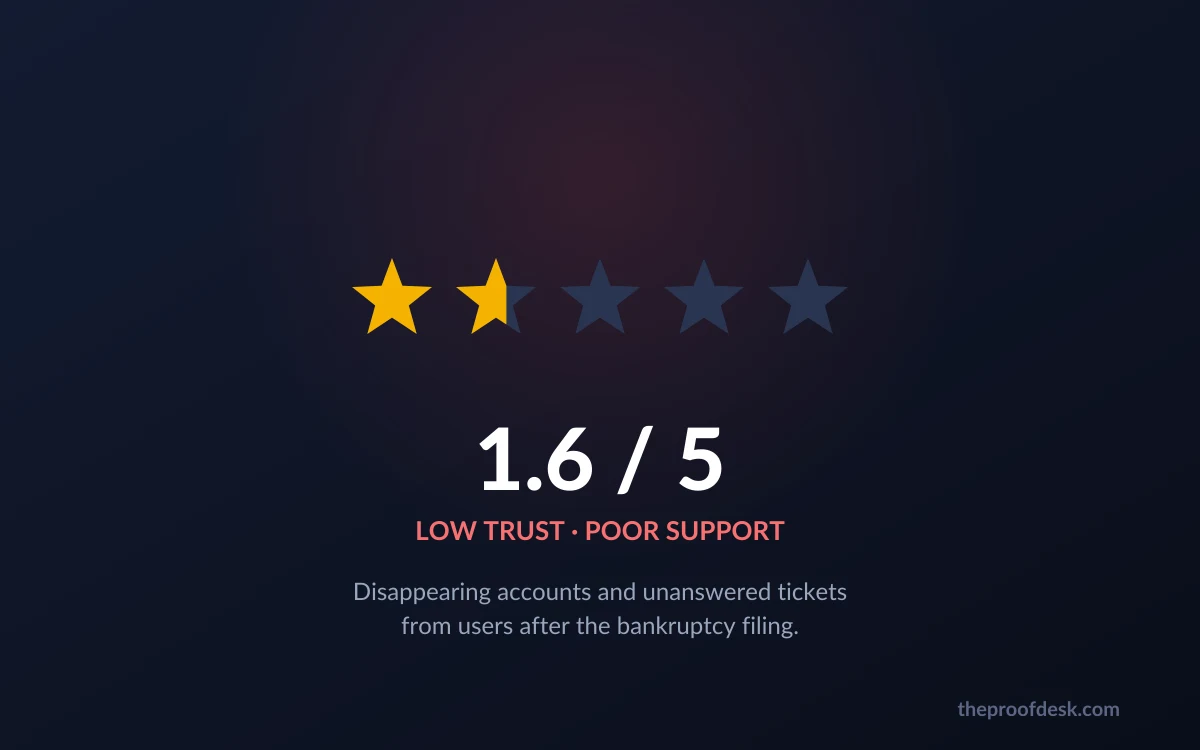
The clearest warning sign for a buyer is not the courtroom — it is the support queue. As of September 2026, lovo.ai holds a 1.6 out of 5 rating on Trustpilot across 86 reviews.
The most recent reviews describe the pattern you would fear from a company in liquidation: one user reported six weeks with no working service and no response from support; another said a lifetime-purchase account simply stopped working, with support emails bouncing back undelivered.
A separately documented case makes the risk concrete. A user who paid $449.86 for a 'Lifetime Pro' subscription in January 2025 says they were silently downgraded to the free plan in late April 2026, with no notice, and filed an FTC complaint over it. 'Lifetime' is only as durable as the company selling it.
Read this as a solvency signal
Silent downgrades of paid and lifetime accounts, plus unanswered support, are exactly what you would expect when the entity behind a product is being wound down. Pay month to month, if at all.
Should you sign up in 2026?
For most creators, the honest answer is: not now, and not with anything you cannot afford to lose. The tool itself is capable, but you would be buying it from a company that a court is actively liquidating, over voices whose provenance is the subject of an unresolved lawsuit.
If you still want to try it, protect yourself: never buy an annual or 'lifetime' plan, pay only month to month, keep local copies of every export, and use a payment method that lets you dispute a charge. Do not build a production pipeline on top of it.
If your goal is simply AI voiceover, the safer move is a solvent competitor. On this site we cover ElevenLabs, Murf and Speechify, all of which are operating normally and none of which are being liquidated while you read this.
Frequently asked questions
Is Lovo (Genny) shut down?
No. As of September 2026 Genny is still online, still marketed and still selling subscriptions. What changed is that its parent, Lovo Inc., filed for Chapter 7 liquidation on May 27, 2026 — so the product is running while the company behind it is being wound down.
Did Lovo lose the voice-actor lawsuit?
No. The suit by voice actors Paul Lehrman and Linnea Sage contains allegations that have not been decided. After Lovo's bankruptcy filing, the judge stayed (paused) the case, cancelling a motion-to-dismiss hearing set for June 16, 2026. Nothing has been proven either way.
Is it safe to buy a Lovo subscription right now?
It carries real risk. Lovo has a 1.6-star Trustpilot rating, a documented pattern of paid and 'lifetime' accounts being silently downgraded, and a parent company in liquidation. If you try it at all, pay month to month, avoid annual or lifetime plans, and use a card you can dispute charges on.
How much does Lovo cost in 2026?
Prices reported by third-party reviewers range from about $19–$24/mo for entry tiers up to $75–$149/mo for higher tiers, but the figures conflict between sources and Lovo's own pricing page could not be verified. Confirm the exact number and billing period on Lovo's checkout before paying.
Is there a free trial?
Yes — a 14-day free trial that includes roughly 20 minutes of voice generation. Videos you export during the trial carry a watermark. It is the lowest-risk way to test the tool without committing money to a company in liquidation.
What are the best alternatives to Lovo?
For AI voiceover from a company that is operating normally, look at ElevenLabs, Murf or Speechify. All three offer text-to-speech and, in some cases, voice cloning, without the bankruptcy and unresolved IP litigation hanging over Lovo.
Key takeaways
- Lovo Inc. filed for Chapter 7 (liquidation) on May 27, 2026 — the company is being wound down, not restructured.
- The Genny product is still online and still charging subscribers as of September 2026, despite the filing.
- The bankruptcy paused, but did not resolve, a voice-actor lawsuit alleging Lovo cloned and sold voices without permission — the claims remain unproven.
- A 1.6-star Trustpilot rating, silent downgrades of paid/'lifetime' accounts and bouncing support emails point to a company that can no longer serve customers reliably.
- If you must try it, use the 14-day trial, pay month to month, keep local exports, and prefer a solvent alternative like ElevenLabs, Murf or Speechify.
More in Artificial Intelligence
Browse Artificial Intelligence