Midjourney V6: Create Hyper-Realistic AI Images
Comprehensive guide on using Midjourney V6 to create stunning artistic images from text.
Midjourney in 2026: what you are buying
Midjourney is a subscription-based generative image service for developing visual ideas from prompts and references. The product has evolved beyond its early Discord-only workflow, and current creation options, model versions and editing controls should be checked in the official documentation. This review uses ‘V6’ because that is the established article route, but it does not assume V6 is the newest or automatically selected model for every account.
The product is strongest during visual exploration: mood, composition, lighting, material and art-direction alternatives can be compared quickly. That does not make each output ready for publication. A professional workflow still needs prompt records, selection, retouching, identity and anatomy checks, rights review, accurate text production and final export testing.
- Confirm the active model and parameters for every important project.
- Judge a complete approved asset, not the most attractive first grid.
- Keep references, prompts and edit history with the deliverable.
- Review current terms before commercial or client use.
Web creation, Discord and the image workflow
The web interface makes browsing, prompting, organizing and revisiting generations more approachable, while Discord remains relevant to some established workflows and community activity. Exact availability changes. Before training a team, choose one supported path, document where projects live and confirm that every collaborator can reproduce the steps without relying on a private message history.
A reliable session starts with a written objective and a small reference board. Generate broad directions first, select the visual logic rather than surface polish, then refine composition and details. Saving every variation can create an unsearchable archive; use project names and retain only meaningful branches, final candidates and the prompts needed to understand the decision.

Prompting for repeatable art direction
Strong prompts describe subject, environment, medium, composition, viewpoint, light, palette and constraints in ordinary language. Put the most important visual relationships first. Camera terminology can be useful when it expresses an actual photographic intention, but piling on lenses, awards and style adjectives often produces noise instead of control.
Change one dimension at a time when comparing results. Lock the aspect ratio and core scene, then test lighting or material separately. Record model version, seed or reference settings where available. A prompt is not a deterministic production file: identical language can behave differently across model updates, so approved campaigns should preserve rendered masters rather than depend on future regeneration.
Image references, style references and consistency
References help communicate composition, character, object or aesthetic direction, but different controls influence the result in different ways. Read the current parameter documentation instead of assuming that an uploaded image will be copied literally. Start with low influence, observe what transfers and increase only when the result needs a stronger constraint.
Consistency is a selection and production problem as much as a generation feature. Build a reference sheet for recurring characters or products, keep camera and lighting language stable, and compare outputs side by side. For a client identity or real product, verify every distinguishing detail. Generative similarity can suggest a direction without preserving geometry, typography or legally significant trade dress.
Editing, variations and finishing
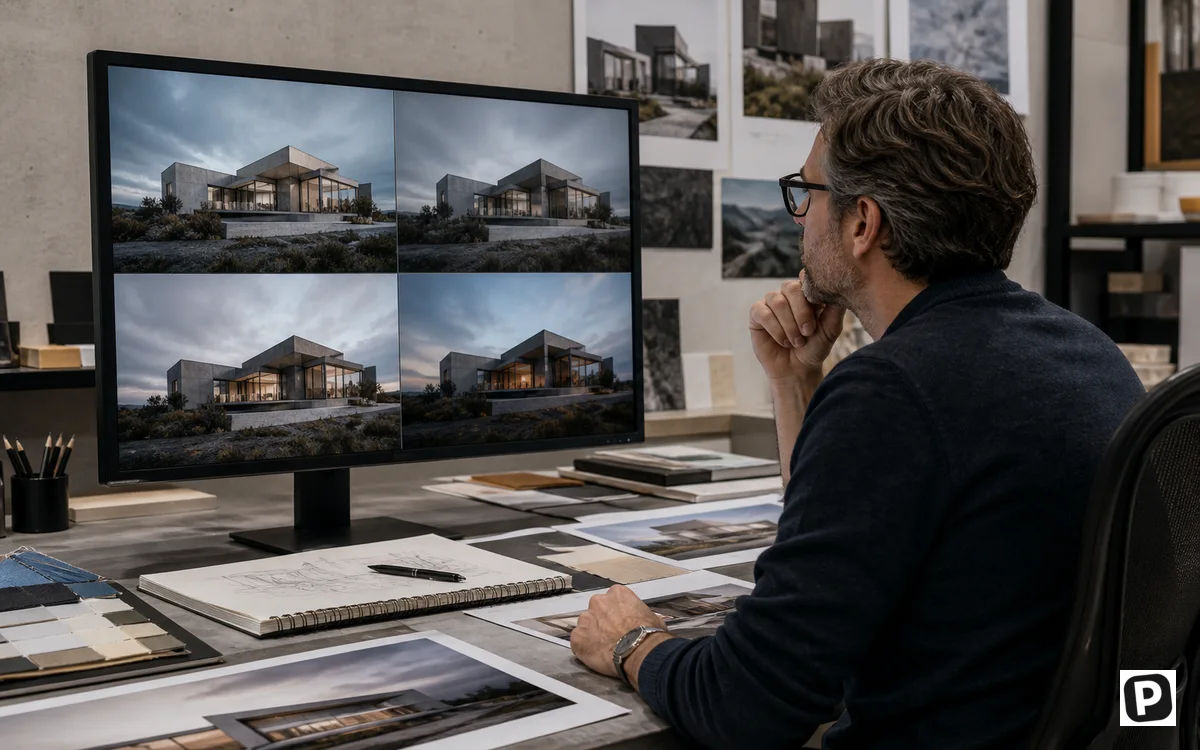
Variation and region-editing tools can repair or reinterpret part of an image, but repeated edits may introduce inconsistent texture, perspective and lighting. Work from larger structural choices toward small corrections. If hands, interfaces, packaging or text must be exact, plan to rebuild them in a conventional editor rather than spending unlimited generations hoping for a perfect accident.
Export the selected image at the best appropriate resolution, inspect at 100 percent and test the real delivery format. Print, social crops and responsive websites expose different problems. Preserve a clean master, a retouched master and delivery derivatives. This distinction matters when a later request requires a new crop or when the platform changes its upscaling behavior.

Typography, logos and brand accuracy
Image models can render short lettering more effectively than earlier systems, but text should still be treated as draft visual material. Check every character, punctuation mark and language variant. For packaging, signage, safety information, prices and calls to action, replace generated lettering with approved type in a design tool so that copy, accessibility and brand standards remain controlled.
Do not ask the model to invent a final logo and assume uniqueness. A useful exploration can reveal shapes or moods, but identity work requires research, vector construction, small-size testing and trademark review. Keep brand assets outside the generated scene until finishing whenever exact color, clear space and proportions matter.
Privacy, rights and commercial review
Commercial use depends on the current subscription terms, the input material and the planned publication—not simply on whether a download button is available. Review ownership and license language for the selected plan. Avoid uploading confidential client material or personal images without authority, and determine whether public visibility or community features expose prompts and outputs.
References create additional questions. A source image may be technically accepted while remaining inappropriate to reuse. Record where references came from, avoid instructions that imitate a living creator for client work, and involve legal counsel when a campaign depends on a recognizable person, protected character, product design or disputed visual style. Policies and law vary by jurisdiction and continue to develop.
Client review needs a provenance packet that survives beyond the Midjourney gallery. For each approved image, retain the brief, prompt and parameters, input references with their source and permission, the selected raw output, retouched master and final delivery file. Note which elements were rebuilt conventionally, especially lettering, logos, products and identifiable people. This record cannot settle every legal question, but it lets an editor or counsel understand how the asset was made and replace a disputed element without reconstructing the entire project. It also prevents a future model update from becoming the only way to reproduce an image whose exact campaign crop and corrections already received approval. Store the packet beside the campaign rather than inside one creator's account so it remains available during staff changes or subscription cancellation.
A professional quality-control checklist
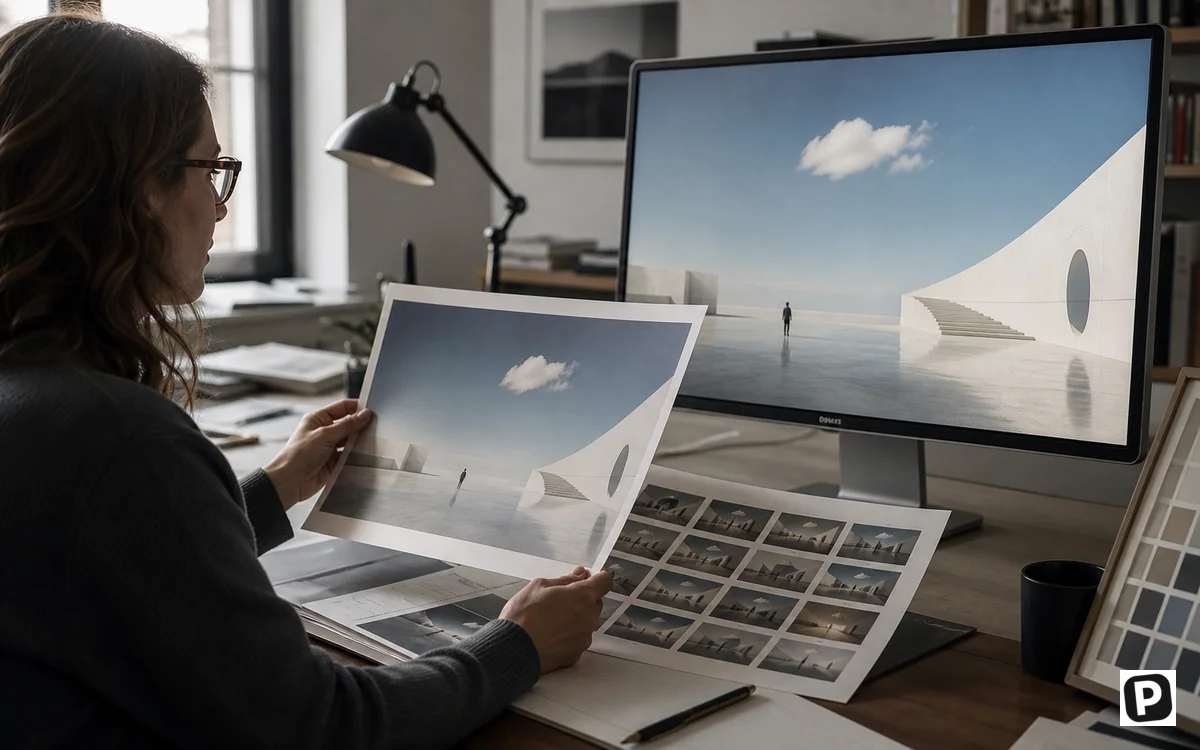
Review the whole image before admiring local detail. Check the intended message, subject hierarchy, perspective, light direction, anatomy, reflections, repeated objects, cultural context and accessibility. Zoom into faces, hands, jewelry, product joins, signs and background figures. Generative errors often hide in areas that feel plausible at normal viewing size.
Then test production requirements: dimensions, crop safety, color space, compression, transparency and the final placement of real copy and marks. Ask someone who did not generate the image to review it against the brief. Fresh eyes notice visual contradictions that the operator has learned to ignore after comparing many similar variants.
Plans, compute limits and real project cost
Plans can differ by generation time, concurrency, private creation and organizational features. Prices and allowances change, so verify the live plan page instead of relying on the figures in an old review. Understand fast versus relaxed processing, whether unused capacity carries forward, what happens at the limit and which privacy controls are included.
Calculate cost per approved campaign asset, not cost per generated image. Include briefing, discarded directions, retouching, copy rebuilding, stakeholder review, stock or reference licensing and archive management. Midjourney can be inexpensive for exploration yet inefficient for a product that requires exact repeatability. A short paid pilot using a real brief gives a more honest answer than estimating from prompt speed.
Who Midjourney suits—and our verdict
Midjourney suits art directors, designers, filmmakers and marketers who need rich visual exploration and are comfortable finishing selected work elsewhere. It can also help a non-specialist communicate a mood before commissioning production. It is less suitable as the only system for exact diagrams, regulated packaging, repeatable product catalogs or any task where every word and geometric detail must be deterministic.
Our verdict is that Midjourney is a powerful visual ideation environment when it sits inside a disciplined creative process. The quality of its most striking outputs is not the whole purchasing case. Choose it when your team can brief, curate, document and finish the work—and when the current terms and privacy settings match the material you intend to create.
Frequently asked questions
Is Midjourney V6 still the newest model?
Do not assume so from this route name. Check Midjourney’s current model documentation and the version selected in your creation settings before comparing results.
Can Midjourney create accurate text and logos?
It can produce visual drafts, but important lettering should be checked and normally rebuilt with approved typography. Final identity work also requires originality research, vector construction and legal review.
Can I use Midjourney images commercially?
Commercial use depends on the current terms, your plan, your inputs and applicable law. Read the official terms and obtain professional advice for consequential campaigns.
Are Midjourney creations private?
Visibility and private-generation options depend on current product behavior and plan features. Confirm settings before using confidential briefs, personal images or unreleased products.
Does Midjourney replace Photoshop or a designer?
It can accelerate concept exploration, but deterministic layout, typography, retouching, color management, rights review and final production still benefit from conventional tools and skilled judgment.
A deeper field guide for buyers
Pilot Midjourney with three briefs: an open mood exploration, a recurring subject that tests consistency, and a delivery with exact copy and dimensions. Record generation, selection, correction and review time. This shows where the platform accelerates thinking and where conventional production remains faster.
Create a project sheet containing objective, audience, required elements, prohibited elements, reference provenance, aspect ratios and approval owner. Save meaningful prompt branches and identify the final rendered master. Do not let a crowded personal gallery become the only production record.
Establish a disclosure and rights policy before client work. Decide which inputs are allowed, who checks references, when AI assistance is disclosed and which projects require legal review. Revisit the policy as the service terms and local guidance evolve.
At renewal, count approved deliverables and useful concepts—not generations. Compare total finishing time, creative range, predictability and archive needs with stock, commissioned work and competing generation tools. The best plan is the one that supports the actual production rhythm without encouraging waste.
Include people who create, review, administer, and receive the output in the final decision. Their incentives differ: the creator may value speed, a reviewer needs traceability, an administrator needs control, and the audience needs clarity and reliability. A product is ready for routine use only when the entire path works; optimizing the generation step while shifting hidden work to reviewers or support is not a genuine productivity improvement.
Before approving a subscription, write a one-page decision record. State the workflow being improved, current baseline, required capabilities, unacceptable risks, owner, budget horizon, and evidence collected during the pilot. Separate mandatory requirements from attractive extras. This protects the decision from a polished demonstration and gives the team a reference when pricing, staff, or product capabilities change after adoption.
Run the pilot with representative input and ordinary users, not only an enthusiast using ideal material. Record setup, correction, review, administration, and recovery time as well as successful output. Test one failure deliberately: revoke access, exhaust a small allowance, disconnect an integration, or correct a bad result. A production tool must be understandable when the happy path breaks, because support and recovery effort are part of its real cost.
Assess governance at the same time as usability. Identify what data enters the service, where copies travel through integrations, who can publish or share, how approval is recorded, how long records remain, and what can be exported or deleted. Compare current vendor documentation with the organization's legal, security, accessibility, and brand obligations. Features described as AI assistance do not transfer accountability away from the customer using the output.
Official sources checked
Product features and plan details change. These primary sources were checked for this review; confirm the live plan page before purchasing.
Key takeaways
More in Artificial Intelligence
Browse Artificial Intelligence