Runway Review 2026: Gen-4.5, Act-Two and What the Credits Really Cost
A hands-on look at Runway's AI video platform in 2026 — Gen-4.5, Act-Two performance capture and Aleph 2.0 editing, plus what the credit system really costs, the 720p ceiling, and the training clause with no opt-out below Enterprise.
Runway is one of the few AI video companies that survived the jump from novelty to production tool. It sells text-to-video and image-to-video generation, a performance-capture system that animates a still character from a webcam clip, and an in-context editing model that rewrites part of a shot without touching the rest — all inside one browser workspace, no GPU required.
It is also one of the more confusing products to price. Runway does not sell minutes or renders; it sells credits, and every model burns them at a different rate. A plan that looks generous at $15 a month works out to about one minute of flagship-model video. This review covers what Runway actually generates in 2026, what each tier costs, how far the credits go, and the terms you are agreeing to about your own footage.
What Runway is in 2026
Runway started as a research lab and still behaves like one — the product changes fast enough that documentation from a year ago is largely wrong. The company raised $315M led by General Atlantic at a $5.3B valuation in February 2026, after a $308M round at a $3B valuation in April 2025, and has announced a London European headquarters with a planned $100M investment in the UK AI ecosystem. Its pricing page claims the platform is "Trusted by 60M+ creators and leading enterprises."
Practically, it is a web app with three things worth paying for: generative video models, Act-Two performance capture, and Aleph in-context video editing. Everything else — the timeline editor, background removal, upscaling — is supporting infrastructure around those.
One housekeeping note before anything else: runwayml.com now redirects to runway.com. The help centre still lives at help.runwayml.com, which is why the two domains appear side by side throughout this review.
Who this is for
Runway suits creators and small studios who need short, controllable shots — ads, music video inserts, previs, social content. It is not a replacement for a camera, and at 5-to-10-second clips it is not a filmmaking tool on its own.
The video models, and what they can actually produce
Gen-4.5 is the current flagship and requires a Standard plan or higher. It generates 2 to 10 seconds per clip at 24 or 25fps, in six aspect ratios: 16:9, 9:16, 1:1, 4:3, 3:4 and 21:9. Gen-4 sits alongside it at fixed 5- or 10-second durations, 24fps, and always requires an input image — Gen-4 is not a text-to-video model on its own.
The resolution ceiling is the detail most people miss. Runway's help centre is direct about it: "Generative video outputs are created in 720p, but can be upscaled to 4K." Gen-4's native output sizes bear that out — 1280×720 for 16:9, 720×1280 for 9:16, 960×960 for 1:1, 1104×832 for 4:3, 832×1104 for 3:4 and 1584×672 for 21:9. Nothing generates natively at 4K; the 4K you see advertised is an upscale applied afterwards.
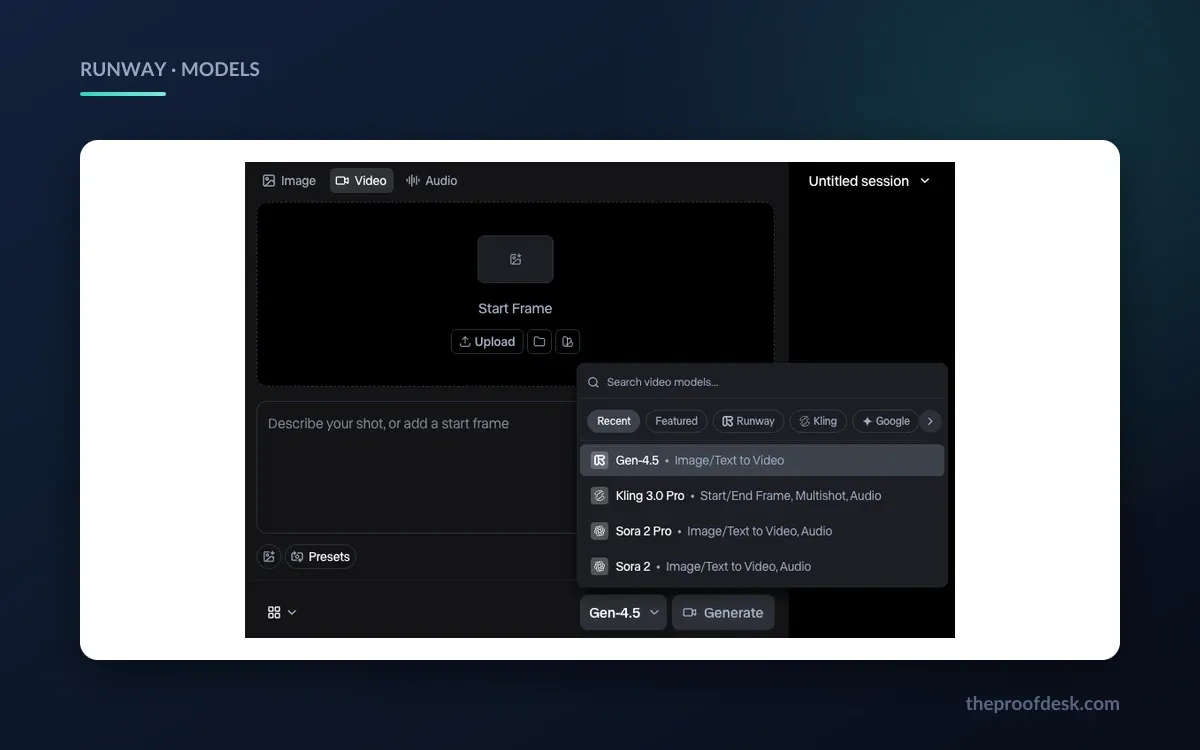
Runway has also turned itself into a model aggregator. The current selector includes Veo 3.1, Kling 3.0, Seedance 2.0, Gemini 3 Pro, Nano Banana Pro and Seedream 5.0 Pro next to Runway's own models. That is genuinely useful — one subscription, one credit balance, several vendors' models — but it means "is Runway any good" is partly a question about models Runway did not build.
Several tools people still search for are gone. Gen-1 and Gen-2 were deprecated on 6 April 2025, Gen-3 Alpha and Gen-3 Alpha Turbo have since followed, Veo 3 was deprecated on 5 August 2026 in favour of Veo 3.1, and the standalone Lip Sync tool was retired on 27 May 2026 in favour of Act-Two. Motion Brush went with Gen-2 — Runway's own FAQ answers it flatly: "No, Motion Brush is a feature specific to the Gen-2 model, and is not available on newer models." If a tutorial tells you to grab the Motion Brush, that tutorial is obsolete.
Act-Two: acting into a still image
Act-Two is the feature that most justifies the subscription. You record yourself performing — voice, head movement, expression — and supply a character, either a still image or a video. Act-Two transfers the performance onto the character, including gesture control when the input is a character image.
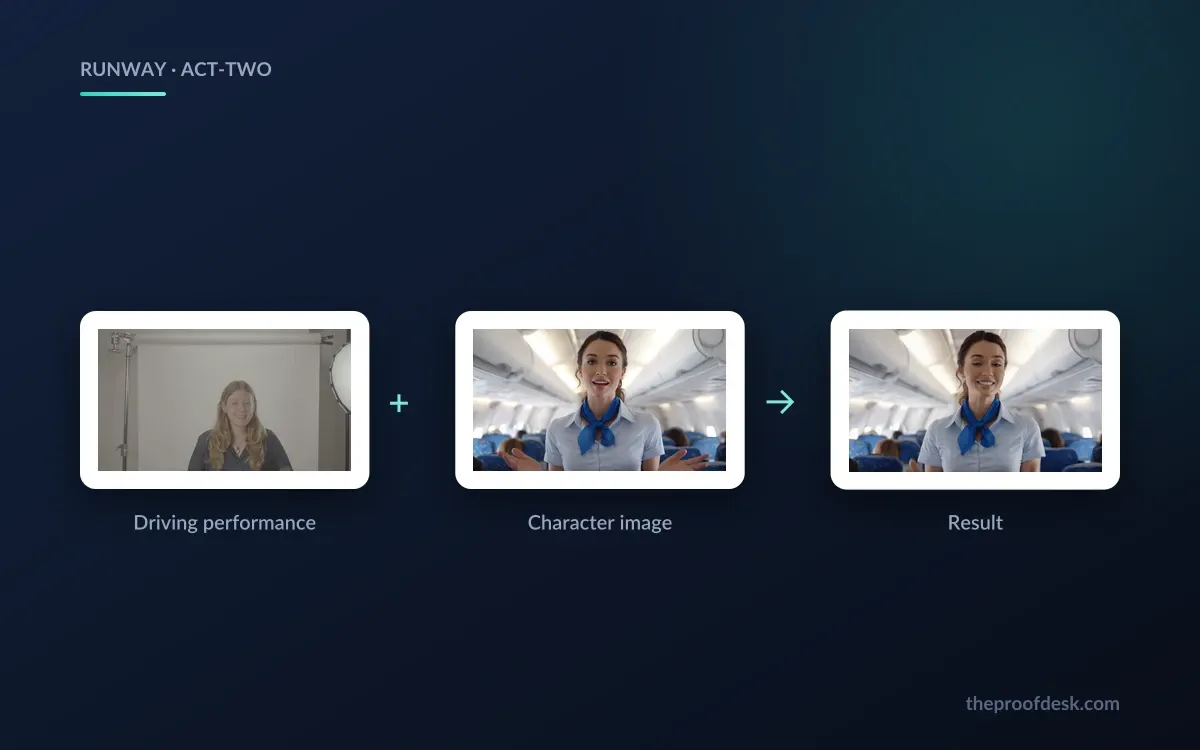
It supports up to 30 seconds per generation, which makes it the longest single output on the platform by a wide margin, and it has a Facial Expressiveness setting that defaults to 3. Like Gen-4.5, it requires a Standard plan or higher — this is not something you can properly evaluate on the free tier.
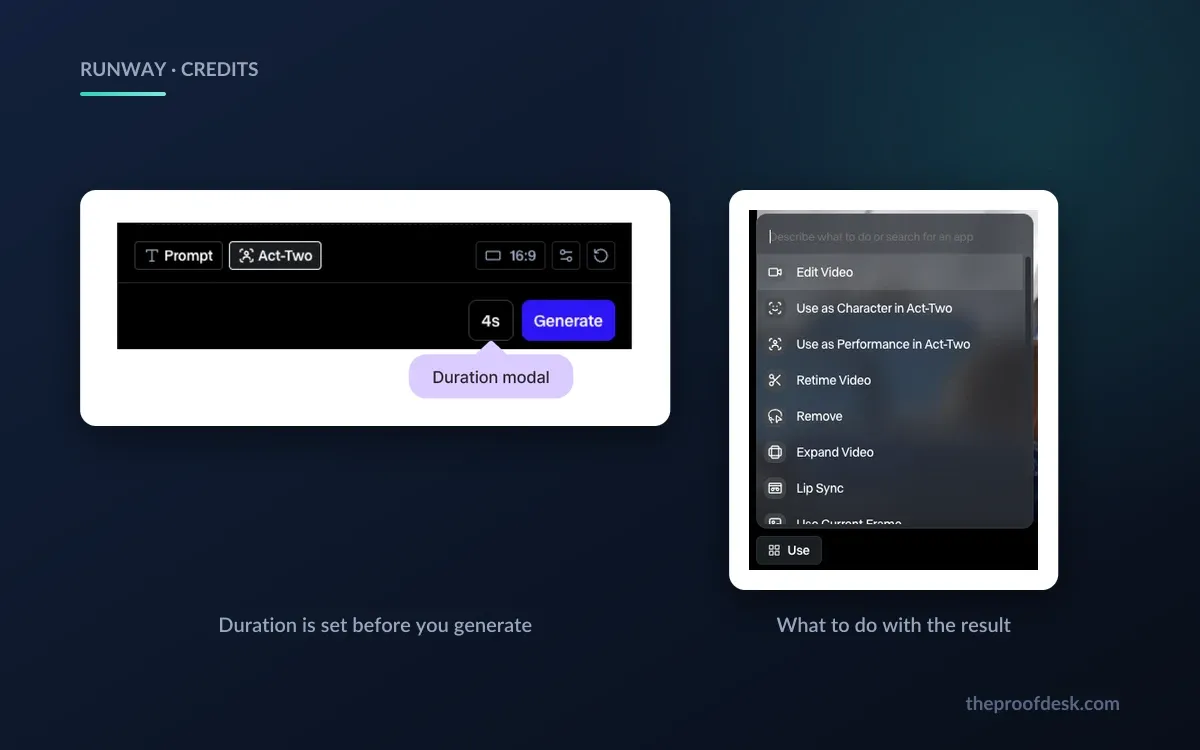
Costing is 5 credits per second with a 3-second minimum, so short takes are charged as 15 credits whether you use the time or not. Runway spells this out: "driving performance videos under 3s will result in a charge of 15 credits."
One ambiguity worth flagging: Act-One, the predecessor, still has live documentation describing it "on Gen-3 Alpha and Turbo" — models that are themselves being retired. Runway has not published an explicit deprecation notice for Act-One, so treat it as legacy rather than as a supported alternative.
Aleph 2.0: editing a shot you already have
Aleph is the video-to-video side of the platform, and Runway describes the current version plainly: "Aleph 2.0 is Runway's in-context video editing model. Edit one frame and Aleph 2.0 modifies the rest of your video to match — changing only what you ask for while preserving everything else."
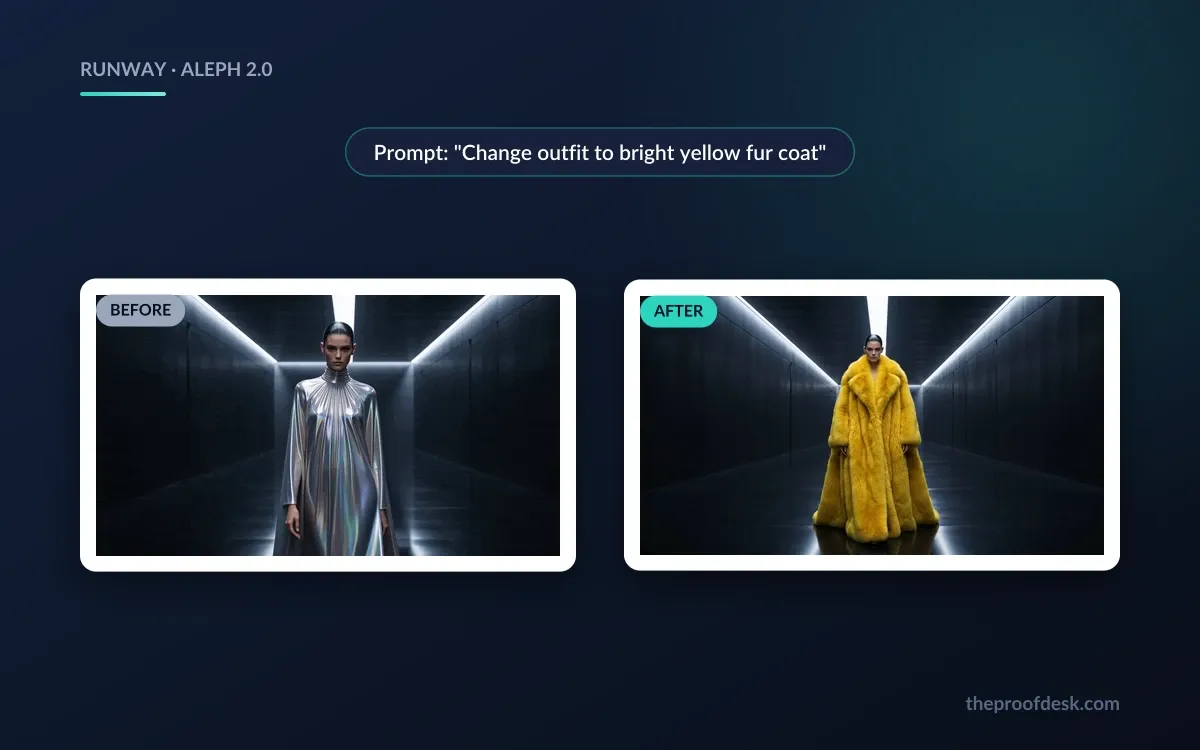
This is the most expensive thing on the menu. Aleph 2.0 runs at 28 credits per second, against 12 for Gen-4.5. The older Gen-4 Aleph is still listed at 15 credits per second. A ten-second edit on Aleph 2.0 is 280 credits — nearly half a Standard plan's entire monthly allowance for one shot.
Budget it before you prompt
At 28 credits per second, Aleph 2.0 is where Standard-plan users run out of month. If you expect to do a lot of video-to-video editing, price the Pro plan against buying credits rather than assuming Standard will stretch.
Pricing: five tiers, two billing cadences
Runway shows a discounted per-month figure by default, which is the annual-billing rate. The plain monthly price is higher. Both are below, along with what each tier's credits translate to.
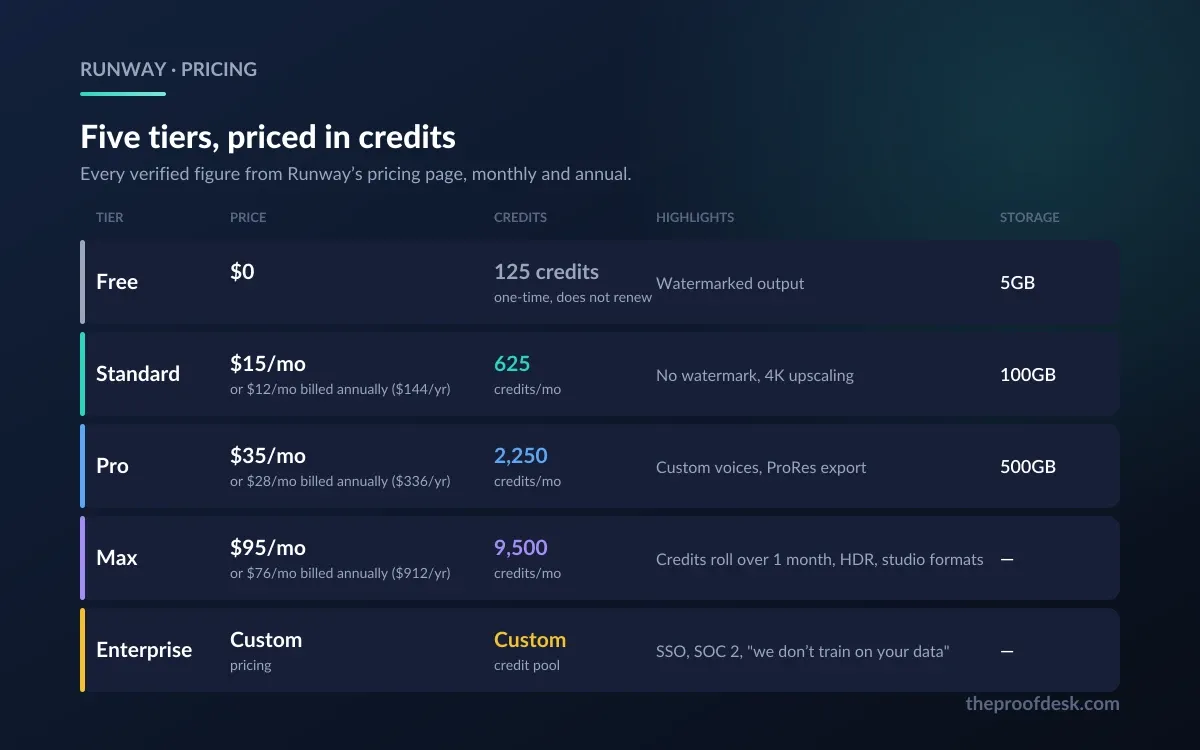
- Free — $0. A one-time deposit of 125 credits that never renews, 5GB of asset storage, watermarked output, and access to only a limited set of tools.
- Standard — $15/month billed monthly, or $12/month billed annually ($144/year). 625 credits per month, all image and video models, 4K upscaling, no watermarks, 100GB storage.
- Pro — $35/month billed monthly, or $28/month billed annually ($336/year). 2,250 credits per month, everything in Standard plus custom voices for Lip Sync and Text to Speech, ProRes and PNG sequence exports, 500GB storage.
- Max — $95/month billed monthly, or $76/month billed annually ($912/year). 9,500 credits per month, everything in Pro plus one month of credit rollover, studio-grade formats and HDR generations up to 16 bit.
- Enterprise — custom. All Pro features plus SSO, custom credit pools, team spaces, workspace analytics and priority support.
Extra editors are charged at the full plan rate: Standard allows up to 5 editors at $15 monthly or $144 annually each, Pro up to 10 editors at $35 or $336 each, Max up to 10 editors at $95 or $912 each. A three-person Pro team is $105 a month, not $35.
There is also a separate developer API — video from $0.05 per second, images from $0.01 each, audio from $0.0025 per second — on its own balance. Runway is explicit that the two do not mix: "Web app credits will never appear in your API credits, and vice versa."
A plan change mid-cycle is handled sensibly. Upgrades are prorated and take effect immediately; on a downgrade the unused balance is applied as a credit toward the next cycle and the current plan runs to the end of its term.
How far the credits actually go
Credits are the whole cost model, so the per-second rates matter more than the sticker price. Gen-4.5 and Gen-4 both cost 12 credits per second. Gen-4 Turbo costs 5. Act-Two costs 5 with a 3-second floor. Aleph 2.0 costs 28.
Runway's own worked example: "Gen-4.5 uses 12 credits per second of generated video. This means your total cost per generation would be either 60 or 120 credits, depending on if you chose a 5 or 10 second duration."
Converted into output, Runway publishes the ceilings for exclusive use of a single model: Standard gets 1 minute of Gen-4.5 or Gen-4, or 2 minutes of Gen-4 Turbo. Pro gets 3 minutes, or 7.5 minutes on Turbo. Max gets 12.5 minutes, or 31.5 minutes on Turbo. That is the honest way to read the plans — $12 a month buys roughly sixty seconds of flagship video, before a single retry.
Rollover is a Max-only benefit. Standard, Pro and Unlimited credits "do not roll over and are reset within 24 hours of your billing date"; on Max, "up to one month of unused credits may roll over to the following month."
Paid plans can buy top-up credits, minimum 1,000 per purchase, priced at $0.01 per credit starting at $10. Purchased credits never expire, but you cannot choose which pool to spend: "When you run a generation, monthly plan credits are always used first since they would otherwise expire." There is also an Auto Refill setting that tops you up when your combined balance drops below a threshold you set. Free-plan users cannot buy credits at all.
The Unlimited plan is being retired
Max launched on 1 June 2026 and Unlimited was withdrawn the same day. Existing Unlimited plans "remain unchanged through November 30th, 2026," after which monthly Unlimited subscribers convert to Max at the same $95/month. Unlimited offered 2,250 credits plus Explore Mode for unlimited generations at a relaxed rate; Max offers 9,500 credits and rollover, but not Explore Mode. If you rely on Explore Mode, that is a real loss, not an upgrade.
What the free plan is good for
Very little, and deliberately so. The free tier is "125 credits (one time); Access to a limited set of generative AI tools; 5GB of asset storage," and Runway confirms the deposit "does not expire, and does not renew or refresh once spent." At 12 credits per second that is about ten seconds of Gen-4.5 in total — except Gen-4.5 requires Standard, so you cannot spend it there anyway.
Everything generated on the free plan carries a Runway watermark, removable only by moving to Standard or above. There is a project cap too: after downgrading, "you will not be able to create any new projects once on the Free plan if you have over three projects."
One quirk worth knowing before you assume something is broken: Runway withholds free credits from accounts it associates with prior abuse — "if your account or network has previously been associated with fraudulent activity on our systems, these credits will not be issued."
Treat the free tier as an interface demo, not a trial. It is enough to see whether the workspace suits you and nothing like enough to evaluate output quality.
Ownership, commercial rights and model training
The ownership terms are unusually clear and unusually generous. Runway's usage-rights page states that "As a user on any of our plans (Free, Standard, Pro, Max, or Unlimited), as between you and Runway, you retain ownership and all your rights to content that you upload and generate on Runway," and confirms commercial use: "the content you create using Runway is yours to use without any non-commercial restrictions from us," explicitly covering monetised YouTube, Reels and TikTok uploads, social posts, film festival entries and product advertising.
That applies to the free tier too. The only free-tier restriction is the watermark, not the licence.
Training is the part to read twice. Section 4.4 of the Terms of Use — last updated 11 May 2026 — says the company "does not claim ownership of any of your Inputs or Outputs" and "does not restrict your commercial use of your Outputs," then adds: "You acknowledge that Inputs and Outputs may be used by the Company to train and improve its AI models, algorithms and related technology, products and services," backed by a "non-exclusive, irrevocable, perpetual, worldwide, royalty-free" licence.
There is no self-serve training opt-out
We found no documented way for a Free, Standard, Pro or Max user to opt out of having uploads and generations used for training. The only "We don't train on your data" commitment appears in Runway's Enterprise marketing copy, not in the Terms of Use or Privacy Policy. If you are handling client footage under an NDA, that gap is the conversation to have with your legal team before uploading.
On security specifically, Runway holds SOC 2 Type II certification, assets default to private, and Enterprise customers can request the report through the trust centre. The help centre frames SOC 2 as the protection for agency work: "If you're editing videos for your own clients through a personally-owned Standard, Pro, or Unlimited Plan, our SOC 2 compliance guarantees that all uploaded media is not accessible or extractable by unauthorized team members and/or third parties." Note that this is a confidentiality guarantee about other people — it is not an exemption from Runway's own training licence.
Cancelling and getting money back
Cancellation is end-of-period, not immediate: "You'll retain your subscription until the end of your billing cycle after cancellation, but the subscription will not renew." You can cancel straight after subscribing and keep access until the cycle ends, and your assets and projects stay on the account unless you delete it outright.
Purchased credits survive cancellation, but the feature set does not. Runway's warning is specific: "your current plan level determines the availability of features, not the plan type at the time the credits were purchased. For example, any generations made after downgrading to the Basic tier will have watermarks." Credits you paid for can end up producing watermarked output.
Refunds are discretionary. The Terms of Use state that "all fees for the Services are non-refundable," softened by "In our discretion, we may provide a refund upon request." The help centre lists when that discretion is normally exercised: within 30 days of purchase or renewal where the subscription is unused or close to unused; within 30 days for credit purchases that have not been used; and where you picked the wrong plan, such as annual instead of monthly. If a refund is granted the account is downgraded to free immediately and unused plan credits are lost. Denied suspension appeals get no refund.
The verdict
Runway is the most complete AI video workspace you can buy on a self-serve plan, and Act-Two and Aleph 2.0 do things that no amount of prompting a plain text-to-video model will match. The ownership and commercial-rights terms are among the clearest in the category.
The reservations are all about economics and expectations. Output is 720p natively, clips run 5 to 10 seconds, and the entry plan buys about one minute of flagship video a month — so the realistic starting point for professional work is Pro at $28 to $35, not Standard. Credit rates vary by more than 5x between models, which makes budgeting genuinely difficult until you have run a project through. Rapid deprecation means skills and tutorials go stale fast. And the training licence has no self-serve opt-out below Enterprise.
- Buy it if you need short, directable shots or character animation and can work within 10-second clips.
- Start on Standard for a month to learn your own credit burn rate, then move to Pro once you know it.
- Choose annual only after that first month — it saves 20% but locks in a burn rate you have not measured yet.
- Look elsewhere if you need long takes, native 4K, or a contractual guarantee that your footage is not used for training without an Enterprise contract.
Frequently asked questions
How much does Runway cost?
Standard is $15 per month billed monthly or $12 per month billed annually ($144/year); Pro is $35 or $28 ($336/year); Max is $95 or $76 ($912/year). Annual billing takes 20% off. There is a free tier at $0 and a custom-priced Enterprise tier. Extra editor seats cost the full plan price each.
How much video do the monthly credits actually produce?
On Standard's 625 credits: about 1 minute of Gen-4.5 or Gen-4, or 2 minutes of Gen-4 Turbo. Pro's 2,250 credits give roughly 3 minutes, or 7.5 minutes on Turbo. Max's 9,500 credits give about 12.5 minutes, or 31.5 minutes on Turbo. Those are ceilings for exclusive use of one model, with no allowance for retries.
Do unused Runway credits roll over?
Only on Max, and only for one month. Standard and Pro credits reset within 24 hours of your billing date and are lost. Credits you buy separately — minimum 1,000, at $0.01 each — never expire, but monthly plan credits are always spent first.
Can I use Runway videos commercially, including on the free plan?
Yes. Runway states that users on every plan retain ownership of what they upload and generate, with no non-commercial restrictions, explicitly including monetised YouTube, Reels and TikTok, advertising and film festival entries. Free-plan output carries a Runway watermark, which is a branding limit rather than a licensing one.
Does Runway train its models on my uploads?
Yes, unless you are on Enterprise. Section 4.4 of the Terms of Use says Inputs and Outputs may be used to train and improve Runway's models under a perpetual, irrevocable, royalty-free licence, and we found no self-serve opt-out for Free, Standard, Pro or Max. Only Runway's Enterprise materials carry a "We don't train on your data" commitment.
Can Runway generate 4K video?
Not natively. Generations are produced at 720p and upscaled to 4K afterwards — Gen-4's native sizes are 1280×720 for 16:9 and 720×1280 for 9:16. The 4K upscale requires Standard or above.
How long can a single Runway clip be?
Gen-4.5 generates 2 to 10 seconds and Gen-4 generates 5 or 10 seconds, both at 24fps (Gen-4.5 also supports 25fps). Act-Two is the exception at up to 30 seconds. Longer pieces have to be assembled from multiple generations.
What happens if I cancel — do I get a refund?
Cancellation keeps your access until the end of the current billing cycle and does not renew it; your projects and assets stay. Refunds are discretionary — fees are non-refundable by default, but Runway will typically consider a request within 30 days of purchase or renewal if the subscription or the purchased credits are essentially unused. If a refund is granted, the account downgrades to free immediately and unused plan credits are forfeited.
Key takeaways
- Runway sells credits, not minutes — Gen-4.5 and Gen-4 cost 12 credits per second, Gen-4 Turbo 5, Act-Two 5 with a 3-second minimum, and Aleph 2.0 a steep 28.
- Standard at $12–$15 a month buys roughly one minute of flagship video; Pro at $28–$35 is the realistic floor for professional work.
- Everything generates at 720p natively in 5-to-10-second clips; 4K is an upscale applied afterwards, and only Act-Two reaches 30 seconds.
- You own your outputs and can use them commercially on every plan, including Free — the free-tier limit is a watermark, not a licence.
- Runway reserves the right to train on your inputs and outputs under Section 4.4, with no self-serve opt-out below Enterprise.
- Credits only roll over on Max, and only for one month; Standard and Pro credits are lost within 24 hours of your billing date.
- Unlimited is gone as of 1 June 2026, with legacy plans converting to Max on 30 November 2026 — Explore Mode does not come with them.
More in Artificial Intelligence
Browse Artificial Intelligence