Scaleway Review 2026: What the European Cloud Costs After the June Price Rise
Scaleway review 2026: instance, storage and GPU prices after the June increase, the IPv4 and storage costs the list prices leave out, sovereignty claims versus certifications, support costs and account risks.

Scaleway built its name on very cheap European cloud servers. In June 2026 it raised prices for the first time in three years, and the cheapest instance went up fourfold.
This review uses Scaleway's current pricing pages, documentation and status history to show what you really pay for instances, storage, bare metal and GPUs. It also checks how far the sovereignty claims go, and what support and account risks come with the platform.
Verdict: still cheap at the bottom, but no longer a bargain bin
Scaleway is the cloud arm of the French Iliad group. It runs regions in Paris, Amsterdam and Warsaw, with a first Milan zone live and Sweden and Germany announced. It sells everything from a sub-euro virtual machine to an eight-way B300 GPU server, along with object storage, bare metal, serverless and hosted AI models.
On 1 June 2026 Scaleway raised prices for the first time in three years. It blamed rising RAM and storage hardware costs and the global IPv4 shortage. The smallest instance now costs four times what it did, every flexible IPv4 address went up 25%, and GPUs rose by roughly 5-10%. Over the same months Dedibox and Elastic Metal got cheaper, B300 GPUs arrived and Milan opened, so the picture is mixed rather than simply worse.
Our verdict
Scaleway is a good choice for European teams that want EU-owned infrastructure, hourly billing and a broad catalogue at fair prices. Budget for the IPv4 and storage, which the headline prices leave out, and do not buy it for SecNumCloud, which it still does not hold. Low-touch hobby accounts should know that public reviews report account locks.
- Best for: EU-based startups, AI teams that want per-minute H100 billing in Europe, and anyone who needs data kept out of US jurisdiction.
- Watch out for: IPv4 and block storage billed on top of every instance, low quotas until you verify your identity, paid support for fast responses, and no hard spending cap.
- Prices in this review are in euros excluding VAT, taken from Scaleway's pricing pages on 3 October 2026.
What changed in the June 2026 price increase
Scaleway announced the rise in an April 2026 blog post titled "A transparent update on Scaleway pricing". It says the company had "proudly held our prices flat" for three years, and that anything not on its list keeps its old price. These are the changes most customers will notice:
- STARDUST1-S: €0.00015 to €0.0006 an hour (4x, roughly €0.11 to €0.44 a month).
- DEV1-S: €0.0088 to €0.00898 an hour; DEV1-M €0.0198 to €0.0202; DEV1-L €0.042 to €0.04284.
- PLAY2-PICO: €0.014 to €0.01428; PRO2-XXS: €0.055 to €0.0561 an hour.
- Flexible IPv4: €0.004 to €0.005 an hour. The same increase applies to Bare Metal, Public Gateway and Load Balancer IPs.
- H100-1-80G: €2.73 to €2.87 an hour; H100-SXM-8-80G: €23.03 to €25.33; L40S-1-48G: €1.40 to €1.47; L4-1-24G: €0.75 to €0.79.
- Block Storage SSD: €0.000118 to €0.00013 per GB per hour; Object Storage Multi-AZ: €0.00002 to €0.000022.
- Load Balancer GP-S: €0.016 to €0.023 an hour; Public Gateway S: €0.0199 to €0.026; DNS zone for external domains: €0.001 to €0.007.
- Serverless Functions: €0.000012 to €0.000017 per GB-second.
- Elastic Metal EM-I220E-NVMe: €199.99 to €229.99 a month; Dedibox Core-10-XS: €119.99 to €134.99.
Most general-purpose instances moved about 2%, which almost nobody will notice. The changes that hurt sit around the instance rather than in it: IPv4, load balancers, gateways and DNS zones went up between 30% and 600%. A small stack with a load balancer and a gateway now costs noticeably more than it did in May, even if its instances barely changed.
Instance pricing: what you actually pay
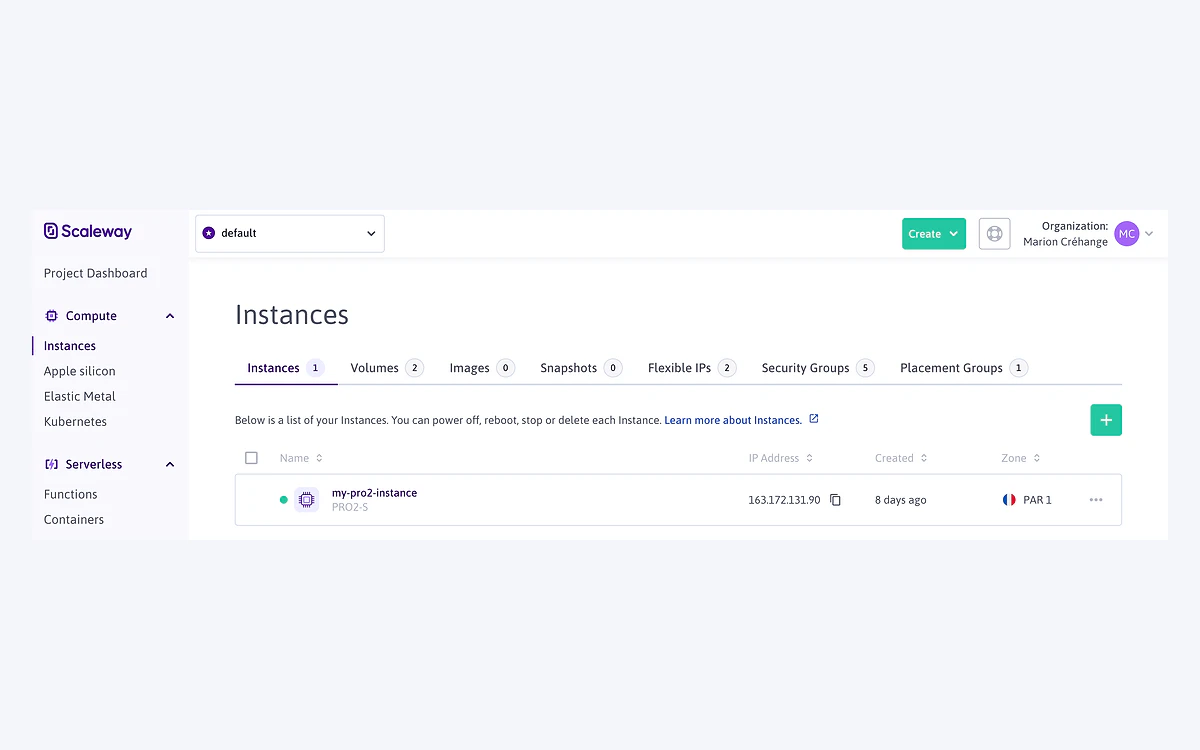
Scaleway's instance list prices include egress and IPv6, but the pricing page says plainly that "Storage (local, block) and attached public IPv4 addresses are excluded." These are the current list prices, with the monthly figure worked out as the hourly price times 730 hours:
- STARDUST1-S (1 vCPU, 1 GB, 100 Mbps): €0.0006/h, about €0.44/month. Only in fr-par-1, nl-ams-1 and pl-waw-2.
- DEV1-S (2 vCPU, 2 GB, 200 Mbps): €0.00898/h, about €6.55/month.
- DEV1-M (3 vCPU, 4 GB): €0.0202/h, about €14.74/month.
- DEV1-L (4 vCPU, 8 GB): €0.04284/h, about €31.27/month.
- BASIC2-A2C-4G (2 vCPU, 4 GB): €0.023/h, about €16.79/month.
- PLAY2-PICO (1 vCPU, 2 GB): €0.01428/h, about €10.42/month.
- PRO2-XXS (2 vCPU, 8 GB, 350 Mbps): €0.0561/h, about €40.95/month.
- POP2-2C-8G: €0.0735/h, about €53.65/month, up to POP2-64C-256G at €2.35/h.
The IPv4 now costs more than the cheapest server
A flexible IPv4 is €0.005 an hour, or about €3.65 a month, which is more than eight times the price of a STARDUST1-S. Scaleway's GitHub Instances FAQ still quotes the old €0.004 rate, so trust the network pricing page instead. Some realistic monthly totals:
- STARDUST1-S + IPv4 + 10 GB block storage: about €0.44 + €3.65 + €0.95 = roughly €5.
- DEV1-S + IPv4 + 20 GB block storage: about €6.55 + €3.65 + €1.90 = roughly €12.10.
- IPv6-only workloads skip the €3.65, which is the easiest saving on the platform if your users and dependencies can reach IPv6.
Billing rules worth knowing
- CPU instances are billed per hour of uptime, including startup and standby time. Each resource has a 60-minute minimum.
- GPU instances are billed per minute, except RENDER-S, which is billed per hour.
- Public IPs and volumes are billed for the whole time they are allocated, "regardless of whether the Instance is powered off." Powering off does not make a server free. You have to delete the IP and the volumes.
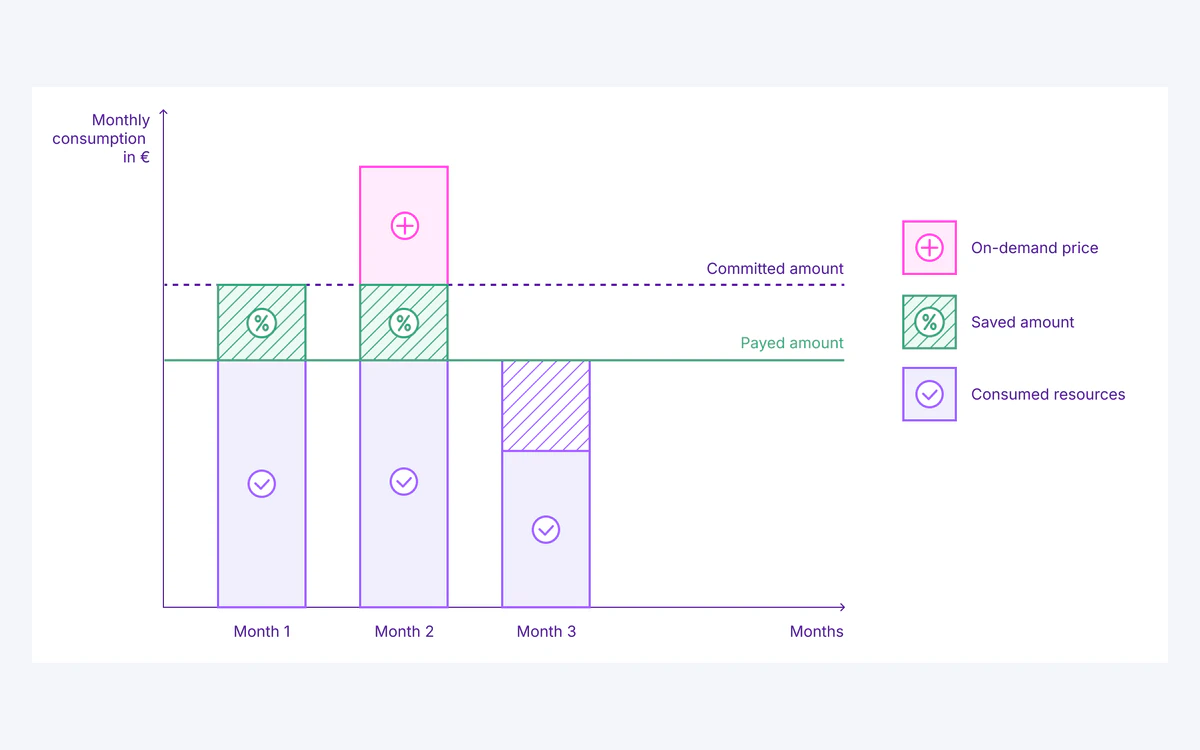
- Savings Plans promise up to 25% off compute if you commit to a monthly spend.
Storage, egress and networking
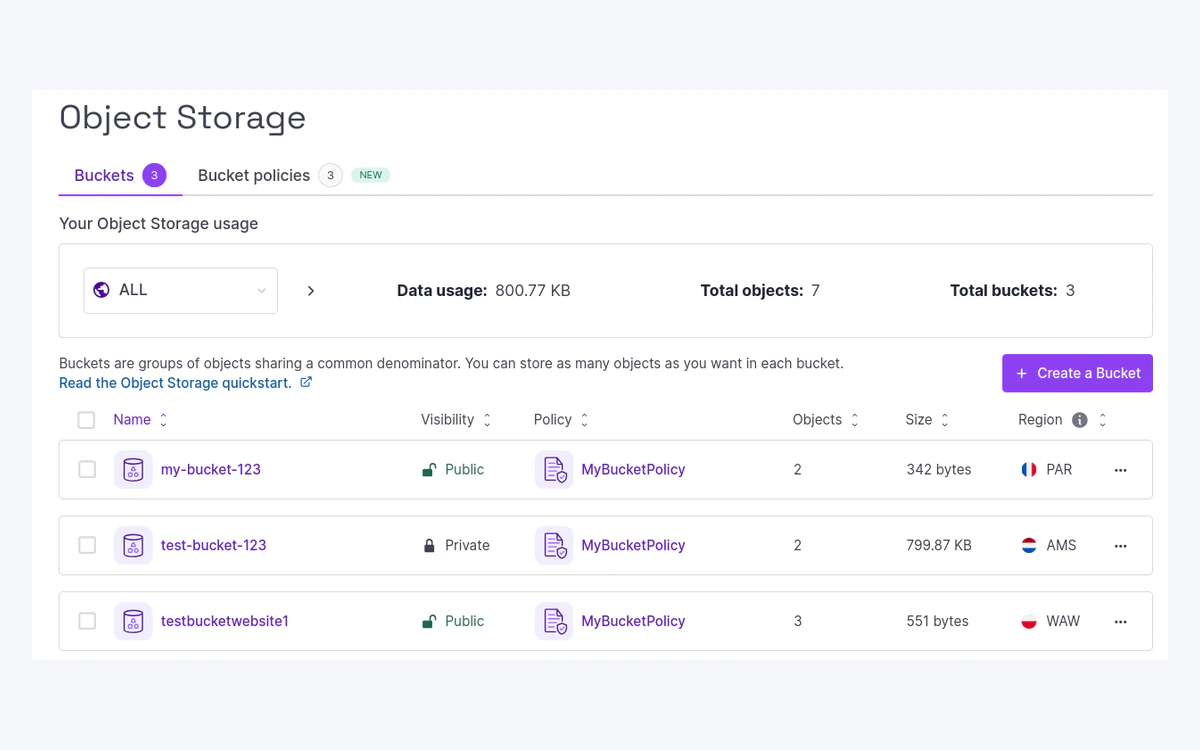
Object storage is one of Scaleway's strongest products. Requests and ingress are free, and the first 75 GB of egress each month is included, with €0.01 per GB after that. Per month that works out to:
- Standard Multi-AZ: €0.01606 per GB, about €16 per TB.
- Standard One Zone: €0.00803 per GB, about €8 per TB. It was cut in January 2026 and then nudged up again in June.
- Glacier: €0.00254 per GB, about €2.54 per TB, plus €0.009 per GB to restore.
- Block Storage: €0.00013 per GB per hour at 5K IOPS (about €0.095 per GB a month) and €0.000177 at 15K IOPS.
- Local instance storage: €0.000049 per GB per hour.
Instance egress is already included in the list price, which is unusual among the large clouds and a real advantage for bandwidth-heavy workloads. The managed networking add-ons took the largest relative increases in June, so price a Load Balancer GP-S (now €0.023 an hour) and a Public Gateway into any production design.
Elastic Metal and Dedibox: the parts that got cheaper
If you want a whole physical machine, Scaleway has two product lines, and both got cheaper at the entry level over the past year.
- Elastic Metal EM-A116X-SSD (Xeon E3 1220, 32 GB, 2 x 1.02 TB SSD): €27.99 a month or €0.077 an hour, no setup fee.
- Elastic Metal EM-A610R-NVMe (Ryzen PRO 3600, 32 GB): €39.99 a month or €0.11 an hour.
- Remote access became free on every Elastic Metal server in December 2025.
- Dedibox Start-2-S-SSD (4 GB DDR3, 120 GB SSD, 250 Mbps): €4.99 a month, cut from €7.99 in October 2025.
- Dedibox Store-4-XL: cut from €399.99 to €199.99.
- Dedibox VPS V2 (February 2026): from €4.99 a month for 1 vCPU, 1 GB and 20 GB NVMe.
Monthly Dedibox subscriptions are charged pro rata for the first month and then in full at the start of each month. Elastic Metal can be rented by the hour, which suits short benchmarks or bursty batch jobs better than a classic dedicated server.
GPUs and Generative APIs
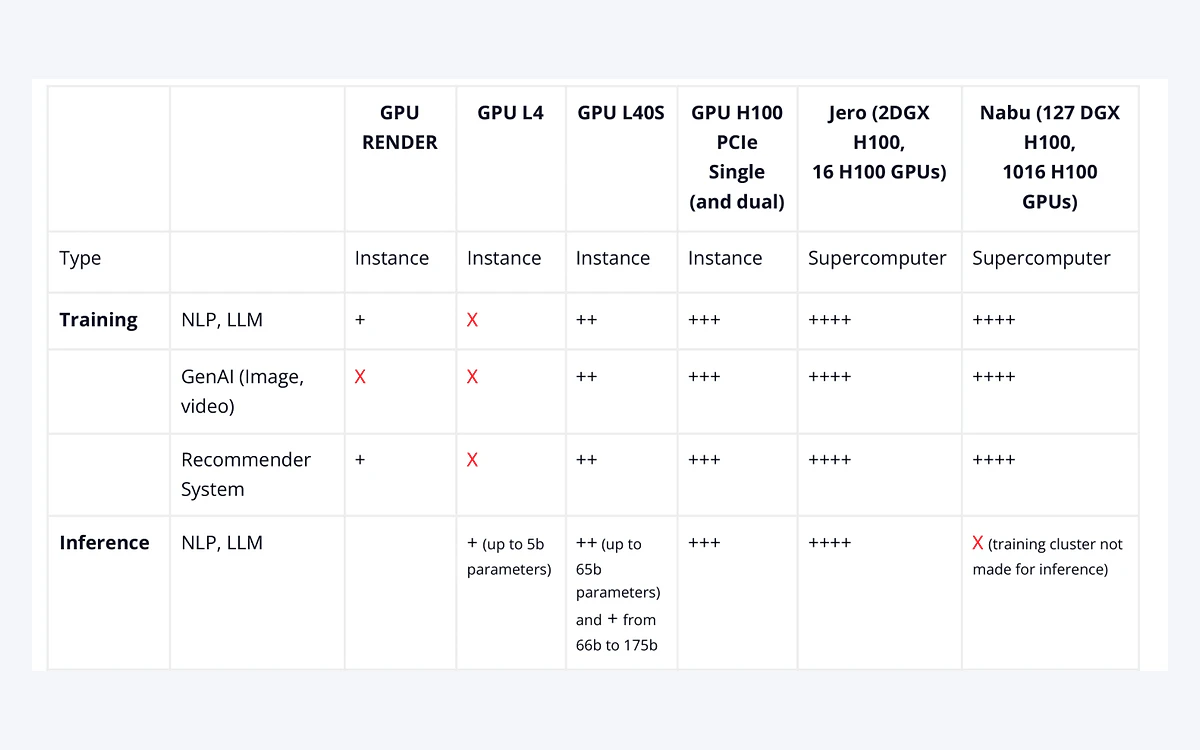
Scaleway is one of the few EU-owned providers that sells H100 and B300 capacity on demand, billed per minute:
- L4-1-24G: €0.79/h (about €575/month), in PAR-1, PAR-2 and WAW-2.
- L40S-1-48G: about €1.47/h.
- H100-1-80G: about €2.87/h; H100-2-80G about €5.73/h.
- H100-SXM-8-80G: about €25.33/h (about €18,491/month).
- B300-SXM-8-288G: €60.00/h, PAR-2 only.
- No H200 or B200 instances are listed.
Generative APIs is the serverless model hosting service. It is priced per million tokens (input/output): gpt-oss-120b at €0.15/€0.60, Mistral Small 3.2 at €0.15/€0.35, Llama 3.3 70B at €0.90/€0.90, Qwen3 235B at €0.75/€2.25 and Mistral Medium 3.5 at €1.50/€7.50. Whisper transcription costs €0.003 per audio minute. New accounts get 1 million free tokens and 60 minutes of transcription, and the Batch API halves the price.
Two cautions apply. Dedicated Deployment (formerly Managed Inference) costs more than renting the same GPU yourself, for example €3.40 an hour for an H100 against about €2.87. And Scaleway retires serverless models fairly quickly: several, including Devstral 2, Pixtral and Qwen 3 Coder, were marked for end of life in July 2026. Pin model names and plan for migrations.
Sovereignty, compliance and regions
Scaleway's sovereignty pitch is real, but narrower than its marketing can suggest. Its compliance page lists:
- ISO/IEC 27001:2022.
- HDS (French health data hosting) for specific products, with Object Storage certified in November 2025 and Block Storage in December 2025.
- SecNumCloud: still "currently undergoing qualification" as of August 2026. Scaleway had aimed for the end of 2025. It is not SecNumCloud-qualified, so public-sector buyers who need that label must look elsewhere for now.
- "Free from the US CLOUD Act": Scaleway is owned by the French Iliad group.
Regions: France (fr-par-1/2/3), the Netherlands (nl-ams-1/2/3) and Poland (pl-waw-1/2/3). A Milan region was announced in March 2026 with three availability zones planned and the first one live. Sweden and Germany are announced as coming soon, without dates. Not every product runs in every zone: STARDUST1-S, for example, is limited to three zones and B300 to PAR-2.
Billing, support and account risk
Scaleway bills in arrears. Hourly usage is added up into a monthly invoice, which is due within 10 days. It accepts Visa, Mastercard, CB, UnionPay, American Express and SEPA, but "virtual and pre-paid credit cards are not accepted," you need a card on file before setting up SEPA, and a card can only be registered to one organization.
- Identity verification with a government photo ID is labelled optional, but it is what unlocks resource quotas. Expect low limits until you do it.
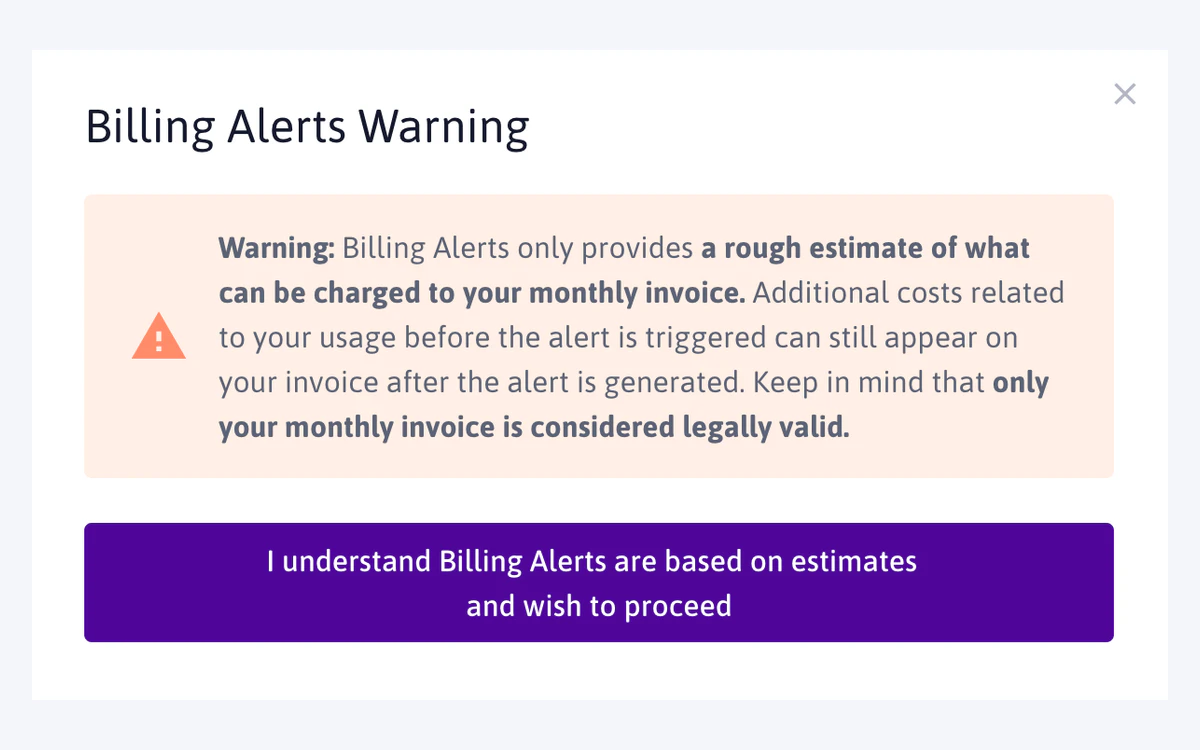
- Billing alerts exist, but Scaleway itself calls them "a rough estimate". There is no hard spending cap.
- Closing an account does not stop billing at once: resources keep being billed until they are deleted, "which can take up to 10 days".
Support plans
- Basic: free, 8-hour first response for critical issues.
- Advanced: €50 a month or 5% of spend, 2-hour response.
- Business: €250 a month or 10% of spend, 30-minute response.
- Enterprise: €990 a month or 20% of spend, 15-minute response.
Scaleway charges whichever is greater, so a team spending €2,000 a month pays €100 for Advanced, not €50. Fast support is therefore a real share of the bill.
What customers report
On 3 October 2026, Scaleway's Trustpilot page showed a TrustScore of 1.5 from 352 reviews, with 79% at one star. The recurring complaints describe accounts blocked or deleted after identity verification, and infrastructure locked over billing disputes, including reviews from September and October 2026. Review sites skew towards unhappy customers, and we have not verified individual cases. Still, the pattern is consistent enough that you should verify your account early, keep a valid card on file and back up off-platform.
The status page for the week of 30 September 2026 showed a handful of incidents: a global Account API outage, network disturbances in FR-PAR, slow Object Storage in WAW, failing Serverless Jobs in FR-PAR and a saturated Qwen 3 235B endpoint. All were short-lived, and we found no multi-day outage.
Pros and cons
Pros
- EU-owned, outside the US CLOUD Act, with ISO 27001 and HDS for key storage products.
- Egress and IPv6 included in instance prices; 75 GB of free object storage egress a month.
- Per-minute H100 and B300 GPUs in Europe, plus cheap serverless open models.
- Very cheap entry options: €4.99 Dedibox, €27.99 Elastic Metal, sub-euro STARDUST1-S.
- Hourly billing, with Savings Plans of up to 25% off compute.
Cons
- June 2026 rise: 4x on STARDUST1-S, 25% on IPv4, steep jumps on load balancers, gateways and DNS.
- IPv4 and storage are not in the headline price, and they keep billing while an instance is off.
- No SecNumCloud yet, despite the sovereignty pitch.
- Low starting quotas, no prepaid or virtual cards, and reports of account locks.
- Fast support costs at least €50 a month or 5% of spend.
Frequently asked questions
How much does the cheapest Scaleway server cost in 2026?
The STARDUST1-S costs €0.0006 an hour, about €0.44 a month, excluding VAT. Add about €3.65 a month for an IPv4 address and roughly €0.095 per GB a month for block storage. Expect a realistic total of about €5. It is only offered in three zones.
Is the IPv4 address included in Scaleway instance prices?
No. Instance prices include egress and IPv6, but a public IPv4 costs €0.005 an hour, about €3.65 a month, and keeps billing while the instance is powered off. Delete the flexible IP when you no longer need it.
Does Scaleway have a free tier or free trial?
There is no general free trial, only product free tiers. Serverless Functions include 400,000 GB-seconds and 1 million requests a month, Containers 200,000 vCPU-seconds, Generative APIs 1 million tokens plus 60 minutes of transcription, and Object Storage 75 GB of egress a month.
How are Scaleway GPU instances billed?
Per minute of uptime, except RENDER-S, which is billed per hour. An H100-1-80G costs about €2.87 an hour and an eight-GPU H100 SXM node about €25.33. Stop and delete the instance when a job ends, because attached IPs and volumes keep billing.
Is Scaleway subject to the US CLOUD Act?
Scaleway says it is "free from the US CLOUD Act". It is part of France's Iliad group and runs its regions in the EU. It holds ISO 27001 and HDS for some products, but it is not SecNumCloud-qualified yet: that qualification is still in progress.
Can I pay Scaleway with a prepaid card or PayPal?
No. Scaleway accepts Visa, Mastercard, CB, UnionPay, American Express and SEPA, and it rejects virtual and prepaid cards. A card is needed before SEPA can be added, and each card can be registered to only one organization.
What happens to billing when I close my Scaleway account?
Resources keep billing until they are deleted, which can take up to 10 days, and everything in a closed account is permanently deleted. Back up your data and delete resources yourself before closing.
Key takeaways
- The June 2026 rise barely touched most instances (about 2%) but hit STARDUST1-S (4x), IPv4 (+25%) and networking add-ons hard.
- Always add about €3.65 a month for IPv4 plus storage to any instance price. Both keep billing while an instance is off.
- Dedibox and Elastic Metal got cheaper, from €4.99 and €27.99 a month.
- Per-minute H100 (about €2.87/h) and B300 GPUs make Scaleway a strong EU option for AI workloads.
- Scaleway is outside the US CLOUD Act and holds ISO 27001 and HDS, but it is not SecNumCloud-qualified yet.
- Verify your identity early and keep a valid card on file. Trustpilot reviews report account locks over verification and billing.
More in Cloud Computing
Browse Cloud Computing