Technology reviews & practical guides
Scribble Diffusion turned sketches into AI images, but scribblediffusion.com now redirects elsewhere. What it was, what a run costs, privacy, and alternatives.
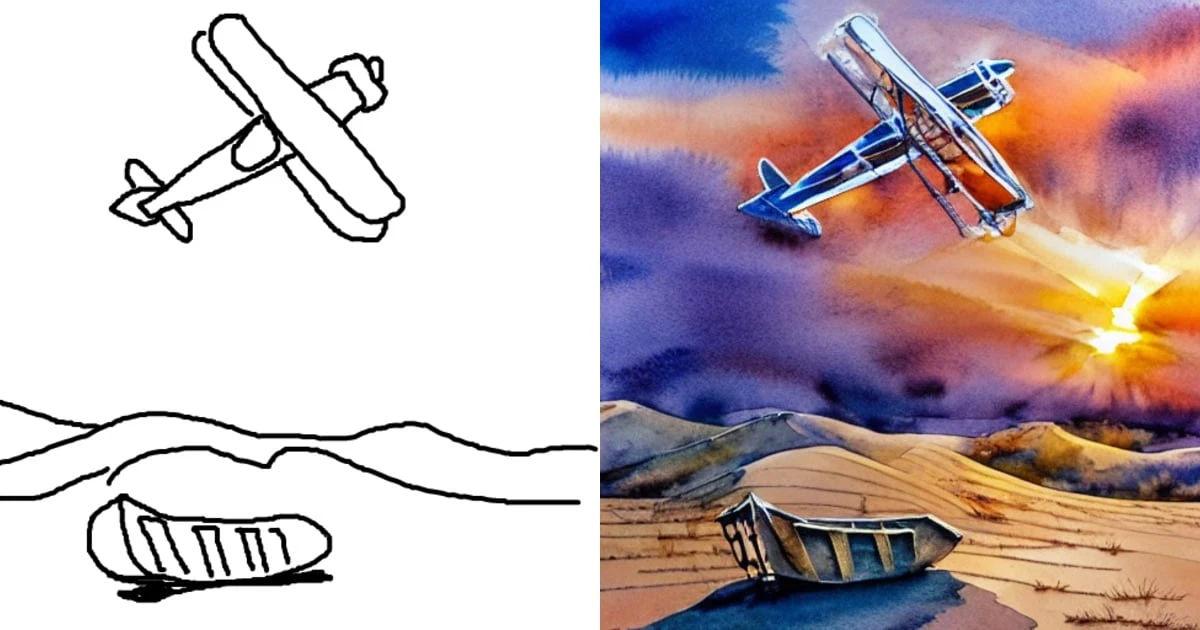
Scribble Diffusion was one of the friendliest AI demos of 2023: draw a rough sketch, type what it should be, press Go, and a few seconds later a finished image came back that followed your lines. Replicate built it, open-sourced it under the MIT licence, and it went viral fast - about 3,000 GitHub stars and a Show HN post with 373 points.
In 2026 the story has a twist. The official address, scribblediffusion.com, no longer serves the app. As of 2026-10-22 it redirects to an unrelated Vietnamese football-streaming site. The code and the model behind it are still alive, though, so this review covers what the tool was, how it worked, what a drawing costs to render today, what happened to your old sketches, and how to get the same result now.
Zeke Sikelianos at Replicate announced it on 2023-02-16 as "a free and open-source AI-powered web app that lets you draw a rough sketch, add a text prompt, and generate images based on your sketch." The homepage tagline was simply "Turn your sketch into a refined image using AI", with a blank canvas that said "Draw something here."
It was a showcase for Replicate's model hosting more than a standalone product. There was no sign-in, no pricing page and no usage tier in the code - the app was a thin front end over one hosted model.
It also got popular quickly enough to hit limits. According to Bytescale, the project "went viral but was on the Bytescale Basic Plan, so quickly ran into problems when it exceeded its upload limit of 2,500" - Zeke posted on 2023-02-17 that they had briefly hit the plan limit and upgraded.
Later versions added a welcome screen that asked for your own Replicate API token (it starts with r8_) before you could press "Start scribbling". The token was kept in your browser's localStorage and sent with each request, so every render was billed to your Replicate account, not Replicate's demo budget.
The app also had a small word filter: prompt words on a common profanity list were swapped for "something" before the prompt was sent.
As of 2026-10-22, scribblediffusion.com returns a 301 redirect to an unrelated Vietnamese football-streaming site. There is no Scribble Diffusion content on it. Do not enter a Replicate token or anything else there.
Wayback Machine snapshots narrow down when it changed. The last capture showing the real app is from 2026-02-11. The first capture of the new streaming site, a WordPress install, is from 2026-03-30, and the redirect is in place by 2026-05-27. The most likely explanation is that the domain lapsed and was re-registered, but Replicate has not announced anything we could find, so the exact cause is unconfirmed.
Old links still point there. The GitHub repo's homepage field and the readme of the Replicate model both still send people to scribblediffusion.com, which is how many visitors end up on the streaming site without realising the app is gone.
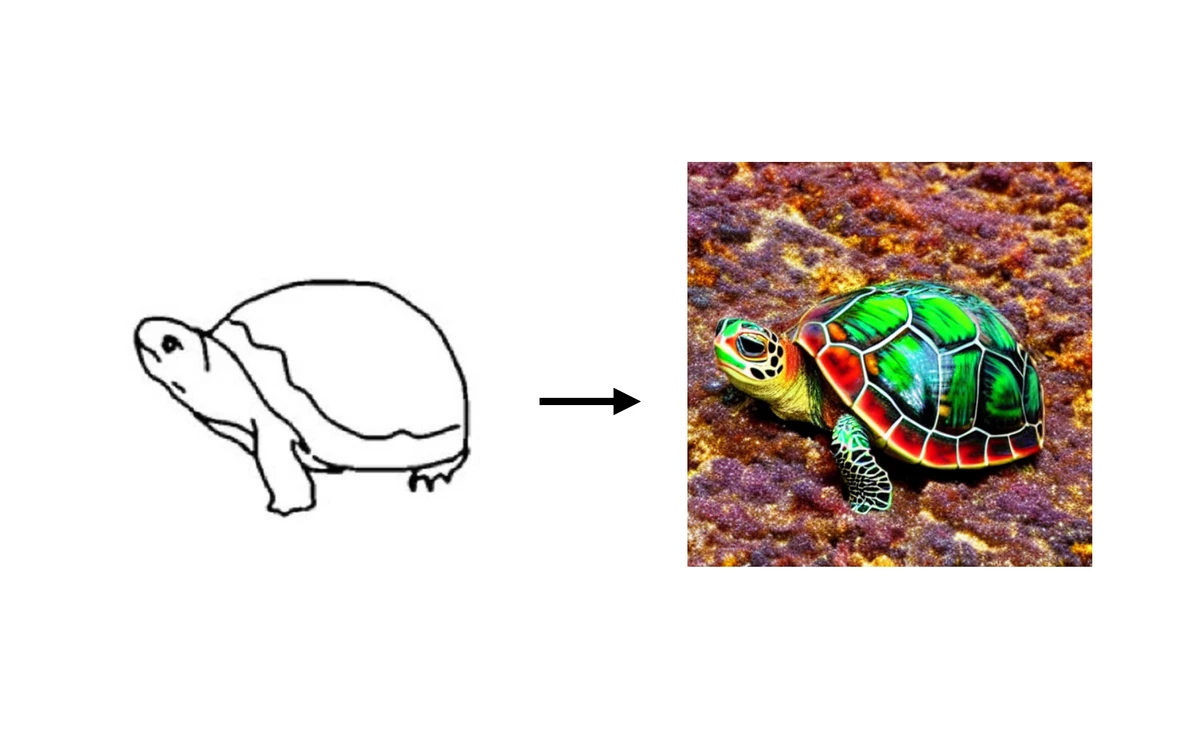
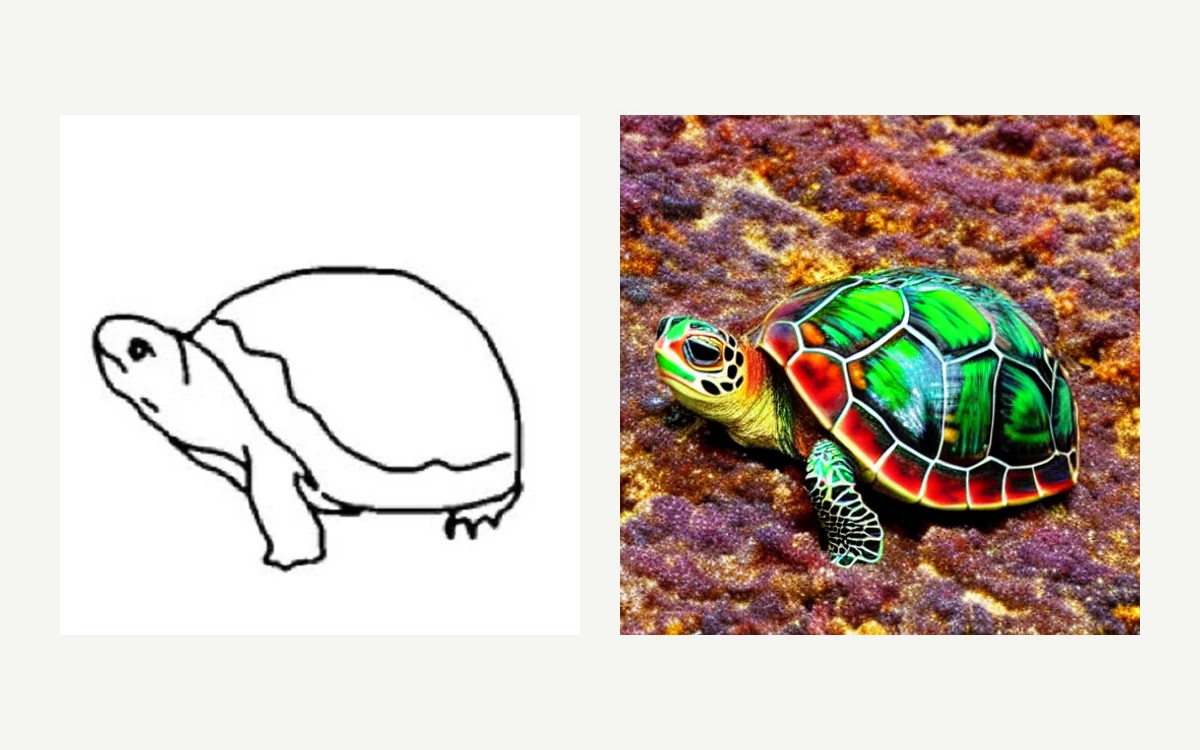
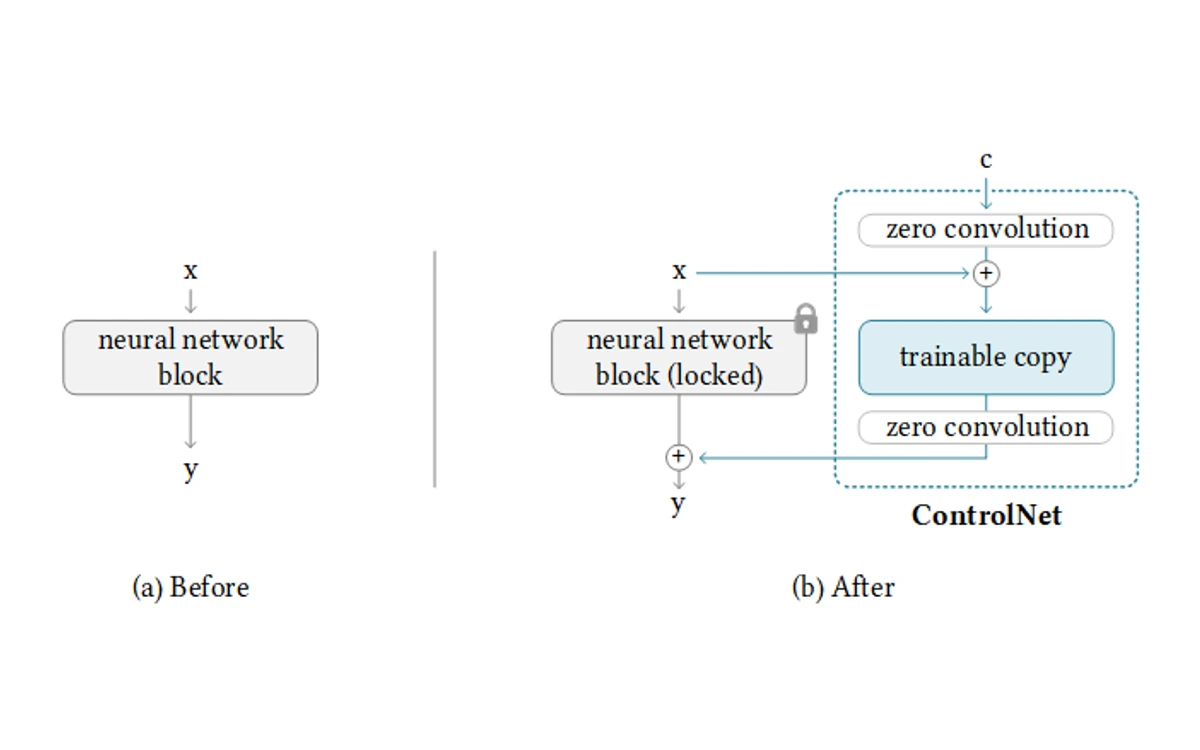
The model doing the work is ControlNet, from the February 2023 paper "Adding Conditional Control to Text-to-Image Diffusion Models" by Lvmin Zhang and Maneesh Agrawala. ControlNet adds a trainable copy of Stable Diffusion's encoder that takes an extra input - here, a line drawing - and joins it to the frozen original through zero-initialised convolutions, so the base model's quality is kept while the output follows your structure.
The scribble variant is trained on rough sketches, which is why it tolerates wobbly lines. The Replicate version that Scribble Diffusion called is published by jagilley and has 38.4M runs, so it is far from a forgotten model.
Results are good at following composition and silhouette, and much weaker at fine detail you did not draw or describe. A circle and a line with the prompt "a red balloon over a city at dusk" works; expecting the model to guess what a vague shape is without a prompt does not.
The app was always free and open source. What costs money is the model run, and since later versions used your own token, you paid Replicate directly.
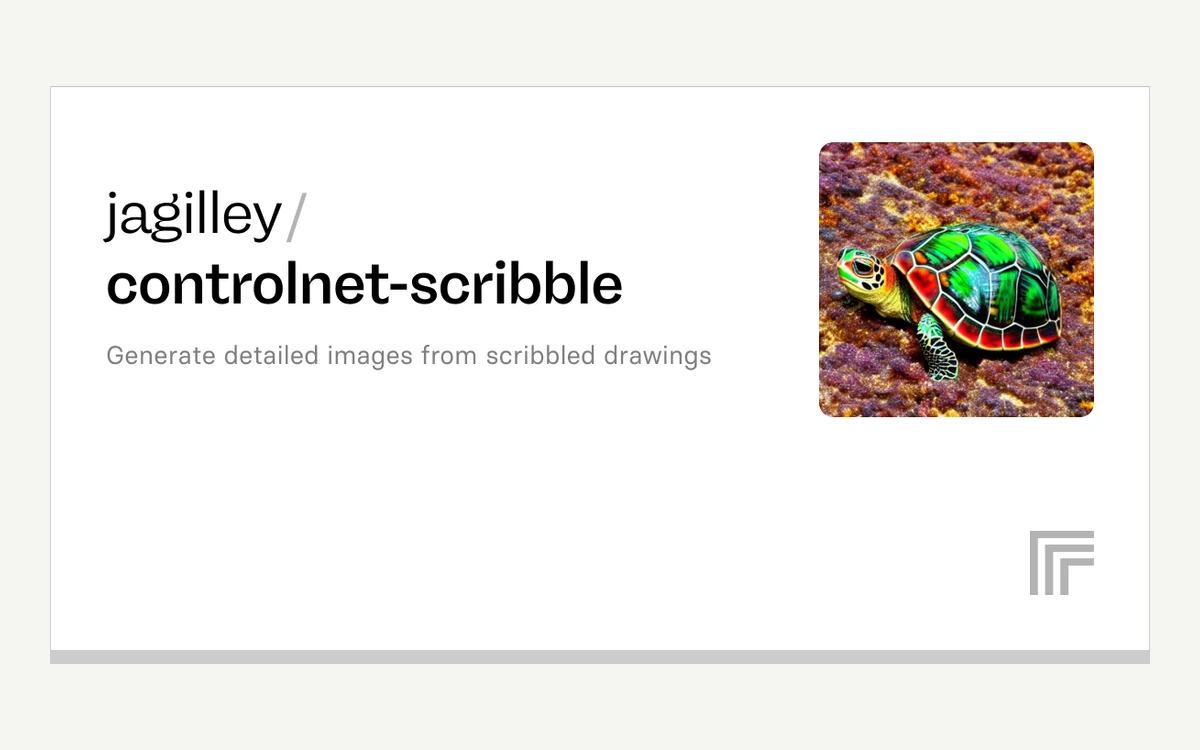
For a hobbyist, 50 sketches cost roughly $3. Replicate sometimes runs temporary discounts, so check the model page before budgeting, but do not count on a sale price.
This is the part many users did not realise. The source code shows that every drawing was uploaded as scribble_input.png to Bytescale (formerly Upload.io), with your browser's user agent attached as metadata. Every successful render - prompt, sketch and output - was saved to a database and shown on a public /scribbles gallery page of up to 1,000 items.
A Wayback snapshot from 2024-04-15 shows about 2,005 images with their prompts on that gallery, and uploads from 2023 are still publicly reachable on Bytescale's CDN today. The site never linked a privacy policy or terms of use. If you typed anything personal into a prompt, assume it was public.
The public gallery is part of the code. Remove or protect the /scribbles page and the database write before you let anyone else use your copy.
The repo, replicate/scribble-diffusion, is MIT-licensed and not archived: 2,974 stars and 595 forks as of 2026-10-22. The last commit (2025-08-28) only touched CI, and the last app-code change was on 2024-05-30, so treat it as maintained but dormant. It is a Next.js 13 app with Tailwind CSS, built to deploy on Vercel.
The README makes it sound like a one-token job:
git clone https://github.com/replicate/scribble-diffusion
cd scribble-diffusion
echo "REPLICATE_API_TOKEN=<your-token-here>" > .env.local
npm install
npm run dev
In practice you need more. The .env.example file also lists DATABASE_URL (a MySQL database, PlanetScale in the original setup) and NGROK_HOST, because results arrive through a webhook that Replicate must be able to reach - on localhost that means a tunnel such as ngrok. Uploads go through Bytescale too. Expect an afternoon of setup, not five minutes, unless you strip the gallery and upload code out.
Scribble Diffusion as a hosted product is gone, and its old domain is now actively misleading. The idea was excellent and the code still works, but nobody is running the official site, the repo has not seen app changes since 2024, and its public gallery was a real privacy trade-off.
If you want the exact Scribble Diffusion result, run ControlNet Scribble on Replicate for about $0.056 a render. If you want a polished app, try Vizcom or Krea. Just do not type scribblediffusion.com into your browser.
No. As of 2026-10-22 it redirects to an unrelated Vietnamese football-streaming site. The real app was last captured on 2026-02-11, and the domain changed hands before 2026-03-30.
The code is free under the MIT licence, but renders are not. Later versions used your own Replicate API token, so each image was billed to your Replicate account.
About $0.056 per run, or 17 runs per $1, on Replicate. It runs on an A100 80GB at $0.0014 per second and usually finishes within 41 seconds.
Yes, the GitHub repo is public and not archived. Beyond REPLICATE_API_TOKEN you need a MySQL DATABASE_URL, a publicly reachable webhook (ngrok on localhost) and an upload service, or you must remove those code paths.
Yes. Every successful render was shown on a public gallery page with its prompt, and the sketch uploads from 2023 are still reachable on Bytescale's CDN. The site had no privacy policy.
Not publicly. We found no announcement. The model is still live on Replicate and the repo is not archived; only the domain was lost, most likely after it lapsed.
For the identical result, the ControlNet Scribble model on Replicate. For a no-setup app, Vizcom or Krea. For turning doodles into simple icons, AutoDraw.
More in Artificial Intelligence
Browse Artificial Intelligence