Tensor.Art Review 2026: Pro Pricing, Credits and the SFW Switch
Tensor.Art review for 2026: Pro at $9.90 for 30 days, what 300 daily credits buy, the SFW-only switch and TensorHub, Canvas closed models, and the refund fine print.
Tensor.Art is one of the biggest free-to-start AI image sites built on open models. You can run Stable Diffusion, SDXL and Flux checkpoints, stack community LoRAs, and use ComfyUI workflows in the browser without a GPU of your own. The platform is run by ECHO INTERNATIONAL HK LIMITED, a Hong Kong company, and it went live in July 2023.
The platform changed a lot in the twelve months before this review. Payment processors forced restrictions in July 2025. In November 2025 it became an SFW-only site and moved adult content to a sister platform. In 2026 it added closed-source models such as GPT-Image-2 and lost its Civitai import tool. This review covers what Pro costs today, what credits really buy, and the fine print that catches people out.
What Tensor.Art is and how it works
Tensor.Art is a model-hosting community with a cloud generator on top. Creators upload checkpoints, LoRAs and workflows. Everyone else runs them online and pays in credits instead of renting a GPU. A 2024 press release said the site passed 15 million visitors in its first year, hosted more than 330,000 resources and generated over 2 million images a day. Those are the company's figures, not independent ones.
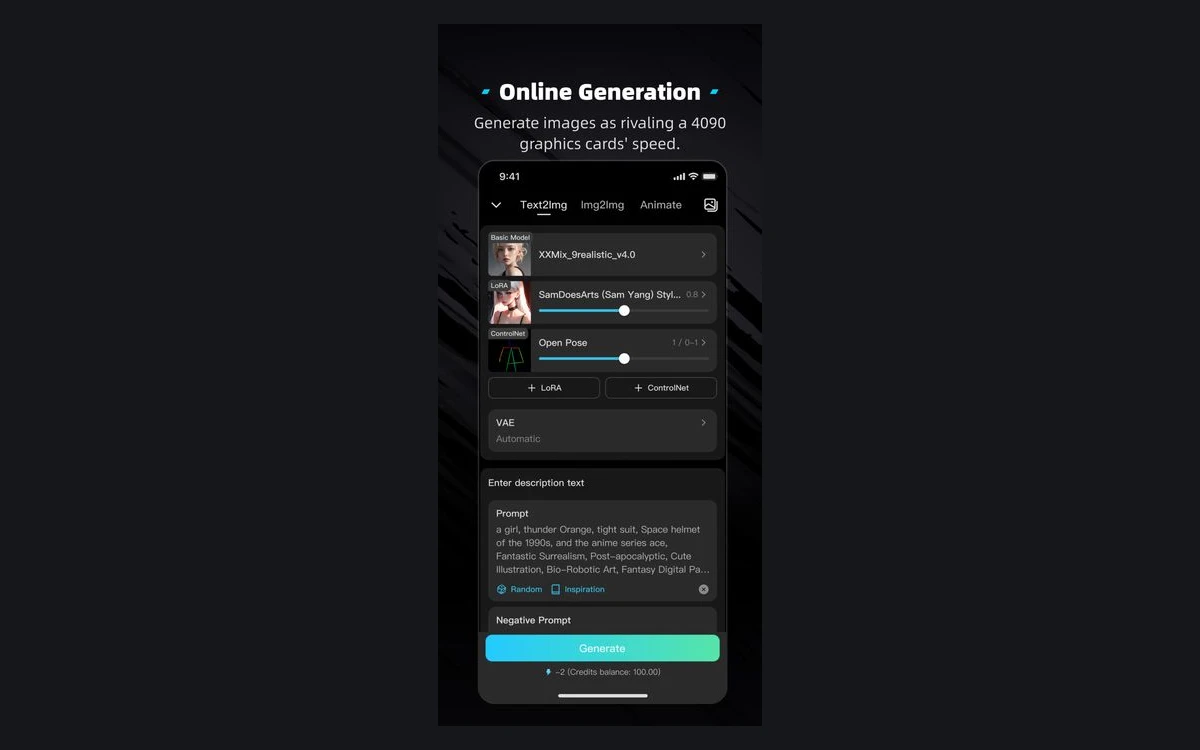
- Workspace: the main generator for text-to-image and image-to-image, with model, LoRA, sampler, steps and resolution controls.
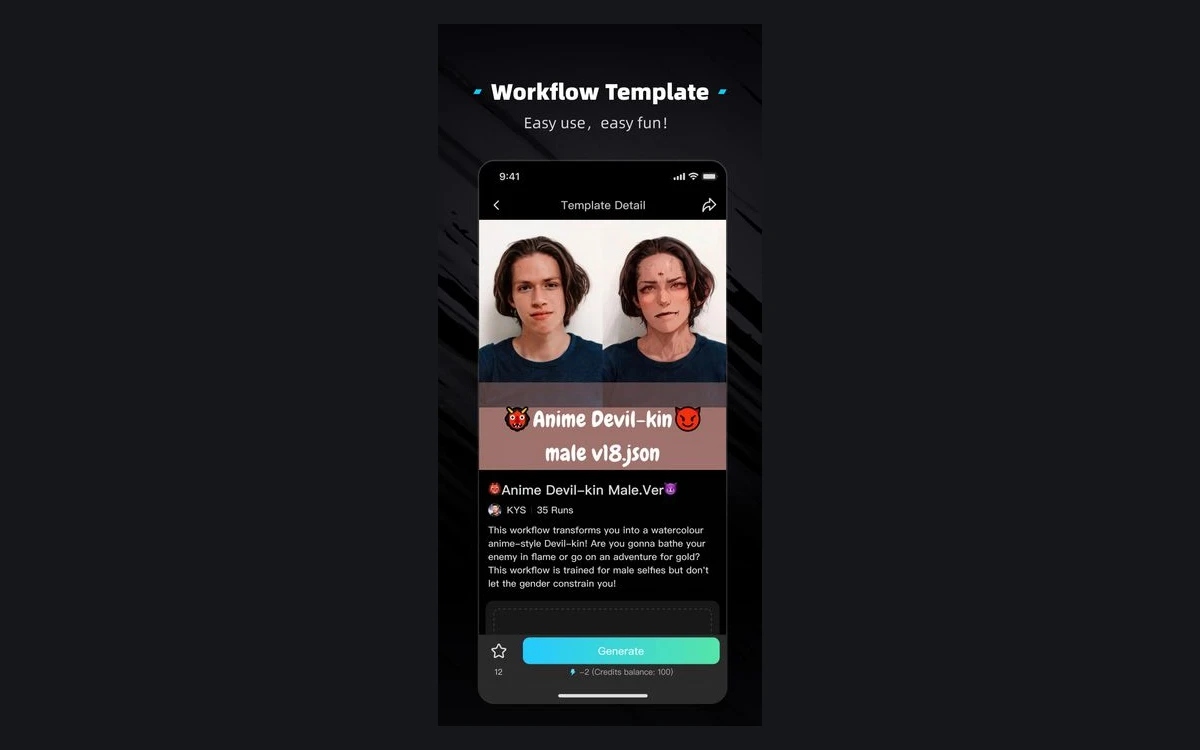
- ComfyUI workflows and AI Tools: node graphs that creators publish as one-click tools.
- Canvas: added in April 2026, the hub for closed-source image and video models.
- Model pages: each one shows its license, sample images and run count, much like Civitai.
- TAMS: a separate developer API with its own billing.
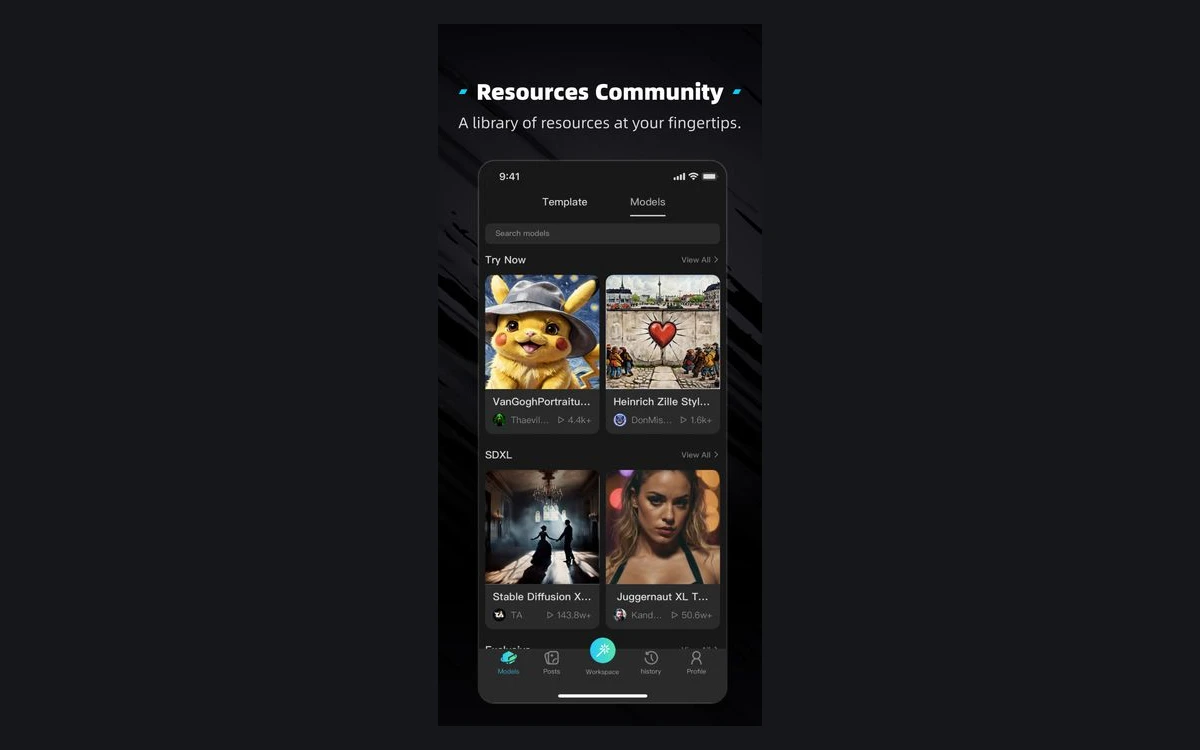
If you have used Civitai or SeaArt, the layout will feel familiar. The appeal is the size of the open-model catalogue. The trade-off is that quality depends on the community model you pick, not on one house model.
Tensor.Art pricing in 2026
Tensor.Art doesn't publish a public pricing page that its bot filter lets through, so the most reliable current list is the App Store in-app purchases. These are US App Store prices, checked on October 9, 2026. Web checkout can differ.
- Day Pass Kit: $1.00
- 30-day Pro Plan: $9.90
- Quarterly subscription: $21.90
- Yearly subscription: $69.90
- 3k Credit Package: $9.90
- 10k Credit Package: $29.90
- 30k Credit Package: $59.90
Prices have gone up. The company's February 2024 announcement listed Quarterly Pro at $19.9 with 5k bonus credits and Yearly Pro at $59.9 with 25k bonus credits. The quarterly plan is now $21.90 and the yearly plan $69.90. It isn't confirmed that the old bonus credits still come with them, so don't count on those.
Best value
The yearly plan works out to about $5.83 a month, against $9.90 for a single month. Buy it only if you have already used the site for a few weeks. The membership terms rule out refunds for unused benefits.
What credits actually buy
Everything on Tensor.Art runs on credits, and there are two kinds. Daily credits refresh every day and expire. Purchased (permanent) credits stay in your account until you spend them.
Free plan
Tensor.Art doesn't publish its free daily allowance, and third-party reviews quote different numbers. Toolsforhumans, updated in March 2026, reports 50 daily credits that reset every 24 hours, 1 to 2 concurrent tasks, a maximum resolution of 1536×1024 and 14-day image storage. Treat those figures as indications, not guarantees.
Pro
The official membership terms say Pro includes 300 daily credits that 'are refreshed daily and cannot be accumulated'. Unused credits don't carry over. The same third-party breakdown lists 10 regular tasks, 3 priority tasks, 1 video task, output up to 3840×2160 and 60-day image storage for Pro.
How far a credit goes
The consumer site doesn't publish a cost table, but the TAMS developer API does. There, an SD or SDXL image costs 0.8 credits at 20 steps, 1 at 25 steps, 1.2 at 30 steps and 2 at 50 steps. Flux models cost double. API credits are priced at $0.003 each. These are API figures. They suggest how cheap a basic open-model render is, but the website's own costs may differ.
Premium models cost far more. When SD3 launched in April 2024, it cost 40 credits a run, was limited to Pro users, and could only use accumulated credits, not free daily ones. Expect closed models on Canvas, such as GPT-Image-2, Vidu or PixVerse video, to draw on purchased credits in a similar way.
The 2025 changes: SFW-only and TensorHub
On July 11, 2025, Tensor.Art said it was 'temporarily' restricting models, tools and posts tied to pornographic content or real-world celebrities 'due to pressure from payment processors'. The restriction turned out to be permanent.
From November 27, 2025, Tensor.Art became a fully SFW platform. In the company's words, the Workspace 'will block NSFW prompts and automatically censor NSFW images generated'. Existing posts weren't deleted but are only visible to their owners. Adult content moved to a sister site, TensorHub. It runs on Tokens, which cost more than credits and can't be earned through daily free credits or missions. Celebrity content is banned on both sites.
Watch out
The policy says 'any credits used for blocked generations are non-refundable'. If a prompt trips the filter, you lose the credits.
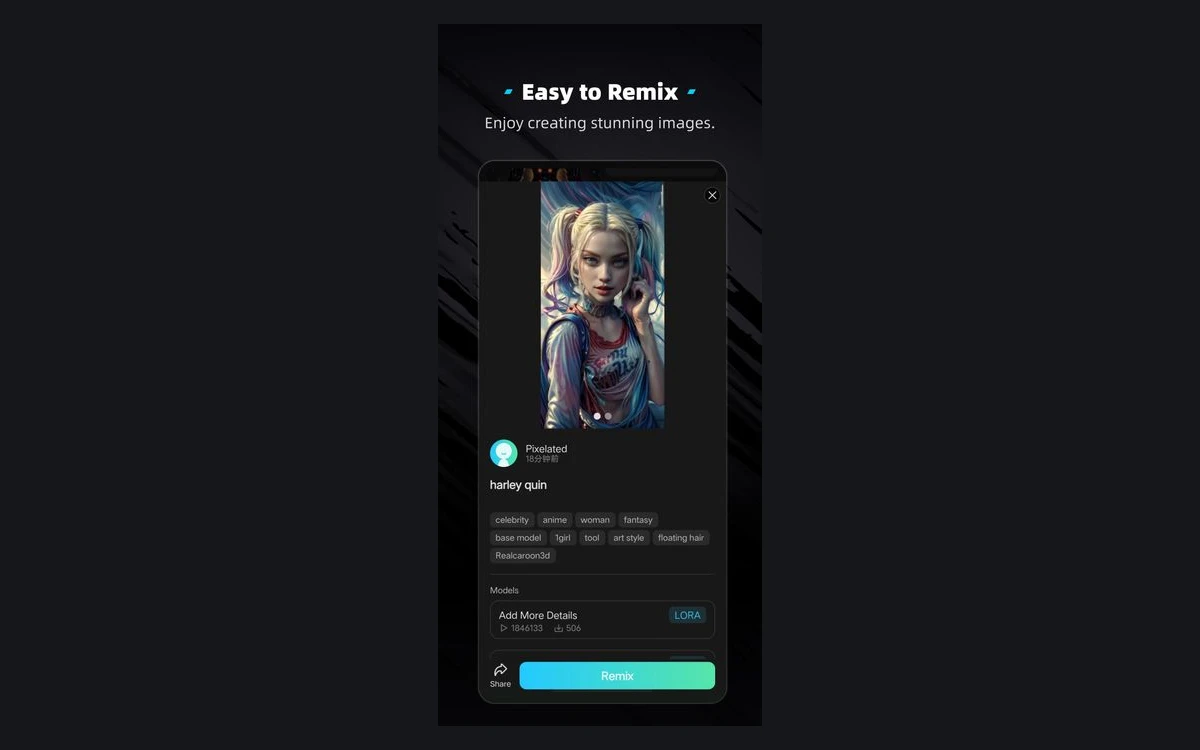
For most users, a stricter filter means some false positives. One App Store reviewer complains that 'they started censoring images'. If your work is in a grey area, such as figure studies or fan art of real actors, expect more blocked generations than you would see on a local Stable Diffusion setup.
What changed in 2026
The 2026 changelog shows Tensor.Art moving beyond open models:
- March 12: Civitai import suspended after Civitai shut down its model transfer stream. You can no longer pull models across with one click.
- April 1: Wan2.7-Image added.
- April 13: Canvas launched, 'featuring top closed-source AI models'.
- April 17: Vidu Q3 Pro and PixVerse v6 video added to Canvas.
- May 13: GPT-Image-2 added.
- June 2: Canvas Agent launched.
Canvas makes Tensor.Art more of an aggregator, with open checkpoints and big closed models in one place. Outages can still happen. Nano Banana features went down briefly at the end of March because of a Google Cloud disruption.
The fine print: renewals, refunds and privacy
Auto-renewal
Membership is 'a subscription that renews automatically'. On iOS, Apple charges you within 24 hours before the period ends. To stop the next charge, cancel in your Apple ID settings at least 24 hours before renewal.
Refunds
The membership terms, last changed in August 2023, rule out refunds if you don't use the benefits, if Tensor.Art cancels your account, or if you leave because of 'normal changes in rights, services, and functions'. The Terms of Service add that if your account is terminated there is 'no guarantee of future availability of your data nor of a refund'. App Store buyers can still ask Apple for a refund under Apple's own process.
Ownership and commercial use
Tensor.Art claims no ownership of what you generate. The catch is the model license. Commercial use depends on the license of each checkpoint and LoRA you used, and the terms put that responsibility on you. Check every model page before you use an image in client work.
Privacy
Generations are public unless you set them private. Even private accounts keep a public name, avatar and bio. The privacy policy, dated October 2023, says data is officially kept for up to 60 days but 'in practice, we may store data for a longer period'. It promises never to sell your information but says nothing either way about training on user content. The App Store listing says location, user content, usage data and diagnostics are linked to your identity. One App Store reviewer says the app doesn't let you delete your own account.
For model creators: the TenStar Fund
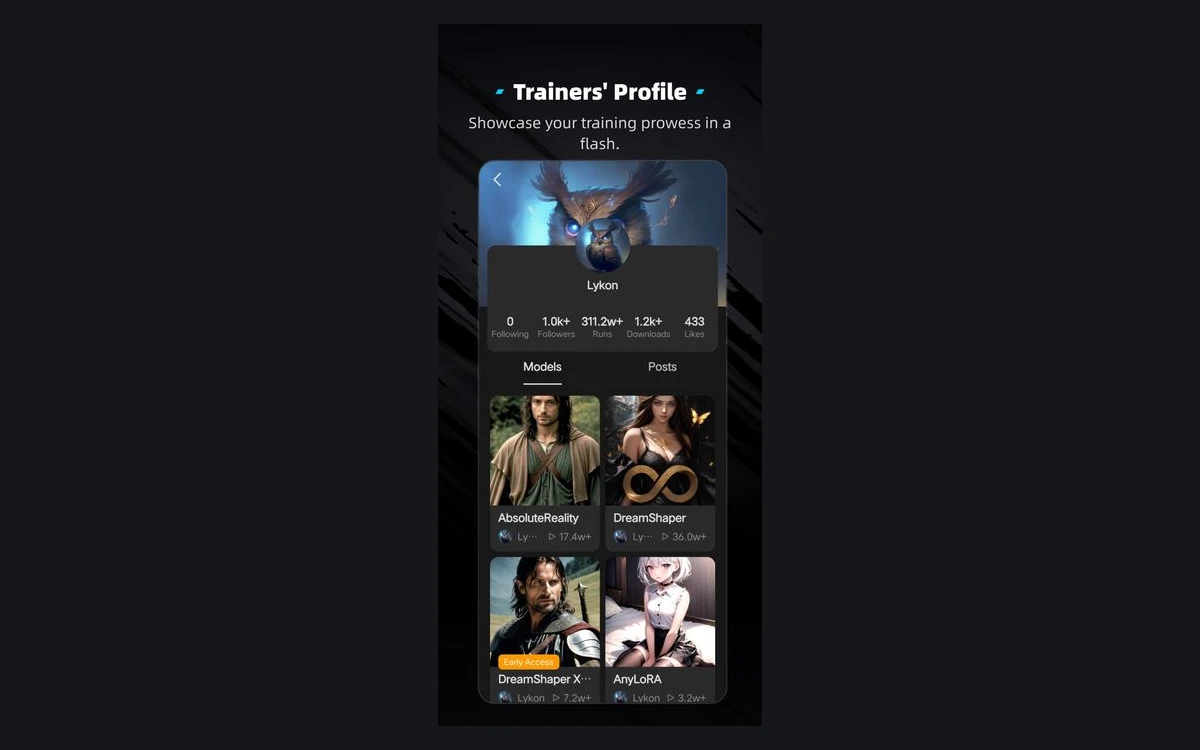
Tensor.Art pays creators through several channels: the TenStar Fund (based on online runs of your models), subscription plans, paid local downloads, AI Tools and events. You can withdraw once you reach $50. The leaderboard weights runs by Pro users four times as heavily as runs by standard users, so a model that paying users like earns far more than raw run counts suggest. Reposting someone else's model needs the original author's consent.
Verdict: who Tensor.Art is for
Tensor.Art fits people who want the open-model ecosystem without a local GPU. That means trying LoRAs, running community ComfyUI workflows, or comparing checkpoints side by side. At $9.90 for 30 days with 300 daily credits, Pro is cheap for heavy SD and SDXL users. The $1 day pass is a sensible way to test it first.
It fits less well if you want predictable costs on premium models, a generous refund policy, or a platform with stable content rules. In the past year it has tightened moderation twice and lost Civitai import. If you mostly want one polished house model, Midjourney or Leonardo.Ai will cost more but give more consistent results. SeaArt is the closest like-for-like alternative.
- Pros: a huge open-model catalogue, cheap entry with a $1 day pass and $9.90 Pro, ComfyUI workflows in the browser, closed models in Canvas, and income for model creators.
- Cons: daily credits expire, refunds are narrow, blocked generations aren't refunded, content rules have changed twice, Civitai import is gone, and generations are public by default.
Frequently asked questions
How much does Tensor.Art Pro cost?
$9.90 for 30 days on the US App Store. A quarterly plan costs $21.90, a yearly plan $69.90, and a day pass $1.00. Prices on web checkout may differ.
Is Tensor.Art free?
Yes, there is a free tier with daily credits that reset and don't roll over. Tensor.Art doesn't publish the exact amount. A March 2026 third-party review reports 50 credits a day.
Do unused credits roll over?
Daily credits don't. Pro's 300 daily credits refresh every day and can't be saved up. Purchased credit packs stay in your account until you spend them.
Can I get a refund on Tensor.Art?
Rarely from Tensor.Art itself. The membership terms exclude refunds for unused benefits, account bans and service changes. Credits spent on blocked generations aren't returned either. If you paid through the App Store, you can ask Apple for a refund under Apple's own process.
Does Tensor.Art still allow NSFW content?
No. Since November 27, 2025, Tensor.Art is SFW-only and blocks NSFW prompts. That content moved to a separate sister site, TensorHub, which uses its own pricier tokens.
Can I use Tensor.Art images commercially?
Usually, but it depends on the model. Tensor.Art claims no ownership of your outputs. Commercial rights depend on the license of each checkpoint and LoRA you used.
Can I still import models from Civitai?
No. The Civitai import feature was suspended on March 12, 2026, after Civitai discontinued its model transfer stream.
Are my generations private?
Not by default. Content is public unless you set it to private, and your name, avatar and bio stay public whatever you choose.
Key takeaways
- Pro costs $9.90 for 30 days, $21.90 a quarter or $69.90 a year on the US App Store. A day pass is $1.
- Pro gives 300 daily credits that expire each day. Purchased credit packs ($9.90 to $59.90) don't expire.
- Tensor.Art has been SFW-only since November 27, 2025. Adult content moved to TensorHub, which uses pricier tokens.
- In 2026 Canvas added closed models such as GPT-Image-2, Vidu and PixVerse, while Civitai import was suspended.
- Refunds are narrow, blocked generations aren't refunded, and subscriptions renew automatically.
- Check each model's license before commercial use, and set generations to private if needed.
More in Artificial Intelligence
Browse Artificial Intelligence